
 Payments
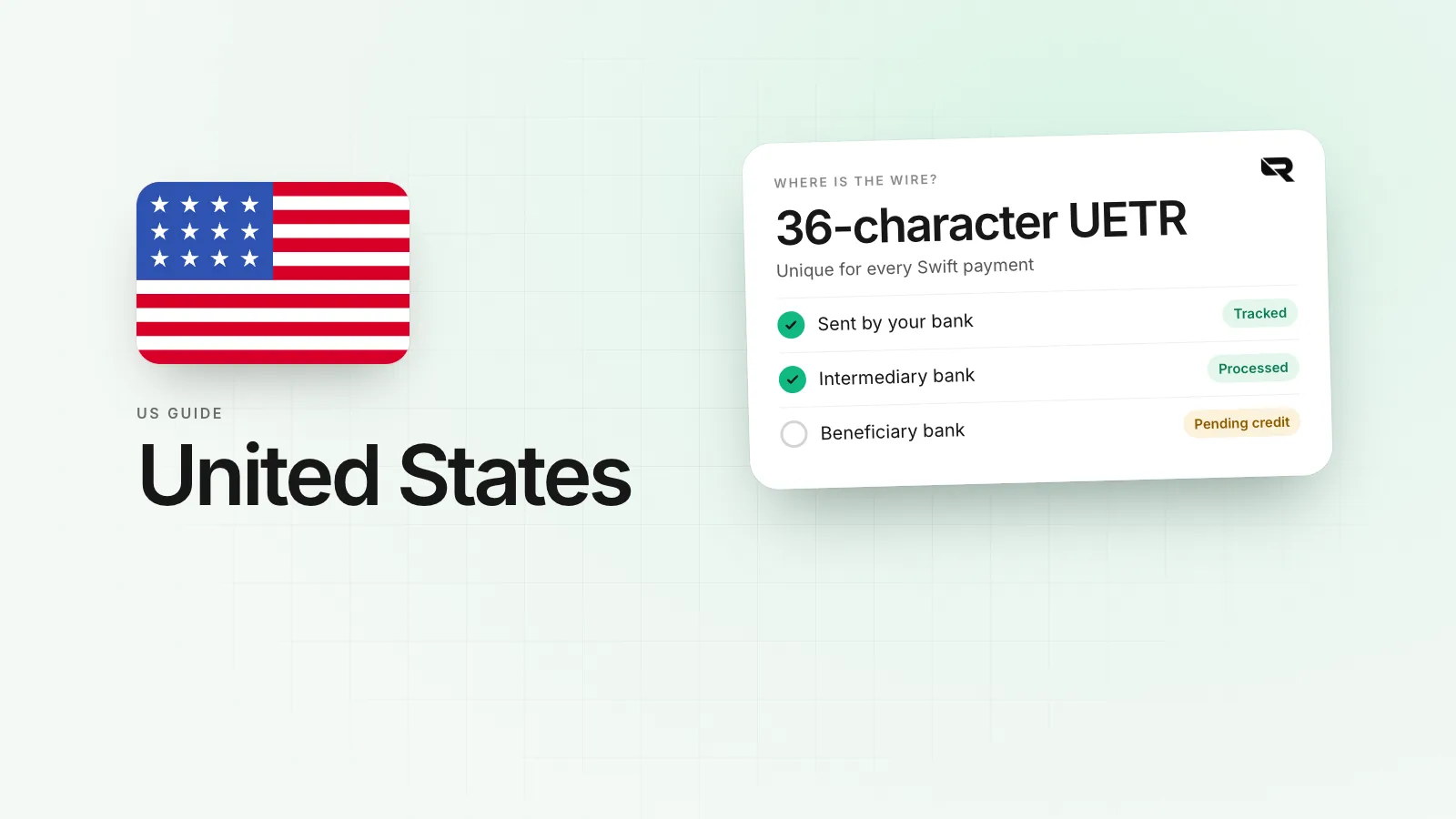
Tracking an international wire with a UETR
Every Swift payment carries a unique end-to-end transaction reference (UETR). With it, banks can see where a wire is, which bank holds it and what fees were taken.
Alexia M.
2 min readUS companies move domestic money on two rails. ACH carries most supplier and payroll payments, with limits set by each provider rather than by Nacha, and Same Day ACH capped at $1 million per payment. Wires settle on Fedwire in real time and suit large or urgent payments, usually for a fee.
Money crossing the border adds paperwork and cost. Foreign contractors give you Form W-8BEN, or W-8BEN-E for a company, and work done entirely outside the US generally needs no 1099 and no withholding. International wires can carry a sending fee, intermediary deductions, a receiving fee and an FX margin, and the UETR lets you track one through Swift gpi.
Customers abroad pay more easily in their own currency: European businesses pay by SEPA or Faster Payments, Canadians by EFT. On the card side, Stripe adds 1.5% for international cards and 1% for conversion on top of 2.9% plus 30 cents.
The guides below cover bank and fintech accounts, FDIC pass-through insurance, contractor classification, state filings for Delaware and Wyoming entities, and wire fraud.
PaymentsEvery Swift payment carries a unique end-to-end transaction reference (UETR). With it, banks can see where a wire is, which bank holds it and what fees were taken.
 Compliance
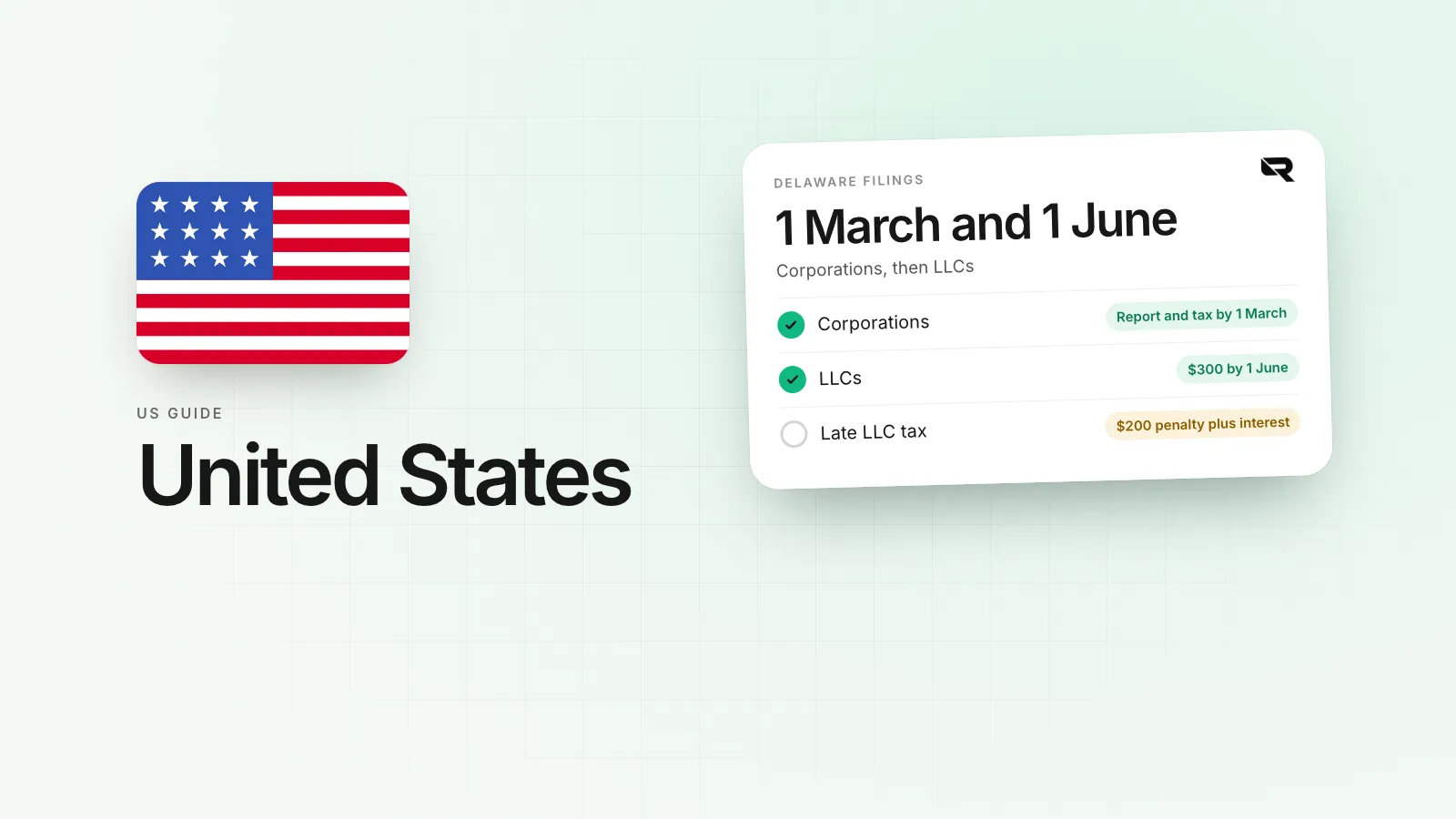
Delaware corporations file an annual report and pay franchise tax by 1 March. Delaware LLCs pay a flat $300 by 1 June. Both carry penalties and interest if late.
 Payments
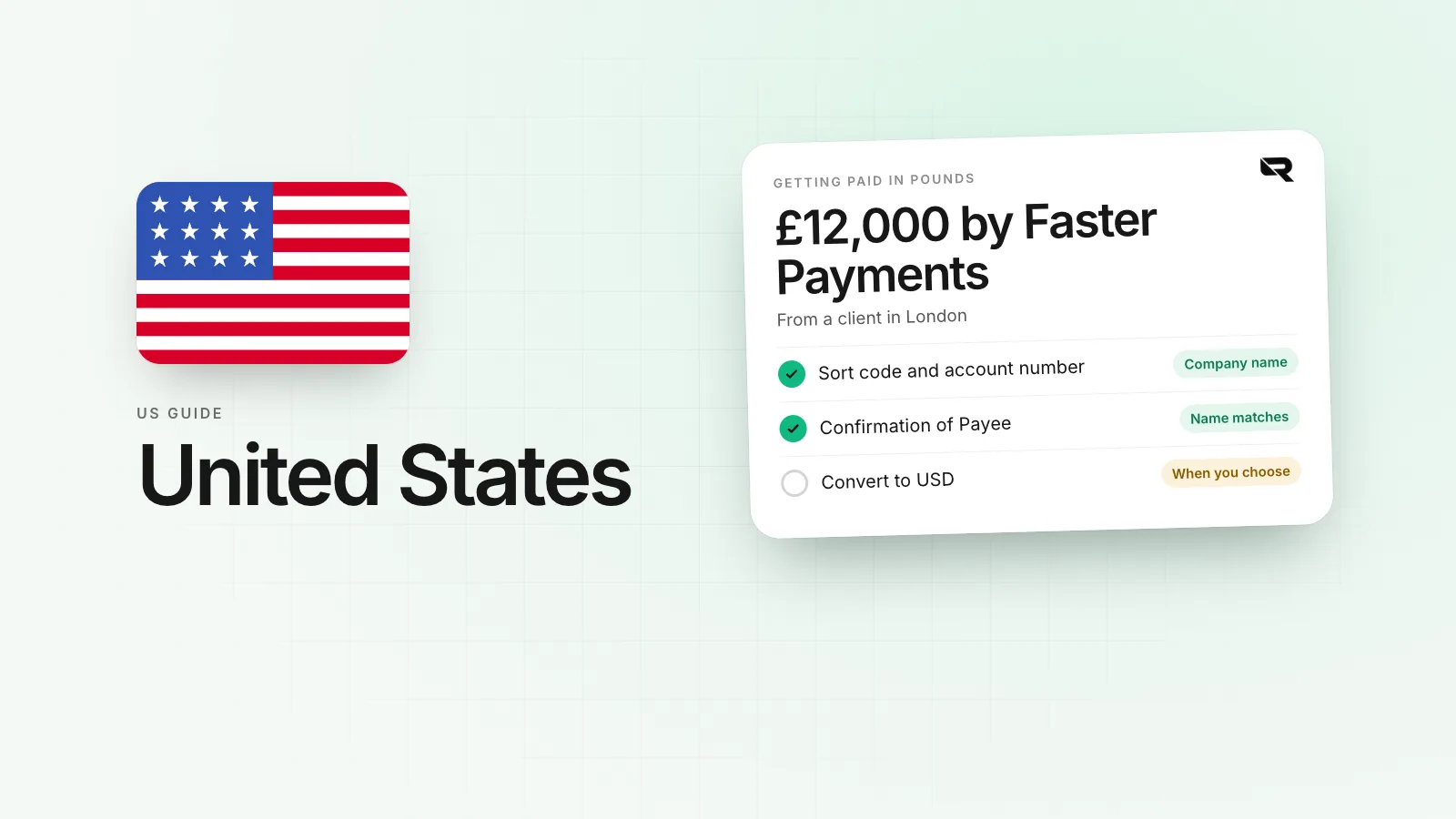
UK companies pay suppliers by Faster Payments to a sort code; euro-area companies pay by SEPA to an IBAN. A US company with GBP and EUR details in its own name gets paid like a local supplier, in full and on time.
 Payments
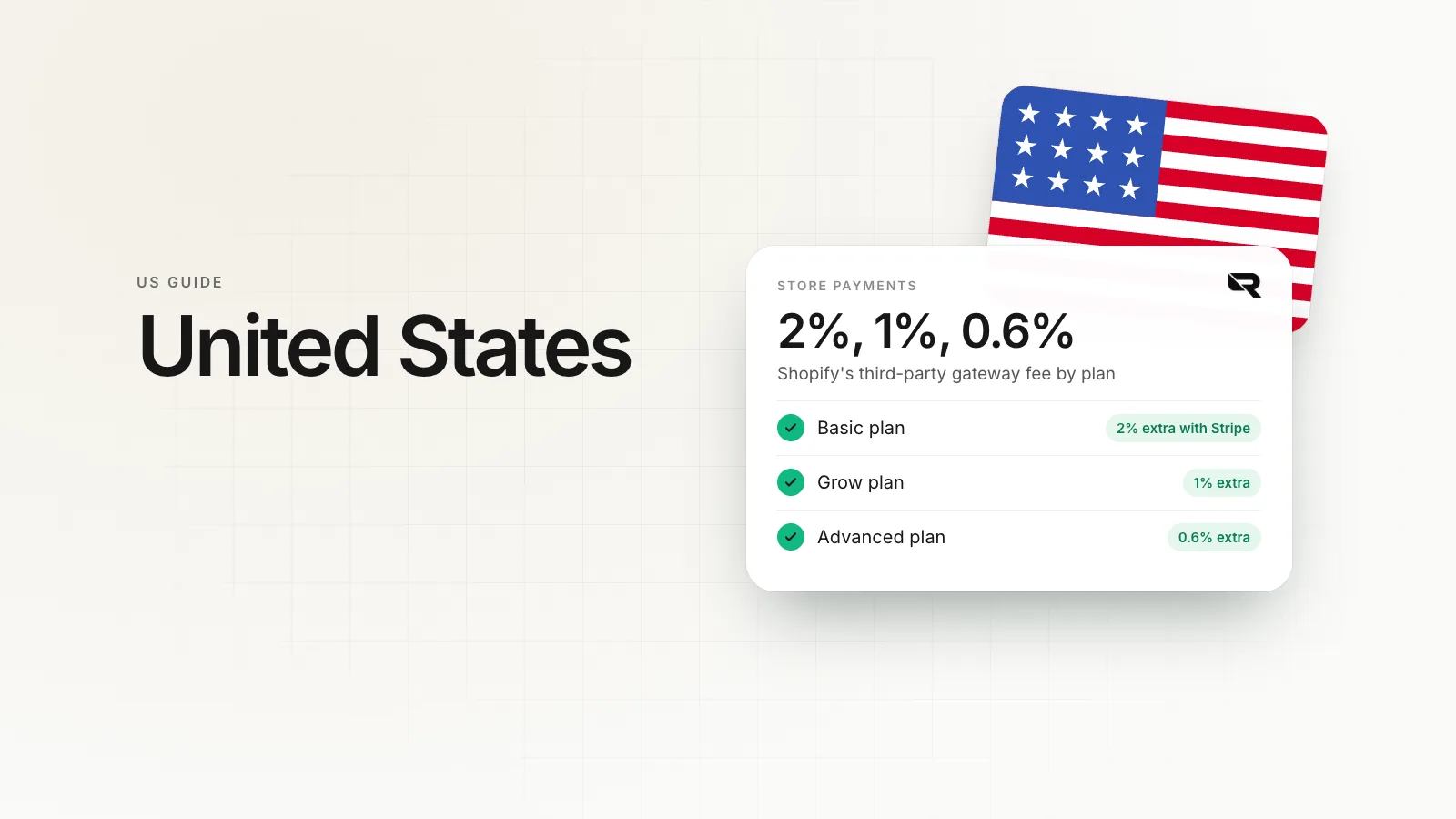
On Shopify, using Shopify Payments avoids the 0.6% to 2% extra fee Shopify charges for third-party gateways like Stripe. Off Shopify, Stripe is the default. The payout account is a separate choice.
 Compliance
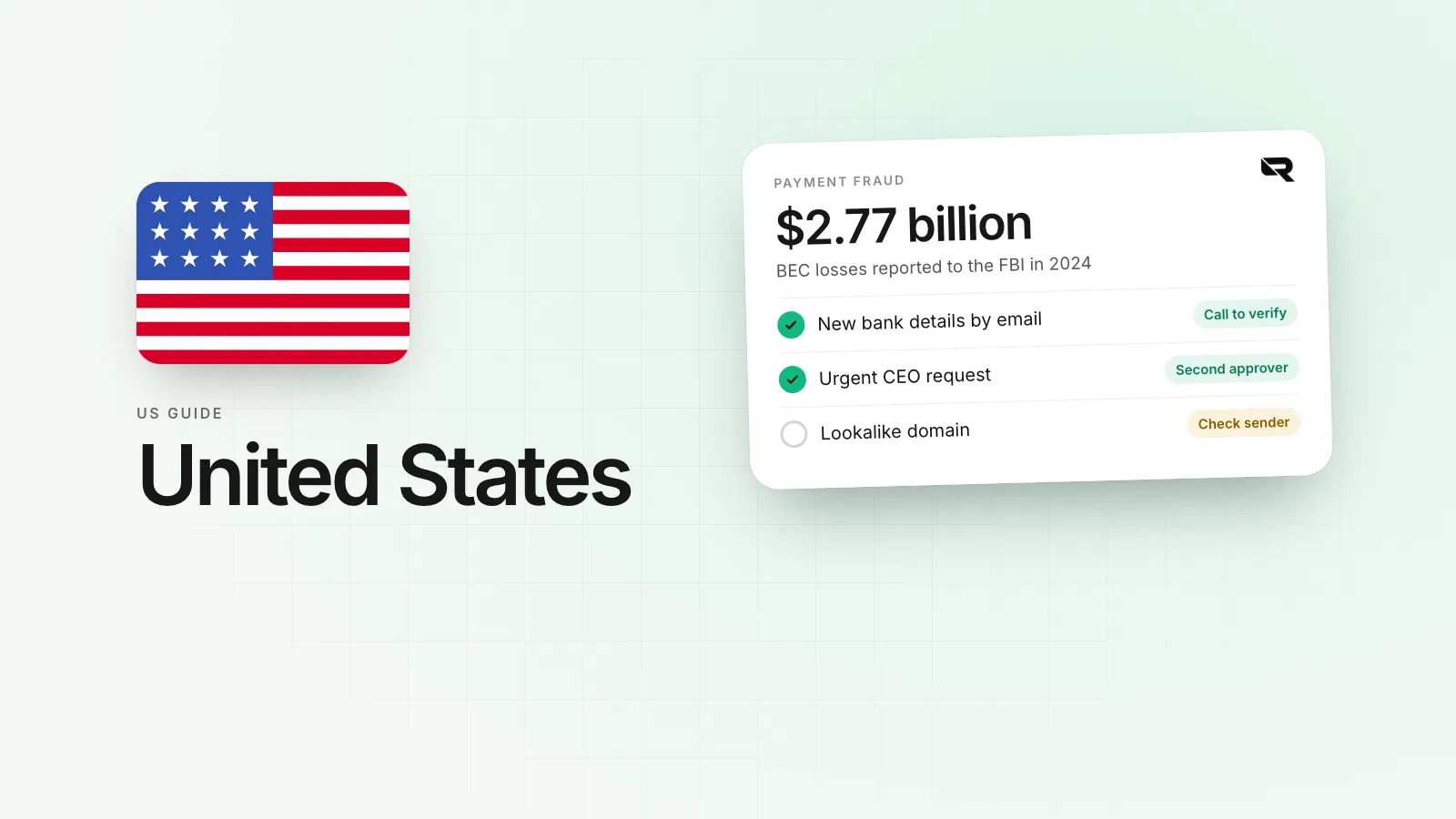
Business email compromise cost US victims about $2.77 billion in 2024, according to the FBI. Most cases start with a convincing email asking for a payment detail change. Here is how to stop it, and what to do in the first hours if a payment has already gone.
 Operations
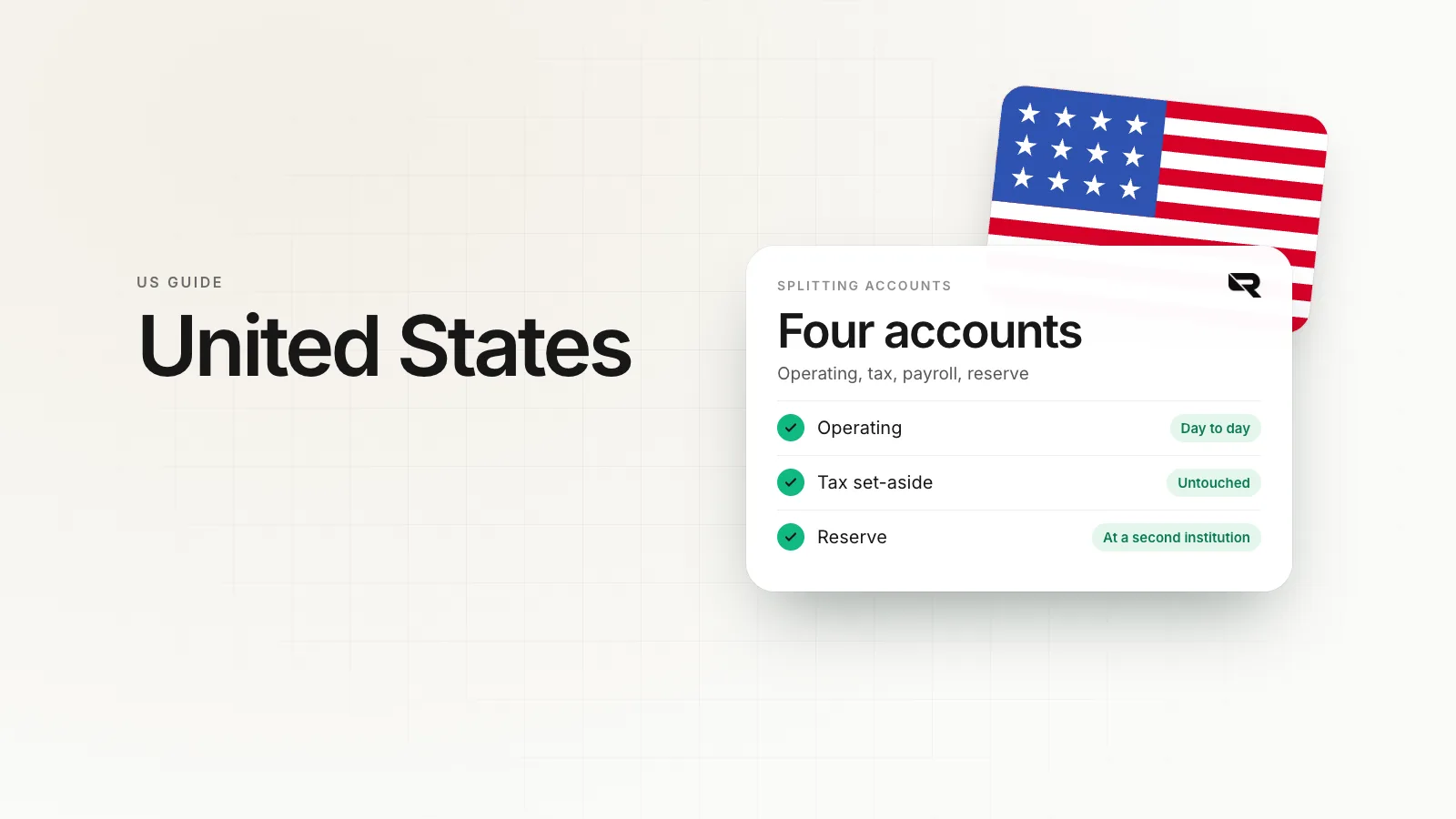
Separate accounts for tax, payroll, operations and reserves keep committed money out of reach. If you run several companies, each needs its own account, and every transfer between them needs a document behind it.
 Operations
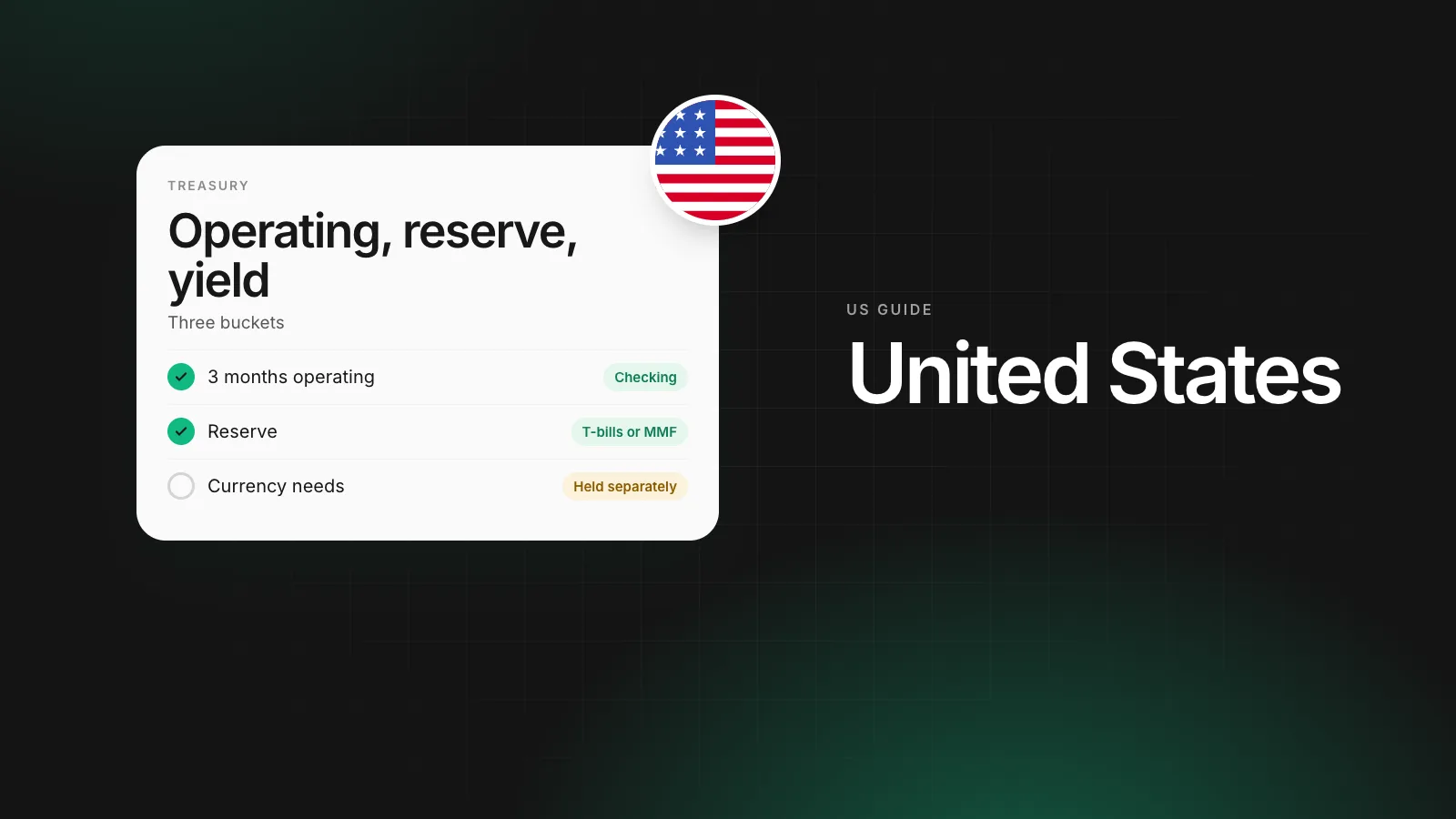
After a raise, a startup holds more cash than it needs this quarter. A simple treasury setup splits operating cash from reserves, puts reserves in short-term government assets and spreads risk.
 Accounts
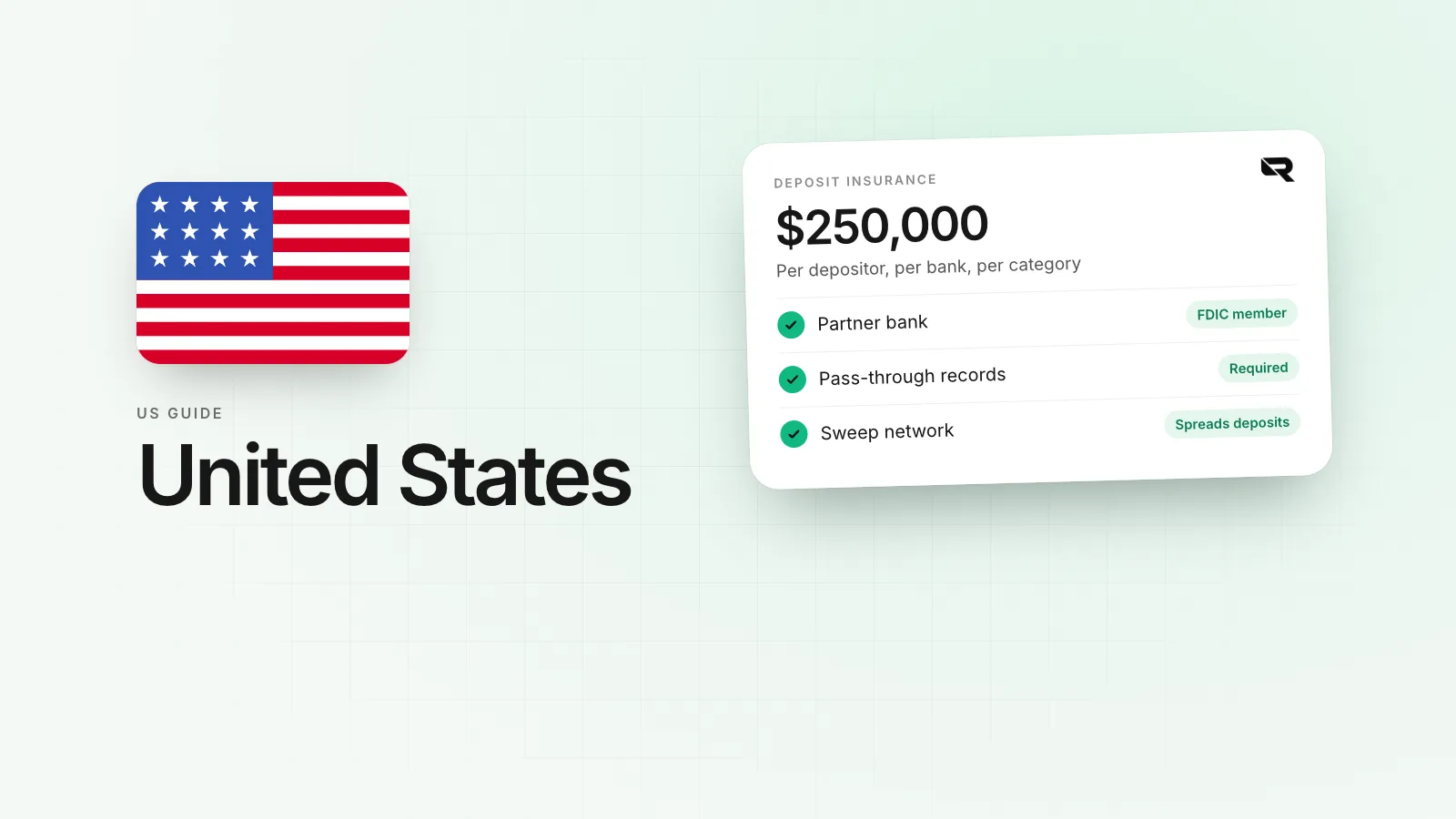
Fintech business accounts are not banks. Deposits sit at partner banks, and FDIC insurance passes through only if records show whose money is whose. That is the question to ask.
 Payments
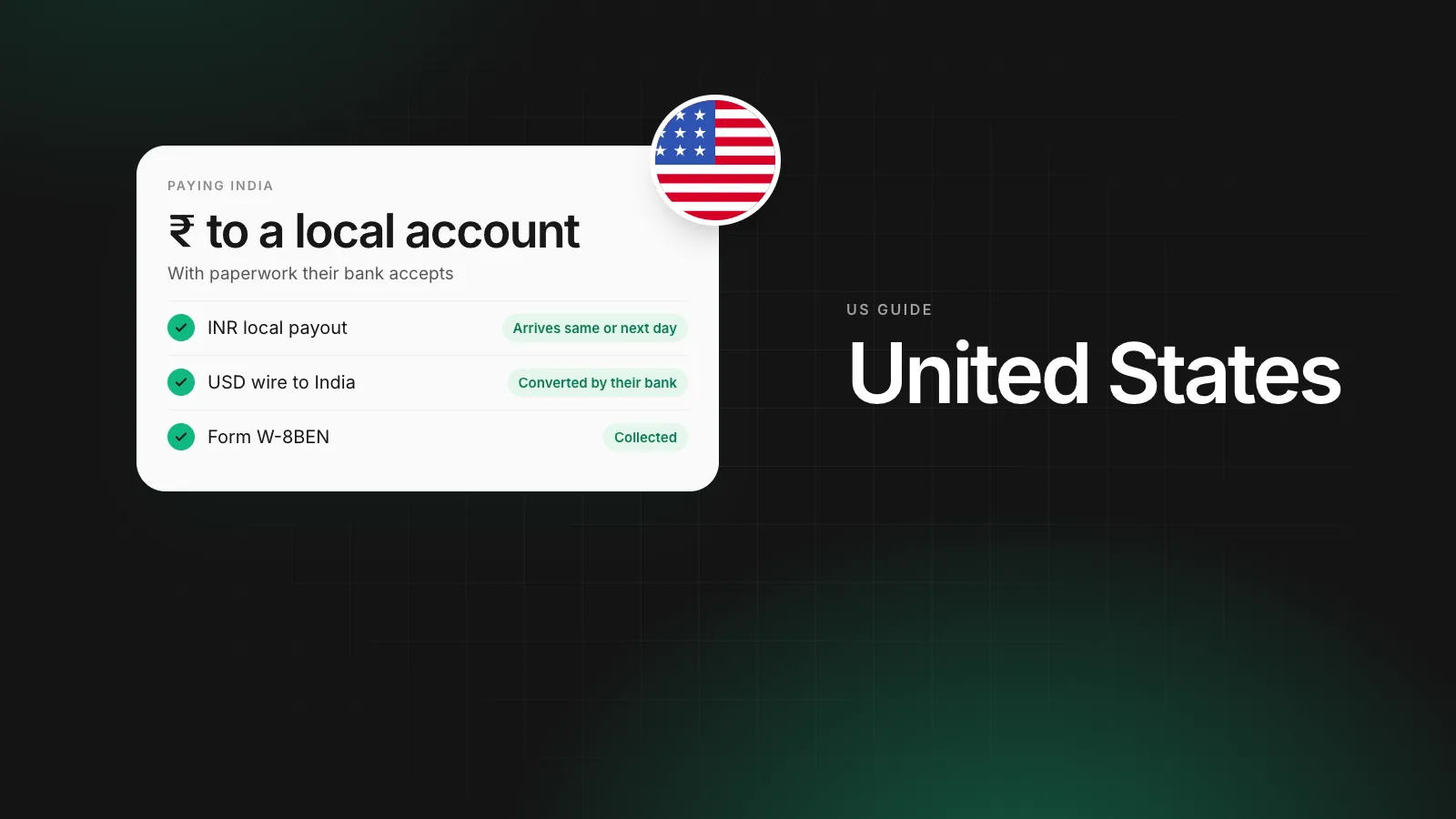
Indian contractors usually want rupees in their bank account with the right paperwork for their bank and tax filings. Paying in INR on a local rail is often cheaper than a USD wire.
 Payments
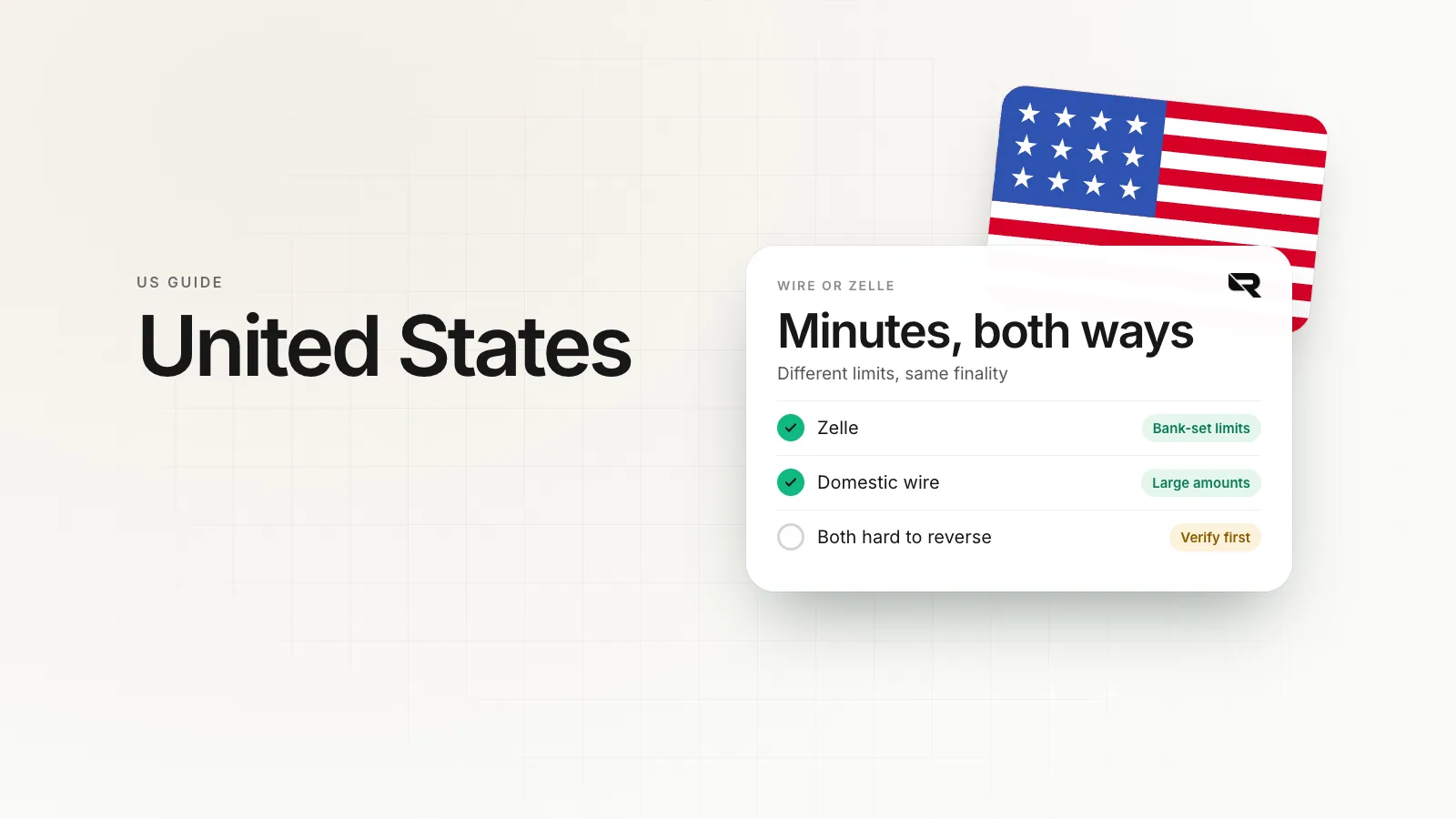
Zelle moves small amounts between US bank accounts in minutes, with bank-set limits. Wires move large amounts with full details. Both are hard to reverse, so both need care, and neither pays anyone outside the US.
 Payments
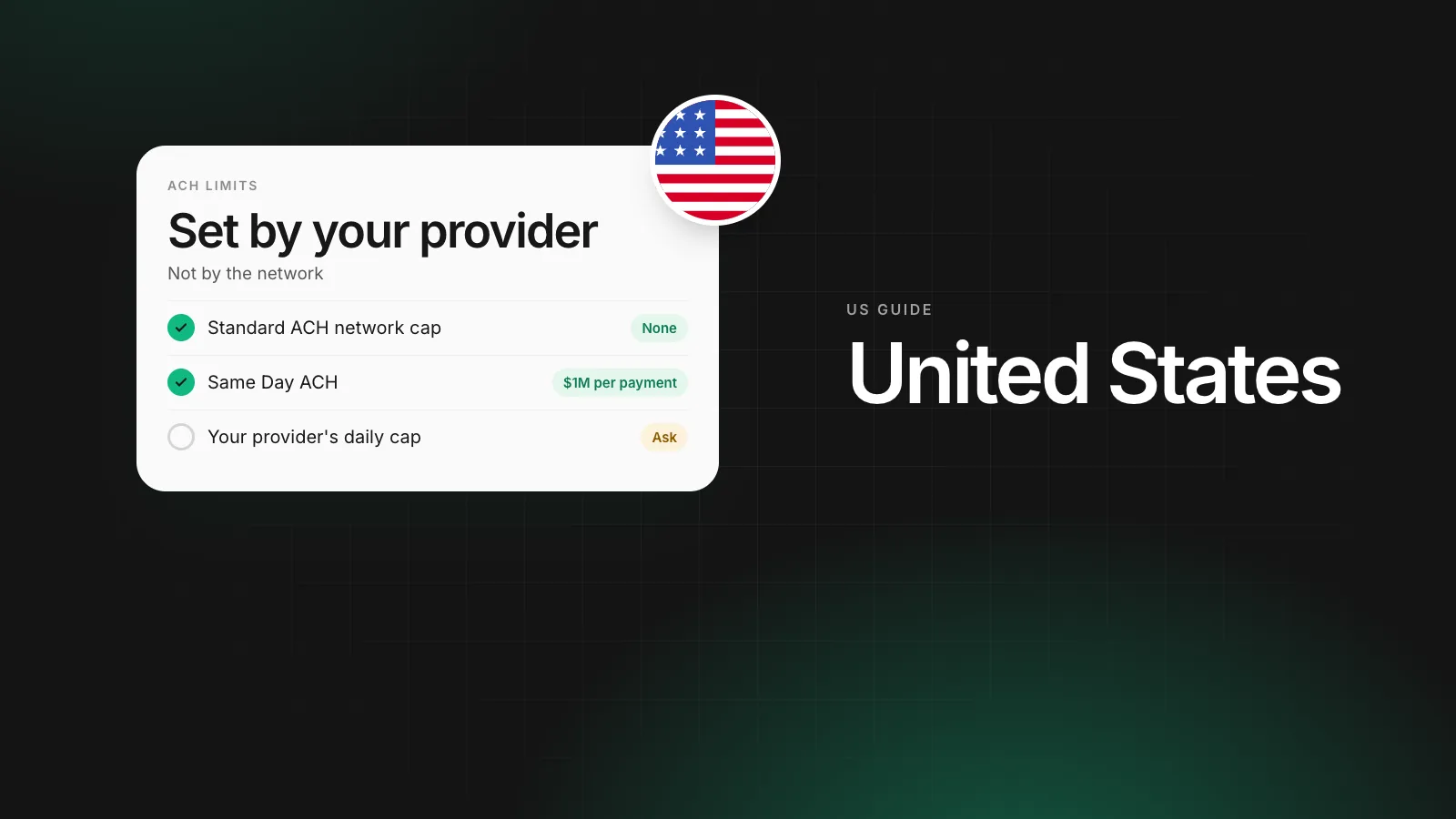
Nacha does not cap standard ACH payments. Your provider does, based on your account's history and risk. Same Day ACH has a $1 million per-payment limit and three daily windows, and debit blocks control who can pull money out.
 Accounts
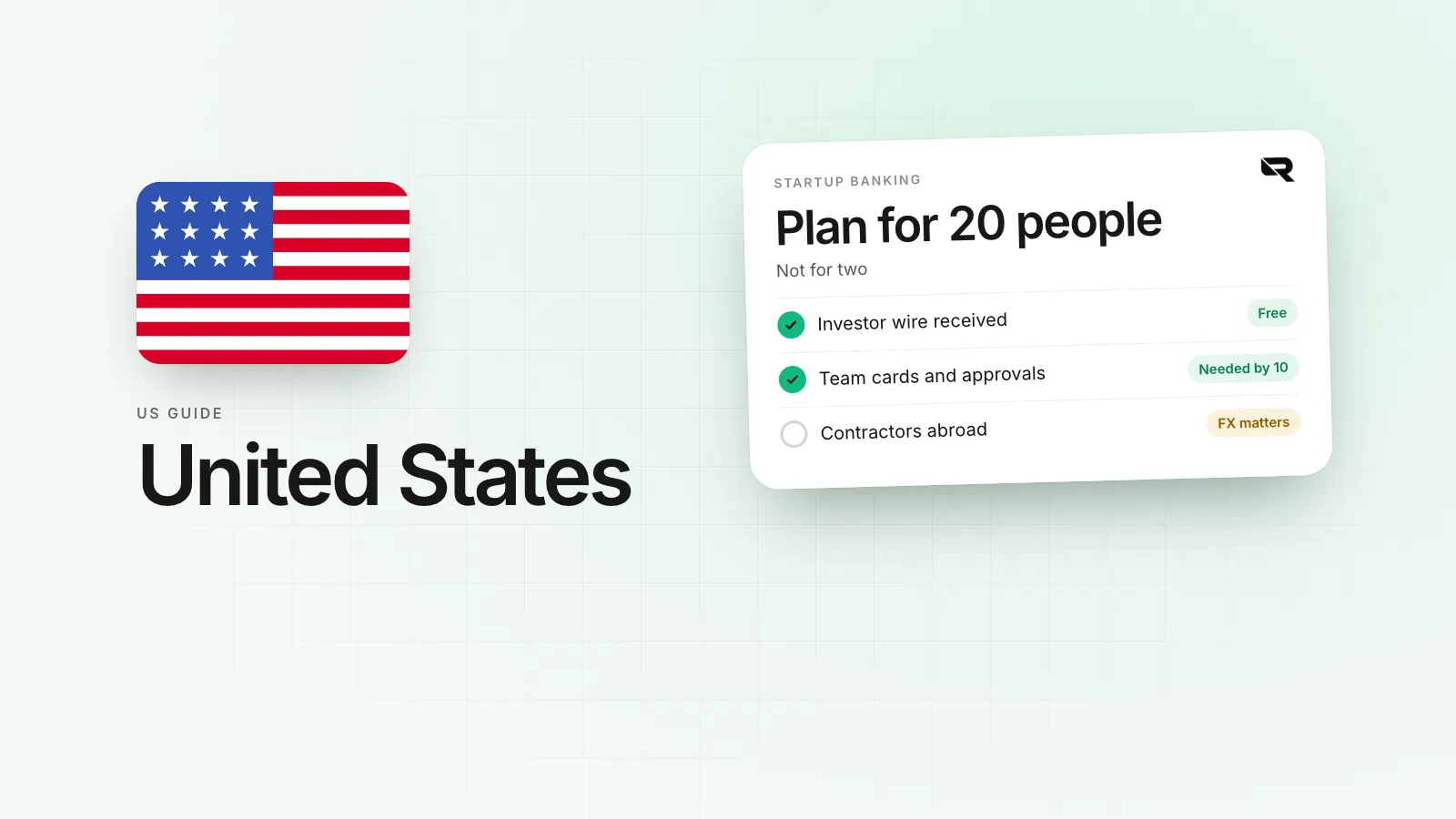
Startups choose an online account for speed and free wires, then outgrow it on team controls or international payments. Compare what you will need at 20 people, not at two, and what your business model adds: processor payouts for SaaS, freelancers and ad cards for agencies.
 Accounts
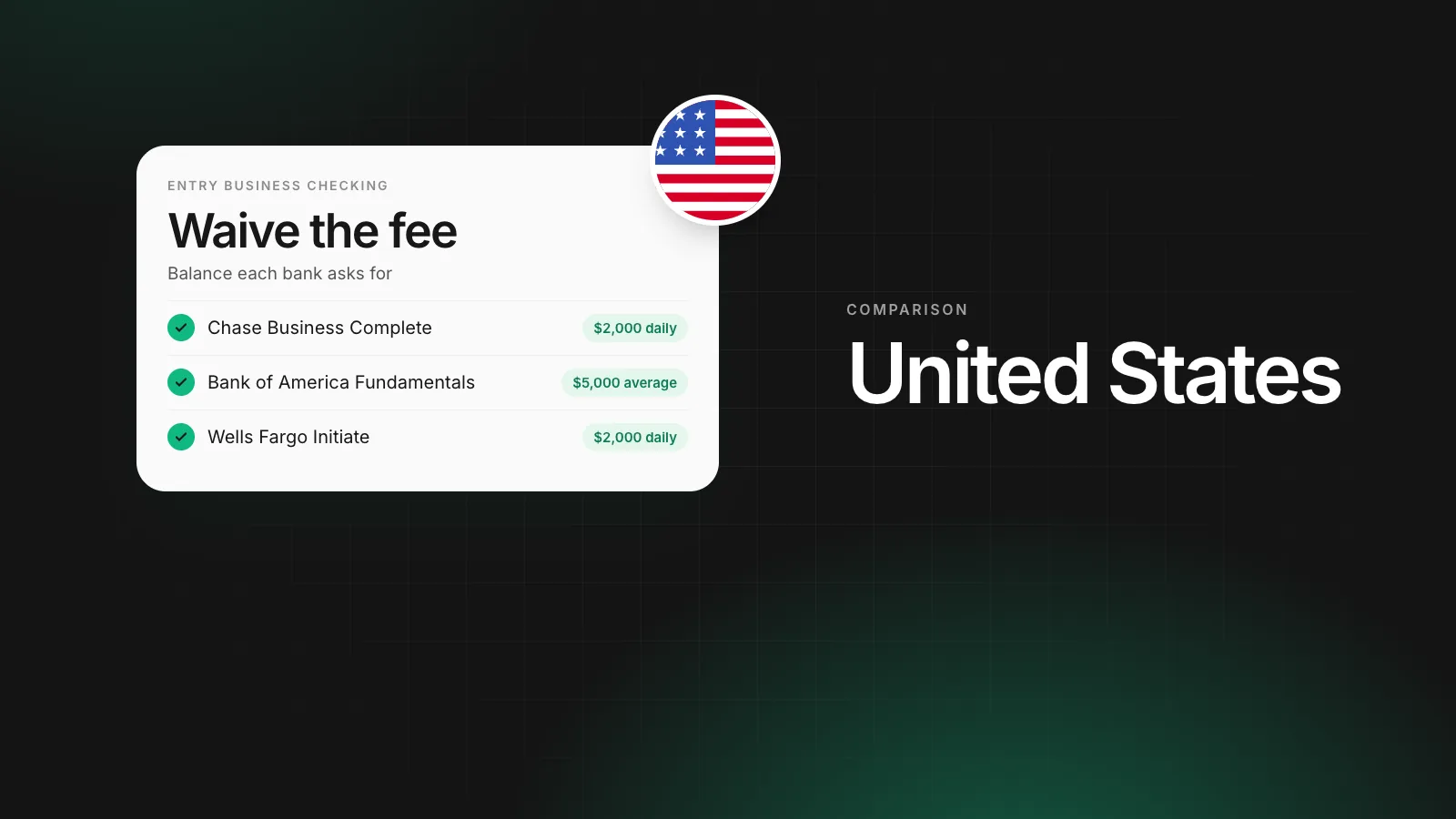
All three big banks charge $15 to $16 a month for their entry business checking account and waive it if you keep enough money in the bank. The balance each one asks for is where they differ.
 Accounts
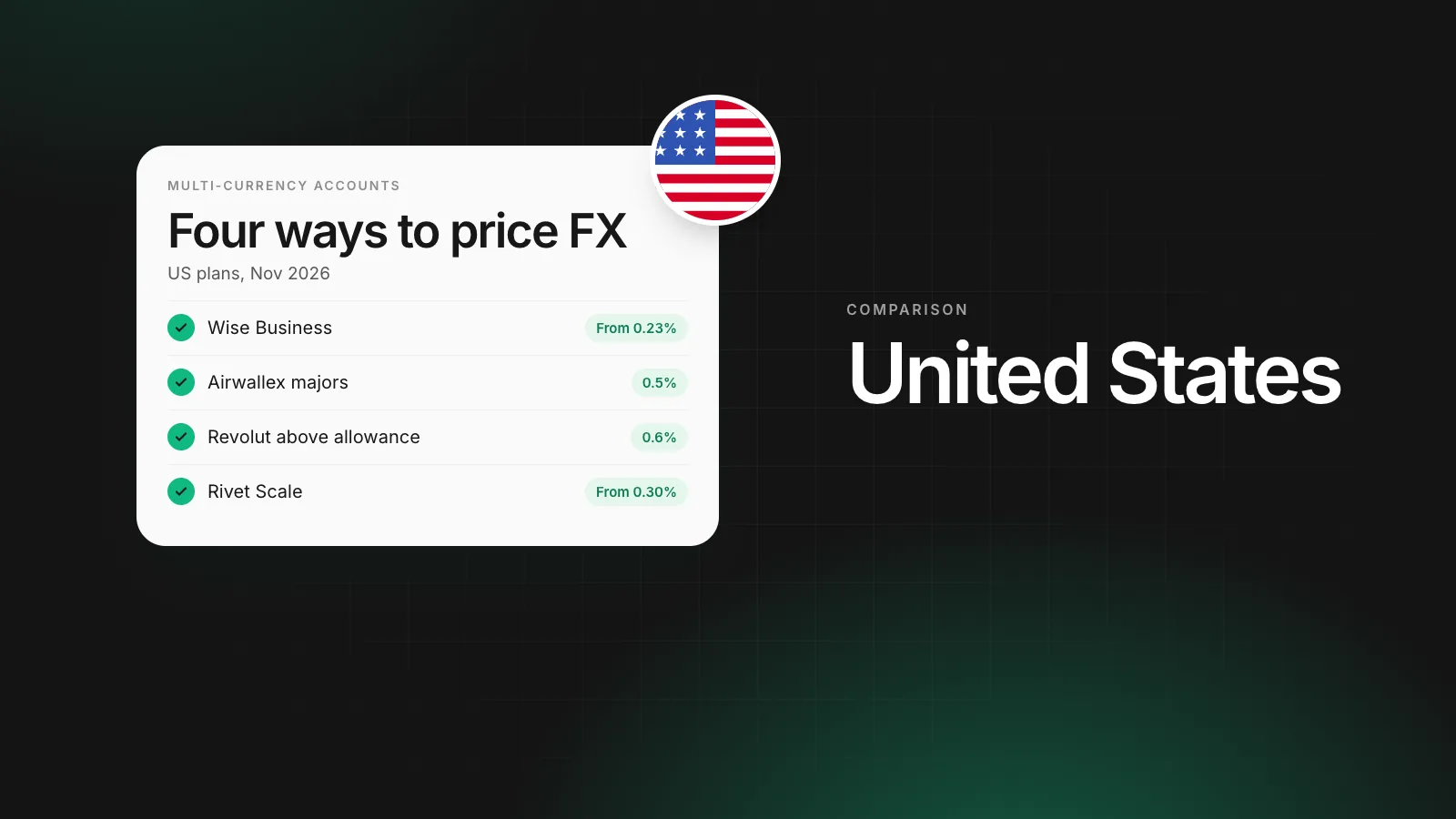
A US company that sells abroad or pays people abroad needs balances in more than dollars. Four providers lead the search results. Here is how their pricing models differ.
 Payments
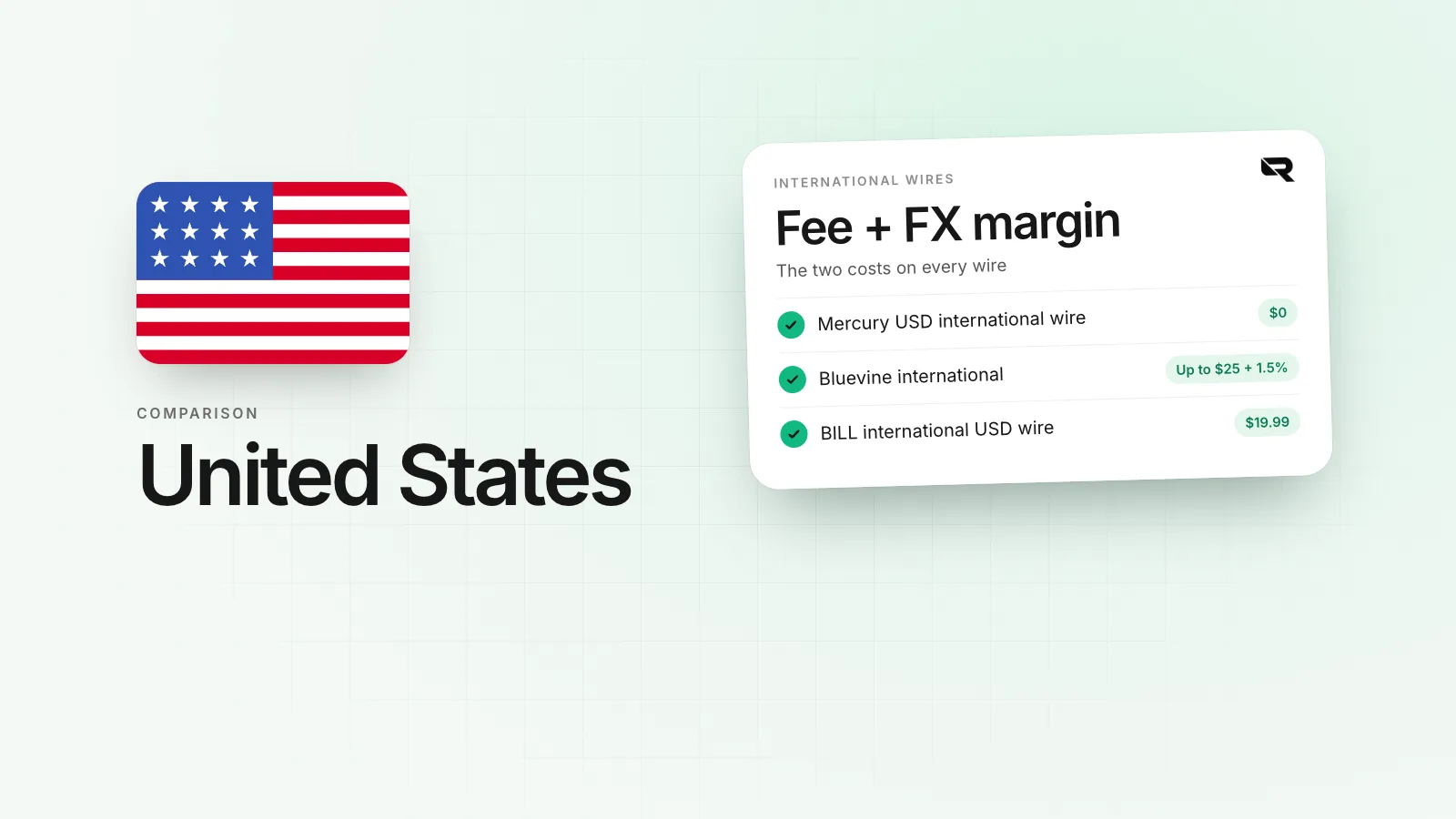
The wire fee is the small number; the exchange rate on a converted wire is usually the big one. What Chase, Bank of America, Wells Fargo, Citi and online business accounts charge, the four costs inside every international wire, and when a local payout beats a wire.
 Accounts
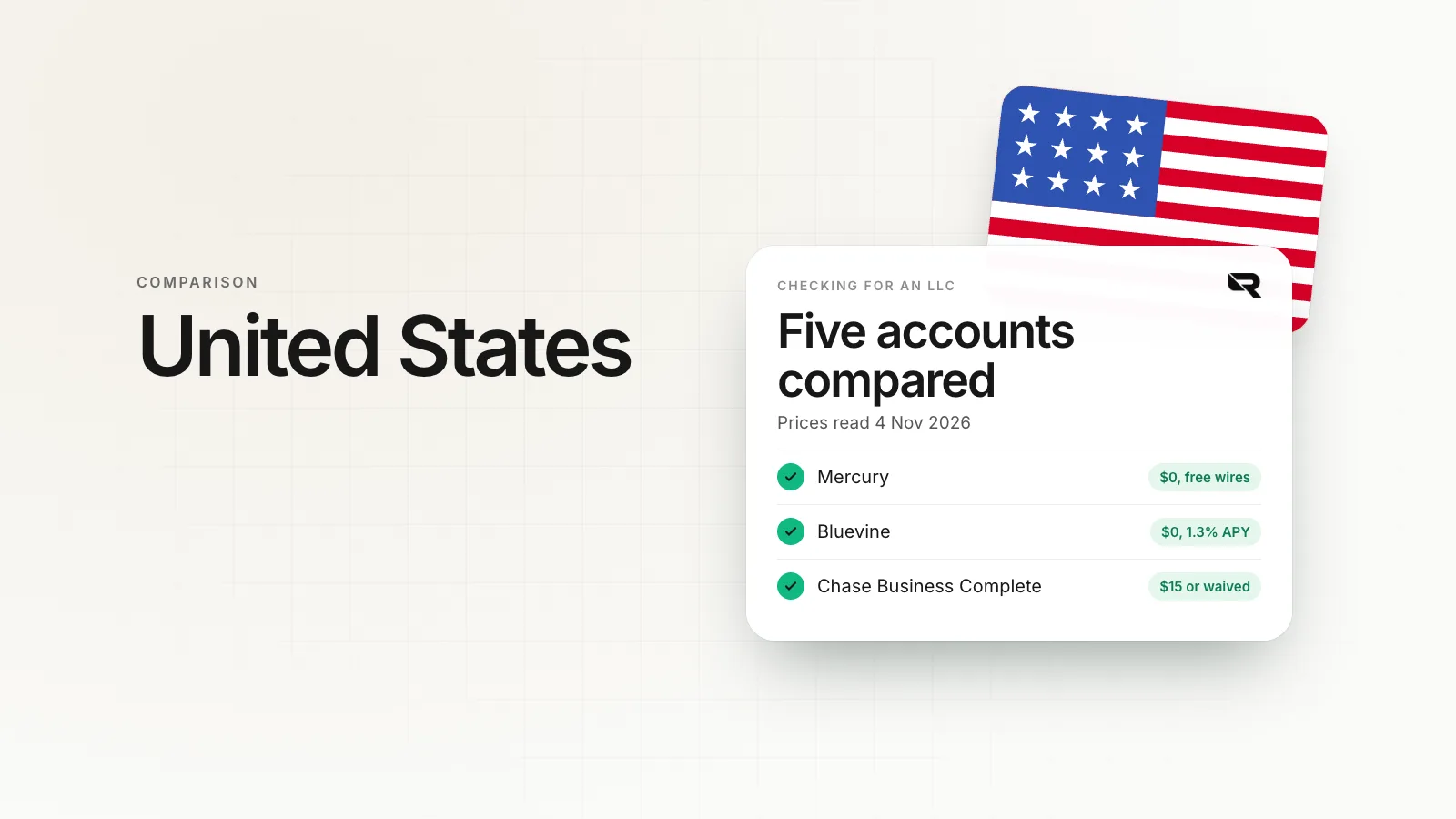
The best checking account for an LLC depends on three things: whether you handle cash, how many wires you send, and whether any money crosses a border. For owners outside the US, the first question is which providers accept them at all.
 Payments
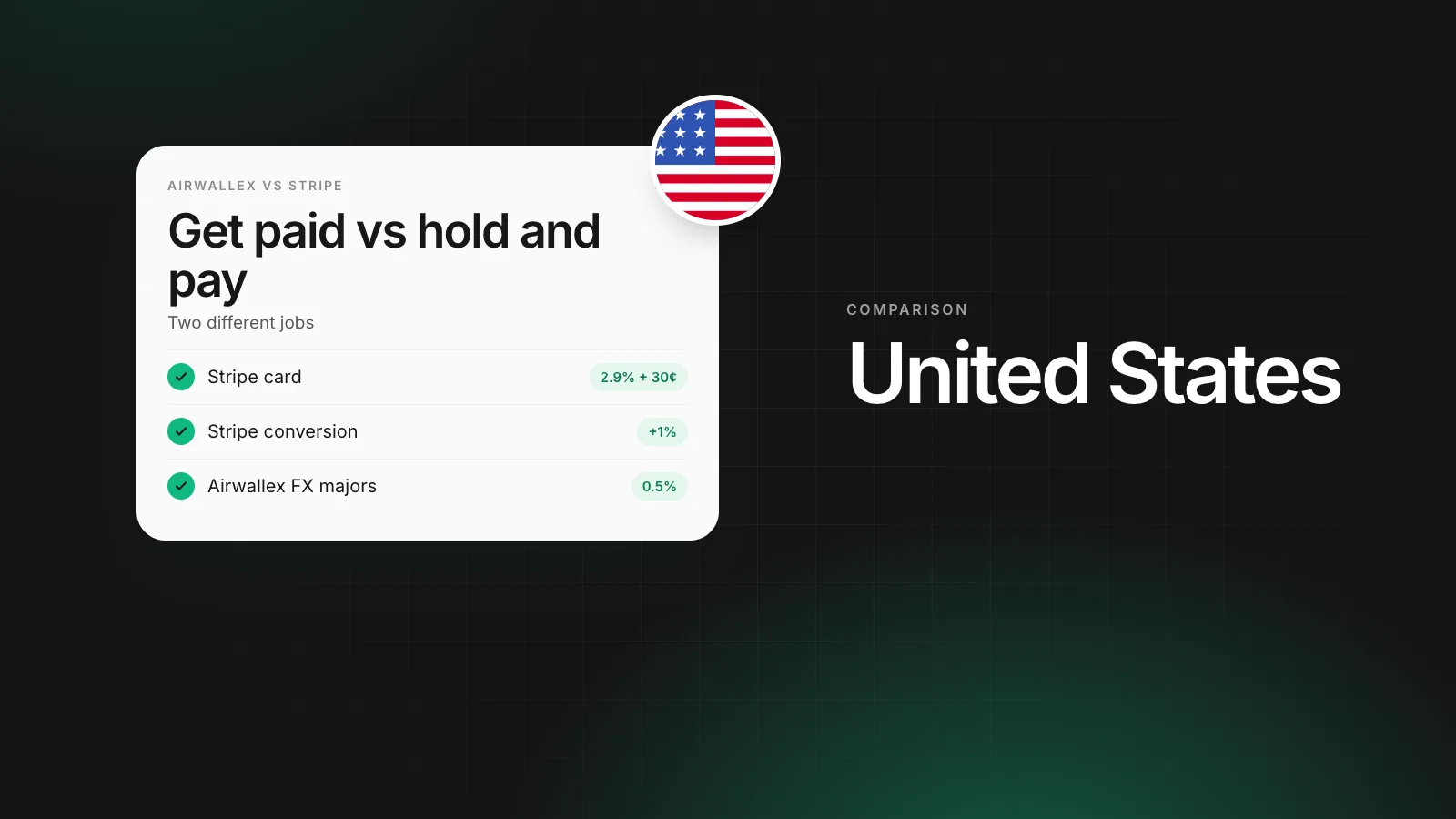
Stripe takes card payments online. Airwallex holds and moves money in many currencies, with card acceptance added. Many companies use Stripe to get paid and a global account to hold and pay out.
 Cards and spend
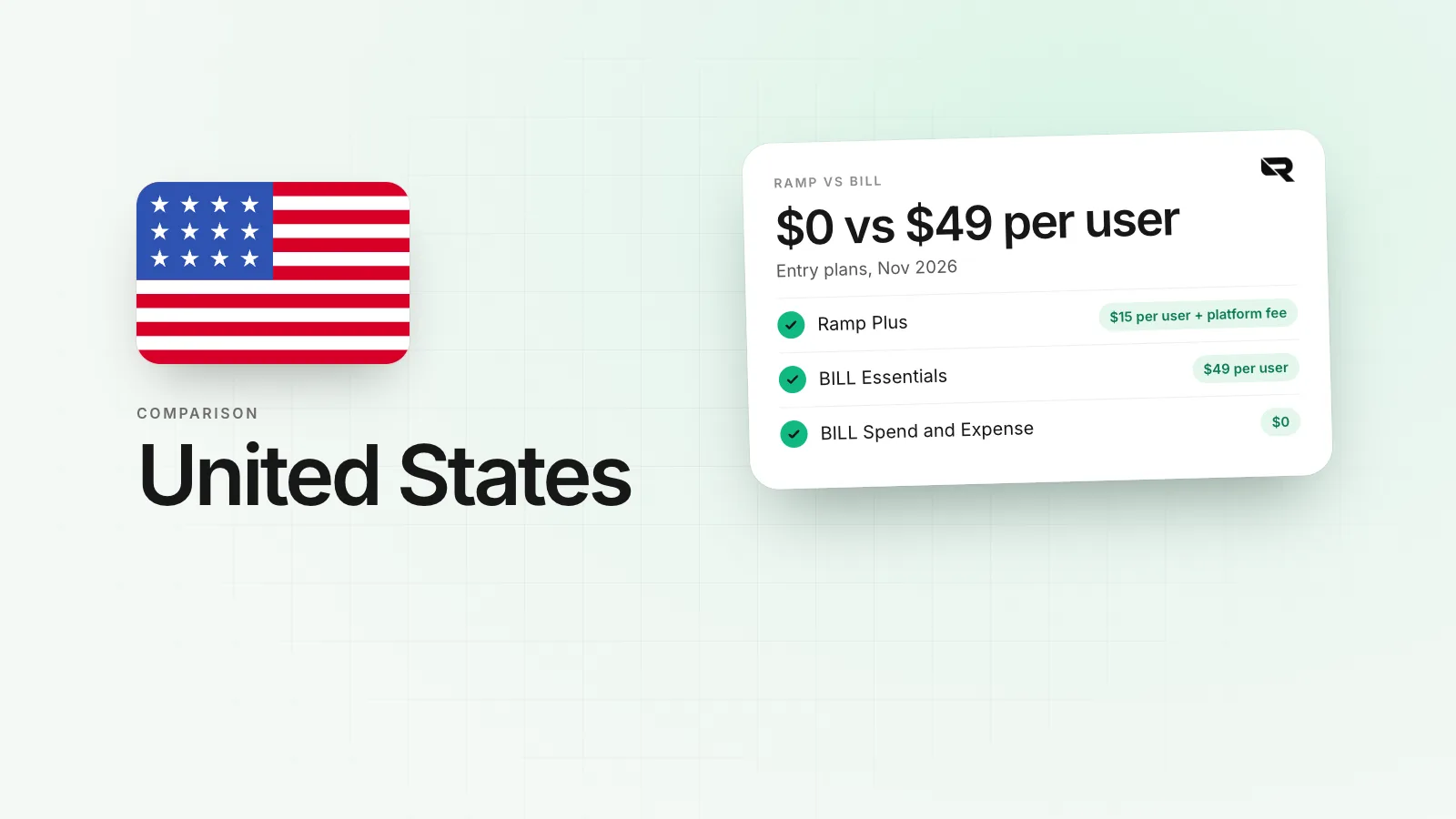
Ramp bundles cards, expenses and bill pay with a free plan. BILL sells AP and AR per user and adds cards through Divvy. The choice often comes down to whether you want one tool or the best AP tool.
 Payments
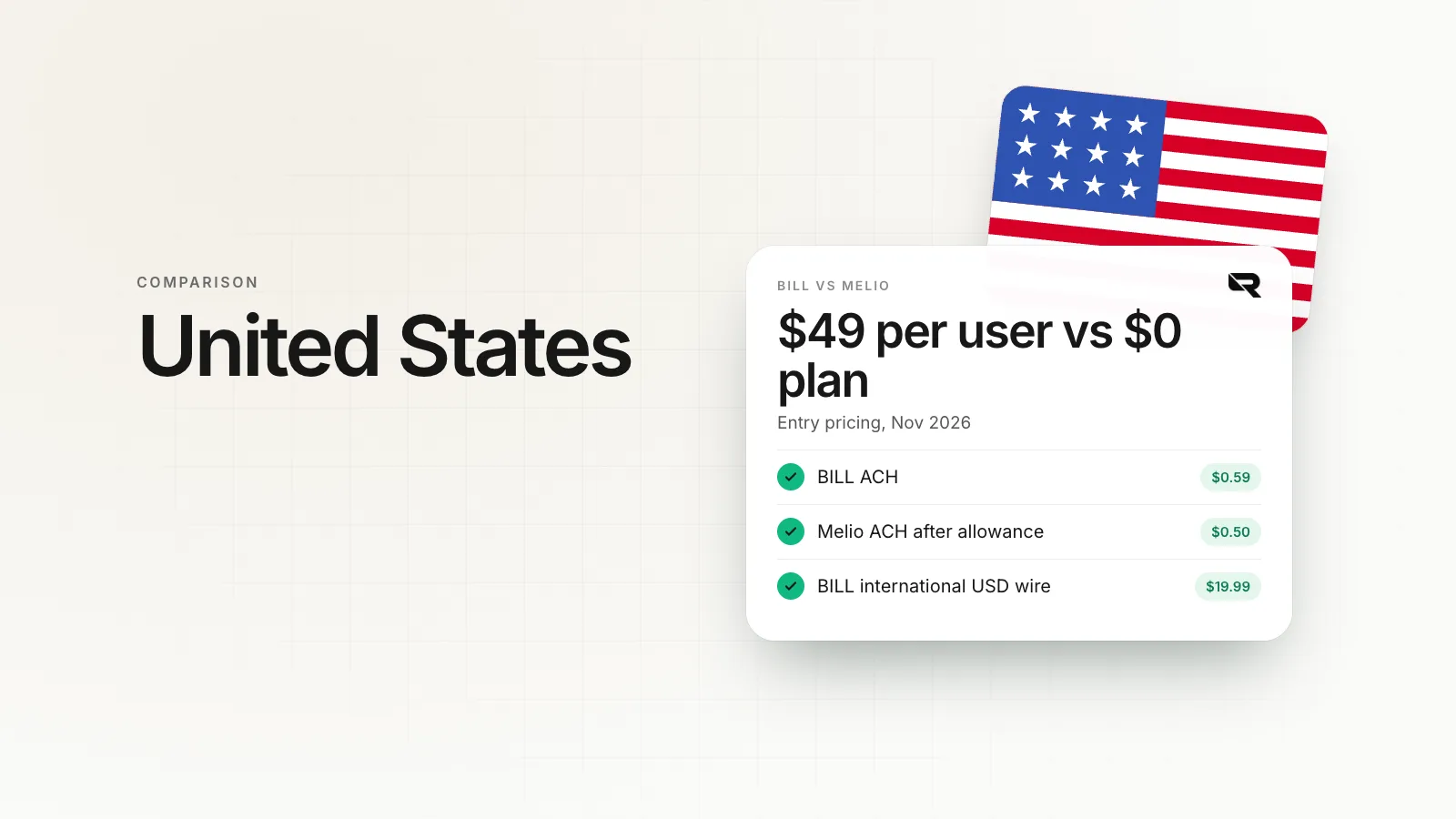
BILL charges per user and suits finance teams with approval chains. Melio charges per plan with free ACH allowances and suits small businesses. Both charge noticeably for paying vendors abroad.
 Payments
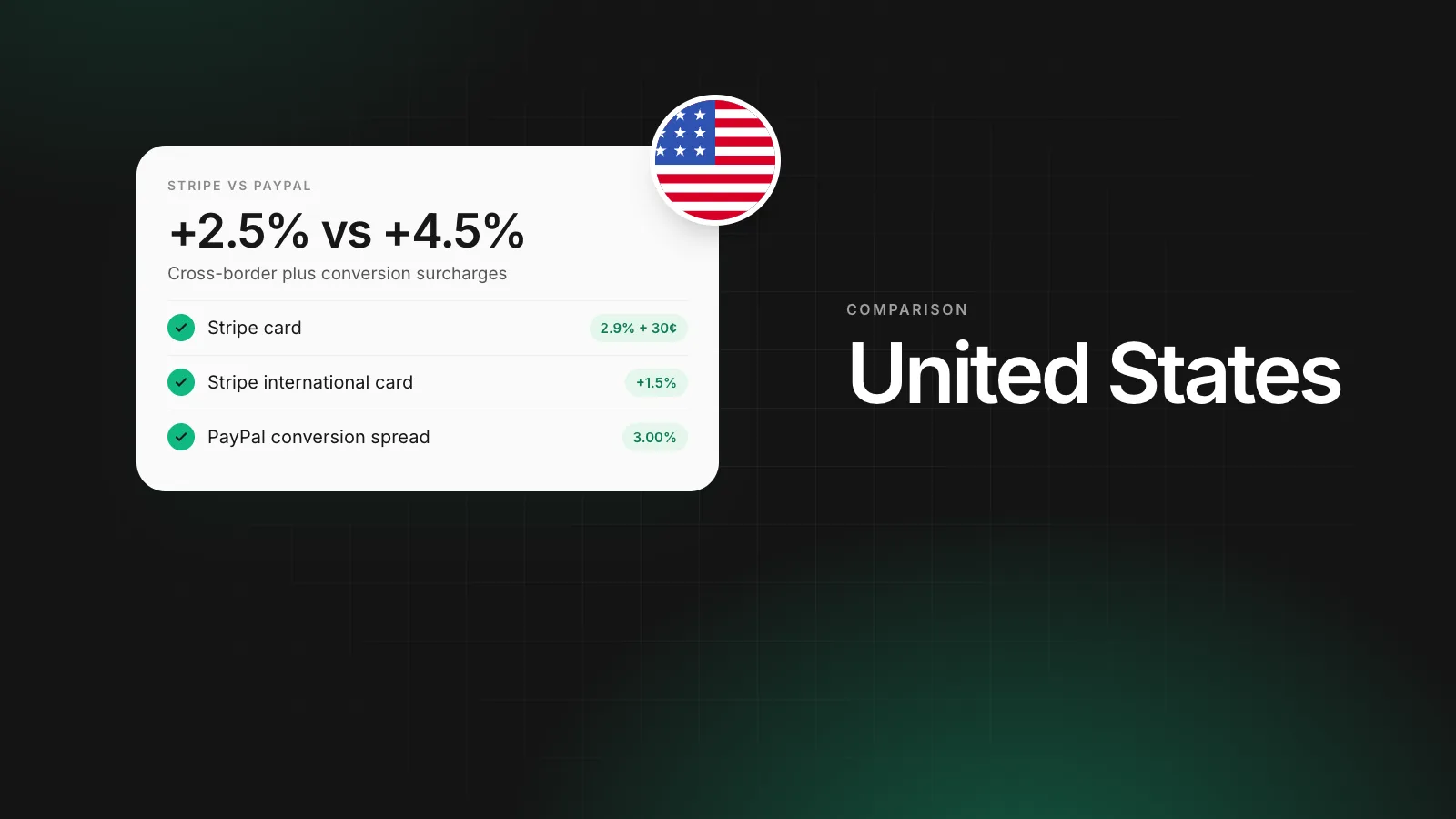
Stripe and PayPal both add a surcharge when the buyer is abroad and another when currency converts. Stripe's are smaller: 1.5% and 1% on top of 2.9% plus 30 cents. The bigger cost is often converting payouts you did not need to convert.
 Payments
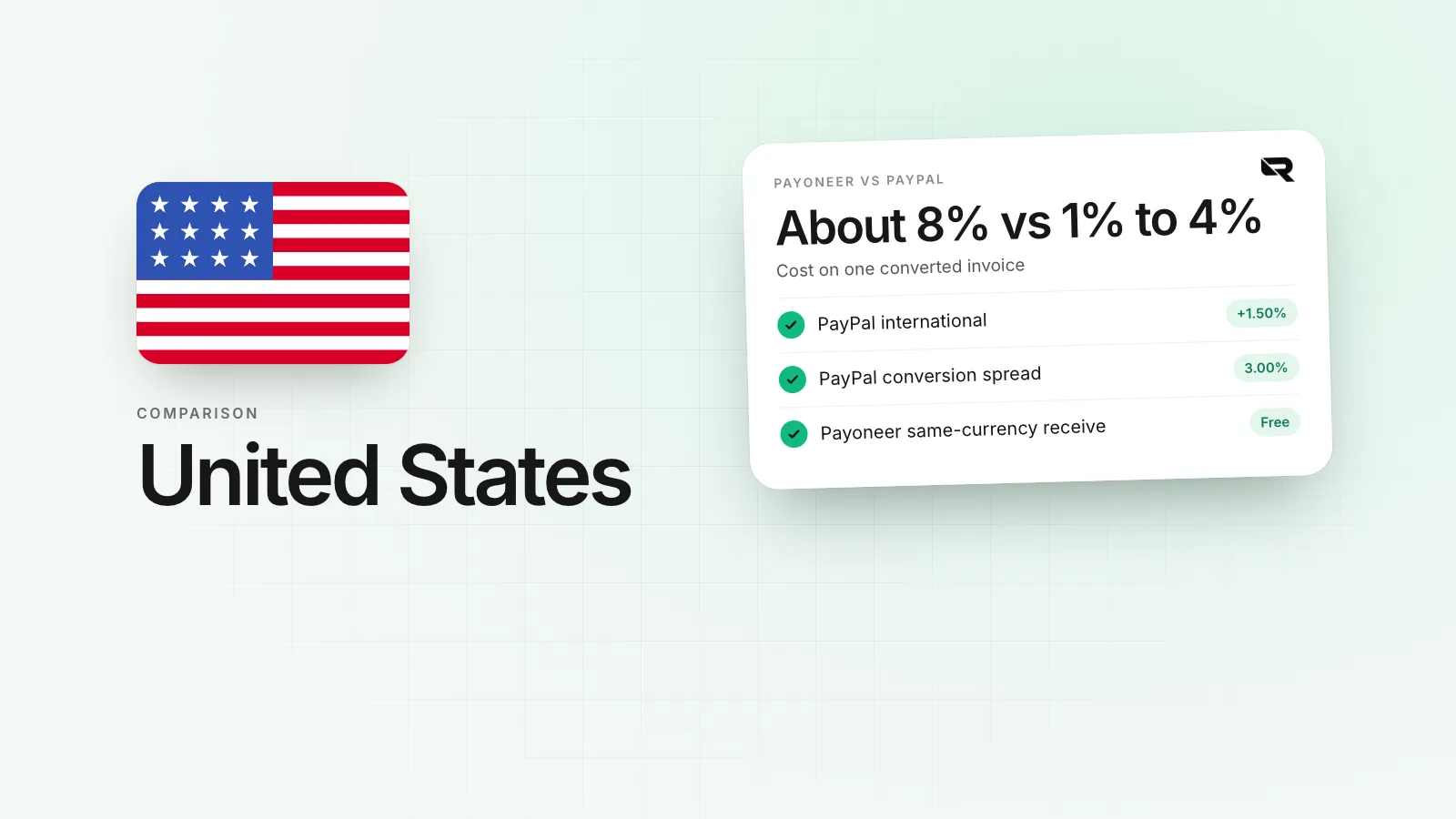
PayPal is easy for clients and expensive for you once currency is involved. Payoneer is cheaper to receive into but charges to withdraw with conversion. A worked $5,000 invoice shows the gap.
 Payments
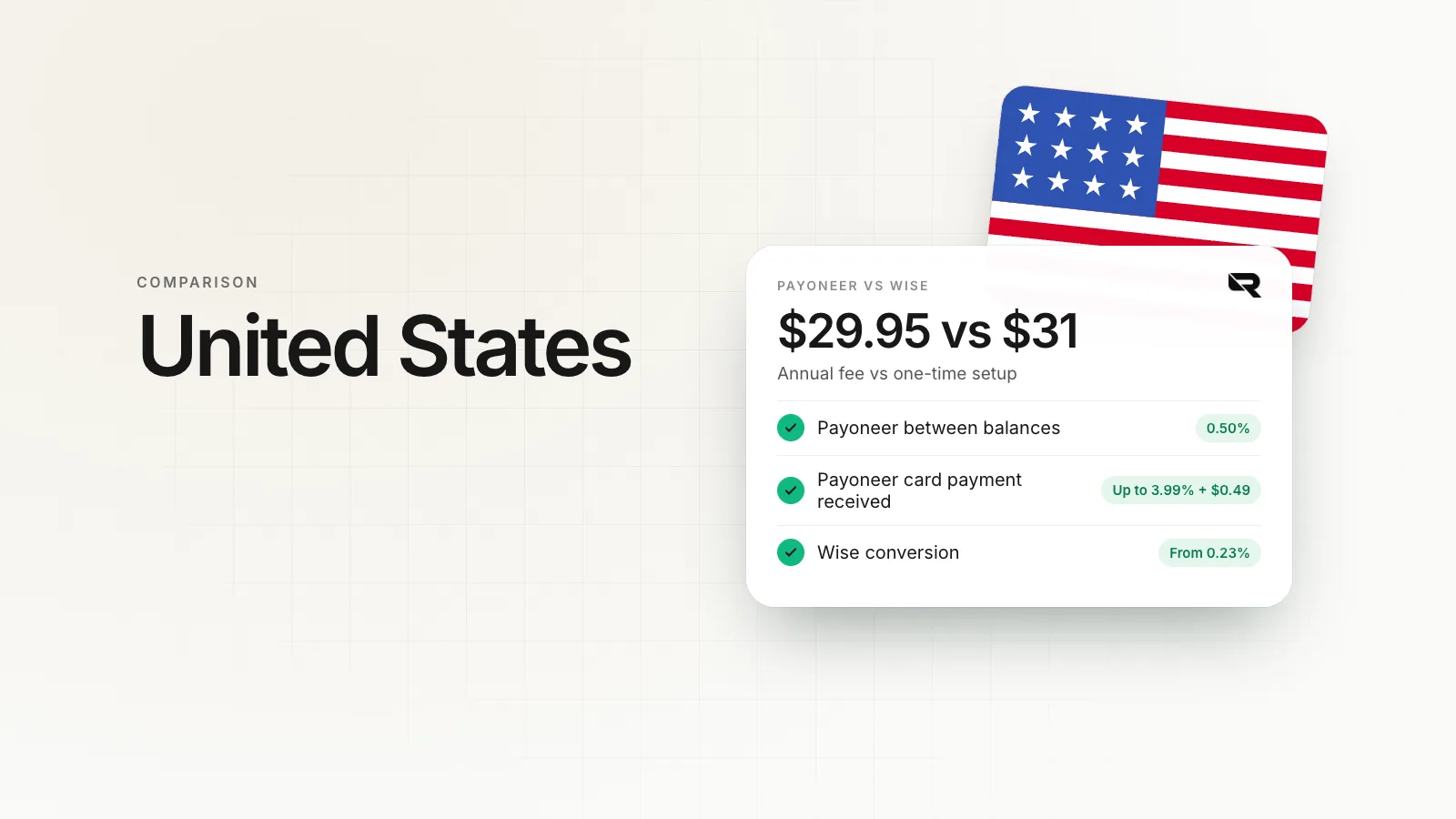
Payoneer is built around marketplace and platform payouts. Wise is built around cheap conversion. If your money arrives from Amazon or Upwork, Payoneer's network matters; if clients pay you directly, Wise is usually cheaper.
 Accounts
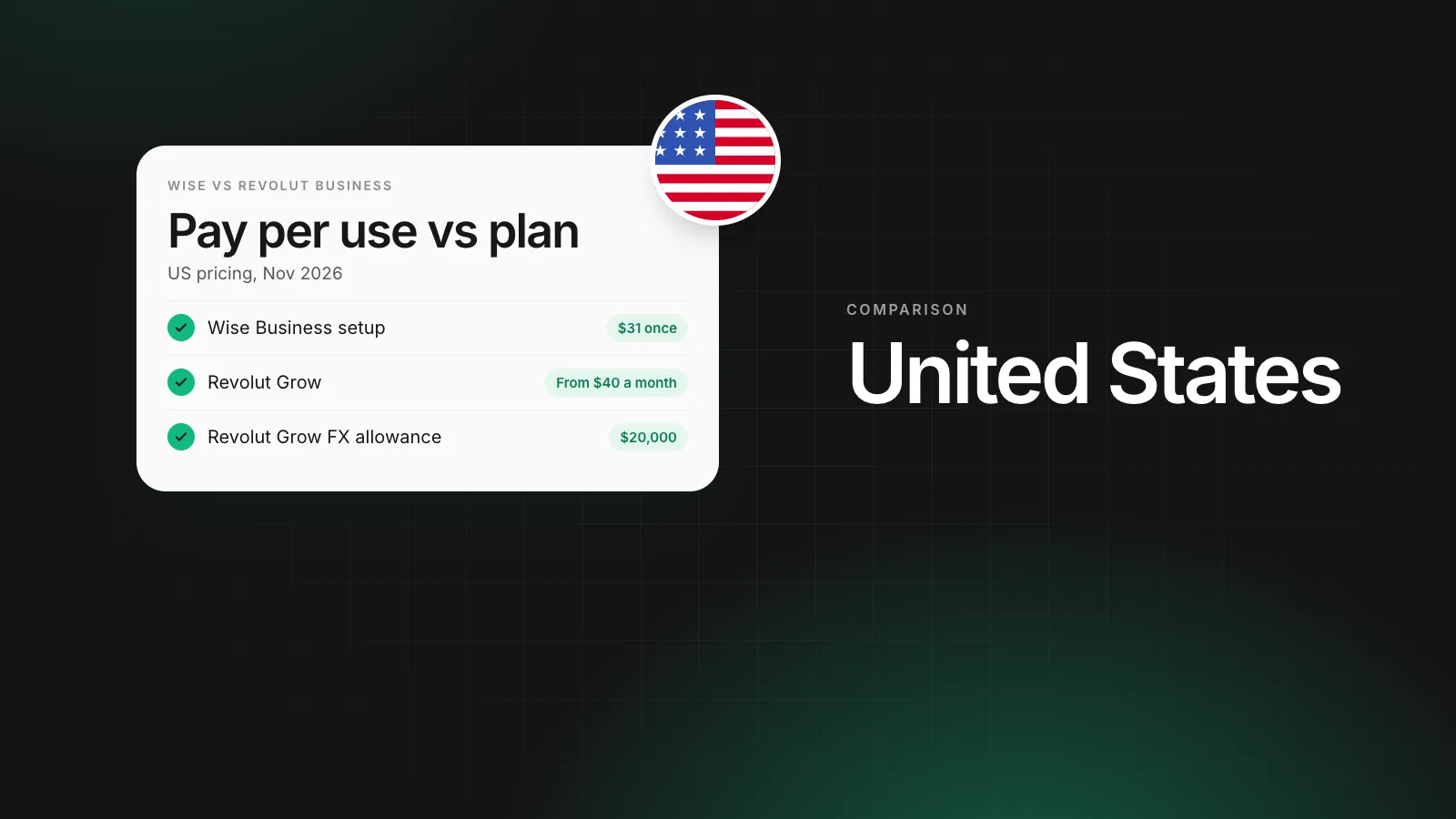
Wise charges per conversion and nothing a month. Revolut charges a plan fee and includes FX at the interbank rate up to an allowance. Your monthly conversion volume decides which costs less.
 Accounts
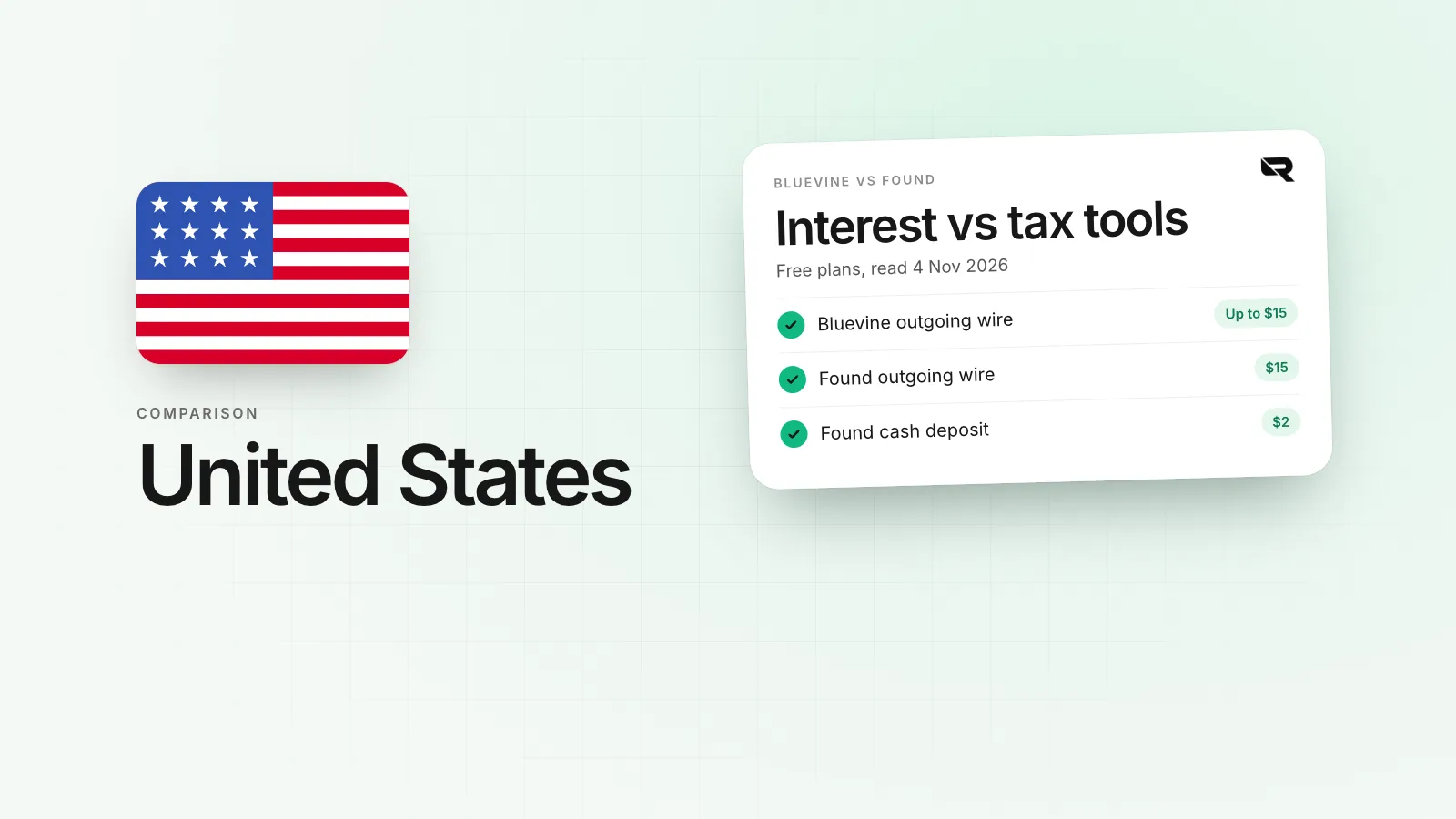
Found and Bluevine both have free plans with no minimum balance. Bluevine pays interest on checking; Found builds tax and bookkeeping into the account. Mercury is the third name people compare, and it suits a different stage of business.
 Cards and spend
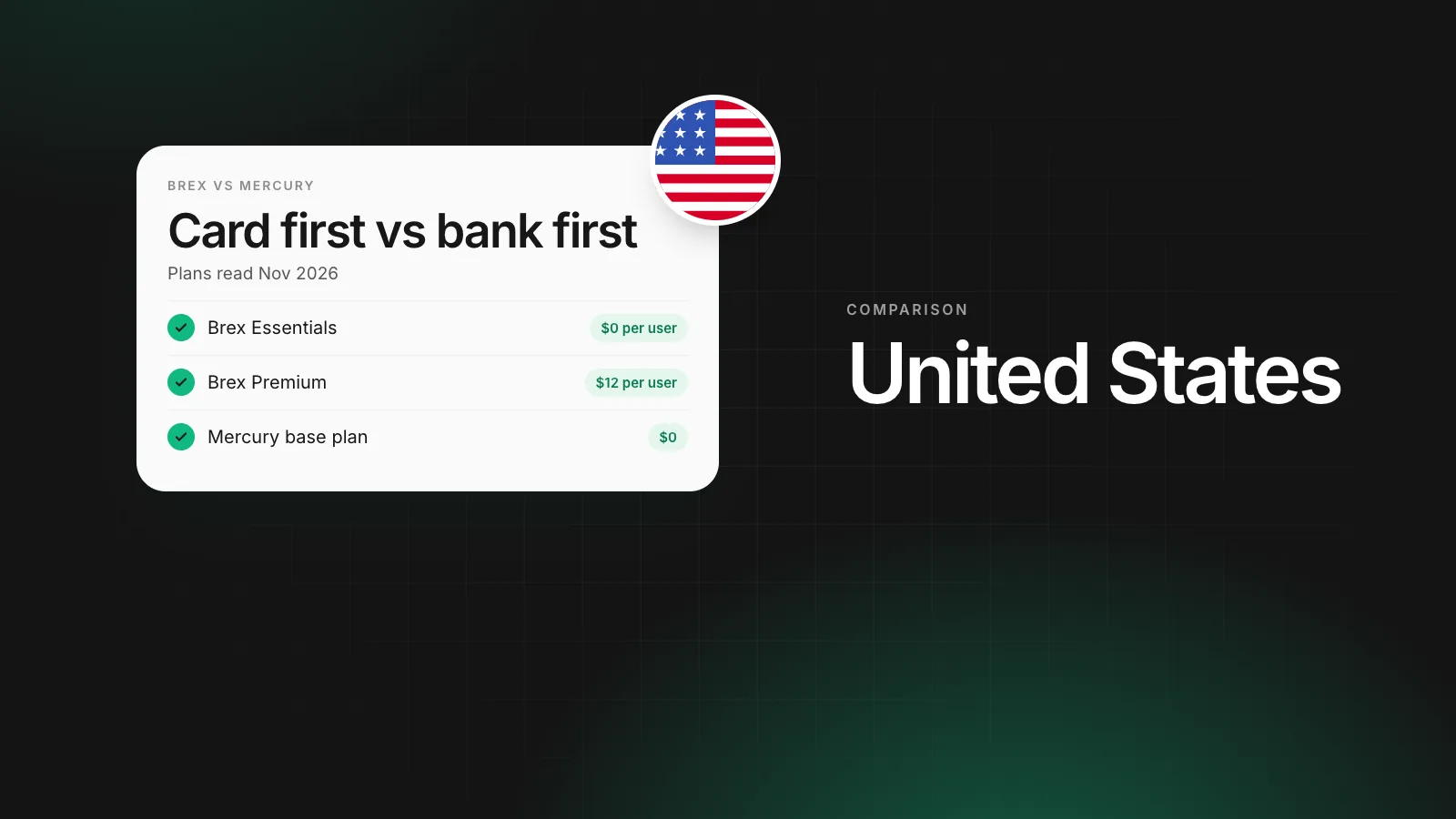
Brex started with the corporate card and added banking. Mercury started with banking and added a card. Brex vs Mercury side by side, then how Mercury compares with the other accounts founders weigh it against.
Bank accounts in USD, EUR and GBP, cards with a limit on each, and payouts on local rails. Starter is free.