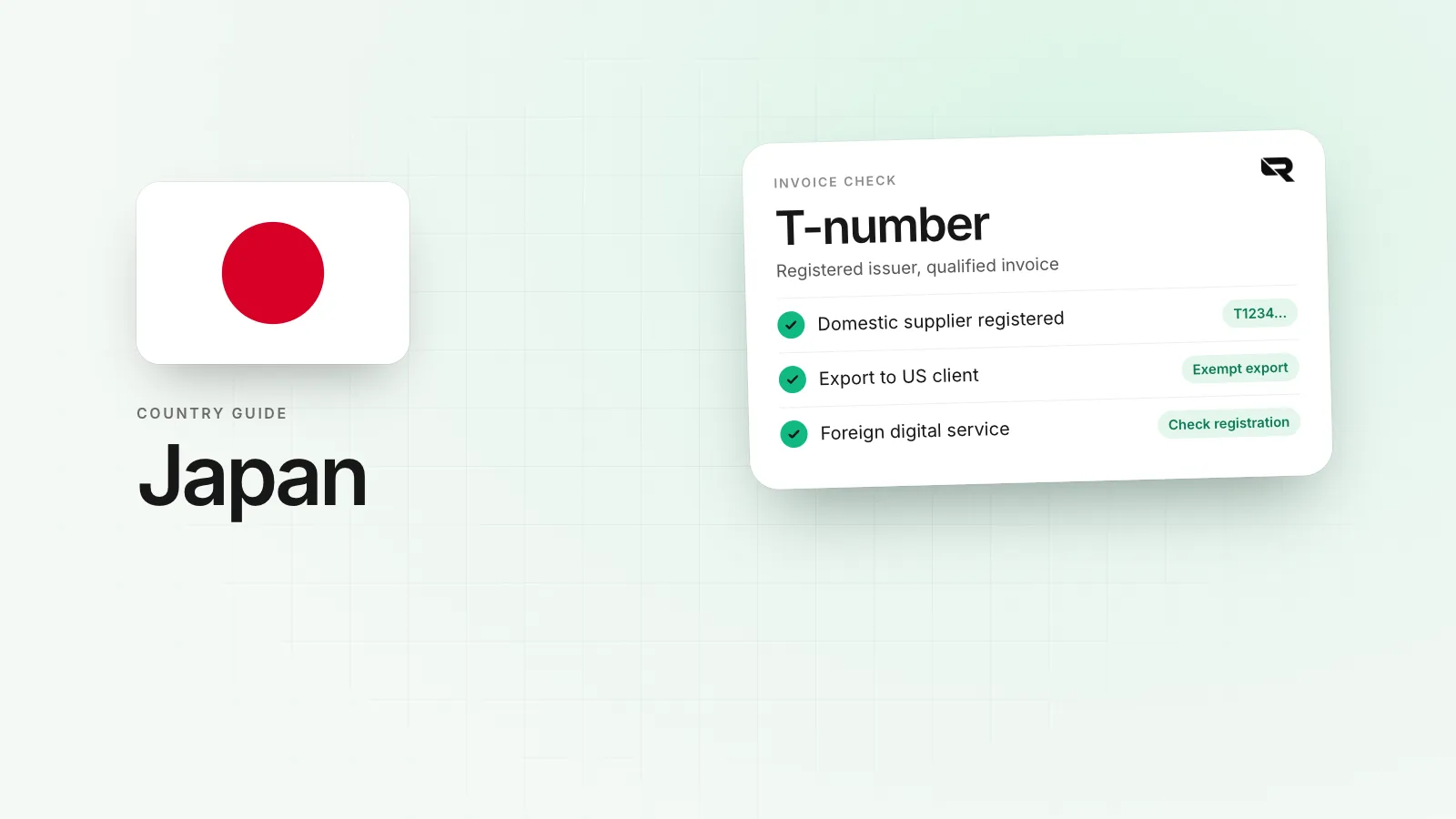
Since 1 October 2023, Japanese businesses can credit input consumption tax only against qualified invoices from registered issuers with a T-number. Exports of goods and services to foreign clients stay exempt from consumption tax, and the qualified invoice rules do not change that. Foreign businesses supplying digital services into Japan may need to register to issue qualified invoices, and B2B digital services bought from abroad can fall under a reverse charge for the Japanese buyer.
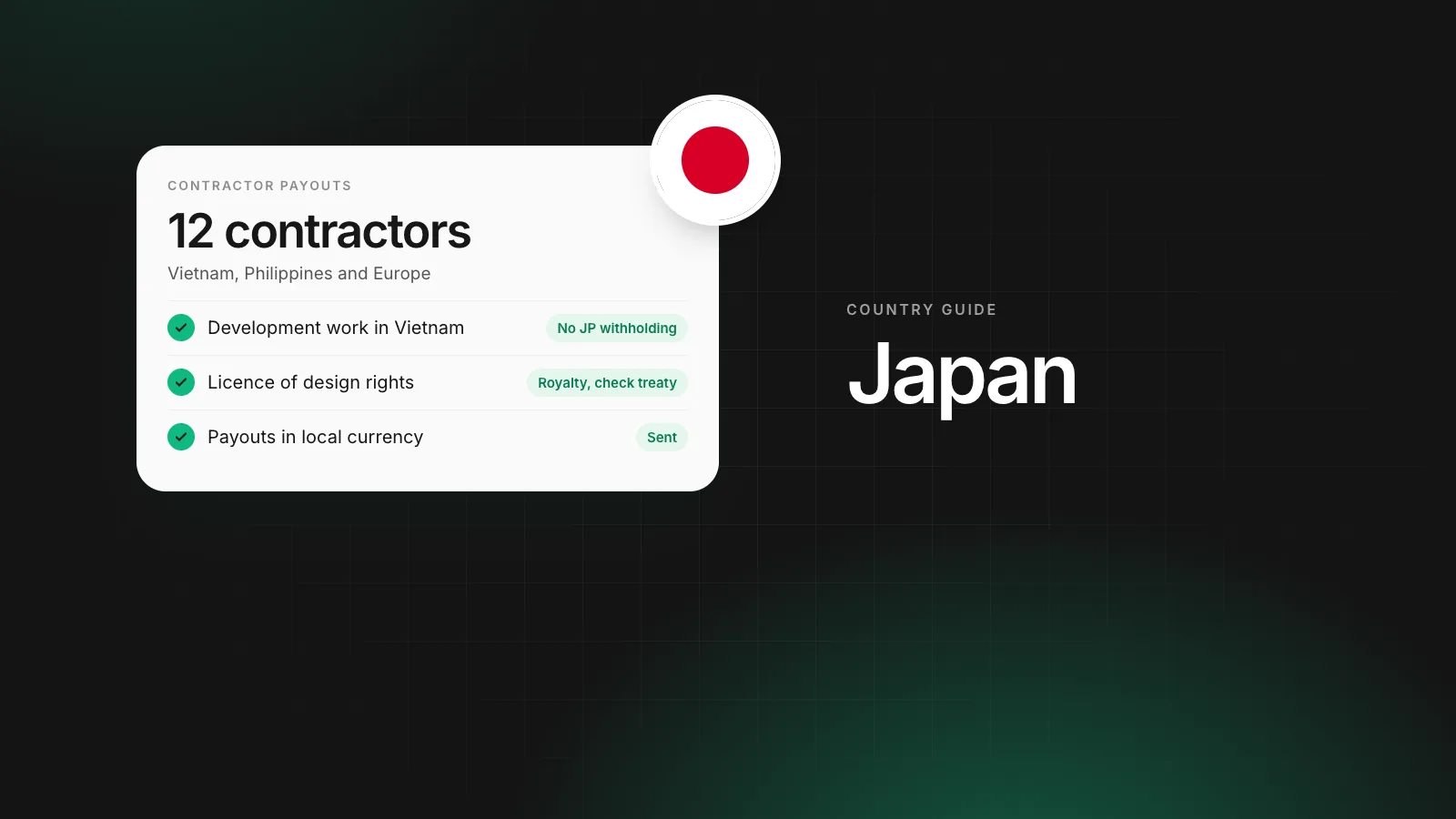
Paying contractors overseas depends on where the work happens. Services performed entirely outside Japan are generally not Japanese-source income and carry no withholding. Royalties and personal services performed in Japan can be Japanese-source and subject to 20.42% withholding, including the reconstruction surtax, and tax treaties often reduce or remove it when the payee files the treaty form before payment.
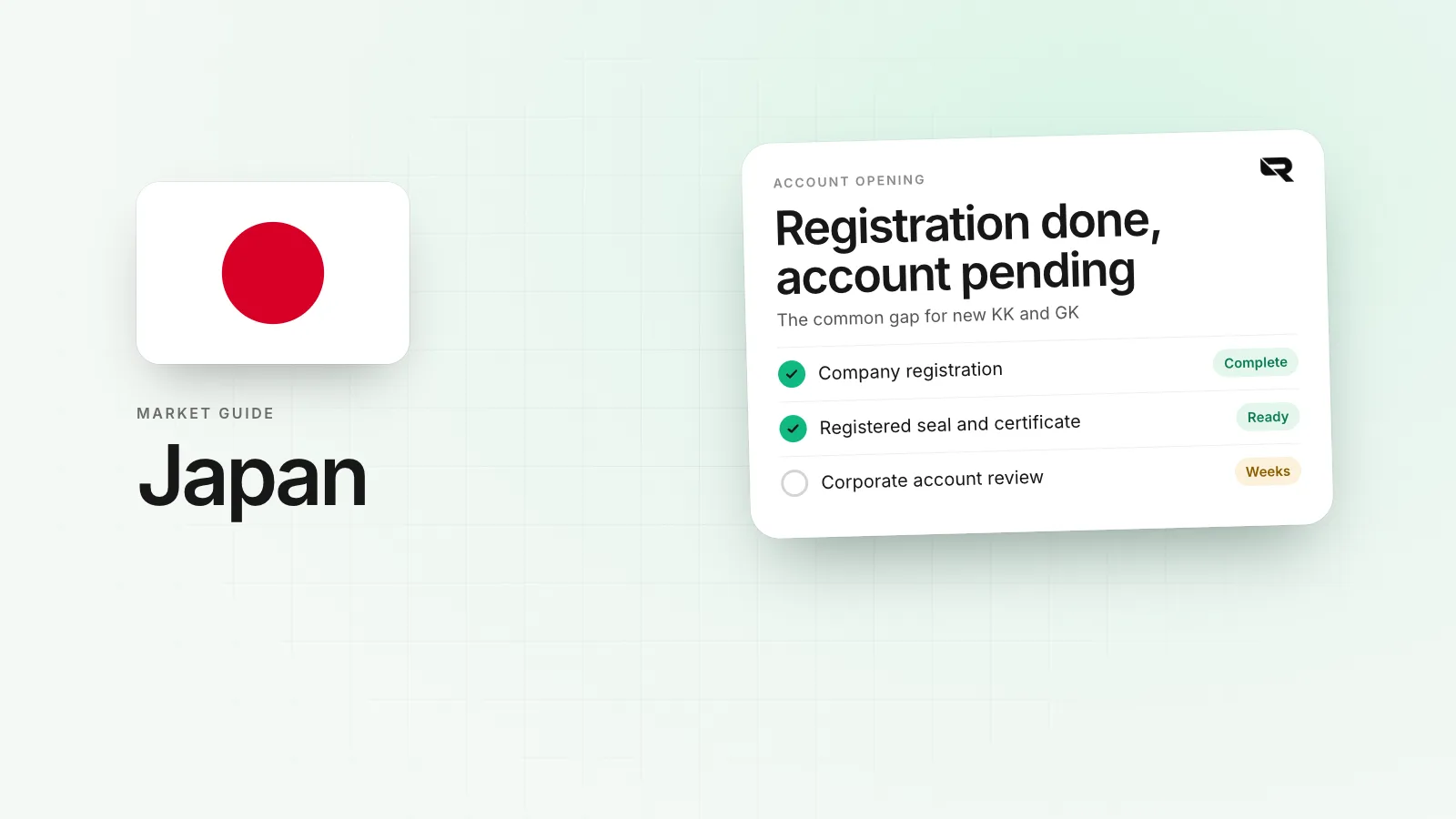
Opening a corporate bank account is often the slowest step for foreign-owned KK and GK companies. Banks ask for the certificate of registered matters, the company seal certificate, the articles, an office lease and the representative director's ID, and reviews of companies with foreign shareholders or no resident director often take weeks. Many founders keep receiving overseas revenue in a multi-currency account while the Japanese account is pending.

 Payments