Treasury management for startups: runway, yield and safety
After a raise, a startup holds more cash than it needs this quarter. A simple treasury setup splits operating cash from reserves, puts reserves in short-term government assets and spreads risk.
- Published
- Reading time
- 1 min read
After a seed or Series A, a startup holds 18 to 24 months of runway. Leaving it all in one checking account is the most common treasury mistake, and SVB's failure in 2023 showed why.
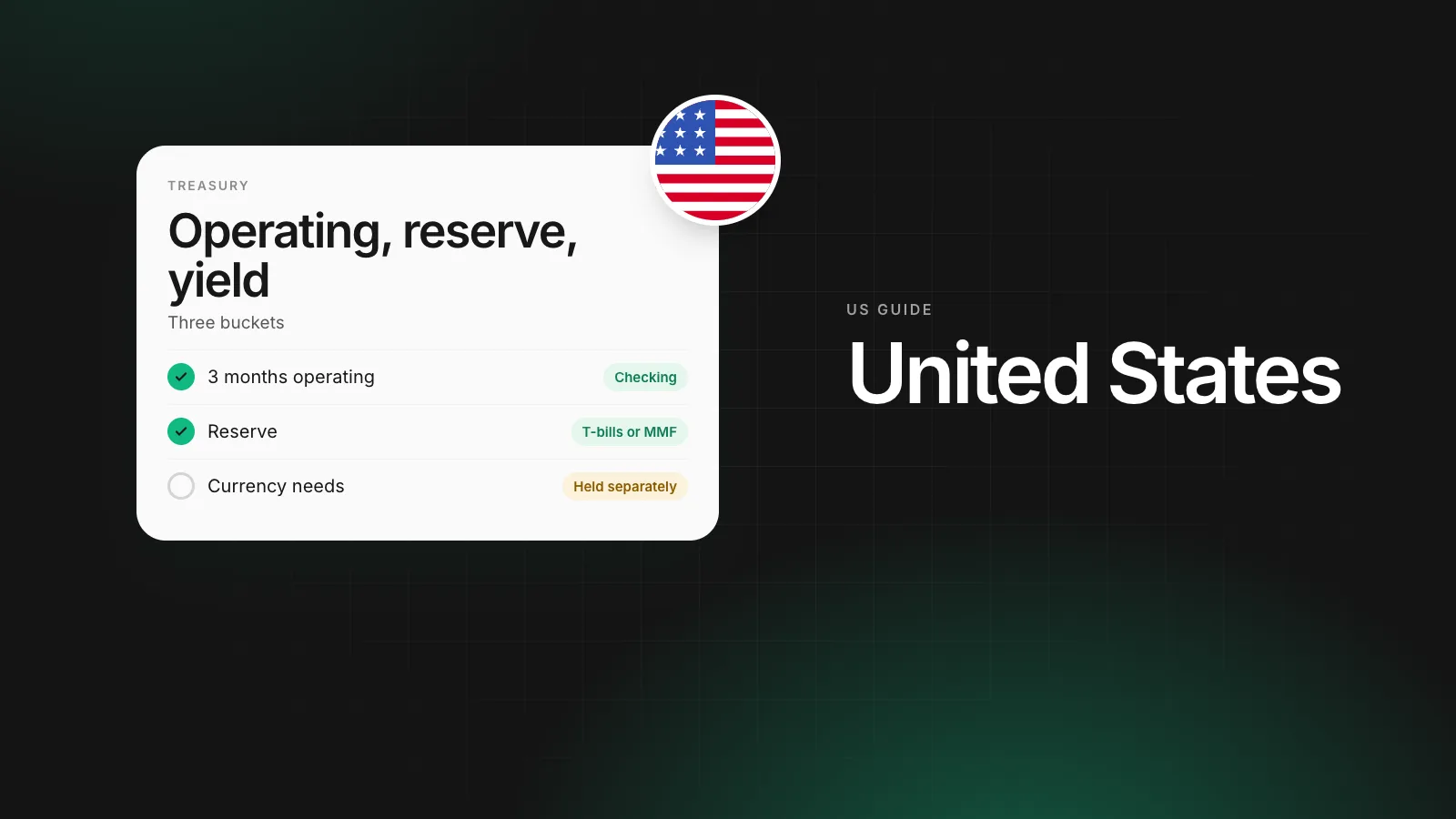
Three buckets
| Bucket | Amount | Where |
|---|---|---|
| Operating | 2 to 3 months of spend | Checking at one or two institutions |
| Reserve | The rest of runway | T-bills, government money market funds |
| Currency | Expected foreign spend | Balances in those currencies |
Rules that keep it simple
- Never more than a set share of cash at one institution.
- Only short-term government assets for reserves.
- Ladder maturities so cash arrives when needed.
- Review monthly with the burn forecast.
Insurance and risk
Deposits are FDIC insured up to $250,000 per depositor per bank per category. Sweep networks raise coverage. T-bills and money market funds are not deposits; they carry small market risk and provider risk.
Currency exposure
A startup with half its team in Europe spends euros every month. If the dollar falls 10%, those costs rise 10%. Holding a few months of euros reduces the effect. See foreign exchange risk for small businesses.
Paying into the United States: the local rail
| What | Detail |
|---|---|
| Local rail | ACH for batch payments; RTP and FedNow for instant transfers |
| Run by | Nacha for ACH; The Clearing House for RTP; the Federal Reserve for FedNow |
| Settlement | Same-day ACH within the business day, standard ACH the next; RTP and FedNow in seconds, 24/7, where both banks take part |
Source: Nacha: Same Day ACH. Checked when this guide was last updated; the scheme's own page has the current figures.
Where Rivet fits
Rivet holds operating balances in USD, EUR, GBP and more for teams that spend across currencies, with payouts to 120+ countries and approvals on Growth. Rivet is not a bank; regulated partner institutions hold the funds, and Rivet does not offer treasury investments. See multi-currency cash flow forecast.
Questions people ask
What is treasury management for a startup?
Deciding how much cash to keep available, where to put the rest, and how to keep it safe and earning something.
Are T-bills safe?
They are backed by the US government and are short-term. Their value moves slightly with rates, and you need a platform to hold them.
How much should stay in checking?
Many startups keep two to three months of spend in operating accounts and the rest in reserves.
What about foreign currency?
If you pay a team abroad, holding some of their currency reduces the risk that a currency move raises your costs.
Sources
Alexia compares the accounts, cards and payment tools companies weigh before they switch, and writes Rivet's market guides for founders in a specific country. Prices in Alexia's comparisons come from each provider's own pricing page on the date given in the article, rules come from the regulator or tax authority that sets them, and every source is listed at the end.
More from Alexia M. →This article is general information, not legal, tax or financial advice. Rules and fees change; check the sources above and the provider’s current terms before you act on them.
- treasury management for startups
- startup cash management
- t-bills
- money market funds
- fdic
- runway