Tracking an international wire with a UETR
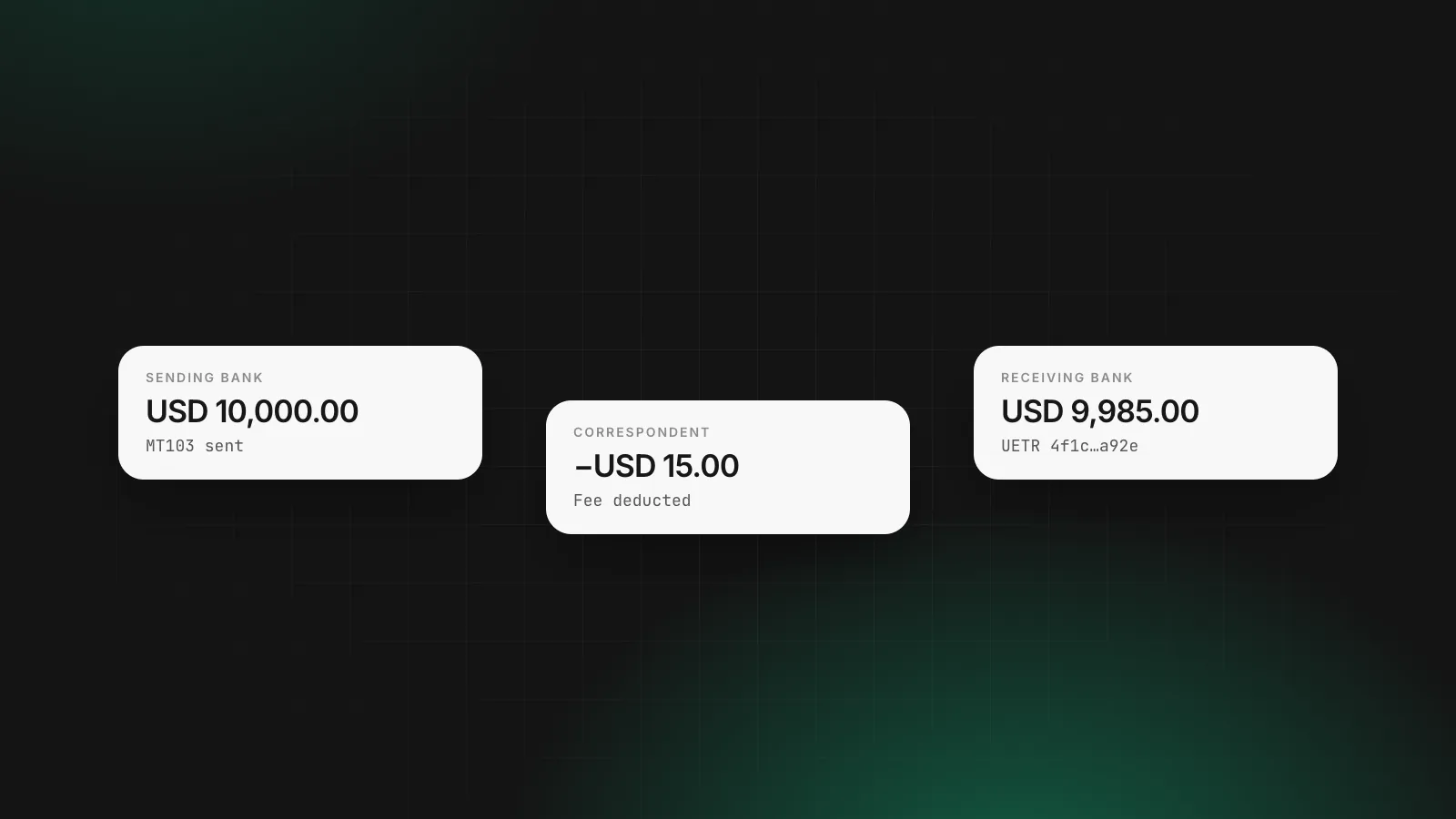
Every Swift payment carries a unique end-to-end transaction reference (UETR). With it, banks can see where a wire is, which bank holds it and what fees were taken.
- Published
- Reading time
- 1 min read
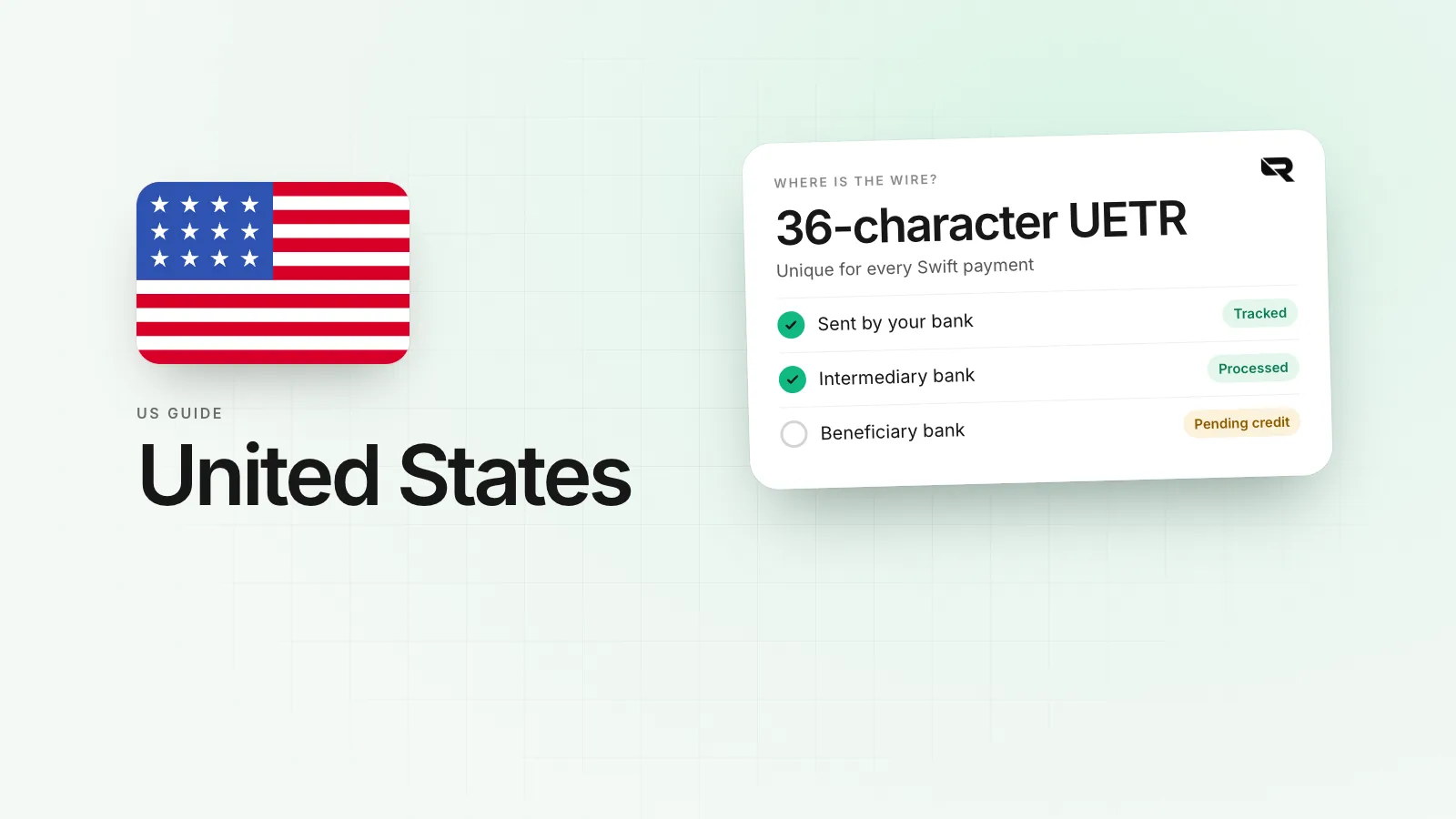
"Swift transfer tracking" is one of the most common questions after "swift transfer". A client says they paid; nothing has arrived. The UETR is how you find it.
What a UETR is
A 36-character unique reference, for example 97ed4827-7b6f-4491-a06f-b548d5a7512d, attached to every Swift payment. Swift gpi uses it to track the payment across banks.
What tracking shows
| Item | Example |
|---|---|
| Status | Processing, credited, rejected |
| Banks passed | Sending, intermediary, beneficiary |
| Fees deducted | By each bank |
| Time | When each step happened |
Why wires stall
- Compliance review at an intermediary or the beneficiary bank.
- Name or account mismatch.
- Missing purpose of payment.
- Cut-off times and public holidays.
What to do
- Ask the sender for the UETR.
- Give it to your bank and ask for the gpi status.
- If held for compliance, provide the invoice or contract quickly.
Avoiding the problem
Local payments, such as ACH in the US or SEPA in Europe, rarely need tracking because they settle domestically.
Paying into the United States: the local rail
| What | Detail |
|---|---|
| Local rail | ACH for batch payments; RTP and FedNow for instant transfers |
| Run by | Nacha for ACH; The Clearing House for RTP; the Federal Reserve for FedNow |
| Settlement | Same-day ACH within the business day, standard ACH the next; RTP and FedNow in seconds, 24/7, where both banks take part |
Source: Nacha: Same Day ACH. Checked when this guide was last updated; the scheme's own page has the current figures.
Where Rivet fits
Rivet gives registered companies USD details on Starter and EUR and GBP details on Growth, so many clients can pay you on local rails instead of Swift. Payouts show their status in your dashboard. Rivet is not a bank; regulated partner institutions hold the funds. See swift structured address requirement.
Questions people ask
How do I track an international wire?
Ask your provider for the UETR and the gpi status. The recipient's bank can trace it with the same reference.
What is a UETR?
A unique end-to-end transaction reference in UUID format, carried by every Swift payment.
Why is my wire delayed?
Common reasons: a compliance review, an incorrect name or account, an intermediary holding it, or a cut-off or holiday.
Can I see fees deducted?
Swift gpi shows fees deducted by each participating bank along the way.
Sources
Alexia compares the accounts, cards and payment tools companies weigh before they switch, and writes Rivet's market guides for founders in a specific country. Prices in Alexia's comparisons come from each provider's own pricing page on the date given in the article, rules come from the regulator or tax authority that sets them, and every source is listed at the end.
More from Alexia M. →This article is general information, not legal, tax or financial advice. Rules and fees change; check the sources above and the provider’s current terms before you act on them.
- swift transfer tracking
- uetr
- swift gpi
- missing wire
- international wire
- us