Cameroon shares the CFA franc (XAF) and a foreign exchange regulation with the other CEMAC states. The regulation adopted in December 2018, in force from 2019, is applied by the BEAC and commercial banks, and it shapes every payment a Cameroonian company sends or receives.
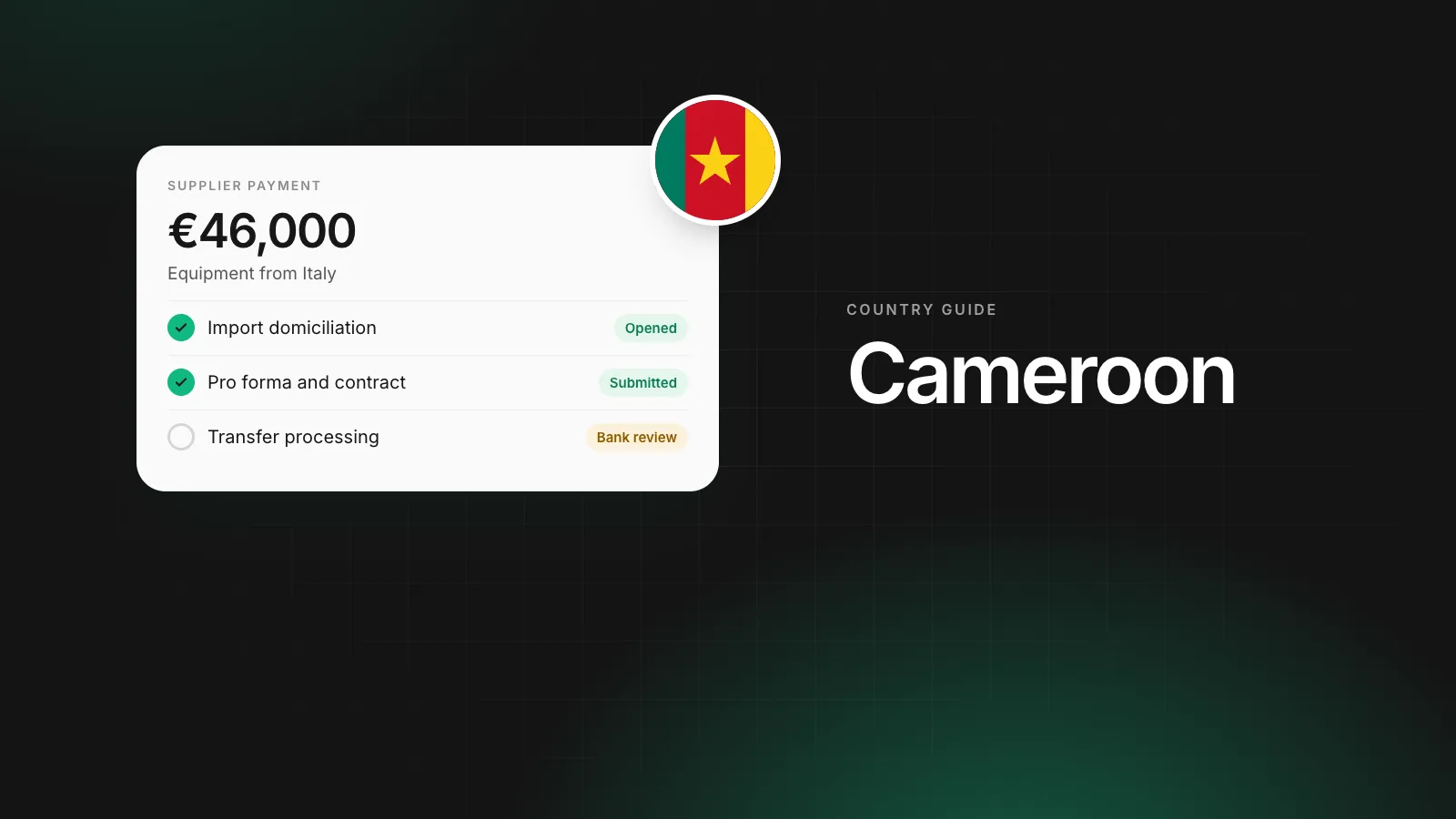
Imports above set thresholds are domiciled with a bank, which needs a pro forma or commercial invoice, the contract and customs documents before it pays the supplier. Processing can take days or weeks, so payments are best started ahead of supplier deadlines. Exporters must bring proceeds home through CEMAC banks within the regulation's deadline, a share is retroceded to the BEAC, and residents generally need BEAC authorisation to hold accounts abroad.
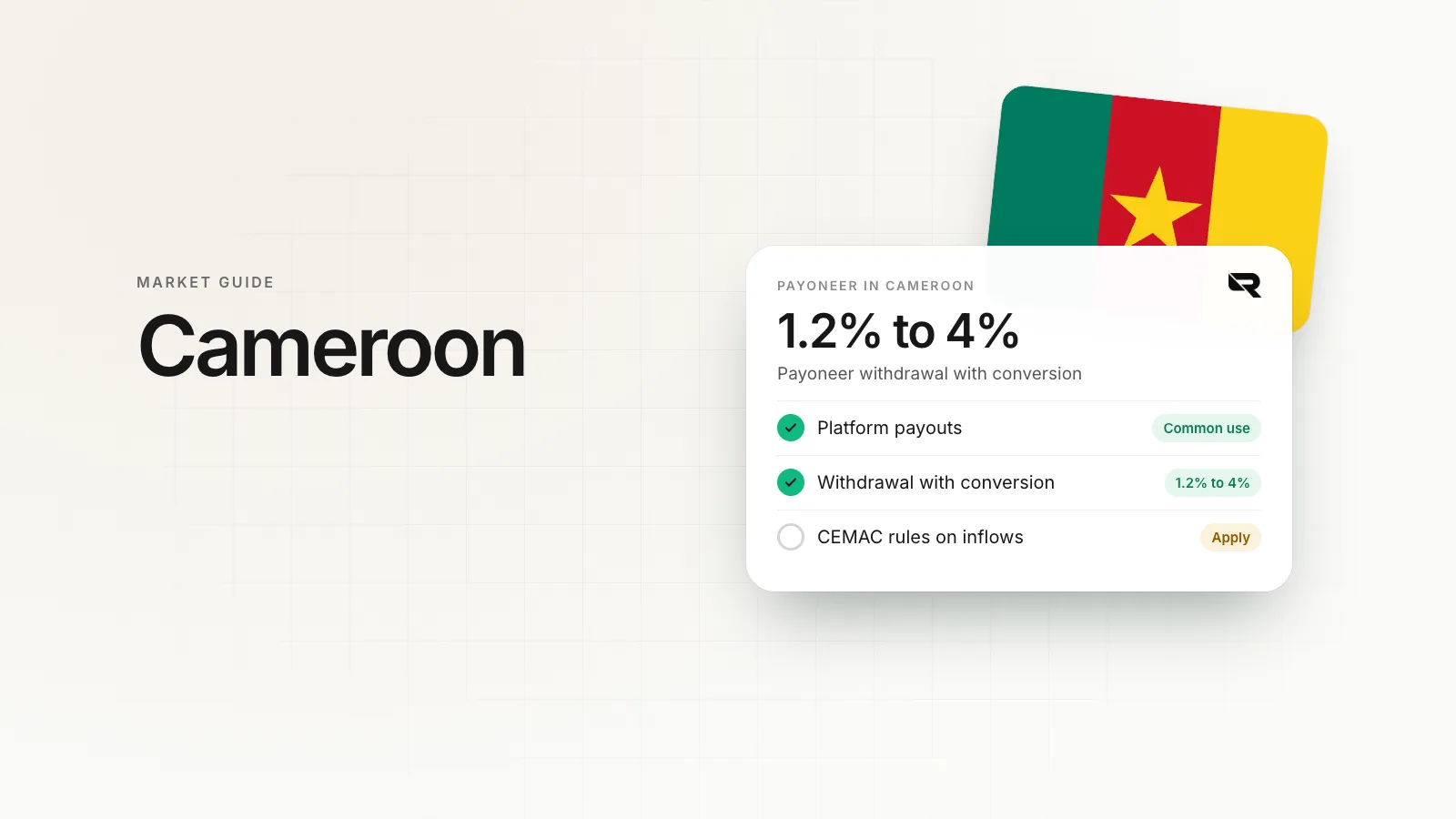
The XAF is pegged to the euro at 655.957, so euro suppliers and euro revenue carry no exchange rate risk, while dollars and yuan do. Foreign software and ads are often paid by card, within limits set under BEAC and bank rules. Payoneer and PayPal serve freelancers and platform payouts, and withdrawals still fall under CEMAC rules.
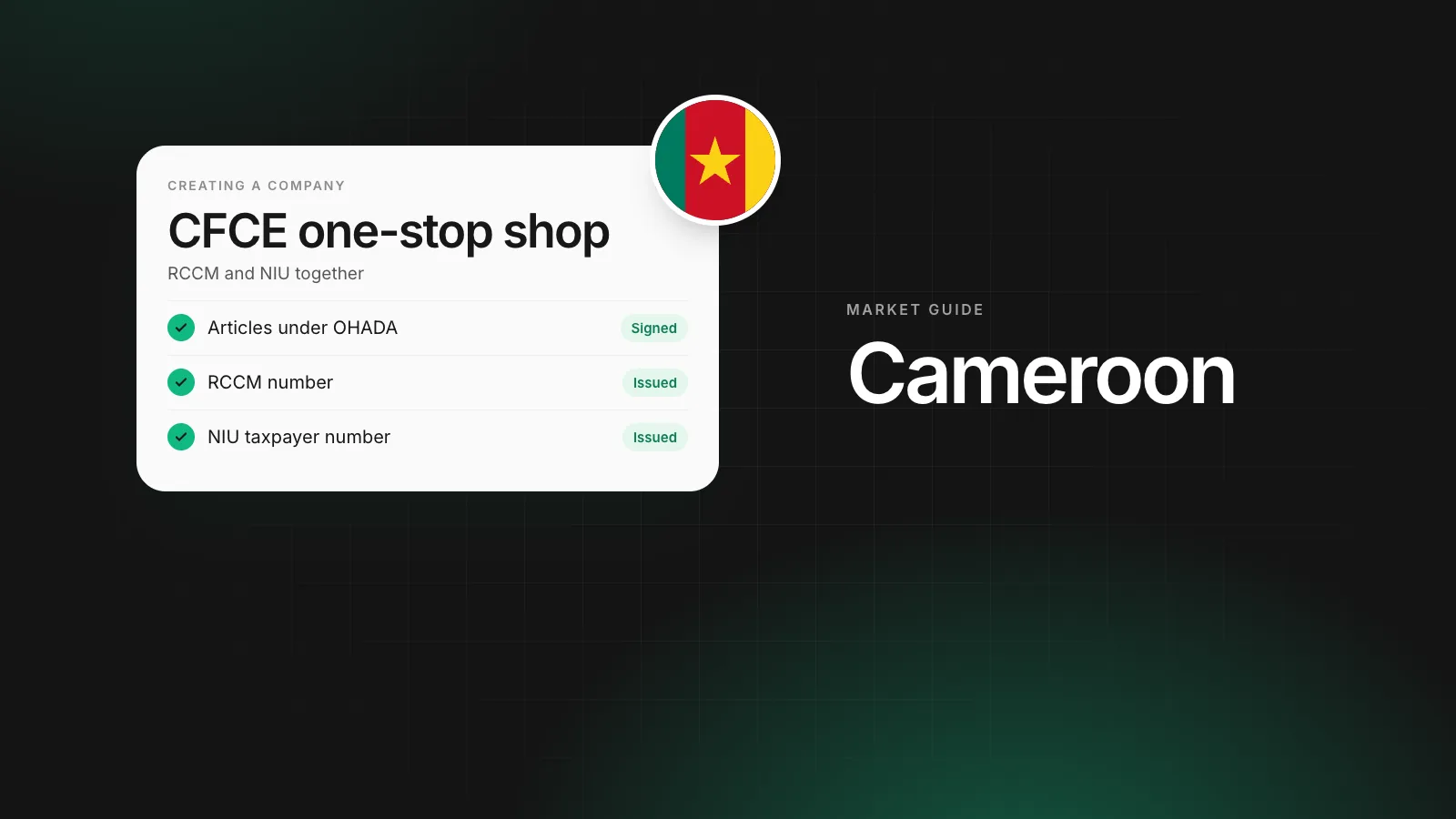
Corporate income tax is 30%, or 33% with the additional council tax. Companies are created through the CFCE one-stop shop and receive an RCCM number and an NIU tax number.

 Payments