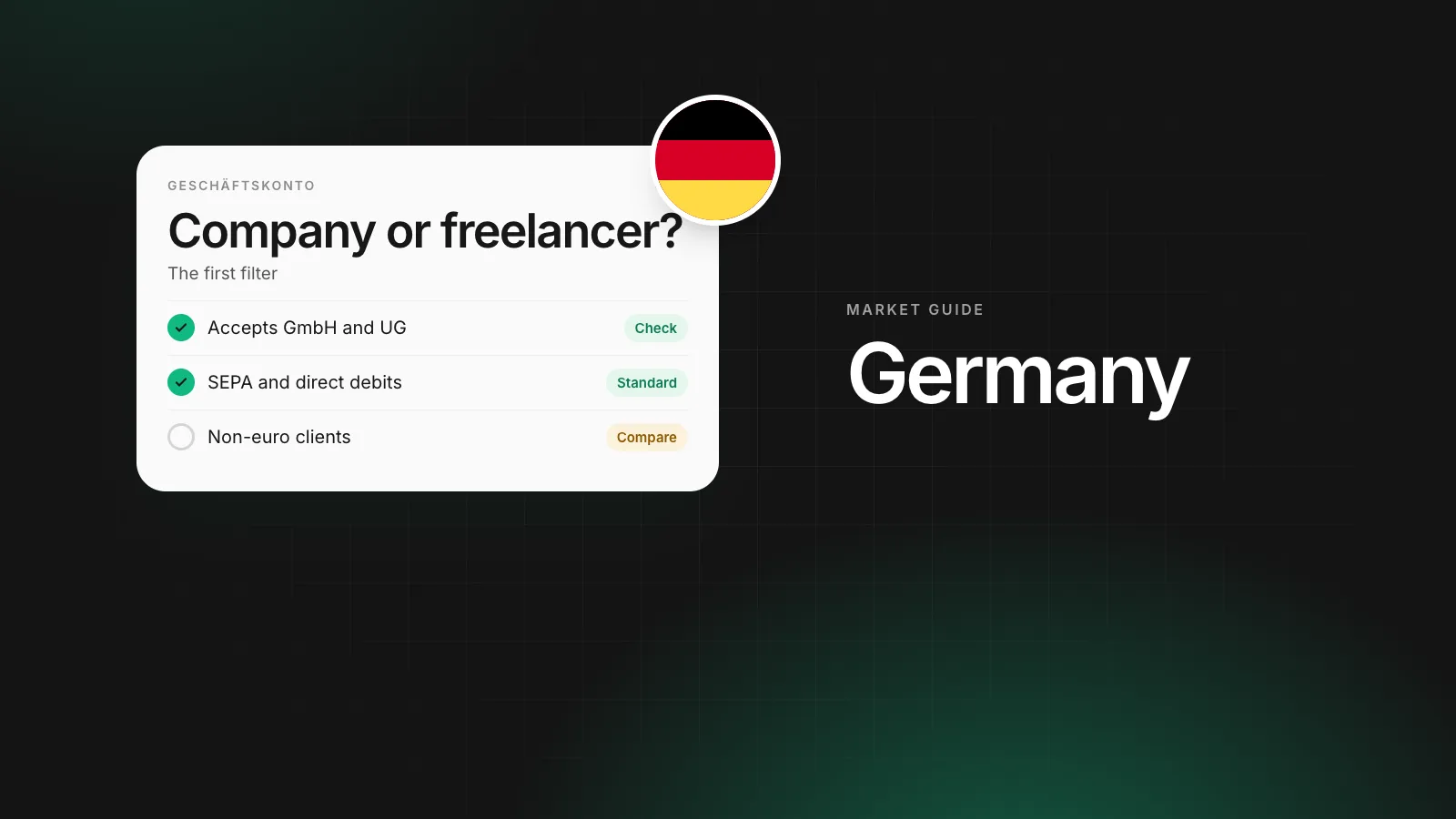
German companies pay in euros across SEPA, so the cross-border questions are mostly about tax paperwork and about clients outside the euro area. For a GmbH, the account comes early: the company needs €25,000 of share capital, with at least €12,500 paid in before registration. Branch banks charge a monthly fee plus a fee per booking, and non-resident directors often get stuck on identification. A GmbH with US clients saves most with US account details its clients can pay by ACH.
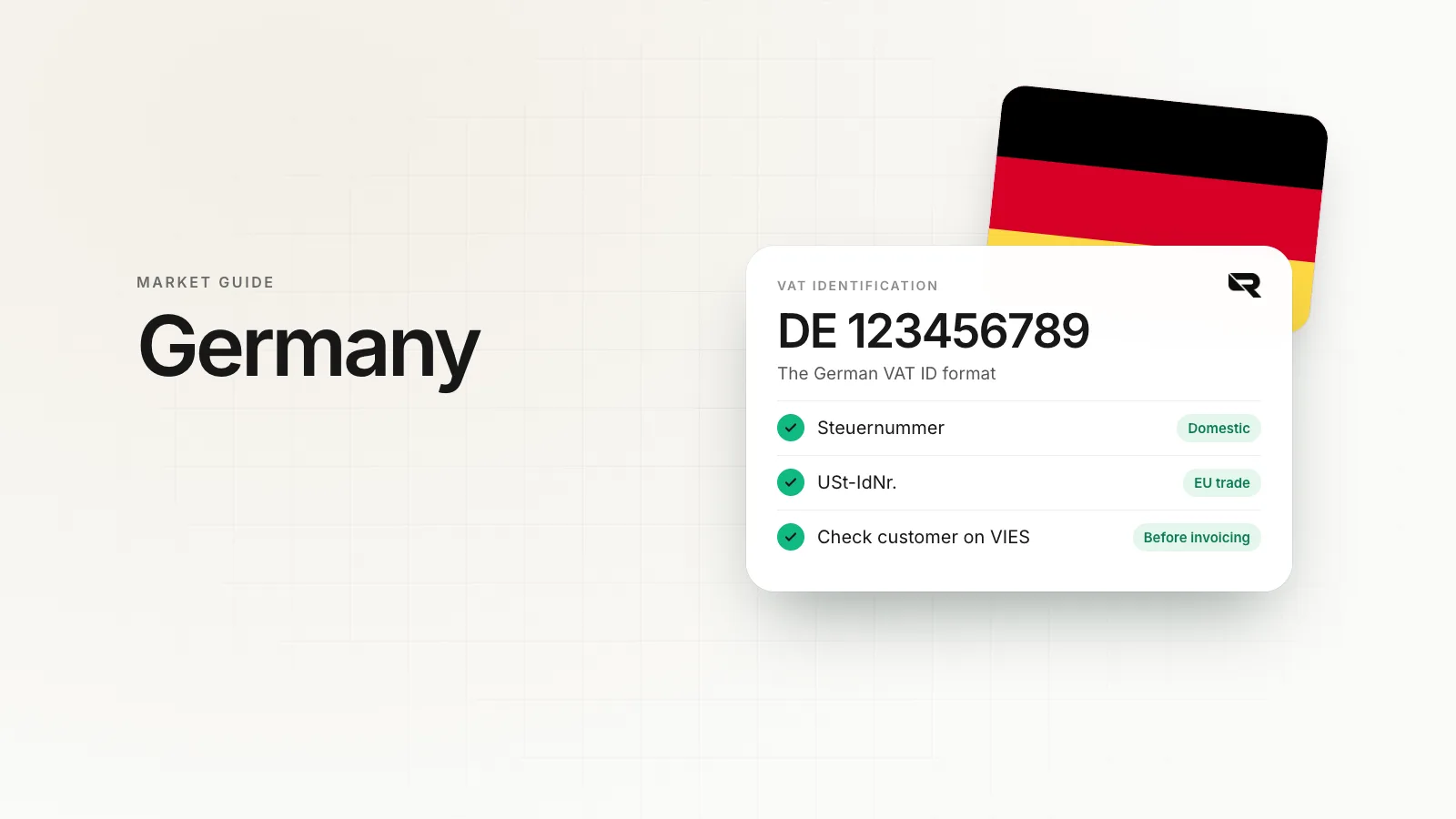
Invoices follow §14 UStG: both parties' names and addresses, the tax number or VAT ID, a sequential number, the supply date, net amounts by rate and the VAT. Invoices up to €250 can omit some fields. The VAT ID (USt-IdNr.) is DE plus nine digits, issued by the Federal Central Tax Office, and EU customers' VAT IDs should be checked before applying the reverse charge.
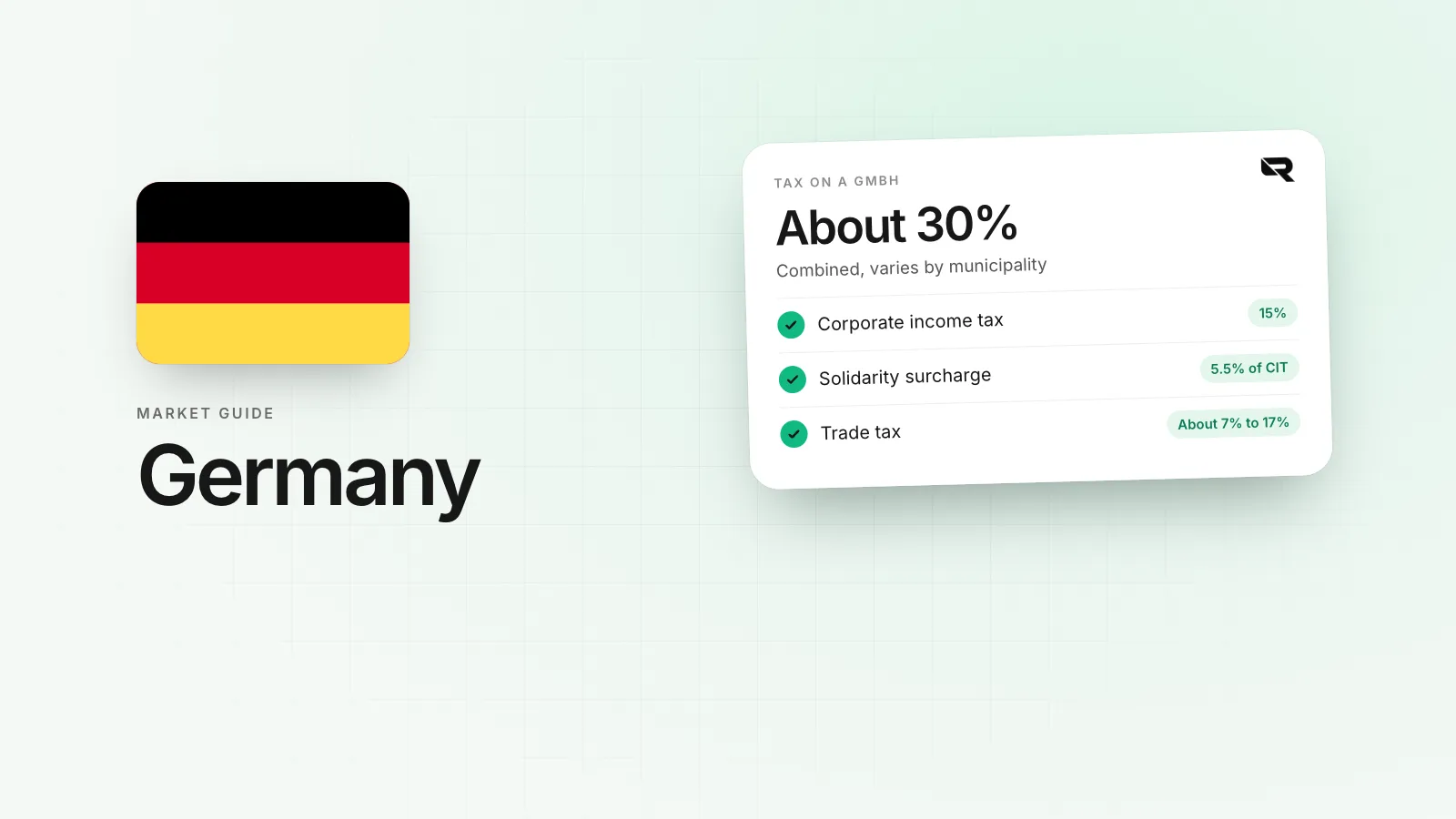
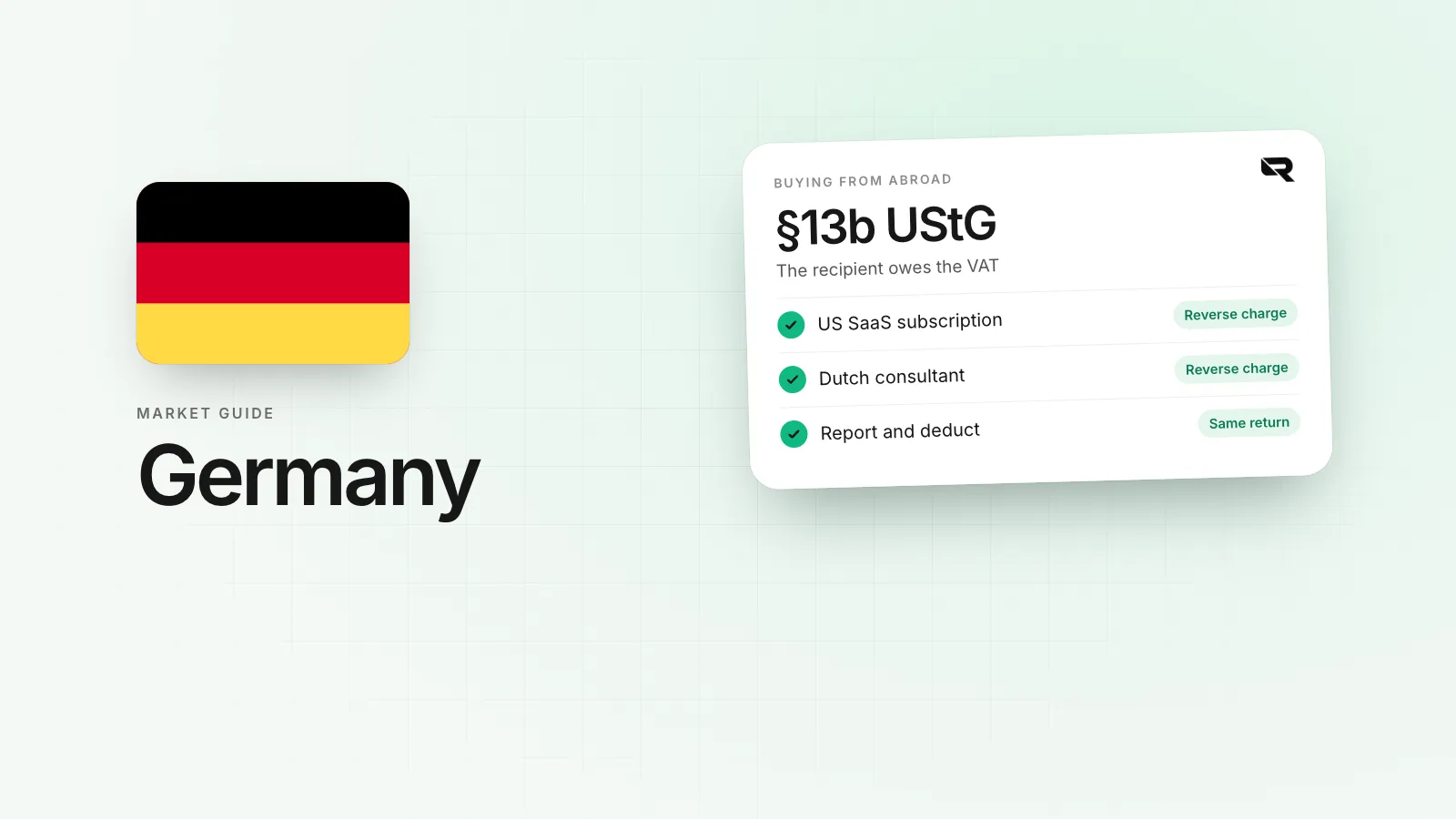
When a German business buys most B2B services from abroad, such as software, consulting or advertising, it owes the German VAT itself under §13b UStG and usually deducts it in the same return. Corporate tax is 15% plus a 5.5% solidarity surcharge, and municipal trade tax brings the combined burden to about 30%.

 Compliance