Should a business have multiple bank accounts?
Splitting money into separate accounts for tax, payroll, operations and reserves makes it harder to spend what is already committed. It also spreads deposits across insurance limits.
- Published
- Reading time
- 1 min read
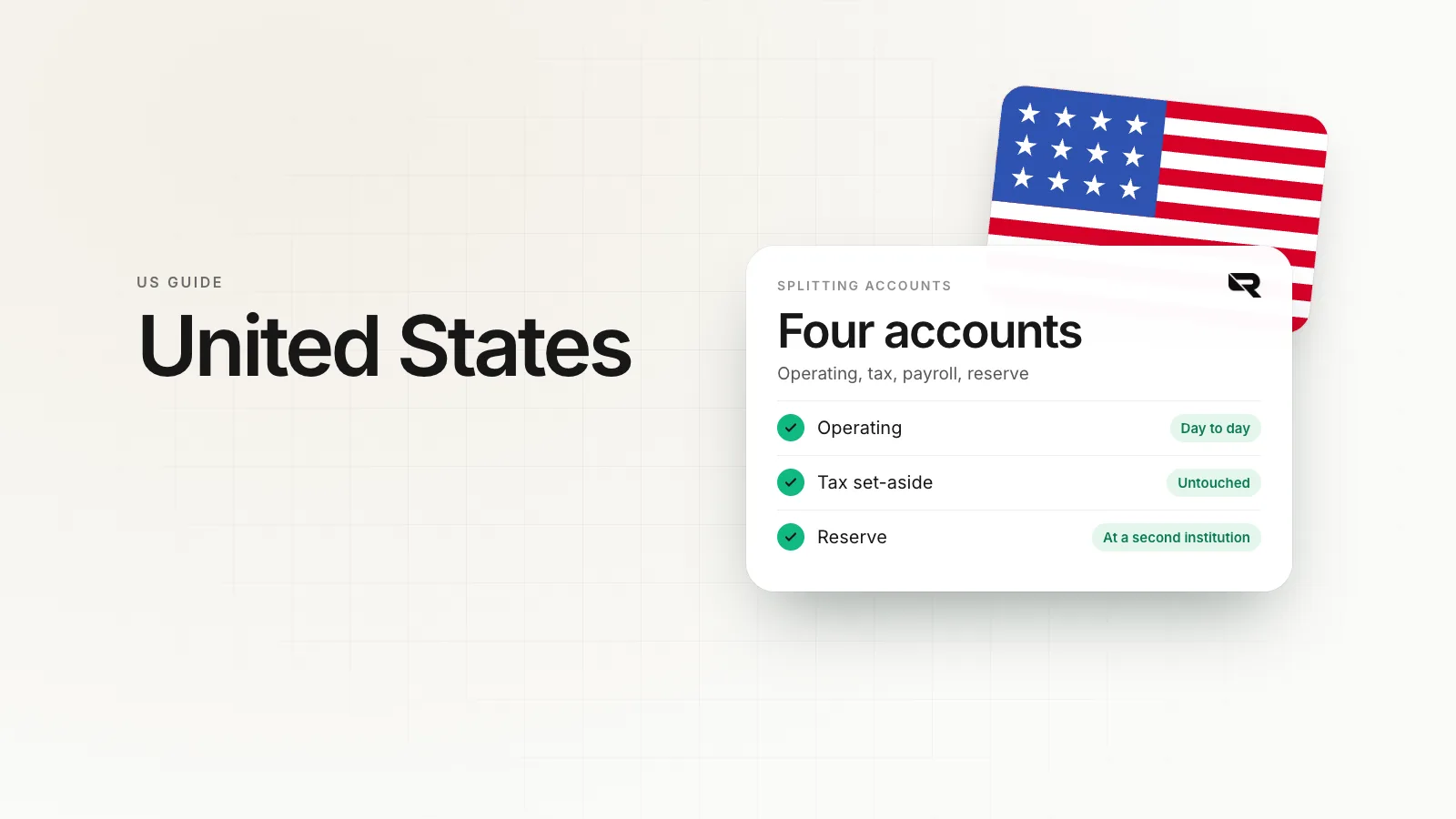
Relay advertises up to 20 checking accounts, and Profit First has made splitting money popular. The idea is simple: money already promised to someone should not sit where it can be spent.
A basic setup
| Account | Purpose | Rule |
|---|---|---|
| Operating | Day-to-day costs | Cards and bills pay from here |
| Tax | Set aside for taxes | A fixed share of each receipt; never spent |
| Payroll | Next payroll | Funded before each run |
| Reserve | Months of runway | At a second institution |
Why a second institution
Deposits are FDIC insured up to $250,000 per depositor per bank per category. A reserve at a second bank, or a sweep network, keeps more of it covered and means one outage does not stop everything.
Currencies
If you hold euros or pounds, keep them in their own balances. A euro balance shown in dollars moves with the rate and can mislead.
Keeping the books clean
- Label internal transfers ("To tax account, March").
- Connect every account to your accounting software.
- Reconcile monthly.
Paying into the United States: the local rail
| What | Detail |
|---|---|
| Local rail | ACH for batch payments; RTP and FedNow for instant transfers |
| Run by | Nacha for ACH; The Clearing House for RTP; the Federal Reserve for FedNow |
| Settlement | Same-day ACH within the business day, standard ACH the next; RTP and FedNow in seconds, 24/7, where both banks take part |
Source: Nacha: Same Day ACH. Checked when this guide was last updated; the scheme's own page has the current figures.
Where Rivet fits
Rivet holds USD, EUR, GBP and more in one account with a balance per currency, cards with limits on each, and payouts to 120+ countries. Many companies use it beside a domestic bank. Rivet is not a bank; regulated partner institutions hold the funds. See multi-entity banking.
Questions people ask
Is it a good idea to have multiple business bank accounts?
For most growing businesses, yes. It separates committed money from spendable money and spreads risk.
How many accounts does a small business need?
Usually three or four: operating, tax, payroll and a reserve. More if you hold several currencies.
Does it complicate bookkeeping?
Slightly. Label every internal transfer and connect each account to your accounting software.
What is Profit First?
A budgeting method that sends a fixed share of each receipt to separate accounts for profit, owner pay, tax and operating costs.
Sources
Alexia compares the accounts, cards and payment tools companies weigh before they switch, and writes Rivet's market guides for founders in a specific country. Prices in Alexia's comparisons come from each provider's own pricing page on the date given in the article, rules come from the regulator or tax authority that sets them, and every source is listed at the end.
More from Alexia M. →This article is general information, not legal, tax or financial advice. Rules and fees change; check the sources above and the provider’s current terms before you act on them.
- multiple business bank accounts
- profit first
- tax account
- payroll account
- fdic limits
- us