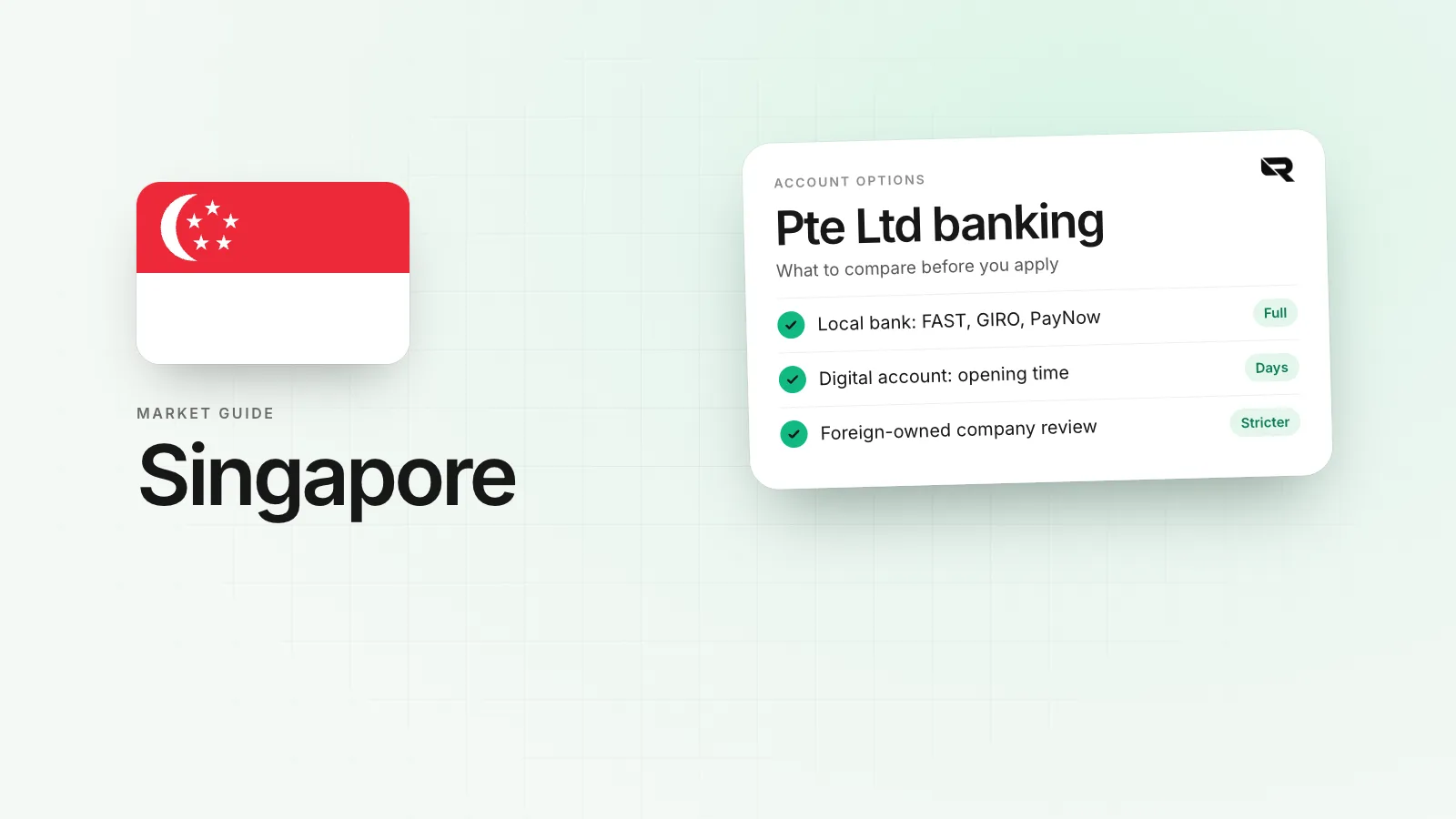
Singapore companies pay locally through FAST, GIRO and PayNow, which come with DBS, OCBC and UOB business accounts. Those banks usually charge a monthly or annual fee and a fall-below charge under a minimum balance, and foreign-owned companies with no local director face longer reviews, so a business summary, contracts and proof of the source of capital help. Many companies keep one local bank for GIRO, IRAS, CPF and payroll and add a multi-currency account for international money.
Much of that international money goes to the region. Singapore companies often pay suppliers and staff in Malaysia, Indonesia, Vietnam, Thailand and the Philippines. Paying in local currency on local rails delivers the full amount, while SGD or USD sent by SWIFT is converted by the recipient's bank. Some neighbours, notably Vietnam and Indonesia, have their own rules on receiving foreign payments.
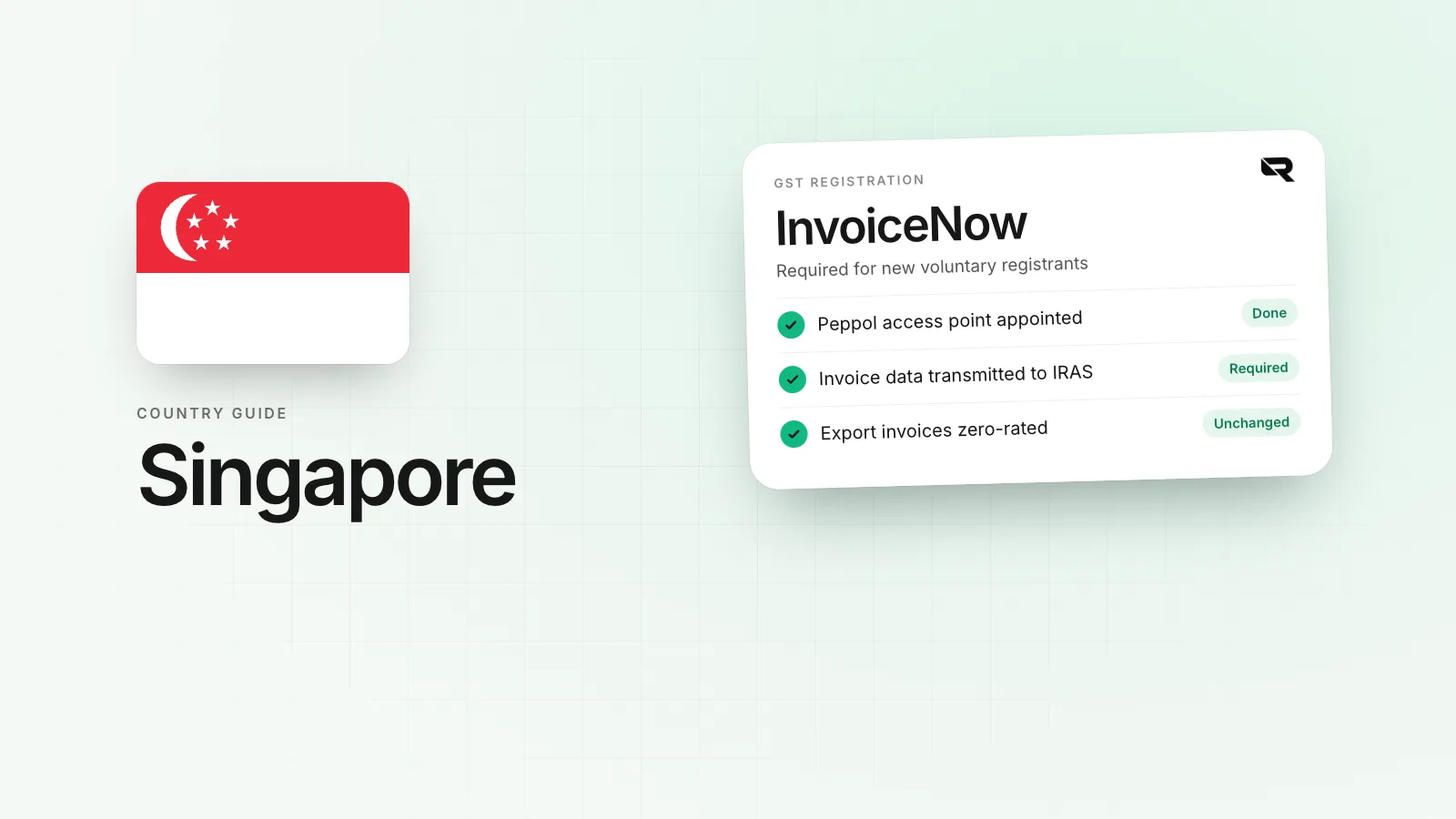
E-invoicing is arriving through InvoiceNow, Singapore's Peppol network run by IMDA. From 1 November 2025, newly incorporated companies registering for GST voluntarily must send invoice data to IRAS through it, extending to all new voluntary registrants from April 2026. Zero-rated exports of goods and international services keep their GST treatment.

 Compliance