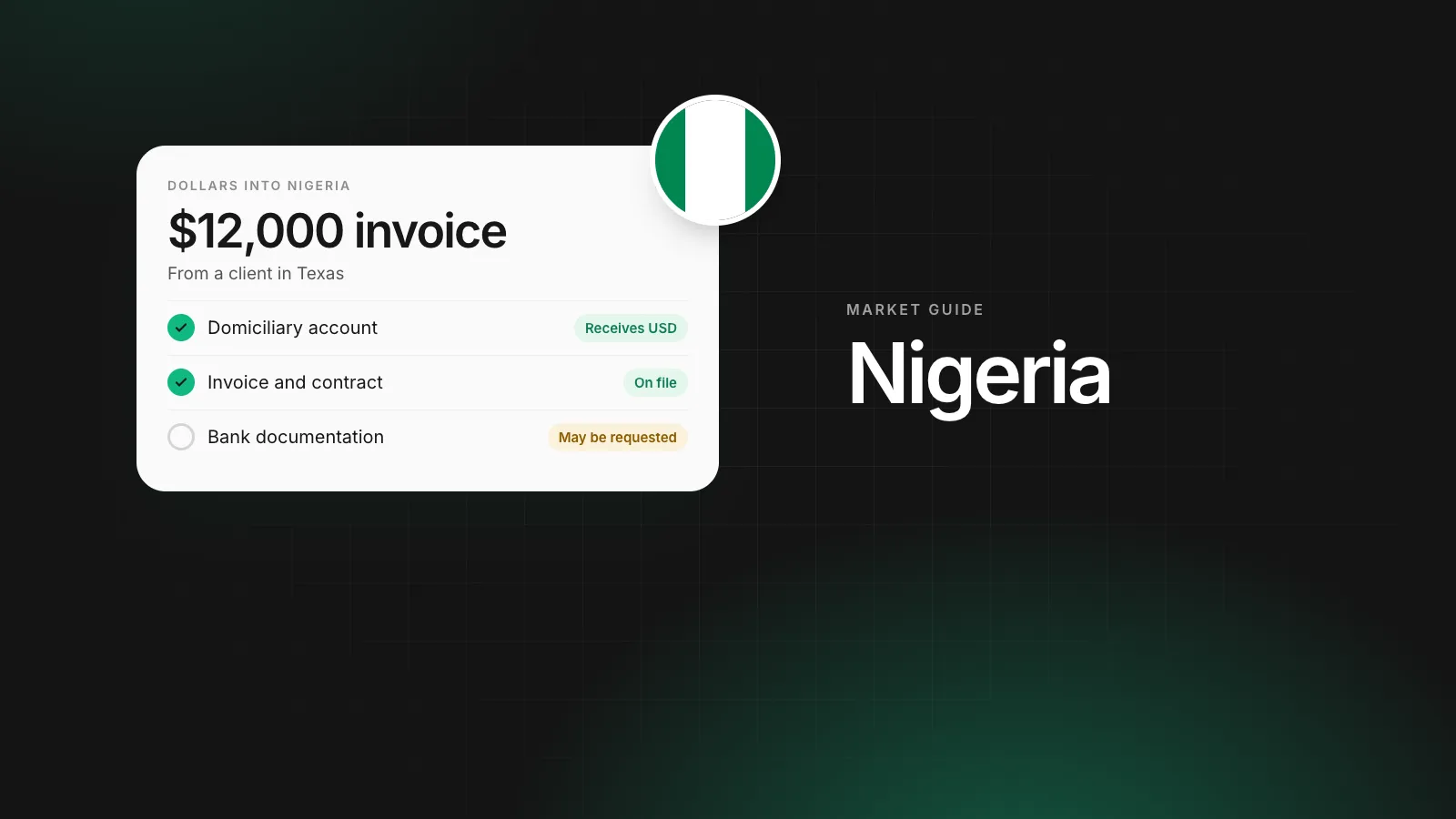
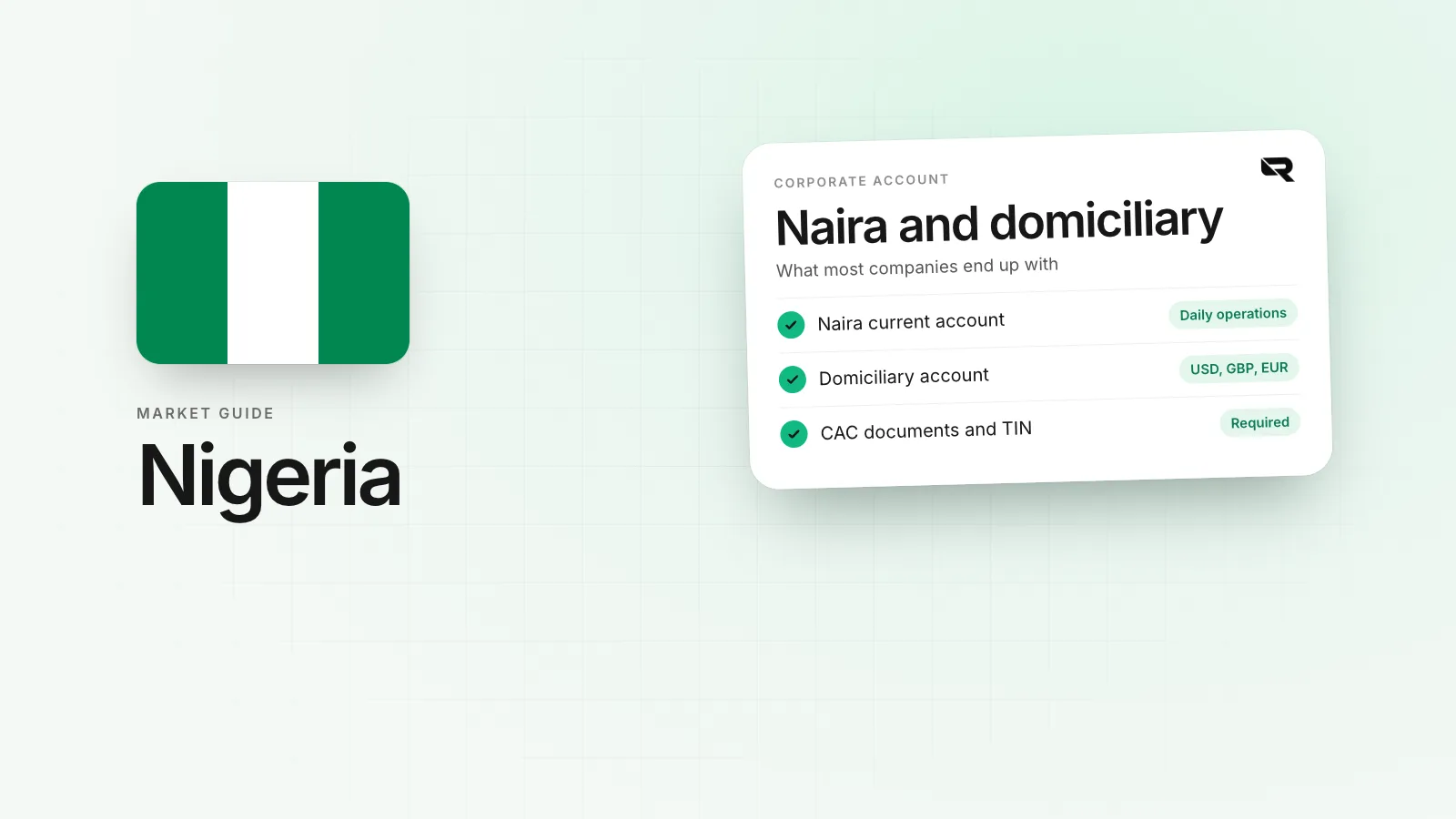
Nigerian companies receive foreign client payments by SWIFT, usually into a domiciliary account at a Nigerian bank, and banks may ask for the invoice, contract and purpose of each payment. Central Bank of Nigeria (CBN) rules decide how foreign currency can be held, used and converted, and they change, so current circulars matter.
The CBN unified the official exchange rates in 2023 and moved towards a market-determined naira. That raised the naira cost of every dollar subscription, and banks adjusted international limits on naira cards. Payments abroad for services, software and fees go through Form A at your bank; goods imports use Form M. Startups with a Delaware parent bring investment into the Lagos subsidiary through an authorised dealer bank with a Certificate of Capital Importation.
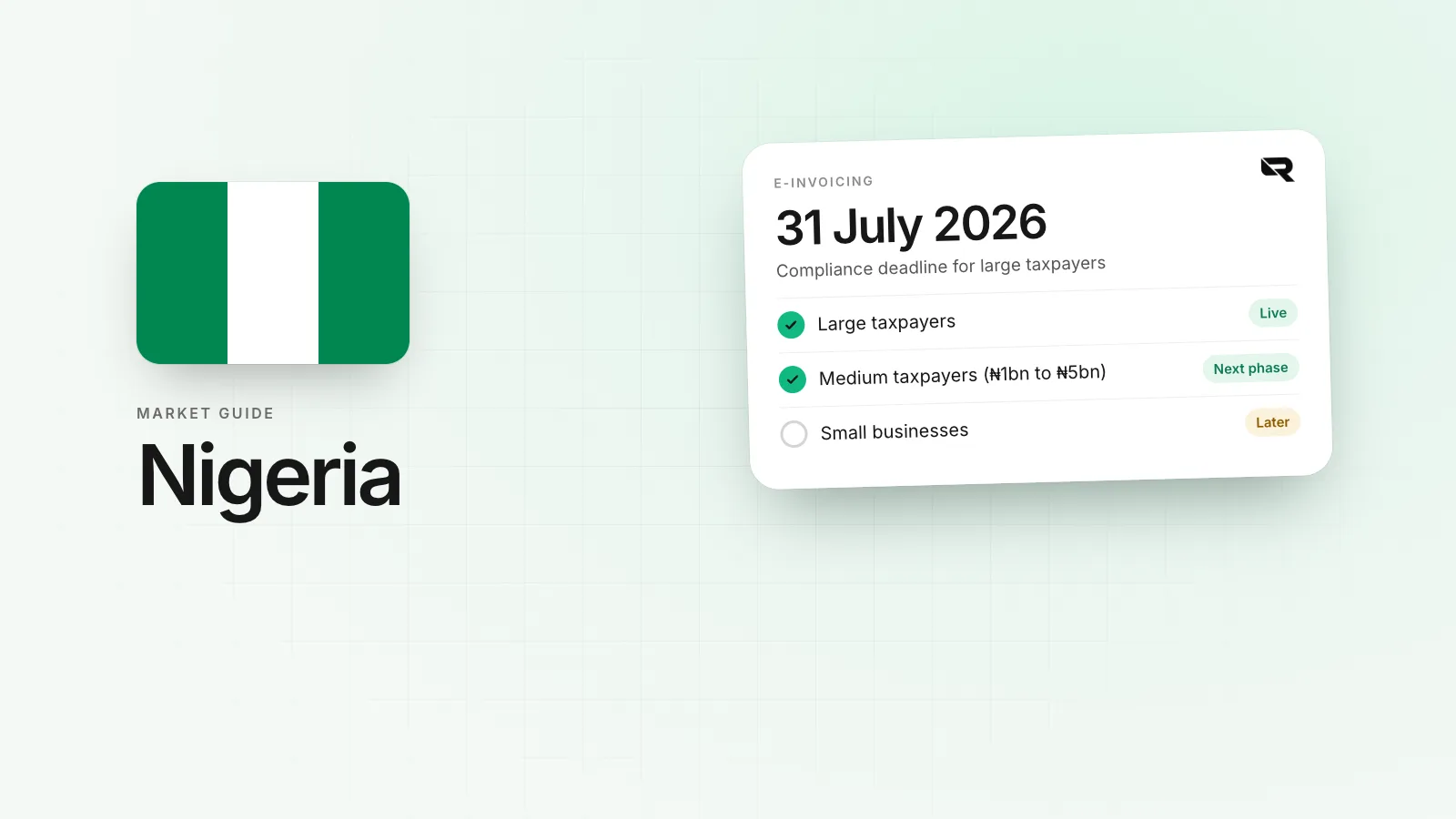
The 2025 tax laws took effect on 1 January 2026. Company income tax is 30% for companies that are not small, and a 4% development levy applies to the assessable profits of most companies. VAT is 7.5%, and foreign suppliers of digital services can be required to charge it. E-invoicing through the Merchant Buyer Solution went live for large taxpayers in August 2025, with medium taxpayers next.

 Compliance