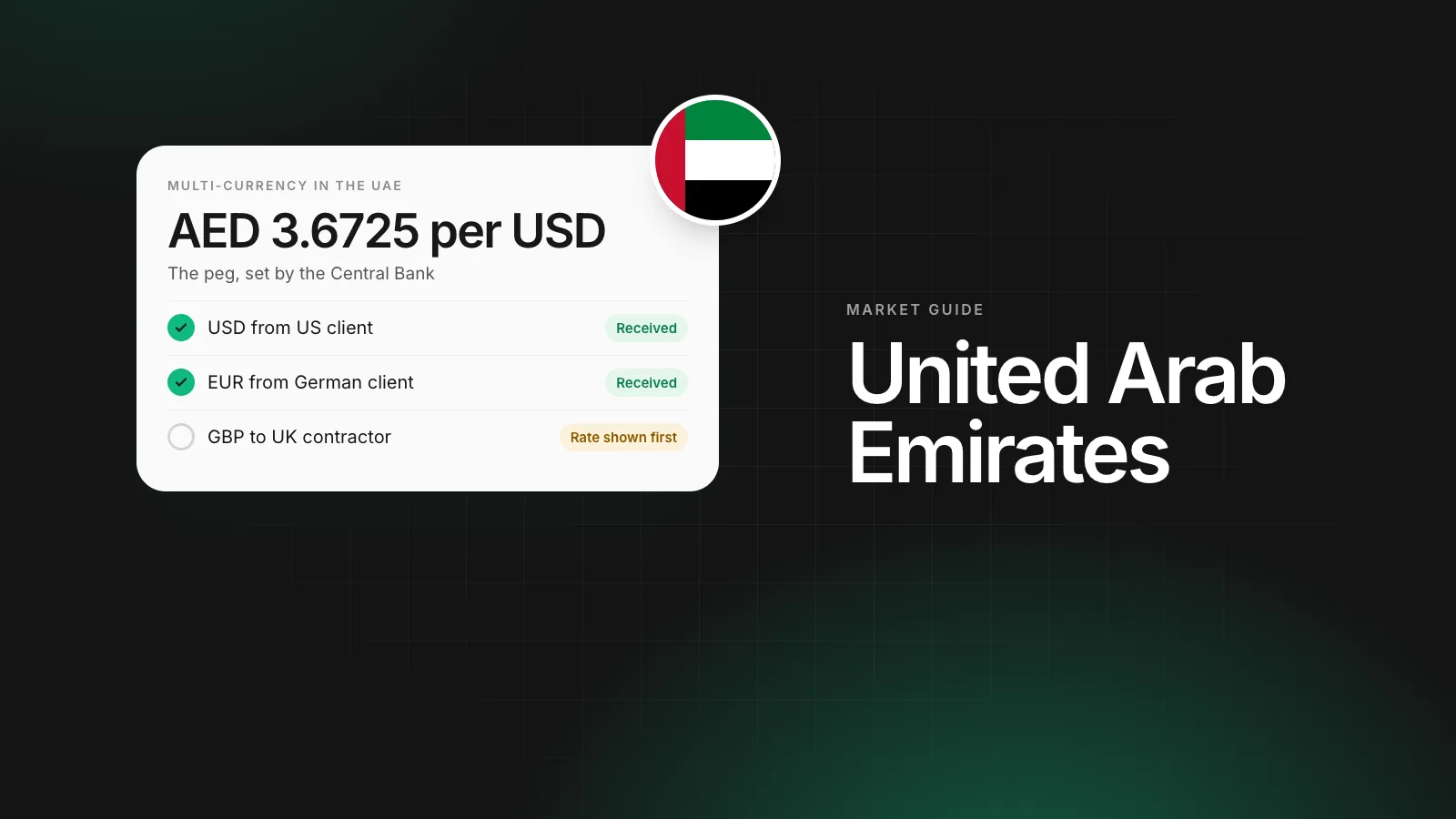
The UAE dirham has been pegged to the US dollar at AED 3.6725 since 1997, so dirham and dollar move together, while euros and sterling float. That is why many UAE companies hold USD, EUR and GBP alongside AED, and compare the FX margin on euro and sterling conversions as well as the dirham rate.
Banking is the first hurdle for companies owned from abroad. Banks usually ask for the trade licence, memorandum of association, shareholder and manager passports and visas or Emirates IDs, and proof of activity. Many prefer at least one signatory with UAE residence, and minimum average balances are common on business accounts.
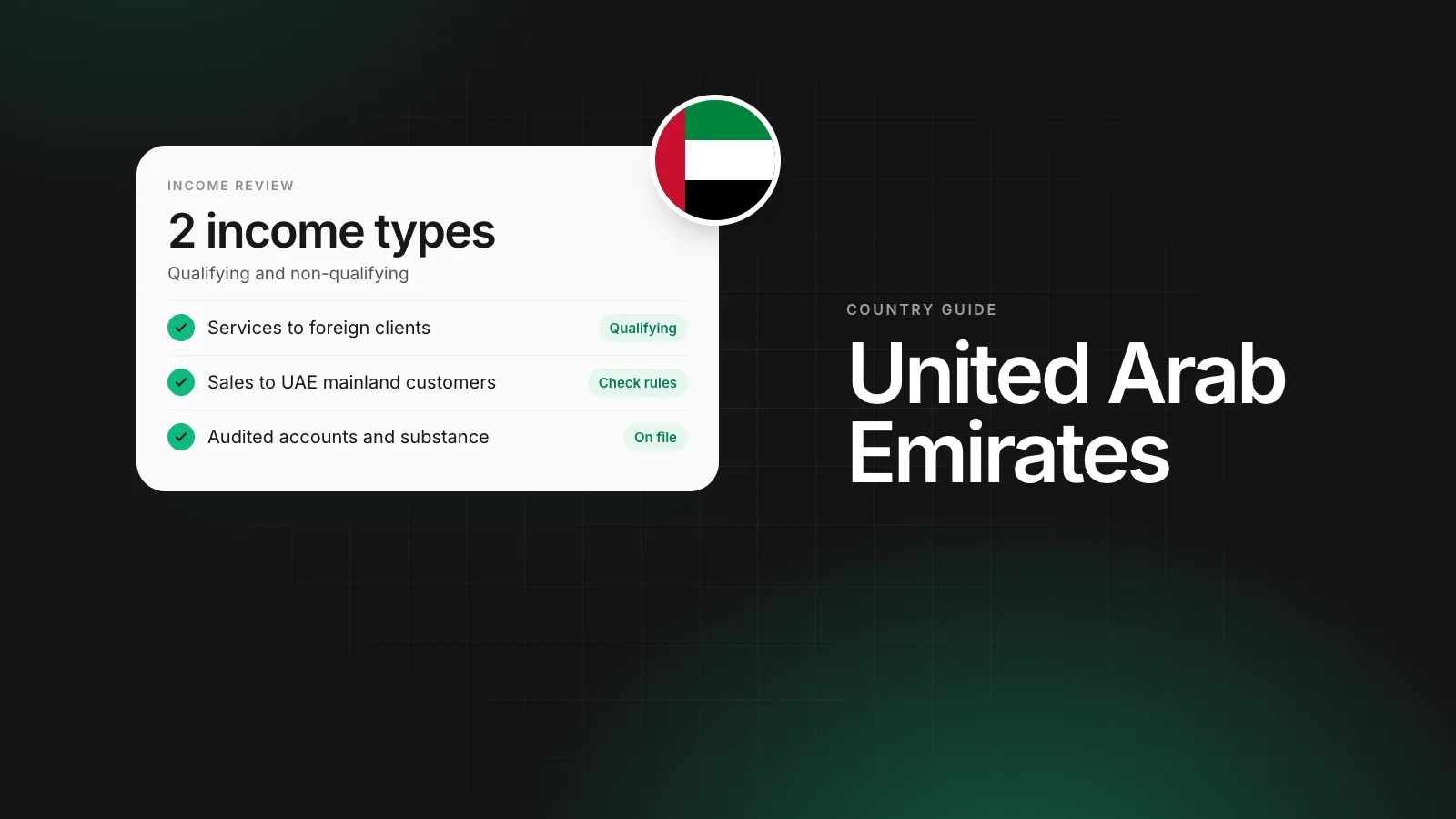
Corporate tax is 9% on taxable income above AED 375,000. A qualifying free zone person pays 0% on qualifying income, provided it keeps adequate substance, audited accounts and non-qualifying revenue under the de minimis threshold, so the records behind each income stream matter.
The UAE is also moving to mandatory e-invoicing for B2B and B2G transactions on a Peppol-based model, with invoices exchanged through accredited service providers that report data to the Federal Tax Authority. The rollout is phased, starting with a pilot and larger businesses.

 Compliance