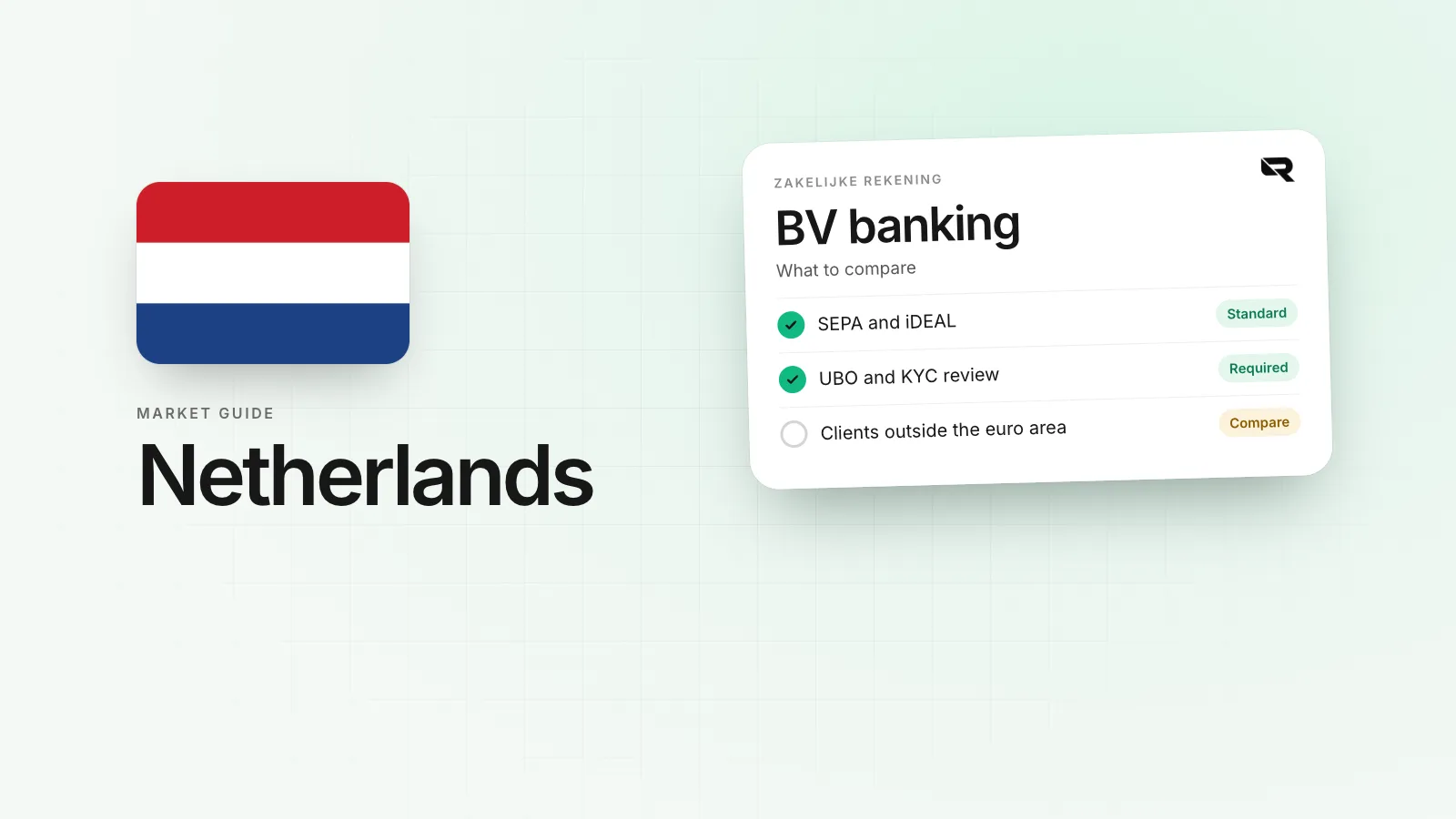
A Dutch BV pays and gets paid in euros across SEPA, and ING, Rabobank and ABN AMRO add iDEAL and lending to that. Setting up is quick on paper: a notary creates the BV by deed and registers it with the KvK, one share of €0.01 is enough capital, and the company records its beneficial owners in the UBO register before the Belastingdienst issues VAT numbers.
The bank account usually takes longer. Dutch banks review companies closely under the anti-money-laundering act (Wwft), asking about UBOs, expected flows, the source of funds and why the company is in the Netherlands. A BV run from abroad can open an account at some banks, while others want a Dutch resident director or Dutch operations.
Clients outside the euro area change the picture. US account details in the BV's name let American clients pay by ACH, which a Dutch IBAN or a SWIFT-only dollar account cannot do, and dollar revenue is recorded in euros with each conversion's rate and date kept.
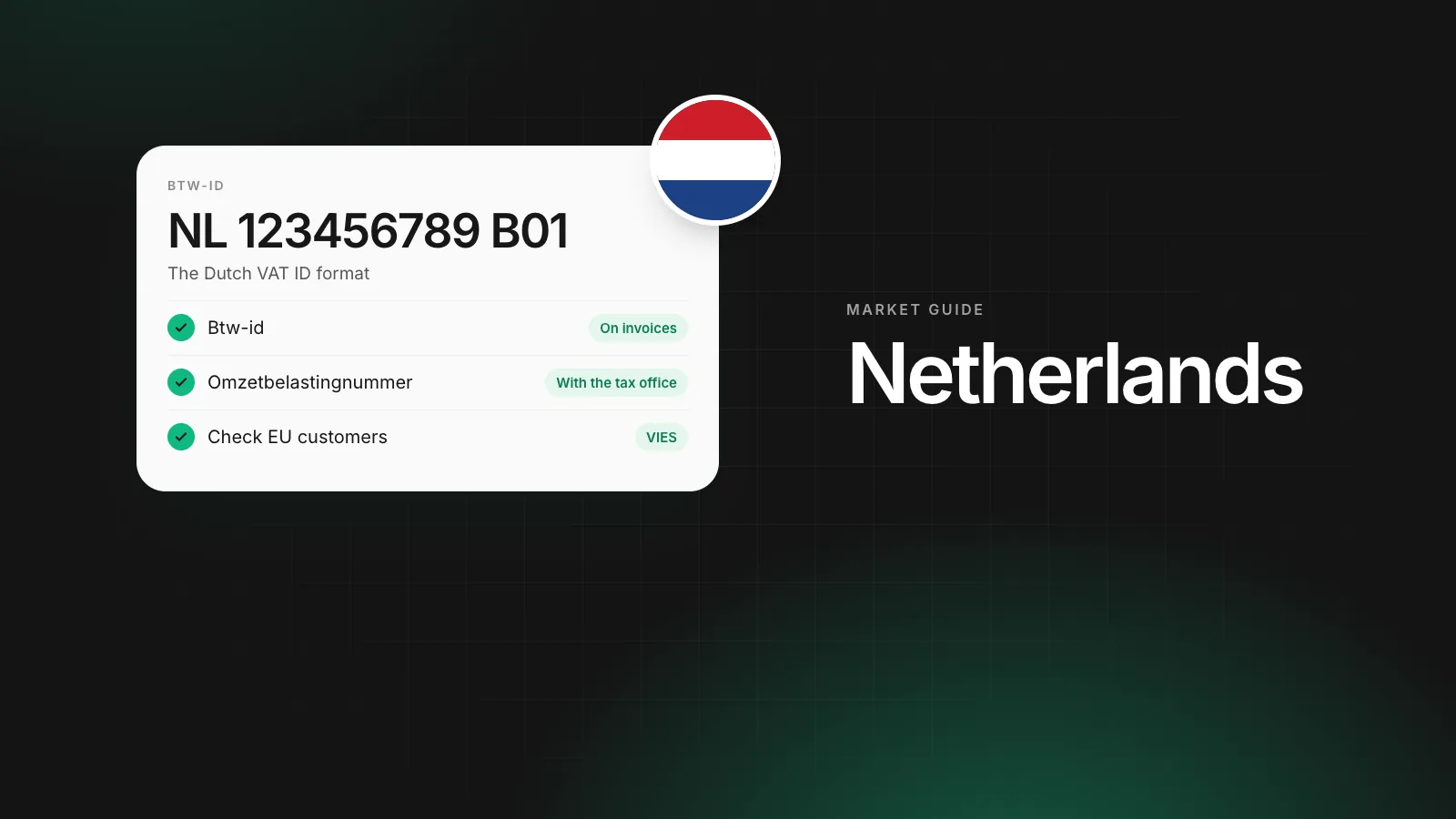
Dutch businesses have two VAT numbers: the btw-id for invoices (NL, nine digits, B and two digits) and the omzetbelastingnummer for the tax office. Reverse-charge invoices to EU businesses show both VAT IDs and "btw verlegd".

 Compliance