Germany reverse charge (§13b UStG) on services from abroad
When a German business buys services from a supplier abroad, it usually owes the German VAT itself under §13b and deducts it in the same return. The cash cost is zero; getting it wrong is not.
- Published
- Reading time
- 1 min read
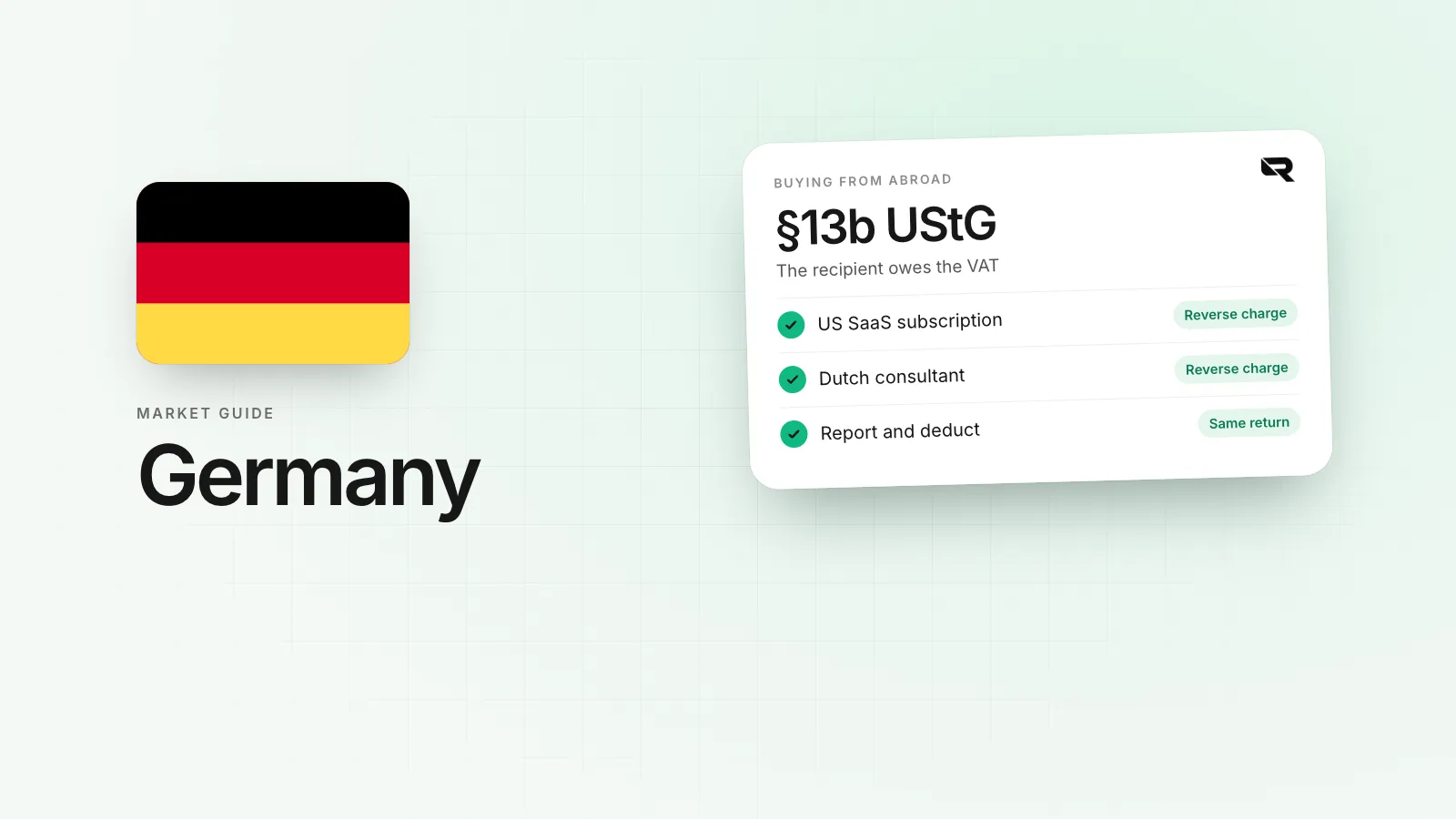
German companies buy services from abroad every day: cloud and SaaS from the US, consultants in the Netherlands, ads billed from Ireland. VAT on each of these follows §13b UStG, and the paperwork has to be right even when no cash changes hands.
How it works
- The foreign supplier invoices the net amount, with no German VAT.
- The German company reports German VAT on that amount in its advance VAT return.
- If entitled to input tax, it deducts the same amount in the same return.
An example
A Cologne agency pays a US analytics tool $2,000 a month. Converted to €1,850, it reports €351.50 of VAT at 19% and deducts €351.50 as input tax. The cash effect is zero. Missing the entries is a filing error the tax office can pick up in an audit.
When it does not apply
- Some services are taxed where performed, such as event admission or work on property in Germany.
- Purchases from a supplier that is registered in Germany and charges German VAT correctly.
- Consumers, who are not covered.
Paying the supplier
Most foreign software suppliers bill in dollars by card. Each charge converts at the card issuer's rate. The euro amount in your books should match what you were charged, so keep receipts that show both.
Paying into Germany: the local rail
| What | Detail |
|---|---|
| Local rail | SEPA Instant Credit Transfer |
| Run by | European Payments Council scheme, run by each bank |
| Settlement | Under ten seconds, 24/7 |
| Published fee | By the EU Instant Payments Regulation, no more than the bank charges for a standard SEPA transfer |
Source: European Payments Council: SEPA Instant Credit Transfer. Checked when this guide was last updated; the scheme's own page has the current figures.
Where Rivet fits
Rivet issues unlimited digital cards on every plan that spend from your USD balance, so dollar subscriptions are paid in dollars, with one card per vendor and receipts on one ledger. EUR details with an IBAN come on Growth. Rivet is not a bank; regulated partner institutions hold the funds. See Cards.
Questions people ask
Do I pay VAT on a US software subscription?
You account for it under §13b: report German VAT on the net amount and, if you are fully entitled to input tax, deduct the same amount. The net cash effect is usually zero.
What if the foreign supplier charged its own VAT?
Ask for a corrected invoice. Foreign VAT is not deductible in your German return.
Does it apply to small businesses?
It applies to entrepreneurs receiving the service, including small businesses using the Kleinunternehmer rule, which then pay the VAT without deducting it.
Where does it go in the VAT return?
In the lines for services from EU or non-EU entrepreneurs under §13b, and the input tax line. Your accounting software or Steuerberater maps them.
Sources
Alexia compares the accounts, cards and payment tools companies weigh before they switch, and writes Rivet's market guides for founders in a specific country. Prices in Alexia's comparisons come from each provider's own pricing page on the date given in the article, rules come from the regulator or tax authority that sets them, and every source is listed at the end.
More from Alexia M. →This article is general information, not legal, tax or financial advice. Rules and fees change; check the sources above and the provider’s current terms before you act on them.
- germany reverse charge
- §13b ustg
- steuerschuldnerschaft
- foreign services
- saas
- vat return