Germany corporate tax rate 2026: corporate tax, solidarity surcharge and trade tax
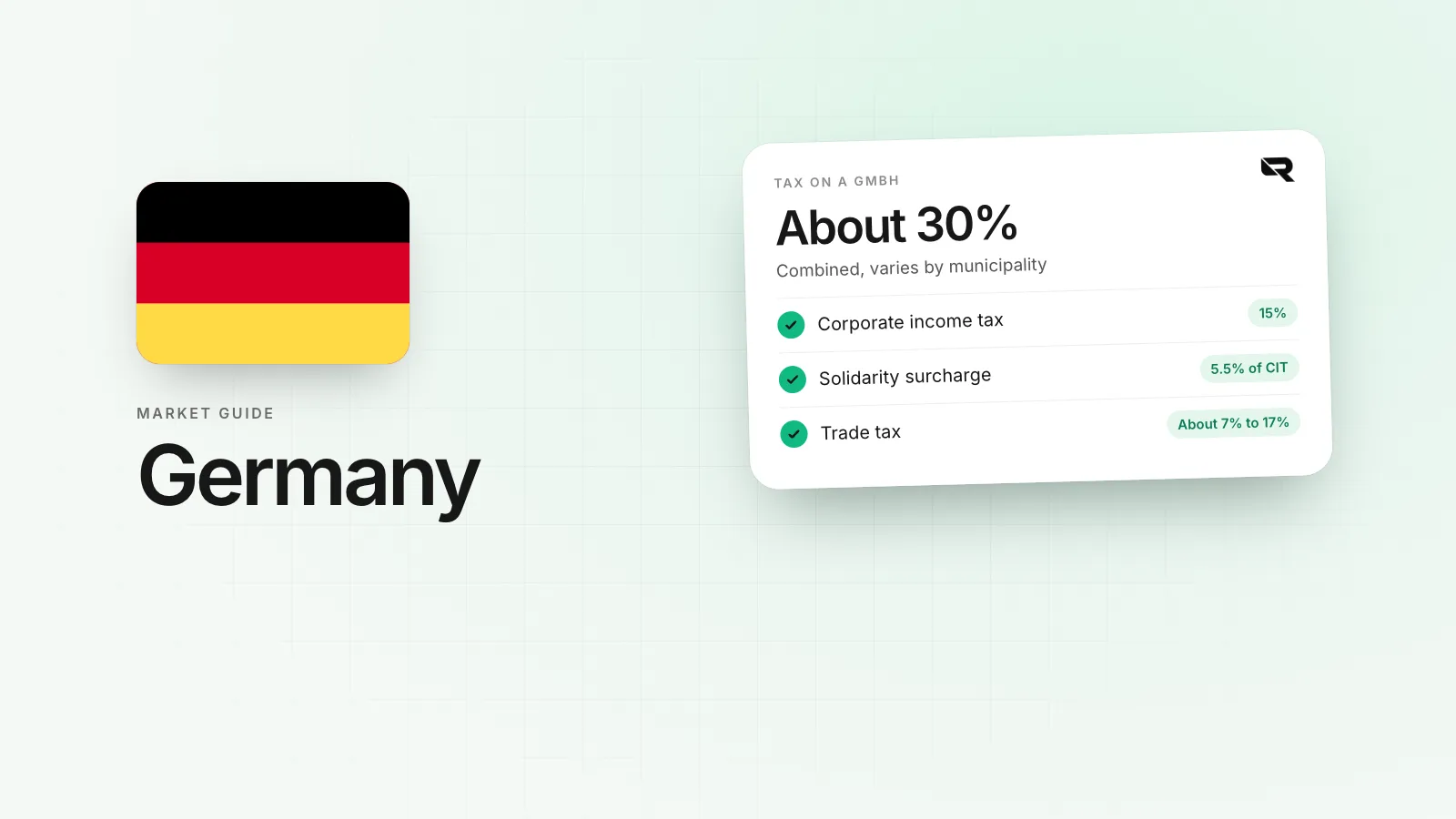
A GmbH pays 15% corporate income tax plus the solidarity surcharge, and trade tax set by its municipality. The combined burden is around 30%. The corporate tax rate falls one point a year from 2028 to 10% in 2032.
- Published
- Reading time
- 1 min read
"Germany corporate tax rate" comes with "rate reduction" and "rate 2026" in Google's suggestions. Both questions now have answers.
The three parts
| Tax | Rate |
|---|---|
| Corporate income tax (Körperschaftsteuer) | 15% |
| Solidarity surcharge | 5.5% of the corporate tax, 0.825% of profit |
| Trade tax (Gewerbesteuer) | 3.5% × municipal multiplier |
With a multiplier of 400%, trade tax is 14% of trade income. Add 15.825% and the total is about 29.8%. In Munich, with a higher multiplier, it is above 32%. In a municipality at the 200% floor, it is about 22.8%.
The cuts from 2028
Germany passed its investment programme in July 2025. The corporate income tax rate falls by one point each year:
| Year | Corporate income tax |
|---|---|
| 2027 | 15% |
| 2028 | 14% |
| 2029 | 13% |
| 2030 | 12% |
| 2031 | 11% |
| 2032 | 10% |
Trade tax is not changed by this law.
What it means for cash planning
A GmbH with €500,000 of profit in Berlin pays about €150,000 today. By 2032, other things equal, the corporate tax part falls from €75,000 to €50,000.
Foreign currency
German tax accounts are in euros. A GmbH with dollar revenue records it at the applicable rate and books gains or losses when it converts. A clean ledger of each conversion helps your Steuerberater.
Paying into Germany: the local rail
| What | Detail |
|---|---|
| Local rail | SEPA Instant Credit Transfer |
| Run by | European Payments Council scheme, run by each bank |
| Settlement | Under ten seconds, 24/7 |
| Published fee | By the EU Instant Payments Regulation, no more than the bank charges for a standard SEPA transfer |
Source: European Payments Council: SEPA Instant Credit Transfer. Checked when this guide was last updated; the scheme's own page has the current figures.
Where Rivet fits
Rivet records each receipt, conversion and payout with its rate and date and exports statements. USD details come on Starter; EUR and GBP on Growth. Check our eligibility list for German companies. Rivet is not a bank; regulated partner institutions hold the funds. See Germany GmbH paying freelancers abroad.
Questions people ask
What is Germany's corporate tax rate in 2026?
15% corporate income tax plus 5.5% solidarity surcharge on it, plus trade tax that depends on the municipality. The combined rate is around 30% in most cities.
When does the rate fall?
From 1 January 2028 the corporate income tax rate falls by one point a year, reaching 10% in 2032, under the law passed in July 2025.
What is trade tax?
Gewerbesteuer, a municipal tax on business profits. The base rate of 3.5% is multiplied by the local Hebesatz, which is at least 200%.
How are foreign currency receipts taxed?
Profits are calculated in euros. Receipts and balances in other currencies are translated, and exchange gains and losses count.
Sources
Alexia compares the accounts, cards and payment tools companies weigh before they switch, and writes Rivet's market guides for founders in a specific country. Prices in Alexia's comparisons come from each provider's own pricing page on the date given in the article, rules come from the regulator or tax authority that sets them, and every source is listed at the end.
More from Alexia M. →This article is general information, not legal, tax or financial advice. Rules and fees change; check the sources above and the provider’s current terms before you act on them.
- germany corporate tax rate
- germany corporate tax rate 2026
- körperschaftsteuer
- gewerbesteuer
- solidarity surcharge
- rate reduction