InvoiceNow for GST registrants in Singapore: who must use it and when
Singapore built InvoiceNow on the Peppol network years ago and is now making it part of GST compliance. Newly incorporated companies that register for GST voluntarily must send invoice data to IRAS through InvoiceNow, with more groups to follow.
- Published
- Reading time
- 2 min read
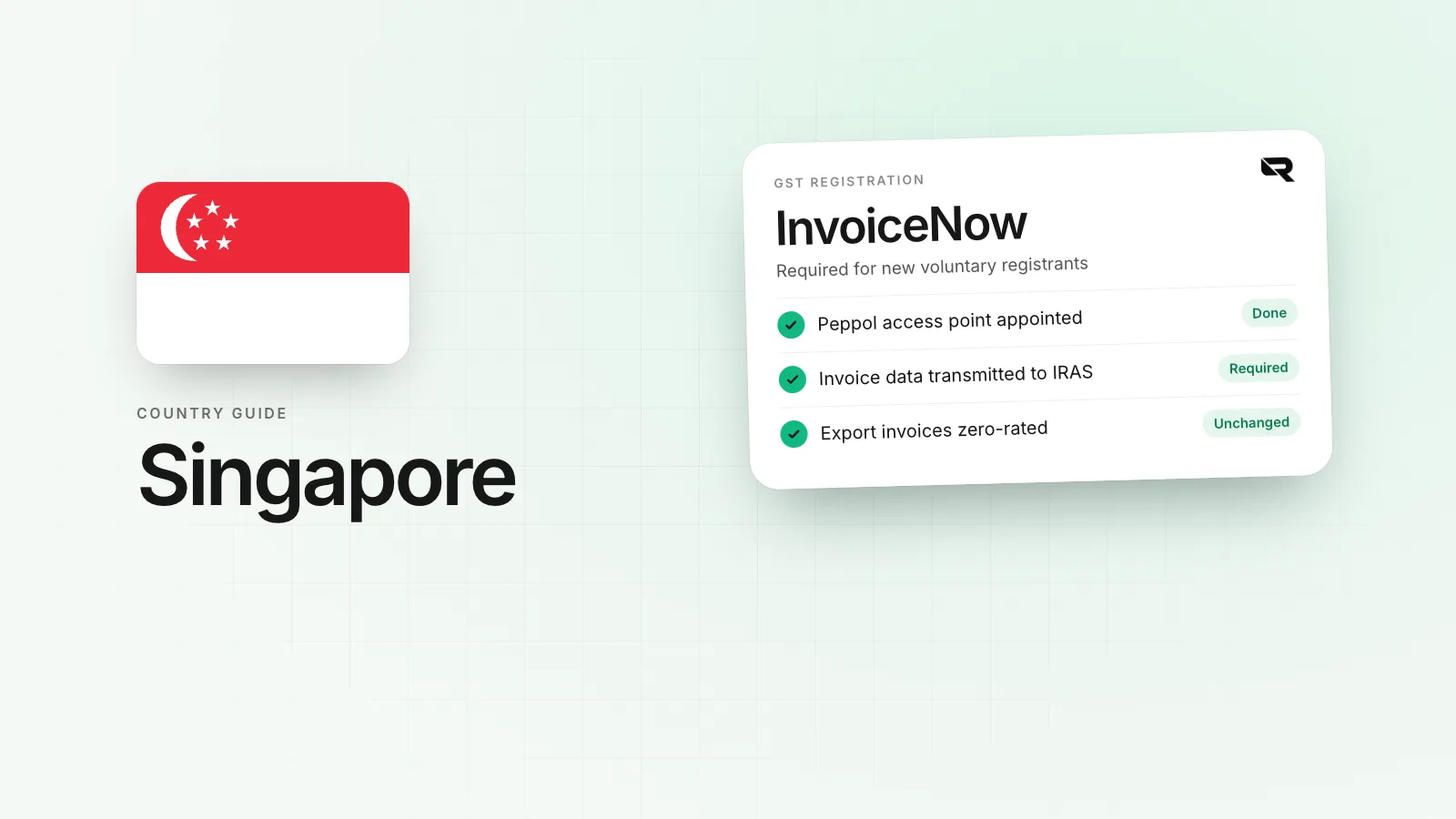
A Singapore software startup incorporated in early 2026 registers voluntarily for GST to recover input tax on its spending. IRAS's confirmation comes with a condition: as a new voluntary registrant, it must transmit invoice data to IRAS through InvoiceNow. Its founders had never heard of Peppol a month earlier.
InvoiceNow
InvoiceNow is Singapore's nationwide e-invoicing network, built on the international Peppol standard and run by the Infocomm Media Development Authority (IMDA). Businesses connect through an InvoiceNow-ready solution or an access point provider and exchange structured invoices.
The GST requirement
IRAS is bringing InvoiceNow into GST compliance in stages:
- From 1 November 2025: newly incorporated companies that register for GST voluntarily must transmit invoice data to IRAS through InvoiceNow.
- From 1 April 2026: all new voluntary GST registrants.
- Later: other GST-registered businesses, on a timeline IRAS will announce.
Getting set up
- Choose an InvoiceNow-ready accounting solution or access point provider.
- Register on the network.
- Configure the solution to send invoice data to IRAS as you issue invoices.
- Test before your first GST return.
Exports
Zero-rated supplies, such as exports of goods and international services, keep their treatment. Keep the documents IRAS requires to support zero-rating, such as evidence that services are supplied to overseas persons and benefit them abroad.
The payment side
InvoiceNow changes how invoices travel and are reported, not how clients pay. Foreign clients still pay Singapore accounts by international transfer unless they can use their own domestic rails.
Paying into Singapore: the local rail
| What | Detail |
|---|---|
| Local rail | FAST and PayNow |
| Run by | Banking Computer Services, under the Association of Banks in Singapore |
| Settlement | Seconds, 24/7, up to S$200,000 per FAST transfer |
Source: Association of Banks in Singapore: FAST. Checked when this guide was last updated; the scheme's own page has the current figures.
Where Rivet fits
Rivet is not an InvoiceNow access point. A Rivet business account accepts registered companies after verification, including Singapore companies, with US account details on every plan, euro and sterling details from the Growth plan and, on Scale, balances in 30 currencies including Singapore dollars. Rivet is not a bank; regulated partner institutions hold the funds.
Questions people ask
What is InvoiceNow?
Singapore's e-invoicing network, based on Peppol, which lets businesses exchange structured invoices and, for GST registrants, transmit invoice data to IRAS.
Who must use InvoiceNow for GST?
Newly incorporated companies registering for GST voluntarily from 1 November 2025, and new voluntary registrants from April 2026. IRAS plans to extend it to other GST-registered businesses.
How do I start?
Choose an InvoiceNow-ready solution or Peppol access point provider, register, and configure it to send invoice data to IRAS.
Does InvoiceNow change GST on exports?
No. Exports of goods and international services remain zero-rated when the conditions are met.
Sources
William covers what happens once a company starts moving money: getting the business verified, paying contractors and suppliers abroad, and keeping card spend under control. William writes for the founder or finance lead who has to make it work this week, and links every rule cited to the text it comes from.
More from William Sunjo M. →This article is general information, not legal, tax or financial advice. Rules and fees change; check the sources above and the provider’s current terms before you act on them.
- singapore
- invoicenow
- peppol
- gst
- iras
- e-invoicing