How a Nigerian company receives dollars from foreign clients
A Nigerian company paid by a US or UK client usually receives the money into a domiciliary account at its bank. Documentation and the CBN's rules decide how fast it arrives and what can be done with it.
- Published
- Reading time
- 1 min read
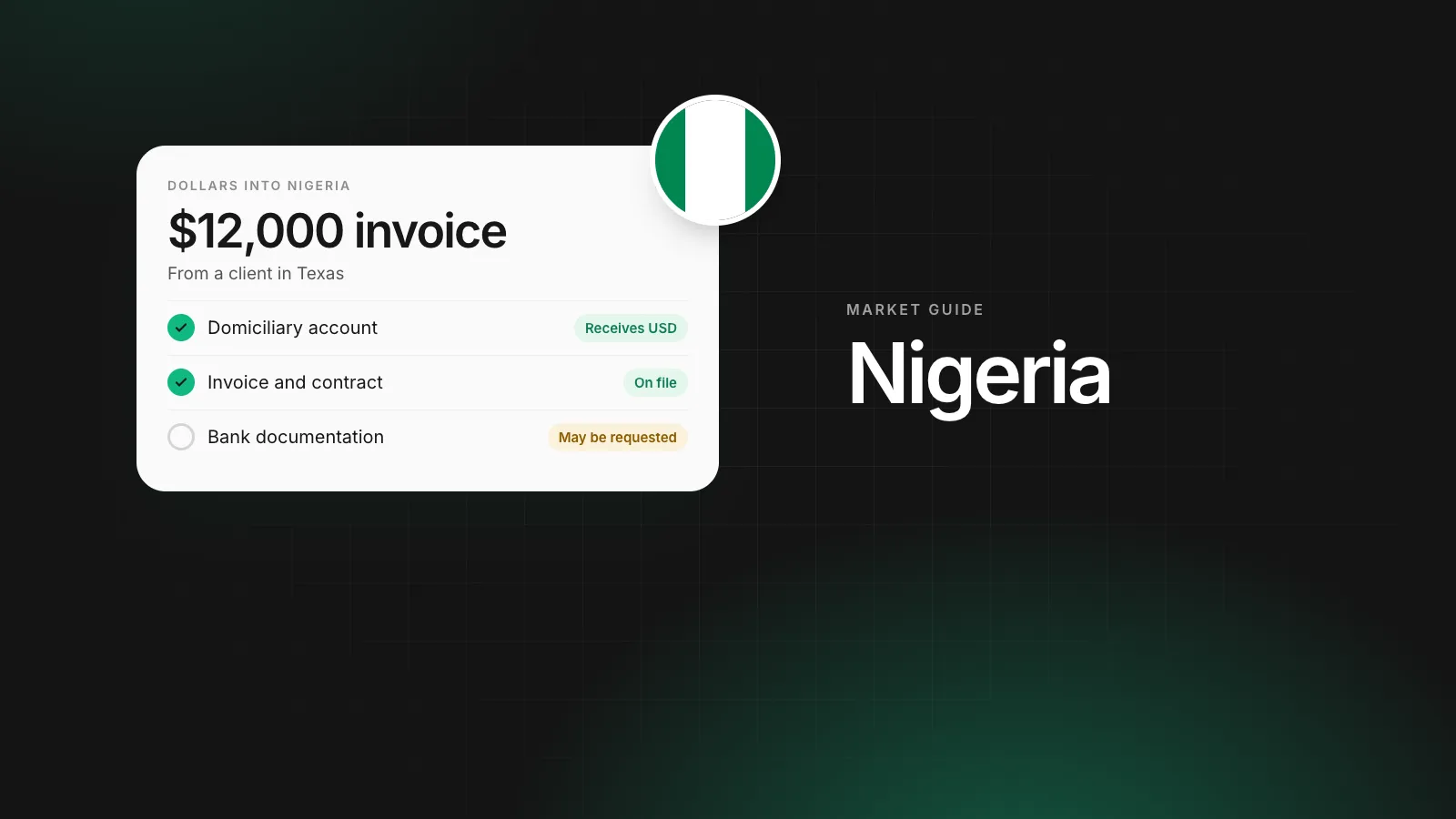
Nigerian agencies, developers and consultancies sell to clients in the US, UK and Europe. Getting paid cleanly depends on the account and the paperwork.
The usual route
- The client pays by SWIFT to the company's domiciliary account.
- The bank credits the account, sometimes after asking for documents.
- The company holds the dollars, uses them for permitted payments, or converts to naira.
Documents to keep ready
| Document | Why |
|---|---|
| Invoice | What the payment is for |
| Contract | The relationship with the client |
| Client details | Name, country |
| Purpose of payment | Services, by type |
Common delays
- Name on the payment does not match the account.
- Missing purpose of payment.
- An intermediary bank holding the wire.
Conversion
Since the CBN unified the official exchange market, companies convert at the prevailing rate through their banks. Check current CBN circulars before planning, since rules have changed often.
Founders with a foreign company
Many Nigerian founders run a US LLC or UK Ltd alongside the Nigerian company, often because clients or investors want a foreign contracting entity. How money moves between them is a legal and tax question; take advice.
Paying into Nigeria: the local rail
| What | Detail |
|---|---|
| Local rail | NIBSS Instant Payment (NIP) |
| Run by | Nigeria Inter-Bank Settlement System |
| Settlement | Seconds, 24/7 |
| Published fee | The CBN caps the sender's charge at ₦10 up to ₦5,000, ₦26 up to ₦50,000 and ₦50 above that |
Source: NIBSS: NIP. Checked when this guide was last updated; the scheme's own page has the current figures.
Where Rivet fits
Rivet serves registered companies in the countries we support, including US LLCs and UK Ltds owned by Nigerian founders where eligible. Those companies get USD details on Starter and EUR and GBP on Growth. Rivet does not advise Nigerian-registered companies to hold proceeds offshore. Rivet is not a bank; regulated partner institutions hold the funds. See NGN business payments.
Questions people ask
How does a Nigerian company receive USD from abroad?
Through a domiciliary account at a Nigerian bank, by SWIFT transfer from the client's bank.
Can a Nigerian company use a foreign account for client payments?
Nigerian exchange control and CBN rules govern this. Take local legal and tax advice first.
How long does an inbound SWIFT take?
Usually one to three business days, longer if the bank requests documents.
Can the company convert dollars to naira?
Yes, through its bank at the prevailing rate in the official market.
Sources
Alexia compares the accounts, cards and payment tools companies weigh before they switch, and writes Rivet's market guides for founders in a specific country. Prices in Alexia's comparisons come from each provider's own pricing page on the date given in the article, rules come from the regulator or tax authority that sets them, and every source is listed at the end.
More from Alexia M. →This article is general information, not legal, tax or financial advice. Rules and fees change; check the sources above and the provider’s current terms before you act on them.
- domiciliary account
- nigeria export of services
- cbn
- usd inflows
- nigeria