Japan's qualified invoice system and cross-border transactions
Japan's qualified invoice system changed how consumption tax credits work. A Japanese company can only deduct input tax on invoices from registered issuers. Exports to foreign clients are outside it, but services bought from abroad have their own rules.
- Published
- Reading time
- 2 min read
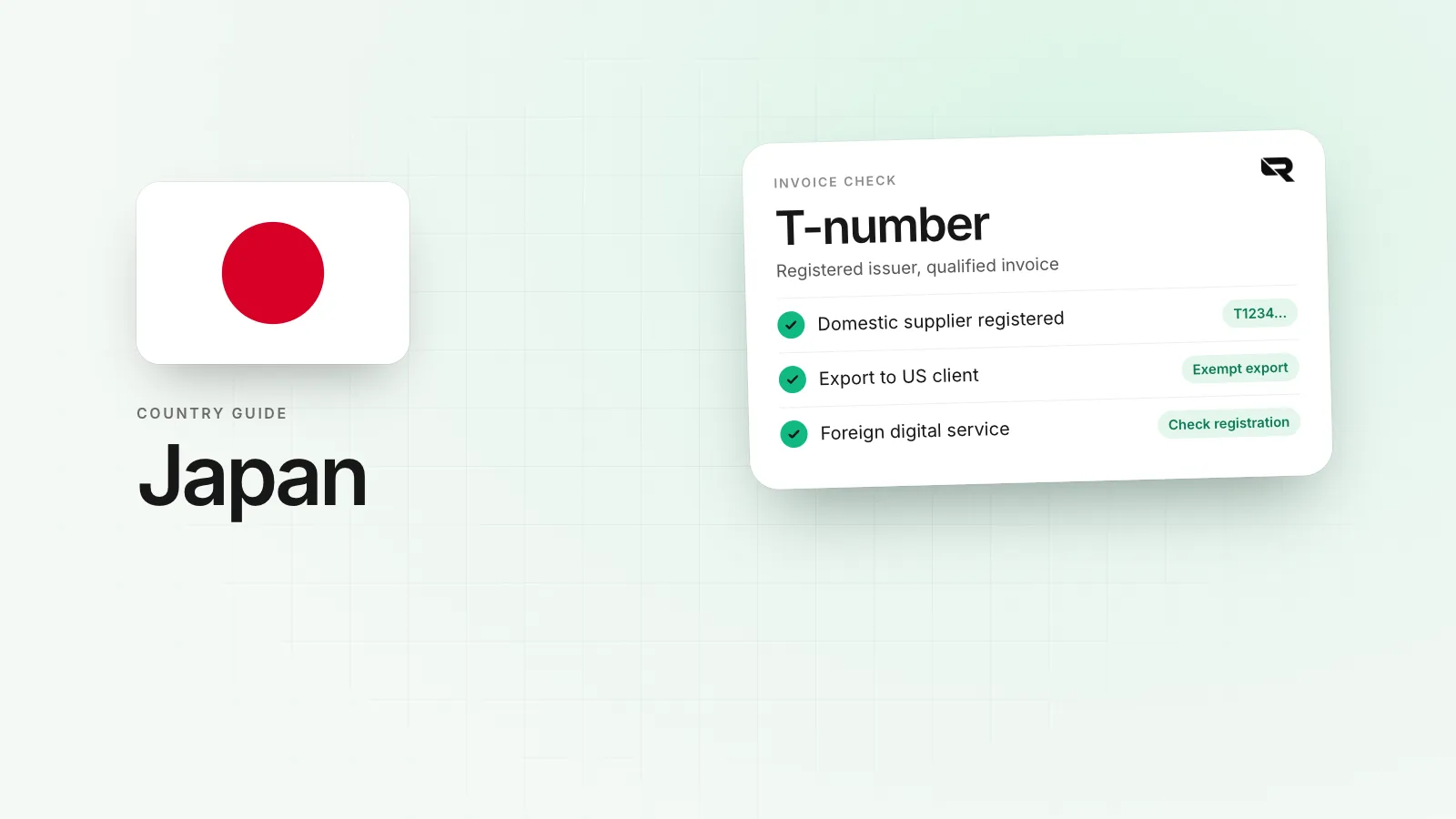
An Osaka machine tool distributor buys parts from Japanese suppliers, sells machines to buyers in the US and Vietnam, and subscribes to a US engineering software platform. Since October 2023 it checks every domestic supplier invoice for a T-number, because without one it cannot fully deduct the consumption tax. Its exports and its foreign software follow different rules.
The qualified invoice system
Japan's qualified invoice system took effect on 1 October 2023. A business can credit input consumption tax only against qualified invoices issued by registered issuers. A qualified invoice shows:
- the issuer's registration number (T-number),
- the applicable tax rate,
- the consumption tax amount.
Transitional relief allows partial credits on purchases from non-registered businesses for several years, stepping down over time.
Exports
Exports of goods and services to foreign clients are exempt from consumption tax. The qualified invoice system concerns Japanese buyers claiming input tax, so foreign buyers are unaffected. Keep export documentation, such as customs records for goods and evidence that services were provided to non-residents.
Services bought from abroad
Two rules matter:
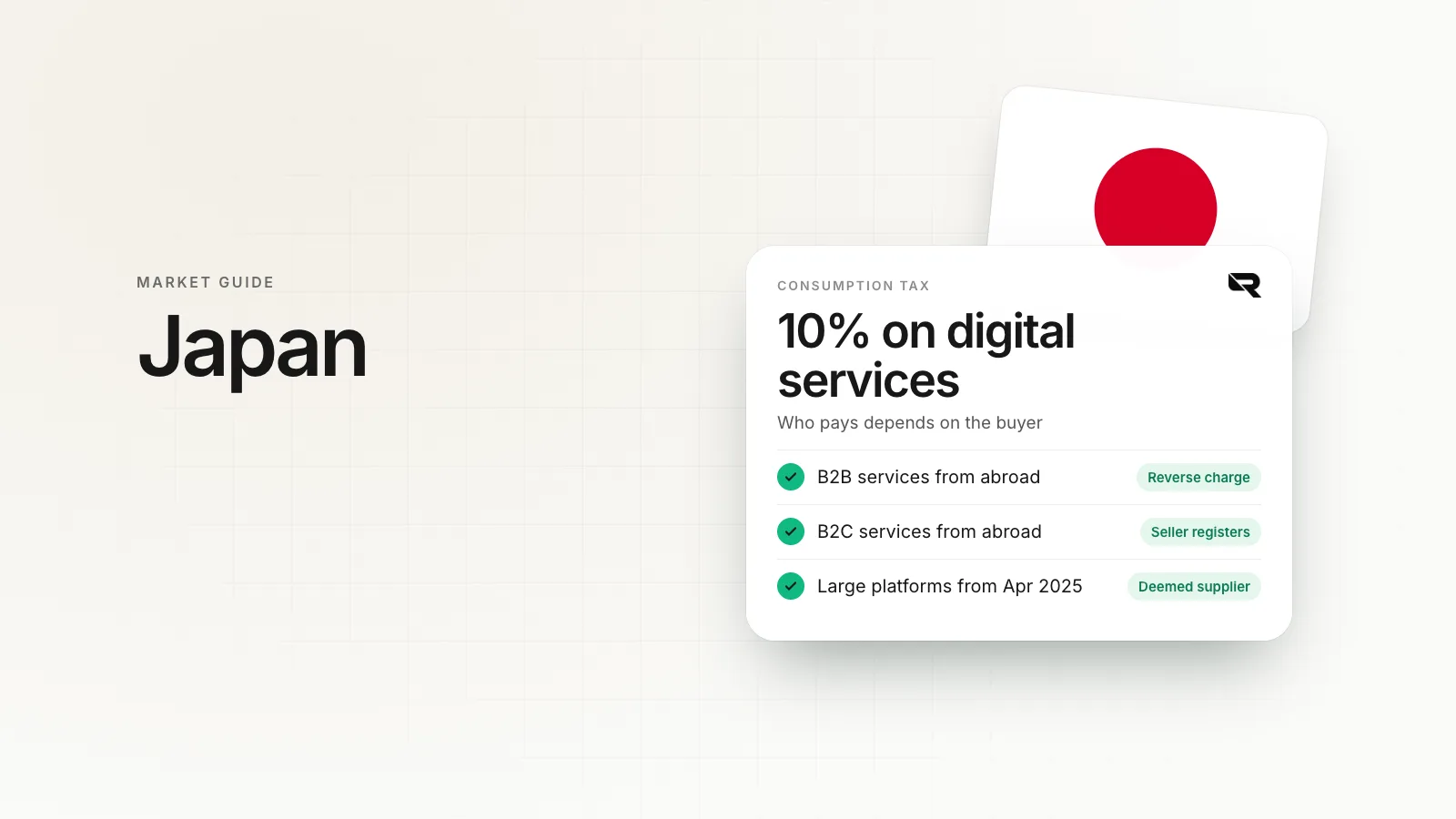
- B2B digital services from foreign providers are generally subject to a reverse charge, where the Japanese business buyer accounts for the consumption tax.
- Consumer digital services require the foreign provider to register in Japan, and registered foreign providers can issue qualified invoices.
Getting paid from abroad
Japanese exporters receive yen or foreign currency from buyers abroad. Holding dollars for dollar costs and converting the surplus when it suits you helps in a period when the yen has moved a lot.
Paying into Japan: the local rail
| What | Detail |
|---|---|
| Local rail | Zengin System |
| Run by | Japanese Banks' Payment Clearing Network (Zengin-Net) |
| Settlement | Within the day in core hours; the More-Time System settles around the clock for participating banks |
Source: Zengin-Net. Checked when this guide was last updated; the scheme's own page has the current figures.
Where Rivet fits
Rivet does not issue qualified invoices. A Rivet business account accepts registered companies after verification, including Japanese companies, with US account details on every plan, euro and sterling details from the Growth plan, and payouts in 120+ countries. Rivet is not a bank; regulated partner institutions hold the funds.
Questions people ask
What is a qualified invoice?
An invoice from a business registered with the National Tax Agency as a qualified invoice issuer, showing its registration number (T-number), the tax rate and the consumption tax amount.
Do exports need qualified invoices?
Exports are exempt from consumption tax. The rules on qualified invoices concern buyers claiming input tax in Japan, so they do not apply to foreign buyers.
How are services bought from abroad treated?
Many B2B digital services from foreign providers are subject to a reverse charge, where the Japanese buyer accounts for consumption tax. Consumer digital services require the foreign provider to register.
Is there transitional relief?
Yes, for some purchases from non-registered issuers, a partial credit applies during a transition period that steps down over several years.
Sources
William covers what happens once a company starts moving money: getting the business verified, paying contractors and suppliers abroad, and keeping card spend under control. William writes for the founder or finance lead who has to make it work this week, and links every rule cited to the text it comes from.
More from William Sunjo M. →This article is general information, not legal, tax or financial advice. Rules and fees change; check the sources above and the provider’s current terms before you act on them.
- japan
- qualified invoice
- consumption tax
- nta
- exports
- reverse charge