UAE free zone companies and corporate tax: qualifying income and the records that protect it
Since the UAE introduced corporate tax in 2023, free zone companies no longer pay nothing by default. A qualifying free zone person pays 0 percent on qualifying income and 9 percent on the rest. Keeping that status depends on what the company earns, from whom, and how it can prove it.
- Published
- Reading time
- 2 min read
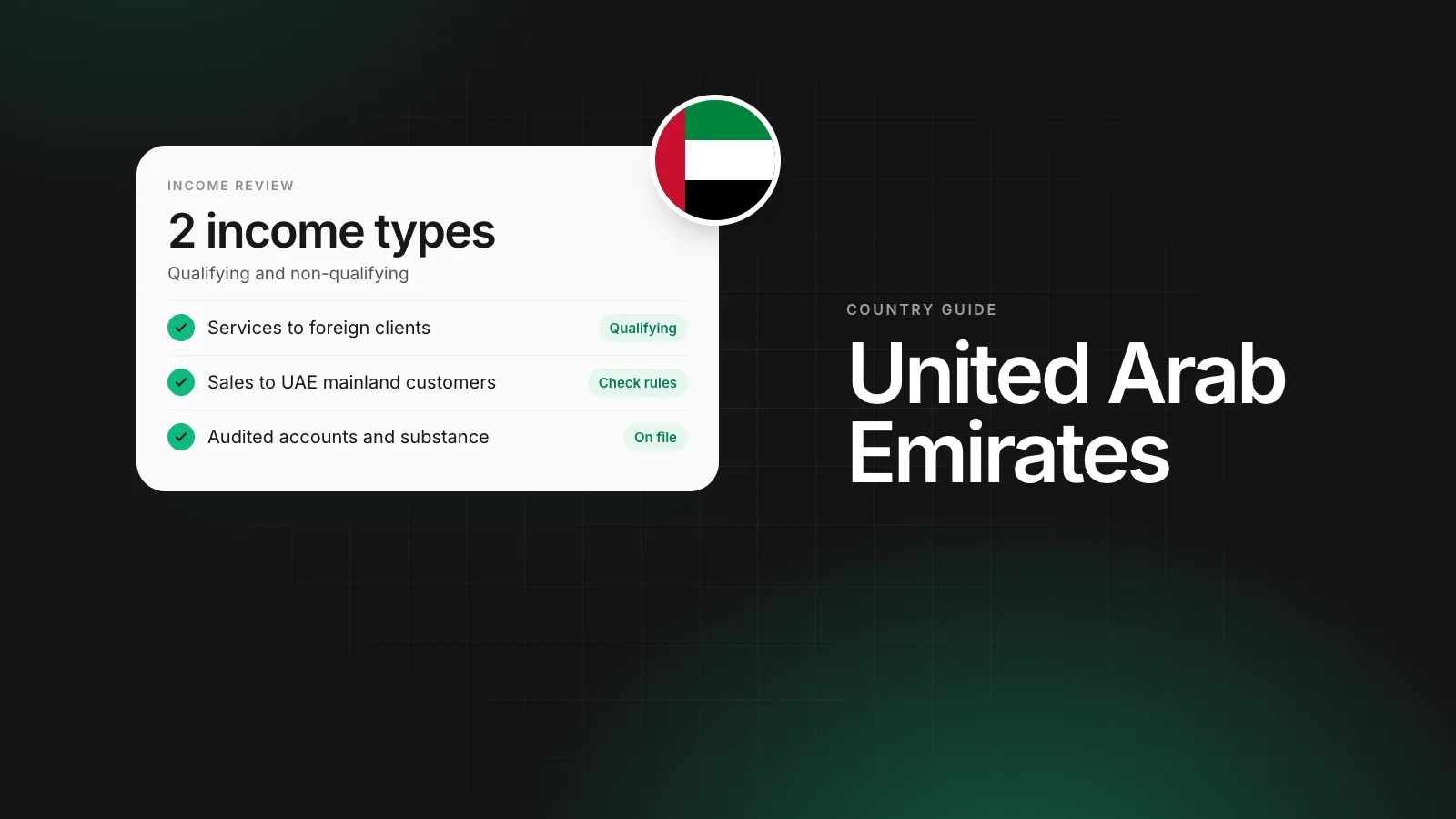
A Dubai free zone software company sells subscriptions to clients in Europe, the US and Saudi Arabia, plus a few to companies on the UAE mainland. Since corporate tax began, its accountant has split revenue every month: income that qualifies for 0 percent under the free zone rules, and income that does not. A large mainland contract could push non-qualifying revenue past the threshold and cost the company its status.
Corporate tax since 2023
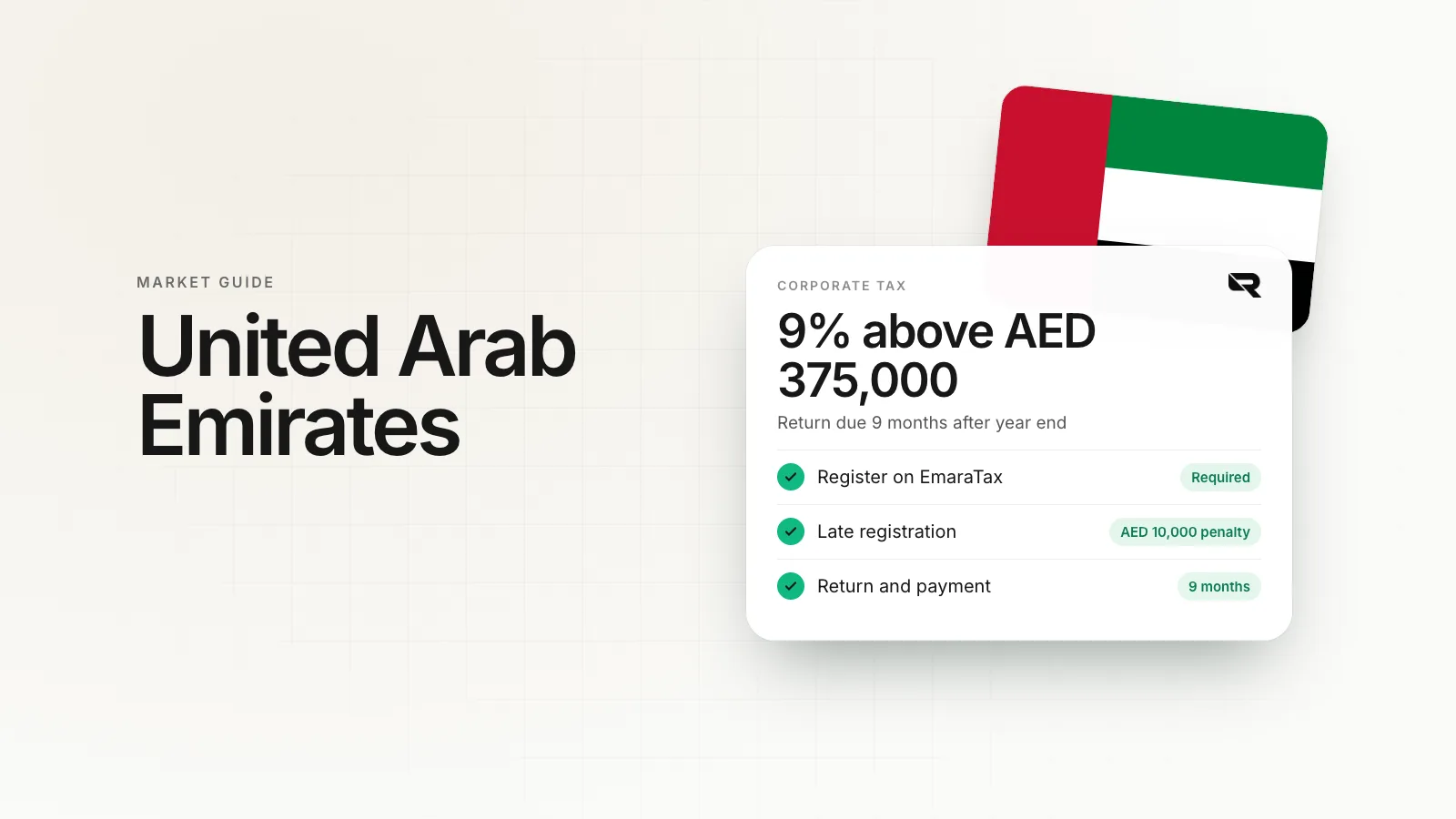
The UAE introduced federal corporate tax for financial years starting on or after 1 June 2023. The standard rate is 9 percent on taxable income above AED 375,000.
Free zone companies can be qualifying free zone persons (QFZPs). A QFZP pays:
- 0 percent on qualifying income,
- 9 percent on taxable income that is not qualifying.
Conditions for QFZP status
- Adequate substance in the free zone: assets, staff and expenses proportionate to the activity.
- Qualifying income from the activities and counterparties the rules allow.
- Audited financial statements.
- Transfer pricing compliance for related-party transactions.
- De minimis: non-qualifying revenue below 5 percent of total revenue or AED 5 million, whichever is lower.
What qualifies
Ministerial decisions list qualifying activities, including many services, manufacturing, trading in qualifying commodities and headquarter services, and set out which counterparties count. Income from transactions with mainland customers is often non-qualifying, with exceptions. The detail matters; take advice for your activities.
Records
To defend the classification, keep for each client:
- The contract, showing who the client is and where it is.
- Invoices.
- Payment records, showing the client paid from where it says it is.
Paying into the United Arab Emirates: the local rail
| What | Detail |
|---|---|
| Local rail | Aani instant payments |
| Run by | Al Etihad Payments, owned by the Central Bank of the UAE |
| Settlement | Seconds, around the clock |
UAEFTS carries larger same-day transfers between banks.
Source: Al Etihad Payments: Aani. Checked when this guide was last updated; the scheme's own page has the current figures.
Where Rivet fits
A Rivet business account accepts registered companies after verification, including UAE free zone companies. Approved companies get US account details in their own name on every plan and euro and sterling details from the Growth plan. Each payment is matched to its invoice, which keeps the client and payment trail in one place for auditors. Rivet is not a bank; regulated partner institutions hold the funds.
See our AED business account guide.
Questions people ask
What is a qualifying free zone person?
A free zone company that meets the conditions in the corporate tax law and ministerial decisions, including substance, audited accounts and the nature of its income. It pays 0 percent on qualifying income.
What income qualifies?
Income from qualifying activities, such as certain services, manufacturing and trading, with other free zone persons or, for some activities, with non-free zone persons. The detailed lists are in ministerial decisions.
What is the de minimis rule?
Non-qualifying revenue must stay below 5 percent of total revenue or AED 5 million, whichever is lower, for the company to keep QFZP status.
Do free zone companies need audited accounts?
Yes, to be a QFZP. Audited financial statements are a condition of the regime.
Sources
William covers what happens once a company starts moving money: getting the business verified, paying contractors and suppliers abroad, and keeping card spend under control. William writes for the founder or finance lead who has to make it work this week, and links every rule cited to the text it comes from.
More from William Sunjo M. →This article is general information, not legal, tax or financial advice. Rules and fees change; check the sources above and the provider’s current terms before you act on them.
- uae
- free zone
- corporate tax
- qfzp
- qualifying income
- fta