East Asia and Pacific: Korea, Taiwan, Australia, New Zealand
Korea wants an overseas account reported first, Taiwan wants a declaration on conversions above NT$500,000, and Australia and New Zealand mostly want you to stop converting every US dollar on arrival. Tariffs, withholding and NRCT, country by country.
- Published
- Reading time
- 7 min read
Companies in South Korea, Taiwan, Australia and New Zealand face two kinds of cross-border rule. Korea and Taiwan regulate foreign exchange: reporting overseas accounts, declaring large conversions and withholding on payments to foreign providers. In Australia and New Zealand the questions are GST on exports, tax on contractors and the cost of converting every US dollar on arrival.
Jump to a country: South Korea · Taiwan · Australia · New Zealand
The four countries at a glance
| Country | Currency | Foreign exchange rule | Domestic rail | What a company dealing abroad has to do |
|---|---|---|---|---|
| South Korea | Won (KRW) | Foreign Exchange Transactions Act; receipts classified by Korean banks | KFTC electronic banking network, in seconds, 24/7 | Report an overseas deposit account to the designated FX bank before opening it |
| Taiwan | New Taiwan dollar (TWD) | Declaration on settlements above NT$500,000 equivalent | Domestic bank transfers | Withhold 20 percent on Taiwan-source payments to foreign companies, paid by the 10th |
| Australia | Australian dollar (AUD) | Foreign currency paid into an AUD account is converted on arrival at the bank's rate | New Payments Platform (Osko and PayID), in seconds; BECS batches for payroll | Keep evidence that services are GST-free exports; record USD income in AUD consistently |
| New Zealand | New Zealand dollar (NZD) | Foreign currency paid into an NZD account is converted on arrival at the bank's rate | Interbank settlement within the hour, every day since 2023 | Deduct NRCT on work performed in New Zealand unless exempt |
South Korea: FX reporting rules and exporters after the 15 percent US tariff
Korean companies receive payments from abroad through Korean banks, which act as designated foreign exchange banks and classify each receipt with the contract and invoice under the Foreign Exchange Transactions Act and its regulations. Korea has relaxed its old repatriation requirements over time, so check the current rule for your type of receipt with your bank. A Korean company that wants a deposit account abroad generally reports it first to its designated foreign exchange bank, and balances and transactions above certain amounts may need periodic reporting. The government has raised several reporting thresholds and simplified procedures in recent reforms, and the Ministry of Economy and Finance publishes the specifics, but reporting has not gone away: failing to report a required transaction can lead to fines. At home, the KFTC network settles won transfers in seconds, around the clock.
Exporters to the US also adjusted to a new tariff. The KORUS free trade agreement still exists, but the US applied additional tariffs to Korean goods in 2025, and an agreement between the two governments settled the rate at 15 percent for most products. Certain autos, steel and semiconductors are covered by separate measures, so check your HS code with a customs broker. The importer of record pays the duty, which for most SMEs selling FOB or FCA is the US buyer, though buyers now negotiate price to share it. Price in dollars, hold dollars and convert to won when it suits, take deposits from new or slower buyers, use letters of credit for large orders, and keep export declarations, invoices and payment records together. See how tariffs get paid.
Taiwan: NT$500,000 FX declarations and withholding on foreign providers
Taiwanese exporters can receive and hold US dollars in foreign currency accounts at Taiwanese banks. Under the Foreign Exchange Control Act and the central bank's regulations, any foreign exchange settlement above NT$500,000 equivalent per transaction, such as converting dollars into NT dollars for payroll, needs a declaration. The company completes it and the bank processes it and reports it to the Central Bank of the Republic of China (Taiwan). Settlements for exports and imports of goods and services are generally outside the annual limits that apply to other purposes, provided the trade is documented, so keep invoices and export records ready. The NT dollar has moved significantly against the US dollar at times. Paying imported materials, equipment and overseas services from the dollar balance and converting a planned amount ahead of payroll keeps the rate a decision.
Paying the other way brings withholding. A Taiwanese company paying a foreign company with no fixed place of business or business agent in Taiwan withholds tax on Taiwan-source income: royalties for patents, software or know-how used in Taiwan, fees for services performed in Taiwan, interest and some other income. The general rate is 20 percent, and tax treaties, special arrangements or tax authority approval for some technical service fees and royalties can reduce it. Services performed entirely outside Taiwan may be foreign-source, judged by where the work is performed and used, so contracts that separate on-site and remote work help. The payer pays the tax and files a withholding statement by the 10th of the month after payment, and penalties apply for failing to withhold. Agree in the contract whether the fee is gross or net.
Australia: collecting USD from US clients and paying offshore teams
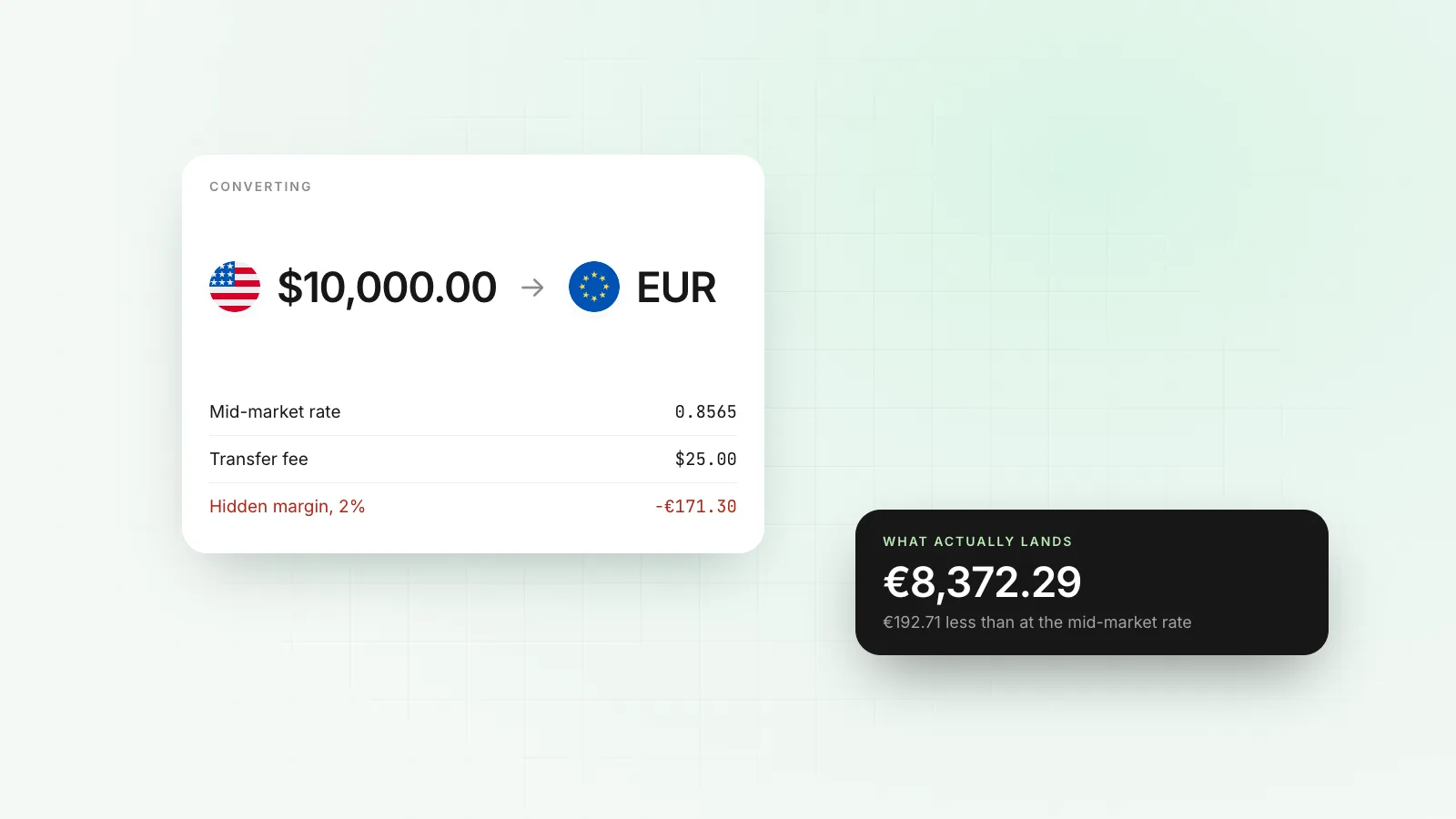
US dollars paid into an Australian dollar account are converted on arrival at the bank's retail rate, usually some way from the mid-market rate, and a wire may also lose an intermediary fee. US account details in the company's own name let US clients pay by ACH, as they pay any vendor, in full and usually in one to two business days. Many Australian companies also pay US software, ads, contractors and travel in dollars, so holding dollars and converting the surplus before payroll avoids paying the margin twice. Services supplied to non-residents outside Australia are generally GST-free when the conditions in the GST law are met; keep contracts showing the client is a non-resident and the service is used abroad. Record US dollar income in AUD at a rate the ATO accepts, consistently. Domestically, the New Payments Platform settles Osko and PayID transfers in seconds, while BECS Direct Entry still carries batch payroll and supplier runs.
Startups building teams in the Philippines and India choose between contractors, who suit project work with their own tools, hours and other clients, and an employer of record, which employs people locally, runs payroll and compliance and invoices the startup a fee on top. Misclassification is judged under the worker's local law, and long-term, exclusive, full-time contractor arrangements can count as employment there. For each contractor payment keep the contract, the invoice, and proof of payment with the exchange rate, which support the deduction. AUD sent by SWIFT is converted by the contractor's bank, so pay pesos to a bank account or e-wallet and rupees with a clear purpose such as "software development services", which Indian banks need to classify the payment as a service export. More in how to pay international contractors.
New Zealand: NRCT on overseas contractors and collecting export currencies
New Zealand companies paying overseas contractors deduct non-resident contractors' tax (NRCT) only when the work or services are performed in New Zealand. The payer deducts it and pays it to Inland Revenue. The standard rate is 15 percent where the contractor provides a tax code declaration, with higher rates without one. Contractors can apply to Inland Revenue for a certificate of exemption, often granted where a double tax agreement means they owe no New Zealand tax, for example with no permanent establishment in New Zealand and a stay under treaty time limits. With a certificate the payer deducts nothing, and thresholds apply for small or short engagements. Remote design, development and consulting done wholly from Manila, Bengaluru or Buenos Aires is generally outside NRCT. Keep contracts, invoices, evidence of where the work was done and payment records with the rate, and pay contractors abroad in their own currency on local rails.
On the export side, New Zealand companies sell in Australian dollars, US dollars, pounds and euros. Into an NZD account each payment is converted on the day it arrives, so a rise in the Kiwi against the pound shows up directly in UK revenue. Buyers pay fastest on their own rails (ACH in the US, Faster Payments in the UK, SEPA in Europe) when the exporter has local details in its own name. Hold each currency, pay freight, marketing and trade fairs from it, and convert to NZD on a schedule ahead of payroll and supplier payments. Larger exporters add forward contracts for predictable NZD needs; see foreign exchange risk for small businesses. Exports of goods, and many services supplied to non-residents outside New Zealand, are zero-rated for GST when the conditions are met. At home, interbank payments have settled within the hour every day of the year since 2023.
Where Rivet fits
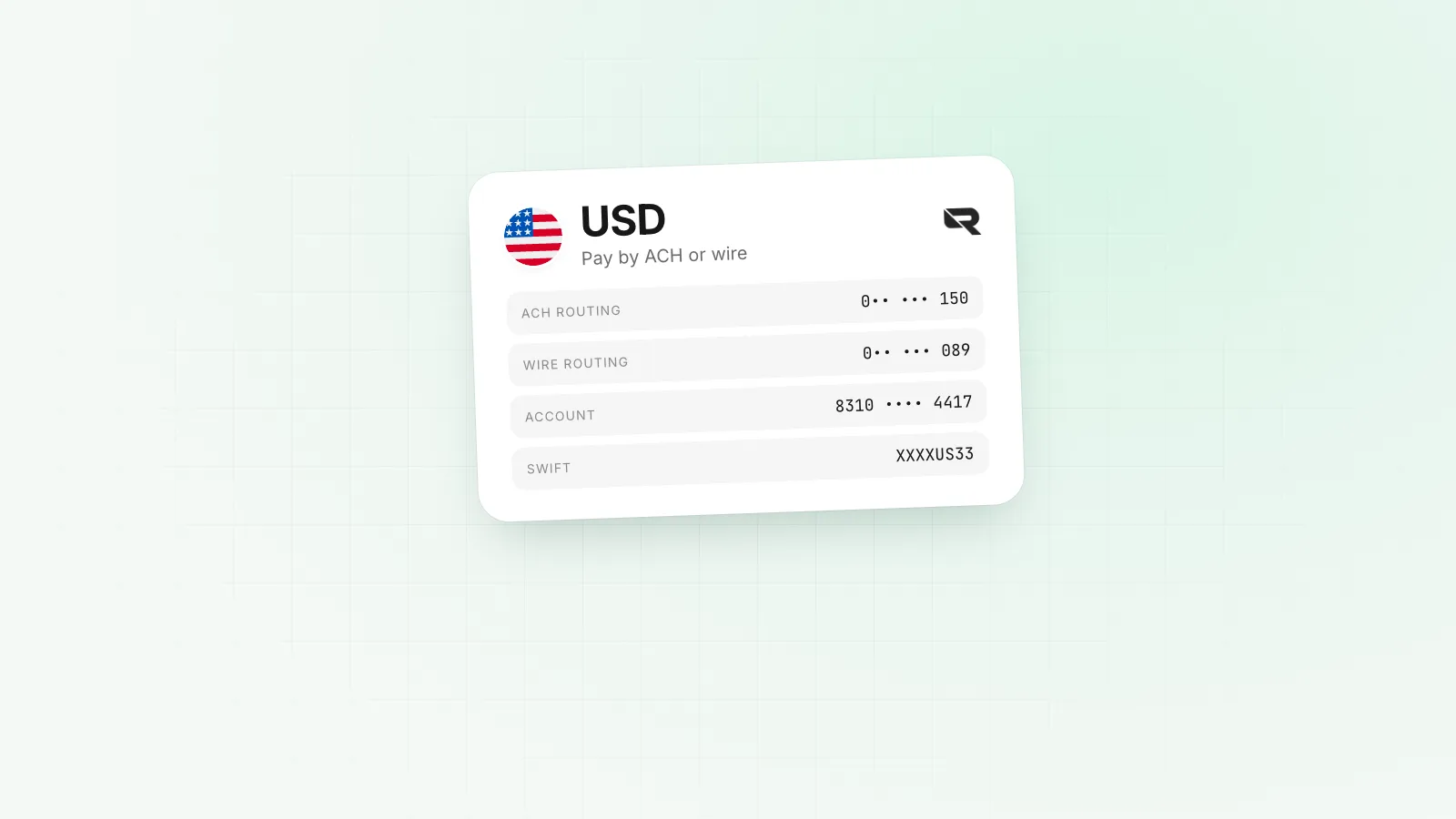
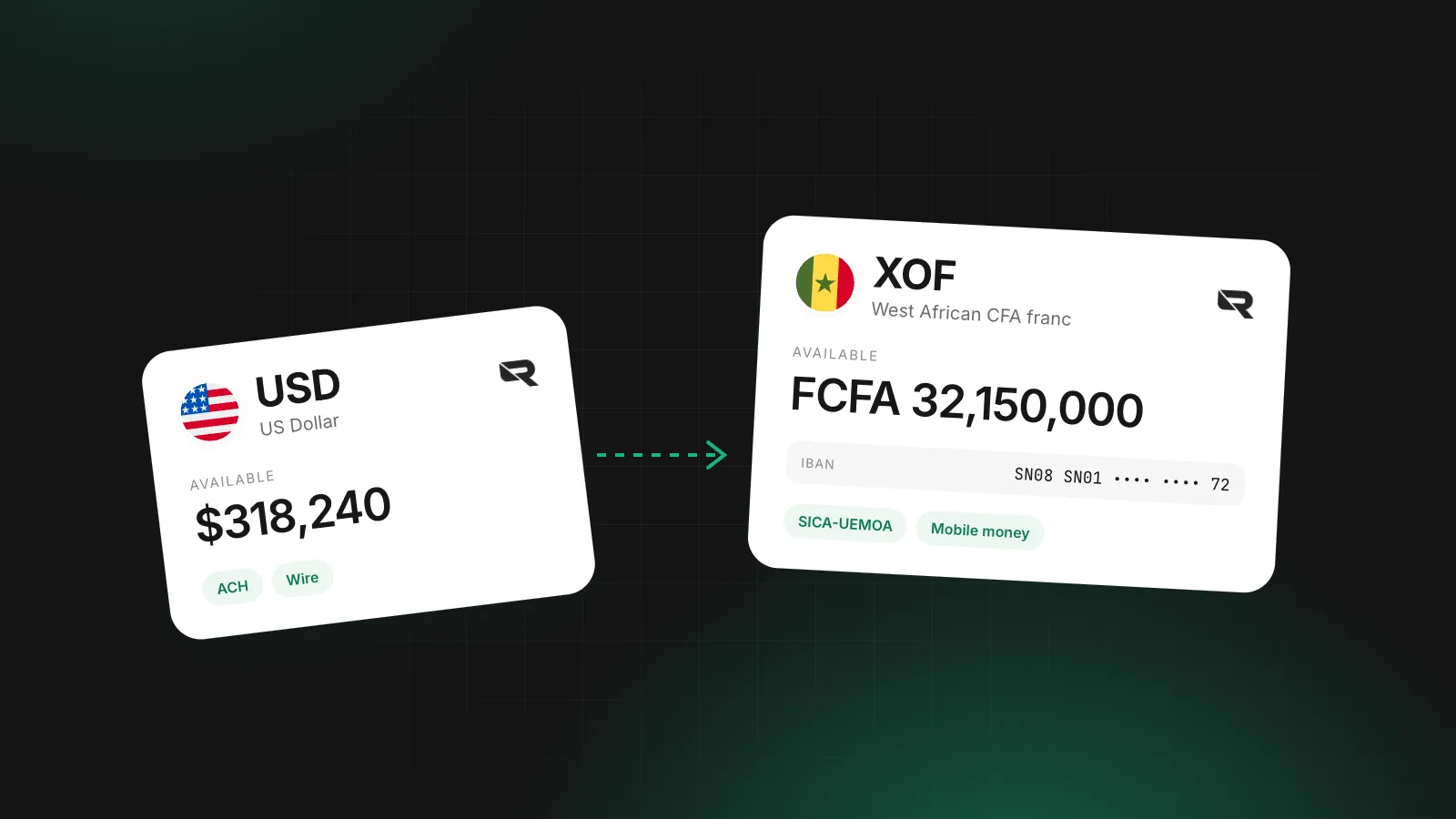
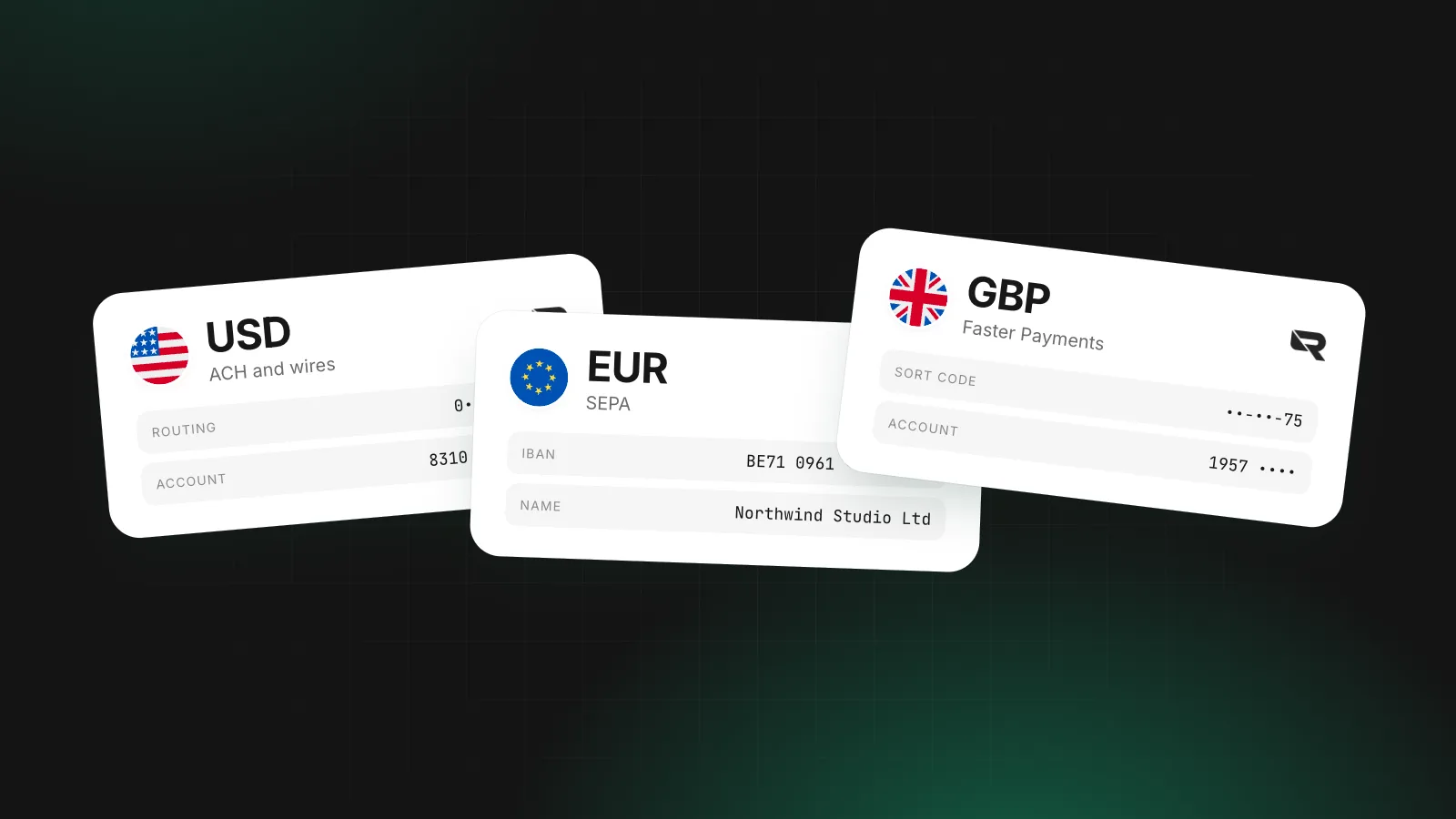
Companies registered in supported countries can apply for a Rivet business account, and availability for each country is confirmed during verification. Approved companies get US account details in their own name on every plan, plus euro and sterling details from the Growth plan. On the Scale plan they hold balances in 25 currencies, including Australian and New Zealand dollars. Dollars can be held, spent with Visa company cards, paid to contractors in 120+ countries (including Philippine and Indian accounts in local currency where available) or converted at a rate shown before you confirm. Bulk payouts send the month's contractor invoices together, and from Growth a second approver can be required.
A Korea- or Taiwan-registered company should follow its foreign exchange reporting rules and check with its bank before opening or receiving into an account abroad; their US subsidiaries and other companies registered elsewhere can apply in their own name if their country of registration is supported. Rivet does not calculate or file NRCT or Taiwanese withholding. Rivet is not a bank; regulated partner institutions hold the funds. See Rivet business accounts.
Questions people ask
Can a Korean company open a bank account abroad?
Yes, generally after reporting to its designated foreign exchange bank under the Foreign Exchange Transactions Regulations. Balances above thresholds may need periodic reporting.
What tariff applies to Korean goods in the US?
Under the 2025 arrangement, most Korean goods face 15 percent. Some products, such as certain autos, steel and semiconductors, are covered by separate measures. Check your HS code.
When is an FX declaration needed in Taiwan?
For foreign exchange settlements, such as converting foreign currency into NT dollars or the reverse, above NT$500,000 equivalent per transaction. The bank processes it and reports it to the central bank.
When does Taiwan withhold tax on payments to foreign companies?
When the payment is Taiwan-source income, such as royalties for use in Taiwan or fees for services performed in Taiwan, and the recipient has no fixed place of business in Taiwan. The general rate is 20 percent.
Is GST charged on services to US clients from Australia?
Services supplied to non-residents outside Australia are generally GST-free if the conditions in the GST law are met.
When does NRCT apply in New Zealand?
When a New Zealand payer makes a contract payment to a non-resident contractor for work or services performed in New Zealand, subject to thresholds and exemptions. Remote work done abroad is generally outside it.
Can NRCT contractors get an exemption?
Yes. Inland Revenue can issue a certificate of exemption, for example where a tax treaty means the contractor has no New Zealand tax liability. With a certificate, the payer deducts nothing.
Sources
- 01Ministry of Economy and Finance (Korea): Foreign exchange policy
- 02Bank of Korea: Foreign exchange
- 03Office of the US Trade Representative: Korea
- 04KFTC
- 05Central Bank of the Republic of China (Taiwan): Foreign exchange
- 06Ministry of Finance (Taiwan): Taxation Administration
- 07Australian Taxation Office: GST and international transactions
- 08Australian Taxation Office: Business records
- 09Nacha: What is ACH?
- 10NPP Australia
- 11Inland Revenue (NZ)
- 12Inland Revenue (NZ): GST
- 13Payments NZ
- 14Pay.UK: Faster Payments
William covers what happens once a company starts moving money: getting the business verified, paying contractors and suppliers abroad, and keeping card spend under control. William writes for the founder or finance lead who has to make it work this week, and links every rule cited to the text it comes from.
More from William Sunjo M. →This article is general information, not legal, tax or financial advice. Rules and fees change; check the sources above and the provider’s current terms before you act on them.
- south korea
- taiwan
- australia
- new zealand
- nrct
- withholding tax
- usd revenue
- us tariffs