How tariffs get paid: importers, customs brokers and payments to CBP
A tariff is a tax paid by the importer, not by the country the goods come from. The payment runs through customs entries, brokers and CBP's systems. Here is how the money moves and what a growing importer needs in place.
- Published
- Reading time
- 2 min read
Tariffs have been in the news constantly since 2025, and a common misunderstanding keeps coming up: that the exporting country pays them. It does not. A US tariff is a tax paid to U.S. Customs and Border Protection by whoever imports the goods. For a business, the questions are who that is on each shipment, how the payment is made and when the cash leaves.
Who pays
The importer of record is the party named on the customs entry and responsible for duties. For a US company buying from a factory abroad, that is normally the US company. For a foreign seller shipping to US customers delivered duty paid, it can be the seller or its logistics partner. Your Incoterms decide; see Incoterms explained.
How the amount is set
| Input | What it means |
|---|---|
| Classification | The product's code in the Harmonized Tariff Schedule sets the base rate |
| Customs value | Usually the transaction value: what you paid the seller, with some adjustments |
| Country of origin | Where the product was made or substantially transformed; it decides which additional tariffs apply |
Getting classification or origin wrong is the most common way to overpay, or to underpay and face penalties later.
The payment flow
- Goods arrive. A customs broker files the entry, usually before arrival.
- CBP releases the goods.
- The entry summary, with duties calculated, is filed within ten working days of release.
- Duty is paid by ACH, through the importer's own ACH account in CBP's ACE system or through the broker's account.
- If the broker pays, it invoices the importer, often with a disbursement fee.
Eligible importers can join the periodic monthly statement, paying a whole month's entries in one ACH debit on a set day the next month. That improves cash flow noticeably for frequent importers.
Bonds
Most commercial imports need a customs bond: a guarantee from a surety that duty will be paid. A continuous bond covering a year of entries is cheaper than single-entry bonds once you import regularly. The bond amount is linked to the duties you pay, so rising tariffs can mean a bigger bond.
Cash flow
Duty is paid when goods enter, often weeks before you sell them, and months before a marketplace pays out. When tariffs rise, that gap grows. Add duty to a multi-currency cash forecast and to landed cost per product. Sellers shipping small parcels should also read about the end of US de minimis.
Paying duty from Rivet
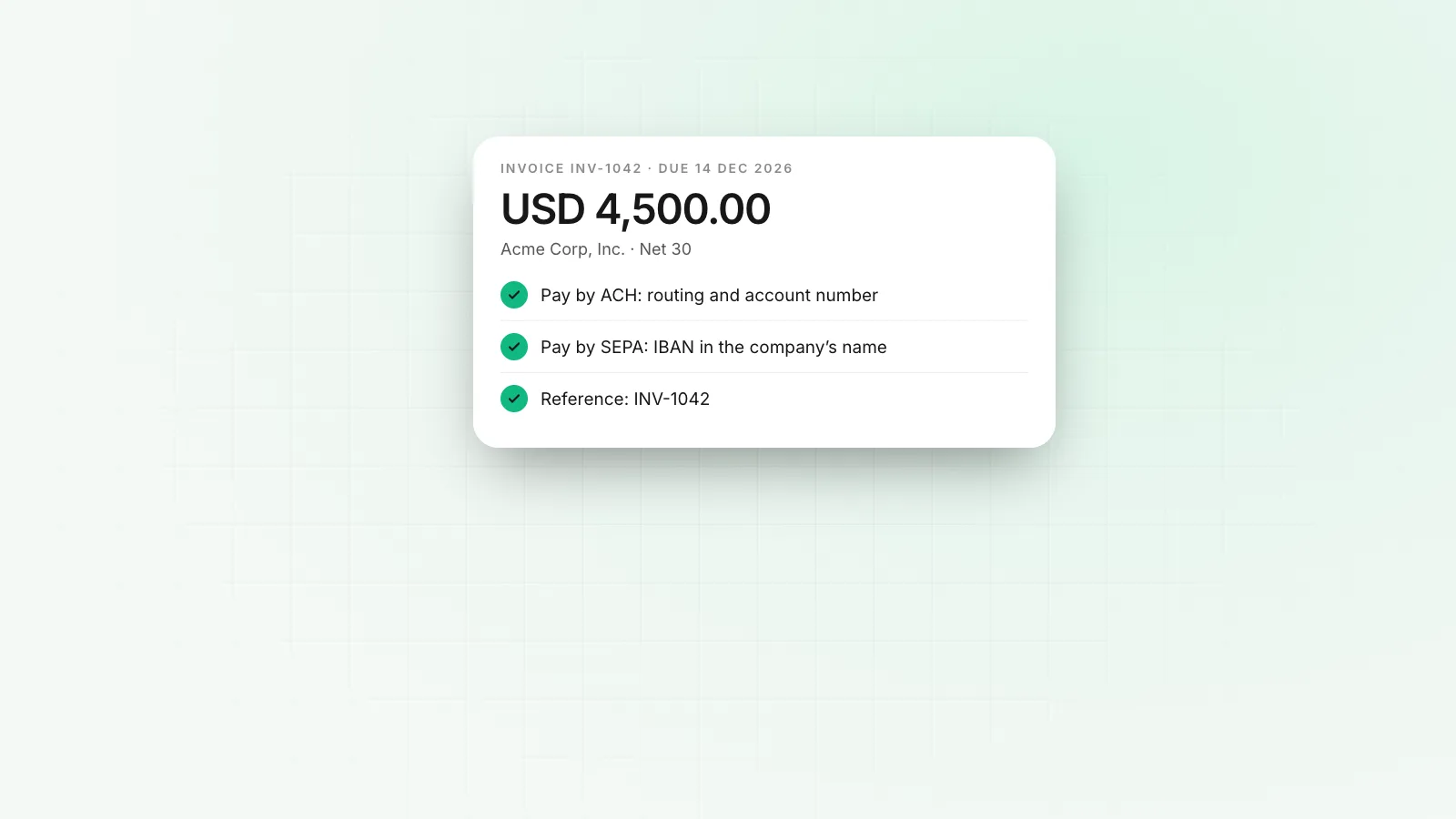
Duty and broker invoices are payable in dollars by ACH. A Rivet USD account has ACH details in your company's name and pays US invoices on ACH, same-day ACH and wire. See Payouts.
Questions people ask
Who actually pays a tariff?
The importer of record, the party named on the customs entry. That is usually the buyer in the US, or the foreign seller when it ships delivered duty paid. The cost is then passed on in prices to some degree.
How do importers pay customs duties?
Mostly through ACH, either by the importer's own ACH account in CBP's ACE system or by the customs broker's account, with the broker billing the importer. Periodic monthly statements let eligible importers pay a month's entries in one payment.
What is a customs bond?
A guarantee from a surety that the importer will pay duties and follow customs rules. A single-entry bond covers one shipment; a continuous bond covers all entries for a year. Most commercial imports need one.
When is duty due?
Duties are generally due with the entry summary, filed within ten working days of the goods' release. Importers on periodic monthly statements pay later, on a set day the following month.
Sources
William covers what happens once a company starts moving money: getting the business verified, paying contractors and suppliers abroad, and keeping card spend under control. William writes for the founder or finance lead who has to make it work this week, and links every rule cited to the text it comes from.
More from William Sunjo M. →This article is general information, not legal, tax or financial advice. Rules and fees change; check the sources above and the provider’s current terms before you act on them.
- how tariffs are paid
- importer of record
- customs broker
- cbp ach
- import duty