South America business payments: a country-by-country guide
Exchange rules, export invoices and withholding on payments abroad in eight South American countries: Argentina's BCRA rules, Brazil's IRRF and CIDE, Chile's impuesto adicional, Colombia's DIAN e-invoices, Ecuador's ISD, Peru's IGV exemption, Paraguay's maquila regime and Uruguay's free zones.
- Published
- Reading time
- 11 min read
Companies in South America that sell abroad mostly invoice in US dollars, then run into their own country's rules on what happens next. Argentina and Colombia regulate how export proceeds reach the local exchange market, Ecuador taxes money that leaves, and Brazil, Chile and Peru tax payments to foreign suppliers. Paraguay and Uruguay let companies hold dollars freely.
Jump to a country: Argentina · Brazil · Chile · Colombia · Ecuador · Peru · Paraguay · Uruguay
How the eight countries compare
| Country | Currency | Exchange rule that matters | Local rail | What exporters must do |
|---|---|---|---|---|
| Argentina | Peso, floating band since April 2025 | BCRA Comunicaciones; exemptions for exporters that meet joint conditions | Transferencias 3.0, seconds, 24/7 | Invoice with factura E through ARCA; check the current BCRA rule each month |
| Brazil | Real | Law 14.286 of 2021 lets exporters keep proceeds abroad; holdings above thresholds reported to the Central Bank | Pix, seconds, 24/7 | Keep contract, invoice and NFS-e where required for PIS, COFINS and ISS relief |
| Chile | Peso | Central Bank reporting for operations above thresholds | TEF through the CCA, seconds | Get the service qualified by Aduanas; issue export invoice type 110 |
| Colombia | Peso | Goods go through the regulated exchange market; services are free-market | Bre-B instant payments; ACH Colombia | Issue DIAN-validated e-invoices with a CUFE; keep IVA exemption documents |
| Ecuador | US dollar | ISD on money leaving; proceeds not brought back in the legal period presumed to have left | SPI, within the business day | Bring export proceeds into Ecuador within the legal period |
| Peru | Sol, with dollars common in business | Dollar accounts common at local banks | Transferencias inmediatas through the CCE, seconds, 24/7 | Meet Appendix V conditions; invoice through SUNAT |
| Paraguay | Guaraní | Liberal regime; dollars held freely | Bank transfers | Match maquila invoices to the CNIME-approved programme |
| Uruguay | Peso | No exchange controls | Bank transfers | Issue e-Factura de exportación through the DGI's CFE system |
Argentina: collecting dollars and paying suppliers after the cepo
Argentine companies can collect dollars from foreign clients and pay most foreign suppliers within days, under Central Bank (BCRA) rules that eased sharply in 2025. On 14 April 2025 the BCRA lifted most currency restrictions on individuals and moved the peso to a floating band. Companies kept rules for longer: obligations to bring export proceeds into Argentina and settle them through the official exchange market.
Through 2026 the BCRA eased those rules further. It exempted exporters of goods and services that meet joint conditions from repatriating and settling proceeds, and later in the year gave broader treatment to service exports regardless of their concept code. The rules come as numbered Comunicaciones that amend the consolidated text on foreign trade and exchange, so ask your bank's foreign trade desk each month which rule applies to your receipts, whether you meet an exemption's conditions and which settlement deadlines apply.
Exports of services are invoiced with the electronic factura E through ARCA, formerly AFIP. Banks ask for the contract, each factura E and proof of payment when classifying receipts. Many companies still treat dollars as their reference currency, and many staff and contractors ask to be paid in them; where the rules allow holding dollars, paying dollar costs such as cloud services and contractors from them avoids converting twice.
On the paying side, from late 2024 through 2025 the BCRA removed staggered payment timelines for new imports, limits on access to the official exchange market and the blend scheme for exporters. Three things still need attention: payments to related companies abroad keep specific deadlines, banks process import payments against customs records and invoices, and taxes on card payments abroad and some service imports change often. Confirm any changed supplier bank details by phone and have a second person approve the first payment to them.
Brazil: export receipts and IRRF and CIDE on foreign software
A Brazilian company paid by foreign clients has two routes. It can convert the money into reais through an exchange contract (câmbio) with an authorised institution, which carries the institution's spread and IOF. Or it can keep export proceeds abroad, as Law 14.286 of 2021 allows, and bring funds in when it chooses. Holdings abroad above set thresholds are reported to the Central Bank, and the revenue is still taxed in Brazil.
Revenue from services exported to foreign residents can be exempt from PIS, COFINS and ISS when the service's result occurs abroad and payment comes from abroad, whether converted or kept abroad. The company still pays IRPJ and CSLL on its profit. IOF rates on exchange are set by decree and changed several times in 2025; inbound export receipts generally carry lower rates than many outbound payments. Keep the contract, each invoice, the NFS-e where your municipality requires it, and proof of payment.
A Brazilian company paying a foreign supplier for software, consulting or technical services may owe:
- IRRF withholding, often 15 percent, higher for low-tax jurisdictions and reduced or reshaped by treaties,
- CIDE at 10 percent on technical services, technical and administrative assistance, and royalties,
- PIS/COFINS-import and municipal ISS,
- IOF on the exchange.
If the contract is grossed up, the Brazilian company pays the withholding on top of the price. Software can be taxed differently depending on whether it is a standard licence, custom development or a service, so get a written view on large contracts. From 2026 CBS and IBS begin replacing PIS, COFINS, ICMS and ISS over several years, and imported services move into the new system as it phases in. Keep the contract, invoice, DARFs and exchange contract for each remittance.
Chile: IVA-free service exports and impuesto adicional
Chilean companies can invoice exported services without IVA once the National Customs Service (Aduanas) qualifies the service as an export. Customs publishes a list of services that are generally eligible, such as engineering, software development, consulting and design. Apply before the first invoice for a new type of service or client: describe the service, the foreign client and how it is used abroad, and attach the contract. Once qualified, issue the electronic export invoice (factura de exportación electrónica, document type 110) through the SII; it can be in foreign currency. Without qualification, a foreign client can be charged the 19 percent IVA. Exporters can also request recovery of IVA paid on inputs used for the export activity.
Paying abroad brings impuesto adicional, the tax on Chilean-source income paid to non-residents. It covers royalties for software, trademarks and know-how, interest on foreign loans, and many services. The general rate is 35 percent; certain technical and professional services are commonly taxed at 15 percent, with higher rates for providers in listed low-tax jurisdictions. Chile's treaties, with countries including Spain, Mexico, Canada and the UK, can reduce or remove it. To apply a treaty, get the provider's certificate of tax residence and any sworn declaration the SII requires before paying. The Chilean payer withholds, declares and pays the tax; if it does not, the SII can collect it from the payer. Operations above certain thresholds are reported under the Central Bank's international exchange rules.
Colombia: DIAN export invoices and exchange rules
Colombian companies receive foreign payments under Banco de la República rules that split operations in two. Exports and imports of goods are obligatory operations: proceeds go through the regulated exchange market, via authorised intermediaries or a registered foreign compensation account (cuenta de compensación) with periodic reporting. Payments for services are free-market operations, so a services exporter can receive them through a Colombian bank or elsewhere.
Export invoices go through DIAN's electronic invoicing system like any other invoice. DIAN validates the XML before delivery and assigns a CUFE, and the buyer gets the XML plus a PDF with a QR code. An export invoice needs:
- the buyer's foreign tax ID and country, using DIAN's document type for foreign entities, not a NIT,
- the buyer's foreign address,
- the currency, such as USD or EUR, with the exchange rate; values are reflected in pesos for tax,
- the IVA treatment for exported services that meet the conditions.
Exported services can be exempt from IVA when used exclusively abroad by a foreign buyer with no business or activity in Colombia. Keep the written contract, the electronic invoice and proof of payment together: missing documents are the most common reason DIAN rejects the exemption in an audit. Use the TRM, the representative market rate, consistently; exchange differences between invoice and payment are recognised for tax.
Ecuador: the ISD tax and collecting from Spanish and US buyers
Ecuador's ISD (Impuesto a la Salida de Divisas) is a tax on transfers, payments and withdrawals of money abroad, in place since 2008. Banks withhold it on outgoing transfers for supplier payments, service fees, loan repayments and dividends unless an exemption applies. Exemptions and credits have covered certain imports of raw materials, inputs and capital goods. The rate has been changed several times by law and decree, so check it with the SRI before large payments.
Exporters miss the second half of the rule most often. Ecuadorian law presumes that export proceeds which do not enter Ecuador within the legal period have left the country, which can make them subject to ISD, with exceptions such as amounts used to pay certain foreign costs. Revenue left in an account abroad can be taxed as if it had been sent out. Dollarisation removes exchange risk with the US, but not transfer fees, intermediary deductions or the ISD.
Exporters of shrimp, bananas, flowers and cacao are paid in euros or dollars by European buyers and in dollars by US buyers. Euros have to become dollars at some point, at a margin. Perishable cargo needs safer terms than open account: advances for new buyers, cash against documents, a letter of credit for large or uncertain buyers, and credit limits per buyer reviewed each season.
Peru: IGV-exempt service exports and paying Chinese suppliers
Peruvian service exports are not subject to IGV when two tests are met. The service must be listed in Appendix V of the IGV law, which includes many consulting, software, engineering, design, advertising and professional services. And the conditions must be met: the client is not domiciled in Peru, the service is used abroad, it is documented with an invoice, and payment comes from abroad. A service that fails either test is taxed as a domestic supply. Exporters can recover IGV on related inputs through the saldo a favor del exportador.
Invoices are issued as facturas electrónicas through SUNAT's system or an authorised electronic issuer, identifying the foreign client by its foreign ID, and can be in dollars. Dollars are common in Peruvian business, and companies hold dollar accounts at local banks.
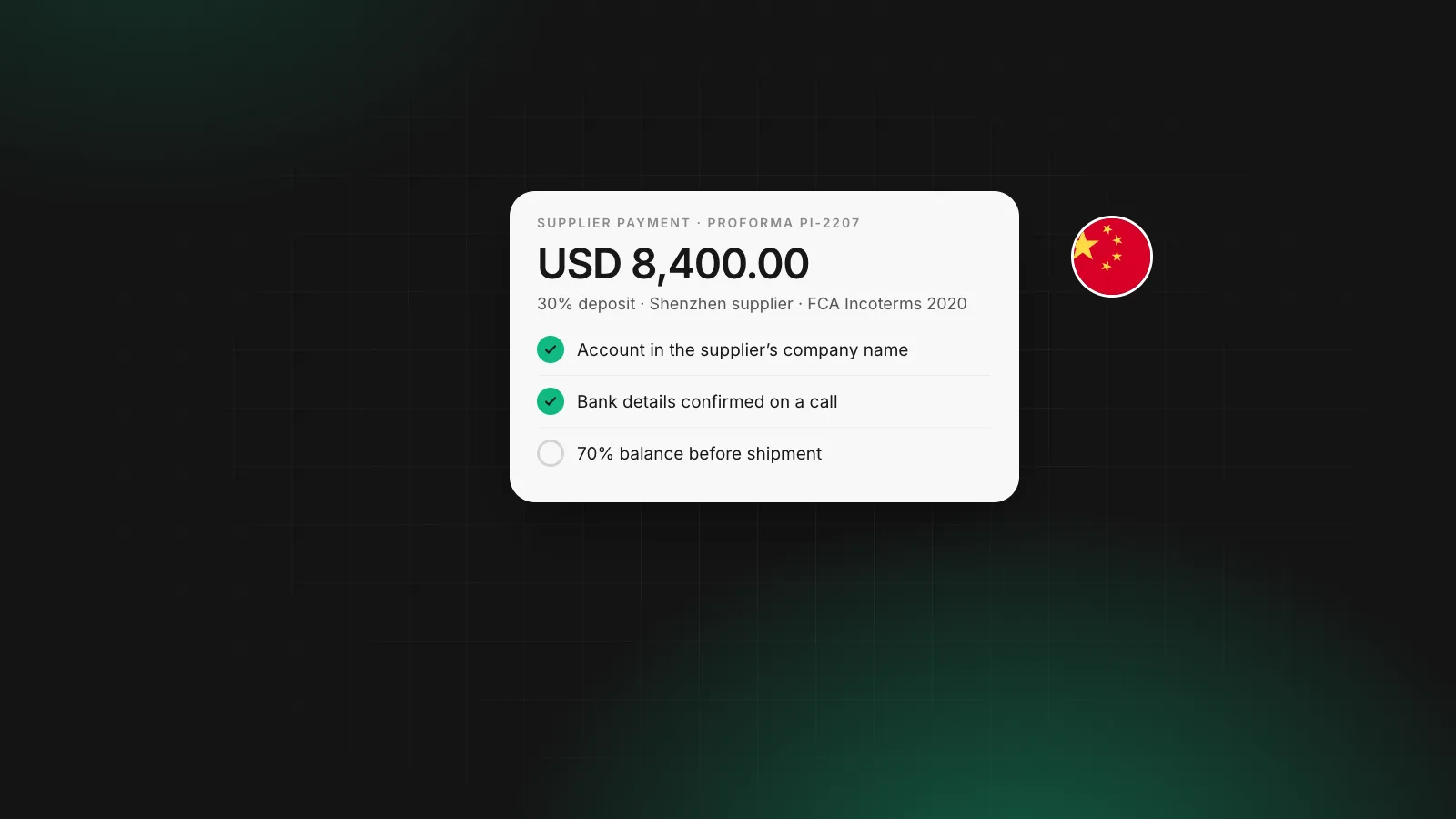
For importers, China is Peru's largest trading partner. The Peru-China free trade agreement, in force since 2010, reduces duty on goods with a valid certificate of origin, and the Chancay port north of Lima, opened in November 2024, offers direct services to Asia. Most Chinese factories invoice in dollars; some offer a lower price in yuan, worth comparing after your conversion cost. A common structure is about 30 percent on order and the balance against a copy of the bill of lading. Before paying a new or changed account, check the account name matches the supplier, be wary of accounts in a different country, confirm by video call and require a second approver. Your customs broker needs the commercial invoice, packing list, bill of lading and certificate of origin.
Paraguay: maquila companies and exporters paid by Brazil and Argentina
Paraguay has a liberal exchange regime: companies hold dollars freely, and dollar accounts are common. Paraguayan exporters usually contract with Brazilian and Argentine buyers in dollars, which keeps the swings of the real and the Argentine peso out of their margins.
Brazilian buyers pay through a foreign exchange operation at a Brazilian bank or exchange institution, which converts reais to dollars, applies IOF and asks for documents such as the import declaration. Payment usually arrives within days once the documents are in order. Argentine importers pay under BCRA rules, which removed many staggered payment timelines from 2025, though documentation requirements and some conditions remain. Agree deposits and terms that reflect how fast each buyer can actually pay.
Under Paraguay's maquila regime, a company produces goods or services for export under contract with a foreign parent or client, within a programme approved by the National Council of Maquiladora Industries (CNIME). It pays a single tax of 1 percent on the value added in Paraguay, in place of most other taxes on the maquila activity, and inputs for the programme can enter under suspended duties. Sales in Paraguay are allowed only within the regime's limits. The maquiladora invoices the parent, usually in dollars, and every invoice must match the programme's operations, quantities and value added. Mismatches between invoices, customs records and the programme are the main audit risk. Wages and local costs are paid in guaraníes, so convert dollars on a schedule ahead of payroll.
Uruguay: software exporters and free zone companies collecting USD
Uruguay has no exchange controls, and companies hold dollars at local banks as a matter of course. Many software salaries are linked to dollars too. Exports are invoiced through the DGI's electronic invoicing system (CFE) with the export invoice type, usually in dollars, and exports of services are generally outside IVA when they meet the conditions.
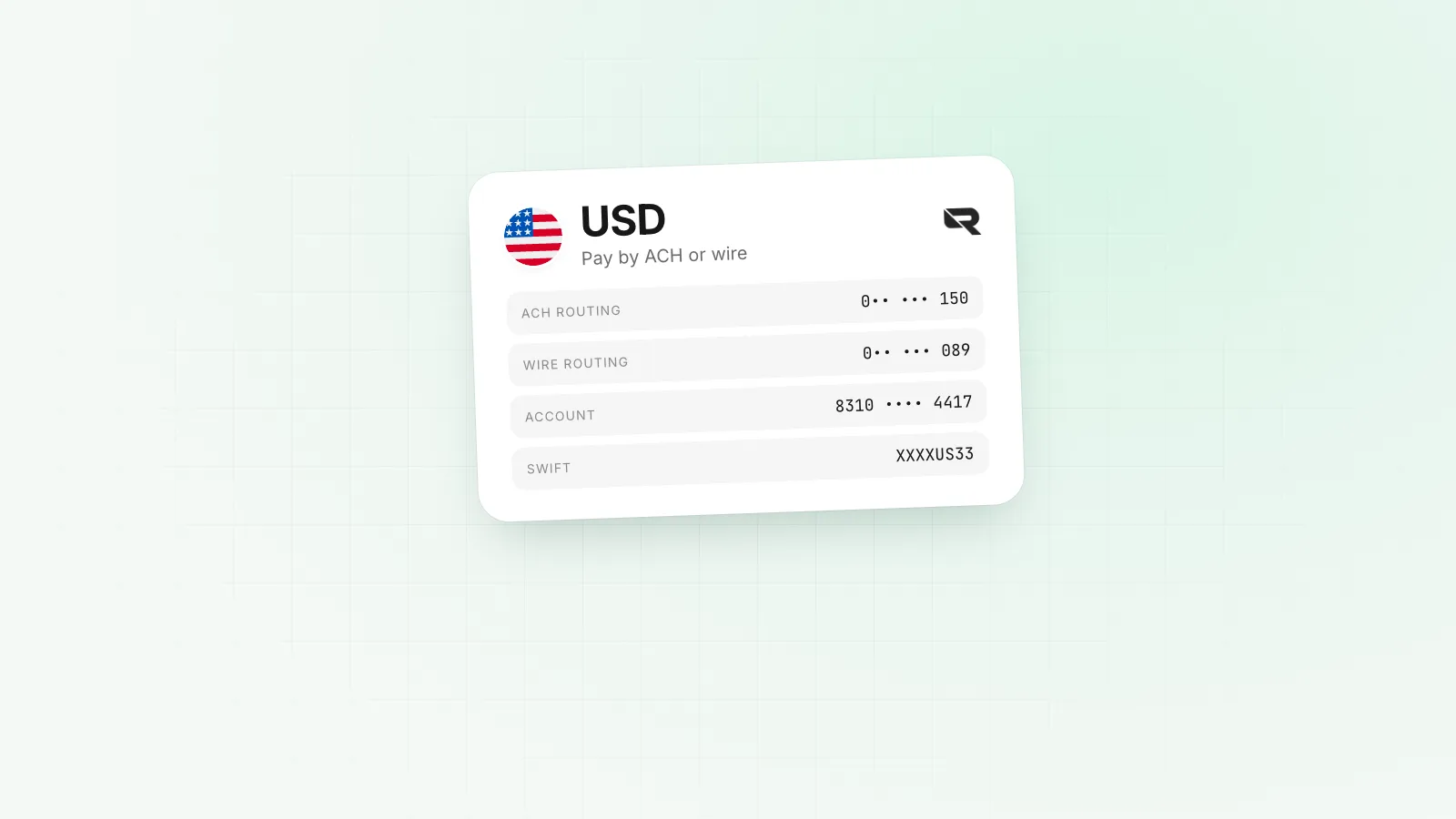
Income from software development and certain exported services has had favourable treatment under the corporate income tax (IRAE). Since 2020 the benefit depends on how much of the work is done in Uruguay by local staff, so confirm with your accountant how it applies to your mix of work. International wires from US clients often take three to six days and can lose an intermediary fee. With US account details in your company's name, US clients pay by ACH in one to two business days, and they will ask for a W-8BEN-E once.
Uruguay's free zones give authorised companies exemptions from most national taxes on activities carried out from the zone, with conditions on activity and on employing staff in Uruguay. They host regional headquarters, shared service centres, logistics operators and traders, which usually bill in dollars. US and European clients pay by bank transfer, Brazilian clients through an exchange operation with IOF on their side, Argentine clients under BCRA rules that still put conditions on payments between related companies, and Chilean and Peruvian clients with fewer constraints. Agree in each contract who bears charges and taxes on the payer's side. Free zone status depends on the regime's conditions, so keep contracts, invoices, proof of payment and evidence of the activity carried out from the zone.
Where Rivet fits
Companies registered in supported countries can apply for a Rivet business account, and availability for each country is confirmed during verification. Approved companies get US account details in their own name on every plan, so US clients pay by ACH, plus euro and sterling details from the Growth plan. They can pay suppliers in 120+ countries and issue Visa company cards with per-card limits. Whether a company registered in Argentina or Colombia may hold proceeds outside the country, and how Ecuador's ISD presumption applies, are decided by local rules, so confirm with your bank or accountant first. Brazilian exporters keeping proceeds abroad and companies in Paraguay and Uruguay face fewer limits. See account details for each currency. Rivet is not a bank; regulated partner institutions hold the funds.
Questions people ask
Do Argentine service exporters still have to convert dollars into pesos?
The obligation has been narrowed several times since 2025. In 2026 the BCRA extended exemptions for service exports that meet joint conditions. Confirm with your bank which conditions apply to your receipts.
Can a Brazilian company keep export receipts outside Brazil?
Yes. Brazilian law allows exporters to maintain export proceeds abroad. Holdings abroad above thresholds must be reported to the Central Bank, and the income is still taxed in Brazil.
Are all services sold abroad exempt from IVA in Chile?
No. A service must be qualified as an export by the National Customs Service. Without qualification, IVA may apply as on a domestic service.
Do payments for exported services have to come through a Colombian bank?
Services are generally free-market operations under Banco de la República rules, so they do not have to be channelled through the regulated exchange market. Many companies still receive them through Colombian banks. Check current rules with your bank.
Do Ecuadorian exporters pay ISD on money kept abroad?
Ecuadorian law presumes that export proceeds not entering Ecuador within the legal period have left the country, which can make them subject to ISD, with some exceptions.
Which services count as exports for IGV in Peru?
Services listed in Appendix V of the IGV law, such as many consulting, software, engineering and design services, when the client is not domiciled in Peru, the service is used abroad, it is invoiced and payment comes from abroad.
What tax does a maquiladora pay in Paraguay?
A single tax of 1 percent on the value added in Paraguay, or on the invoice value as defined in the law, in place of most other taxes on the maquila activity.
Can Uruguayan companies keep dollars?
Yes. Uruguay has no exchange controls, and dollar accounts are widely used by businesses.
Sources
- 01BCRA
- 02US International Trade Administration: Argentina currency controls
- 03ARCA (ex AFIP): Factura electrónica
- 04Banco Central do Brasil: Câmbio e capitais internacionais
- 05Lei 14.286/2021 (marco cambial)
- 06Receita Federal: CIDE
- 07Ministério da Fazenda: Reforma tributária do consumo
- 08Banco Central do Brasil: Pix
- 09Servicio Nacional de Aduanas (Chile)
- 10SII Chile: impuesto adicional and factura de exportación electrónica
- 11Banco Central de Chile: Compendio de Normas de Cambios Internacionales
- 12DIAN
- 13Banco de la República: Régimen cambiario
- 14Banco de la República: Bre-B
- 15SRI (Ecuador)
- 16Banco Central del Ecuador
- 17SUNAT: Exportación de servicios
- 18Mincetur: Acuerdo de libre comercio Perú-China
- 19Cámara de Compensación Electrónica (Peru)
- 20Banco Central del Paraguay
- 21Ministerio de Industria y Comercio (Paraguay)
- 22DGI Uruguay: Comprobantes fiscales electrónicos
- 23Ministerio de Economía y Finanzas (Uruguay): Zonas francas
- 24CCA Chile
Rashidatou writes Rivet's guides to how money moves between countries: the payment rails, what each one costs, and the account details a company needs to get paid in another currency. Every figure in Rashidatou's articles is traced to the scheme rulebook, the regulator or the provider's published price list, and those sources are listed at the end.
More from Rashidatou K. →This article is general information, not legal, tax or financial advice. Rules and fees change; check the sources above and the provider’s current terms before you act on them.
- latin-america
- exports
- usd
- fx-rules
- withholding-tax
- e-invoicing
- brazil
- argentina