West Africa business payments: Ghana, Cote d'Ivoire and Senegal
Ghana's GhIPSS rails, mobile money and Bank of Ghana repatriation rules, and the WAEMU exchange regulation that governs exporters and importers in Cote d'Ivoire and Senegal, where the CFA franc is pegged to the euro at 655.957.
- Published
- Reading time
- 5 min read
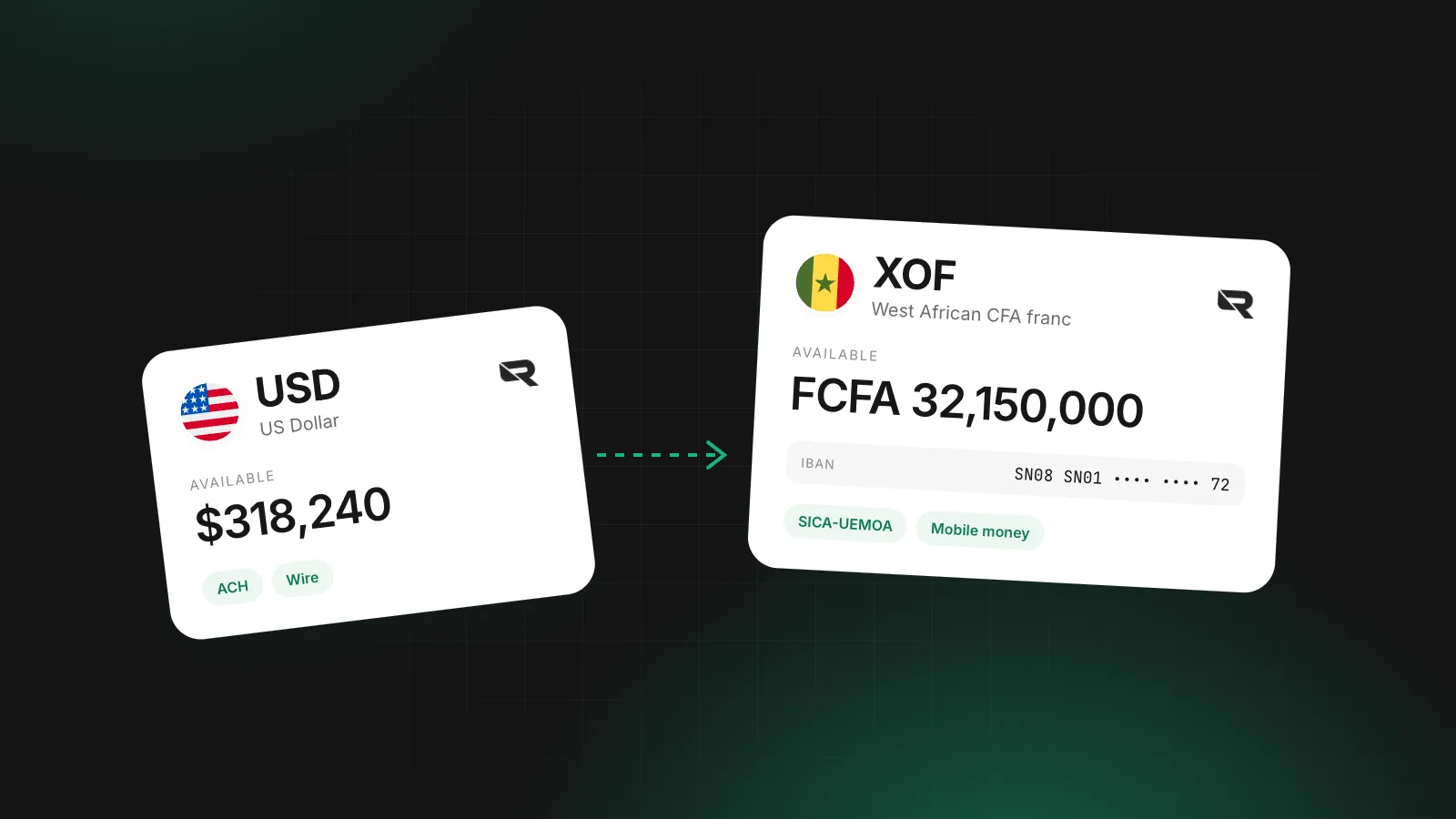
Companies in Ghana, Cote d'Ivoire and Senegal must bring export earnings home through local banks. Ghana applies Bank of Ghana rules to a floating cedi. Cote d'Ivoire and Senegal follow the WAEMU exchange regulation, under which banks track exports and imports above set thresholds, and the CFA franc is pegged to the euro, so euro clients are simplest to bill.
Jump to a country: Ghana · Côte d'Ivoire · Senegal
How the three countries compare
| Country | Currency | Exchange rules | Local rails | What exporters must do |
|---|---|---|---|---|
| Ghana | Cedi, floating, with sharp swings in recent years | Foreign Exchange Act and Bank of Ghana rules; foreign currency accounts allowed | GhIPSS Instant Pay in seconds, 24/7; interoperable mobile money; Bank of Ghana RTGS | Repatriate within the set period; some sectors have had to convert part into cedis |
| Cote d'Ivoire | West African CFA franc (XOF), pegged at 655.957 per euro | WAEMU regulation applied by the BCEAO; accounts outside the WAEMU need authorisation | Bank transfers | Domicile exports above thresholds with a bank; repatriate by the deadline; surrender foreign currency with limited retention |
| Senegal | West African CFA franc (XOF), pegged at 655.957 per euro | WAEMU regulation applied by the BCEAO; accounts abroad need authorisation | Bank transfers | Domicile imports above thresholds; justify each payment abroad with documents |
Ghana: GHS payments, BoG repatriation rules and tech companies billing abroad
Ghana's payment rails are well connected. GhIPSS, a Bank of Ghana subsidiary, runs GhIPSS Instant Pay for bank-to-bank and bank-to-wallet transfers in seconds, the ACH for batches the same or next day, and mobile money interoperability, launched in 2018, which lets an MTN MoMo user pay a Telecel Cash user or a bank account directly. The Bank of Ghana runs RTGS for large payments in real time during business hours. Mobile money is often a small firm's main account, though wallet limits can be too low for large invoices. The 1 percent E-Levy was abolished from 2 April 2025. A foreign company paying staff in cedis usually does better with a local payout by GIP or to a wallet than with a dollar wire the bank converts at its own rate. See mobile money compared with a bank account.
Ghanaian exporters must bring proceeds into Ghana within the period set under the Foreign Exchange Act and Bank of Ghana rules. Banks match proceeds to export documents and report gaps, which can lead to sanctions. The Bank of Ghana has at times required exporters in some sectors to convert part of their proceeds into cedis, including through arrangements for large mining and oil exporters; the rules have changed several times since 2022. The rest can sit in foreign currency accounts in Ghana for permitted payments such as imports and foreign services.
Tech companies billing US and UK clients invoice in dollars and pounds with a clear purpose, such as "animation production services". Payments arrive as international transfers in three to five days and are classified as export proceeds, sometimes with a request for the contract. Because the cedi has lost much of its value against the dollar, hold dollars and pounds for foreign costs such as software and render farms, and convert a planned amount before payroll.
Côte d'Ivoire (Ivory Coast): BCEAO exchange rules and cocoa and cashew payment terms
Cote d'Ivoire shares the West African CFA franc with Senegal, Mali, Burkina Faso, Niger, Togo, Benin and Guinea-Bissau, and applies the WAEMU regulation on external financial relations through the BCEAO and banks. Exports above thresholds are domiciled with a bank, which tracks repatriation. Exporters must bring proceeds back within the deadline counted from the due date of payment, and banks report overdue proceeds. Repatriated foreign currency is generally surrendered through banks for CFA francs, with exceptions allowing retention for needs such as imports. Holding accounts outside the WAEMU generally needs Ministry of Finance authorisation after a BCEAO opinion. The XOF is pegged to the euro at 655.957, so euro proceeds carry no exchange rate risk; dollar proceeds do.
Cote d'Ivoire is the world's largest cocoa producer and a leading cashew exporter. Cocoa sales run through a system regulated by the Conseil du Café-Cacao, with forward sales, licensed exporters, set farm-gate prices and contracts that follow trade association rules. Raw cashew nuts go mostly to processors in Vietnam and India, paid cash against documents, under letters of credit for new or large buyers, or with advances. In both trades the documents drive payment:
- Bill of lading matching the contract.
- Commercial invoice.
- Certificates of origin, quality and weight.
- Phytosanitary certificate.
One San-Pédro exporter had $186,000 held for three weeks over a weight certificate mismatch. Check every document against the contract before presenting it, and follow up quickly, because buyer delays can collide with the WAEMU repatriation deadline. See letters of credit explained.
Senegal: paying foreign suppliers and billing French clients in euros
Senegalese companies domicile imports above set thresholds with a bank under the WAEMU exchange regulation. The bank releases each payment abroad once the documents justify it: a pro forma or commercial invoice, the contract or order, customs documents once the goods arrive, and licences where required. The Orbus single window handles many trade formalities online. A missing document can hold a payment for a week, so allow time for bank processing before suppliers' deadlines, especially for new suppliers and large amounts. Euro suppliers carry no exchange rate risk thanks to the peg, while Chinese and Turkish suppliers often invoice in dollars, which move against the franc; ask for euro prices where suppliers offer them. Confirm any email announcing new bank details by phone with a known contact, and check that the account name matches the supplier.
Senegalese tech startups with French clients sit on the other side of the peg. The XOF is fixed at 655.957 francs per euro, so a €10,000 invoice is always worth 6,559,570 francs. Payments arrive at Senegalese banks under the WAEMU regulation, usually in two to four days, and banks may ask for contracts or invoices to classify receipts. French and Belgian clients often pay on 30 to 45 days; French commercial law caps business payment terms, and stating them on invoices helps. Services exported to clients abroad can be exempt from Senegalese VAT when the conditions are met, so keep contracts and evidence of use abroad. Companies generally need authorisation under WAEMU rules to hold accounts abroad. For the Central African franc zone, see Cameroon companies paying foreign suppliers under BEAC rules.
Where Rivet fits
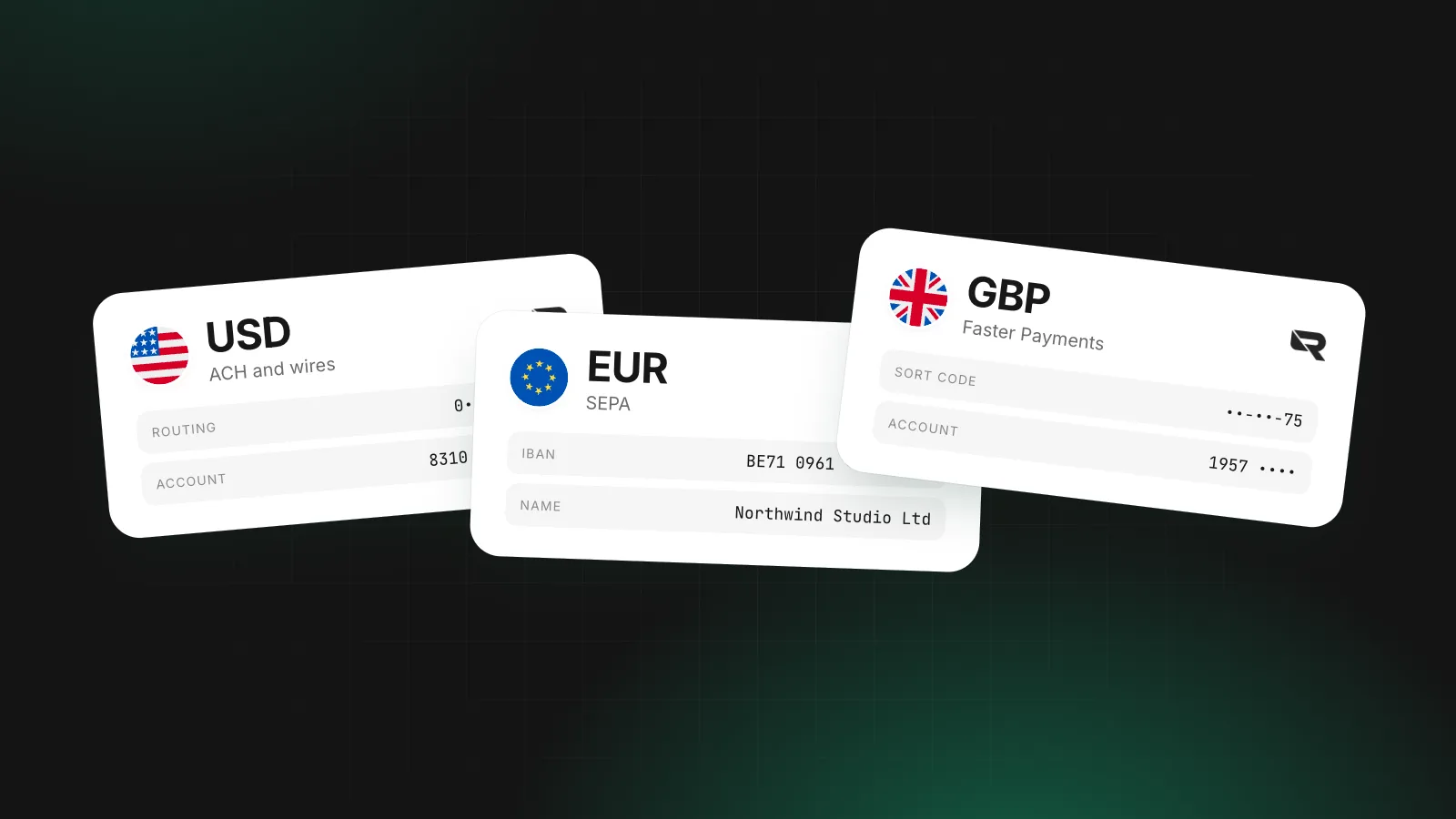
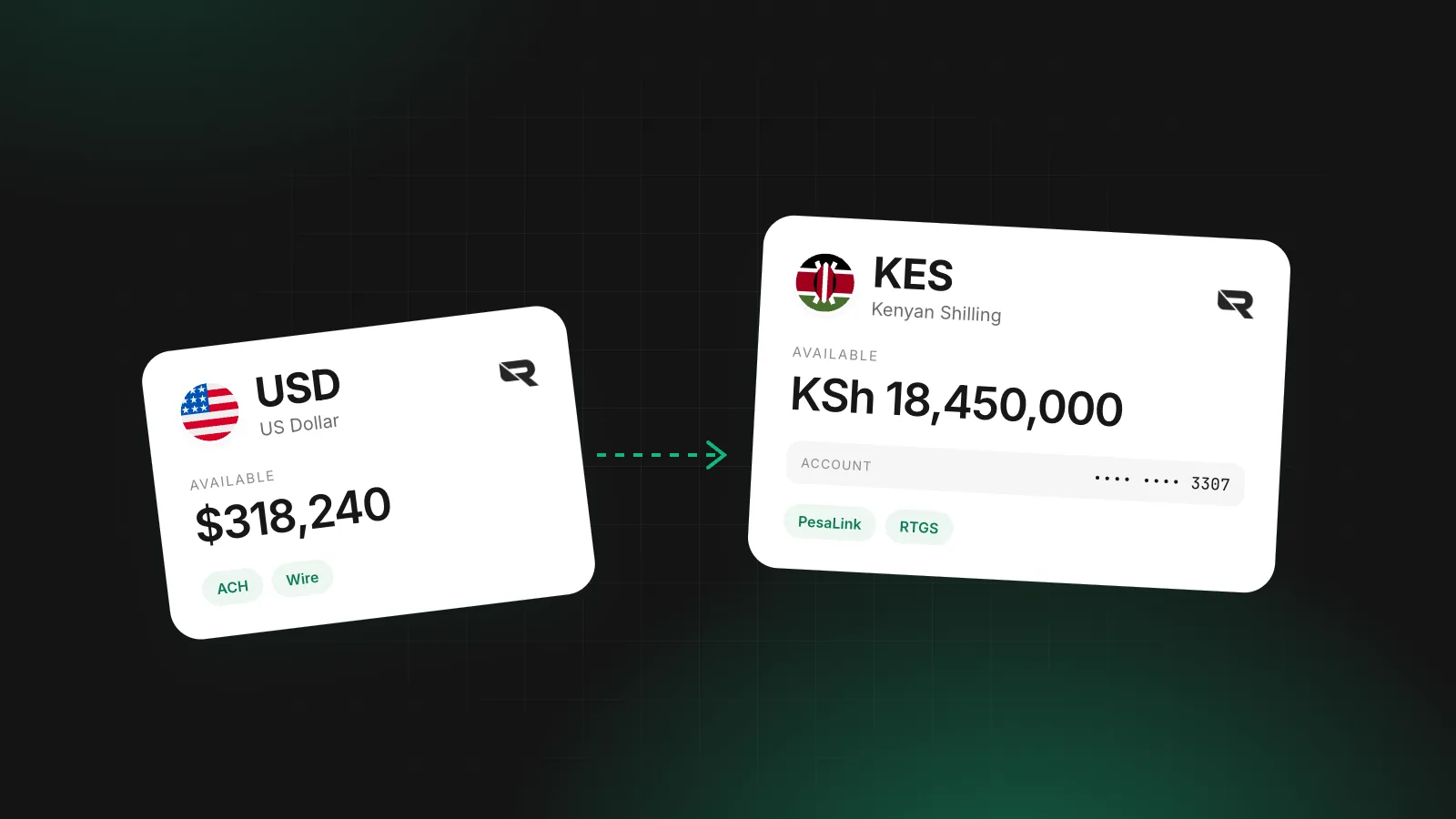
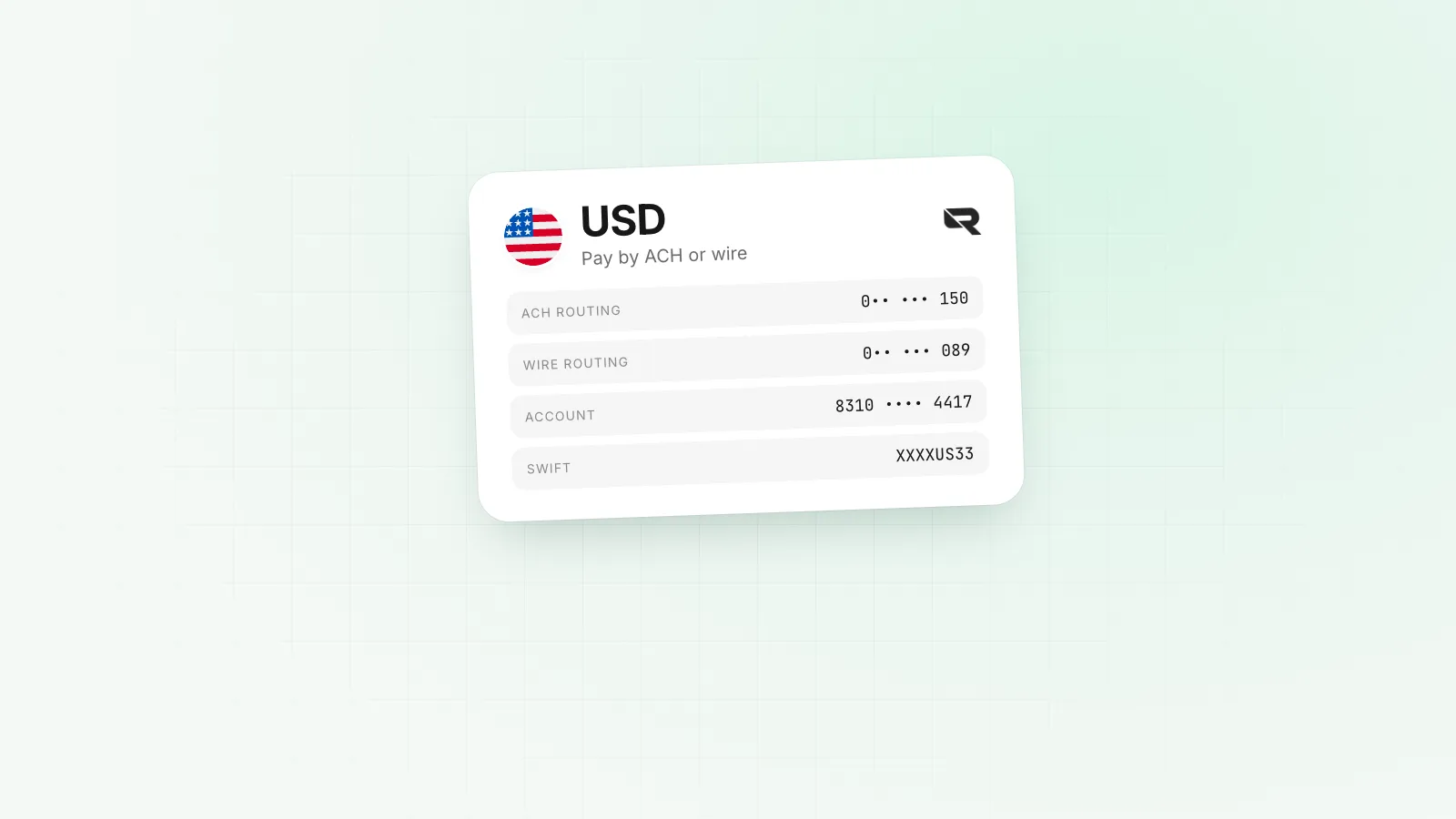
Companies registered in supported countries can apply for a Rivet business account, and availability for each country is confirmed during verification. Ivorian and Senegalese companies must follow WAEMU rules on proceeds and accounts abroad, and Ghanaian exporters Bank of Ghana rules, so check with your bank first. Where available, partners abroad who bank with Rivet can pay bank accounts in Cote d'Ivoire and Senegal through Rivet's payouts. On the Scale plan a company can also hold West African CFA francs (XOF) next to USD, EUR and GBP. A company with clients abroad can take dollars into account details in its own name and convert when it needs to pay in Ghana. Rivet is not a bank; regulated partner institutions hold the funds.
Questions people ask
How long does a bank transfer take in Ghana?
GhIPSS Instant Pay transfers arrive in seconds. ACH transfers clear in batches, usually the same or next business day. RTGS transfers settle in real time during business hours.
Is there still a tax on mobile money in Ghana?
The E-Levy was repealed from 2 April 2025. Operators' own fees for transfers and cash-outs still apply.
Do Ghanaian exporters have to convert proceeds into cedis?
Some sectors have faced conversion requirements at various times. Ask your bank which rule applies to your exports now.
Which exchange regulation applies in Cote d'Ivoire and Senegal?
The WAEMU regulation on external financial relations, applied by the BCEAO across the eight WAEMU states.
Do Ivorian exporters have to convert foreign currency?
Repatriated foreign currency is generally surrendered through banks for CFA francs, with exceptions such as retention for specific needs. Ask your bank.
What documents trigger payment for cocoa and cashew exports?
The bill of lading, commercial invoice, certificates of origin, quality and weight, and phytosanitary certificates, matching the contract.
What is import domiciliation in Senegal?
Registering an import with a bank, which then follows the documents and executes the payment under WAEMU rules.
Is the CFA franc pegged to the euro?
Yes. The XOF has a fixed parity of 655.957 francs per euro, guaranteed under the monetary cooperation arrangement.
Sources
- 01Ghana Interbank Payment and Settlement Systems (GhIPSS)
- 02Bank of Ghana: Payment systems
- 03Bank of Ghana: Foreign exchange
- 04EY: Ghana's Parliament amends tax laws following the 2025 budget
- 05Ghana Export Promotion Authority
- 06BCEAO
- 07Conseil du Café-Cacao
- 08Conseil du Coton et de l'Anacarde
- 09ICC: Trade finance rules
- 10Ministry of Economy and Finance of Côte d'Ivoire
- 11Orbus (Senegal trade single window)
- 12Direction Générale des Impôts et des Domaines (Senegal)
Rashidatou writes Rivet's guides to how money moves between countries: the payment rails, what each one costs, and the account details a company needs to get paid in another currency. Every figure in Rashidatou's articles is traced to the scheme rulebook, the regulator or the provider's published price list, and those sources are listed at the end.
More from Rashidatou K. →This article is general information, not legal, tax or financial advice. Rules and fees change; check the sources above and the provider’s current terms before you act on them.
- ghana
- cote-divoire
- senegal
- ghs
- xof
- bceao
- repatriation
- mobile-money