How to pay international contractors without losing 3% to fees
Paying a team spread across ten countries is mostly a fees problem and a paperwork problem. Both are easier to solve once than every month.
- Published
- Reading time
- 5 min read

Most companies start paying contractors abroad the same way: a wire from the company bank account, one at a time, whenever an invoice comes in. It works for two people. At ten people in six countries, the finance lead is spending a day a month on it, and contractors are emailing to ask why their payment arrived $40 short.
This guide covers the ways to pay people abroad, what each costs, the forms to collect before the first payment, and how to turn it into one monthly batch.
What a payment to a contractor abroad actually costs
There are three cost layers, and most comparisons only show the first.
- The sending fee. What your bank or provider charges per payment. Visible, and usually the smallest part.
- Fees in transit. On an international wire, intermediary banks can deduct their own charges, and the contractor's bank may charge to receive it. The contractor sees a smaller amount than you sent.
- The FX margin. The difference between the rate you get and the mid-market rate. On a business bank account a margin of 1% to 3% is common, and on a $4,000 payment that is $40 to $120, every month, per person.
The World Bank's survey of international transfer prices shows how much the provider matters: in its 2025 data, banks were by far the most expensive type of provider for sending money across borders, at more than double the global average. Business payments are larger and cheaper per dollar than the remittances it measures, but the pattern holds.
The options
| Method | Best for | Watch out for |
|---|---|---|
| International wire from your bank | Occasional, large payments | Fixed fees per payment, intermediary deductions, your bank's FX rate |
| Business account with local payouts | Regular payments to many countries | Coverage: check every country you pay is on a local rail |
| Contractor management platform | Companies that also want contracts, compliance and invoicing handled | Per-contractor monthly fees, on top of payment costs |
| Stablecoins (USDC, USDT) | Contractors who ask for them, in markets with slow banking | Irreversible transfers, wrong-network mistakes, local rules |
| Payment apps | One-off small payments | Personal-account limits, fees on receipt, weak records for audit |
International wires
A SWIFT wire reaches almost any bank, which is its strength. For a monthly payroll of contractors it is the expensive choice: a fixed sending fee for each payment, deductions along the way, and conversion at your bank's rate. If you use it, send with the OUR charge code so the contractor isn't the one paying the intermediaries, and send in their currency, not yours.
Local payouts from a business account
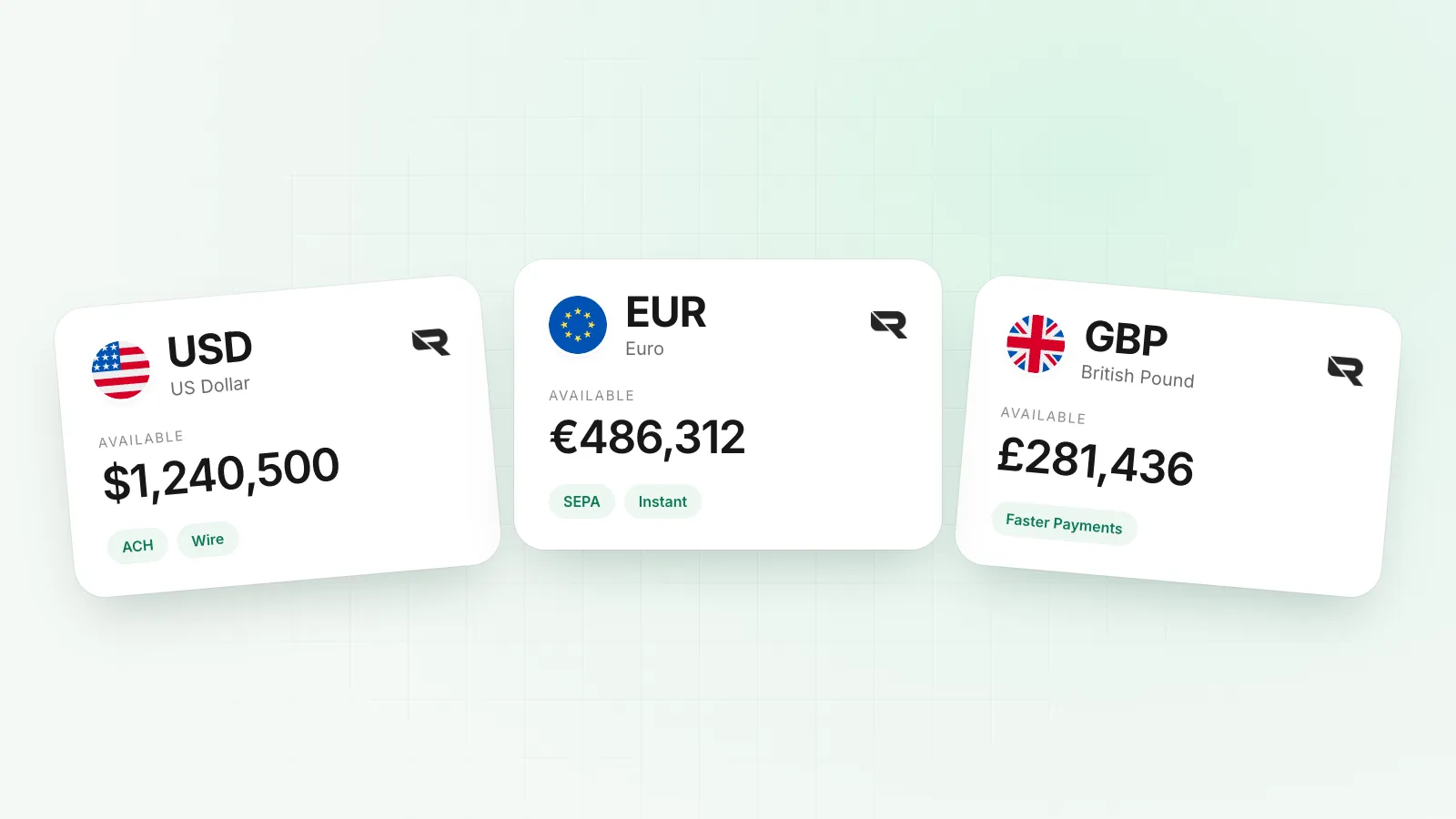
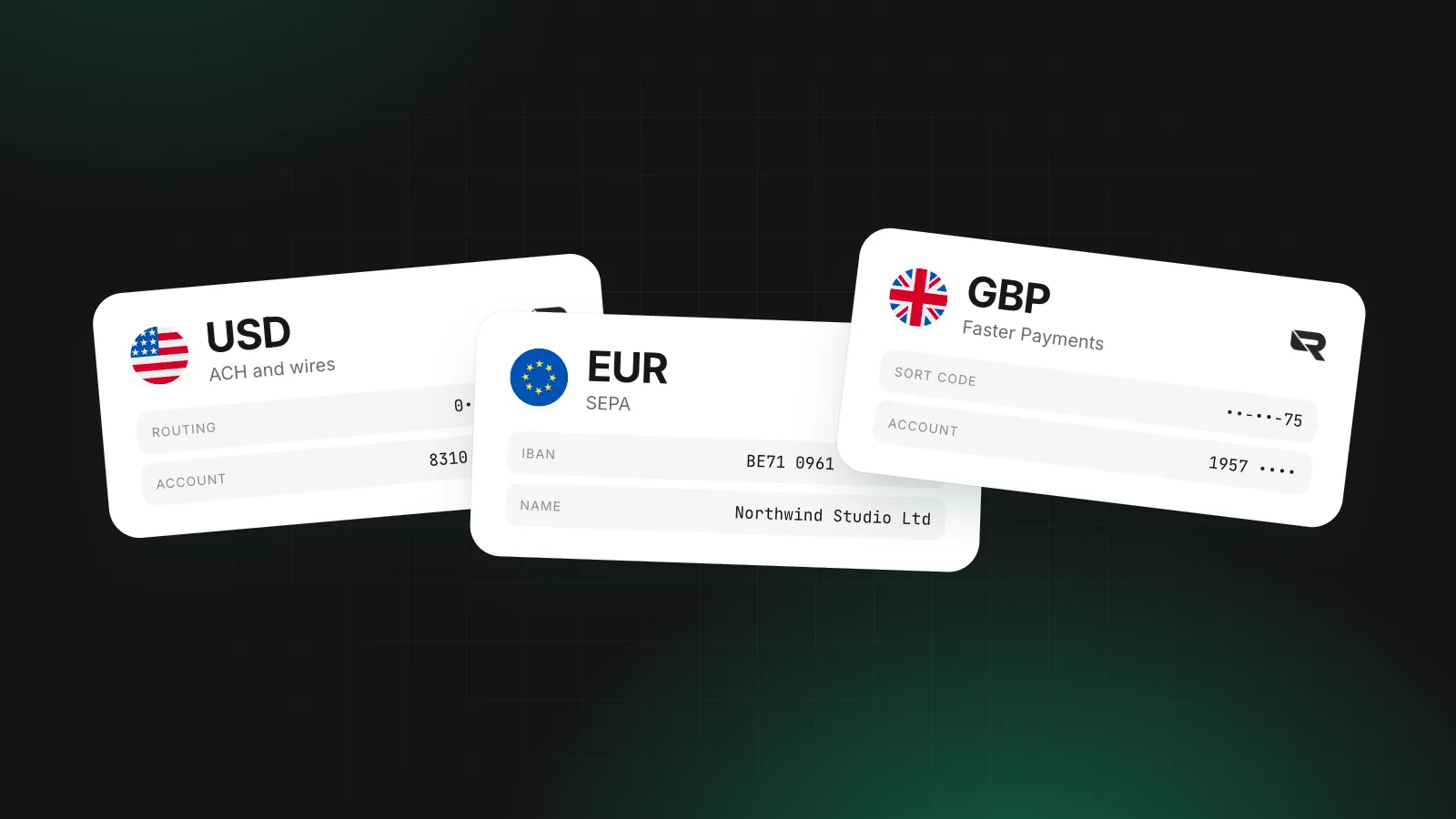
A business account with payouts in many currencies converts once, at a rate you see, and then pays the contractor on their own country's rail: SEPA in the euro area, Faster Payments in the UK, the local instant or bank-transfer system elsewhere. The contractor receives exactly the amount you sent, usually the same day.
This is where most of the saving is. One conversion at a transparent margin, no intermediaries, and a per-payment fee measured in cents or a few dollars rather than tens.
Contractor management platforms
Platforms that manage contractors handle more than payment: contract templates, classification checks, invoice collection and compliance documents. They charge per contractor per month. If you need those services, they can be worth it. If you already have contracts and only need to pay people, you are paying a monthly fee for the payment step alone.
Stablecoins
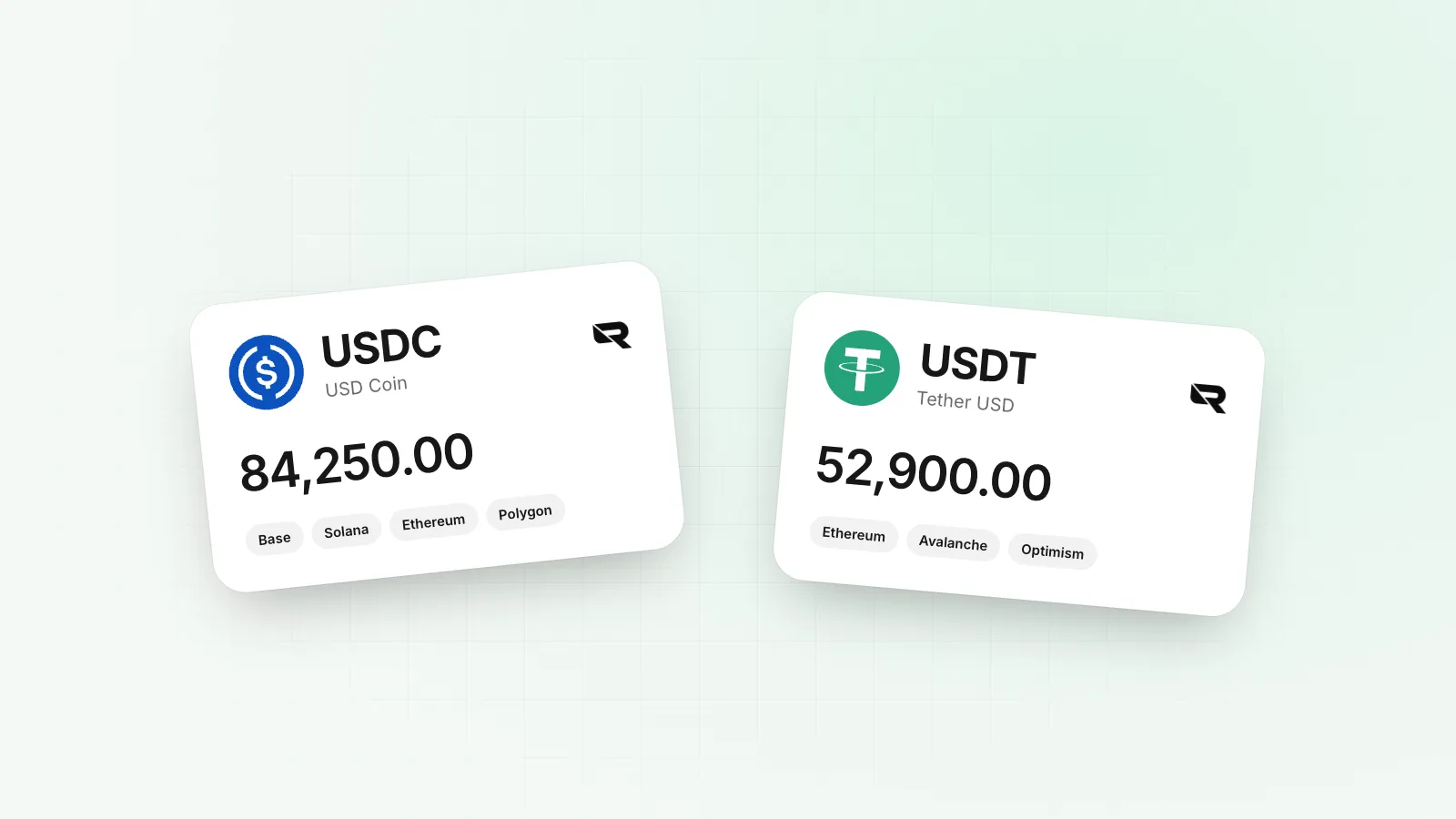
Some contractors, particularly in countries with currency controls or slow banking, prefer to be paid in USDC or USDT. Settlement is fast and works on weekends. The risks are operational: an on-chain transfer cannot be reversed, so a wrong address or the wrong network means lost money. Our guide to stablecoin payments for businesses covers the safeguards.
The paperwork, before the first payment
If you are a US company
- Foreign individual contractors give you Form W-8BEN. It certifies they are not a US person. You keep it; you don't file it with the IRS, and you don't issue them a Form 1099.
- Foreign companies you pay give you Form W-8BEN-E.
- US contractors give you Form W-9 with their taxpayer identification number. You report what you pay them on Form 1099-NEC.
- The 1099 threshold changed in 2026. For payments made from 1 January 2026, the 1099-NEC reporting threshold rose from $600 to $2,000 a year, with inflation adjustments from 2027. Backup withholding still applies below the threshold if a payee hasn't given you a valid TIN.
Collect the form before the first payment. Chasing a W-8BEN in January, for someone you paid all year, is harder than asking for it during onboarding.
Wherever you are
- Classification. Calling someone a contractor does not make them one. If they work set hours, only for you, under your direction, many countries would treat them as an employee, with payroll tax and employment rights. The IRS publishes its own tests, and most countries have equivalents. If in doubt, take local advice.
- A written contract. Scope, rate, currency, payment terms and who owns the work.
- An invoice for each payment. It is the contractor's record and your evidence for the expense.
Running it as one monthly batch
The real saving is time. A workable monthly process looks like this:
- Keep a payee list with each contractor's legal name, country, currency, bank details and tax form on file.
- Collect invoices by a fixed date, say the 25th.
- Build the batch: one line per contractor, amount and currency, from a spreadsheet upload or your payee list.
- Review the total before you commit: every line, the rail it will take, the rate and the fees, and the single amount debited.
- One approval. A second person approves the batch, not forty separate payments.
- Track each line separately. If one payment fails (a closed account, a typo in an IBAN), it should be flagged on its own and retried without resubmitting the batch. The others shouldn't wait.
- Export for the books. One file with every payment, its rate and fee, matched to its invoice.
Paying in their currency or yours?
Agree it in the contract, and think about who carries the currency risk.
- Paying in USD or EUR is simpler for you, but the contractor converts at their bank's rate and absorbs the swings. Over time, good contractors price that in.
- Paying in their currency means you do the conversion, ideally at a better rate than their bank would give them, and they receive a predictable amount. It also ends the "my payment was short" emails.
How Rivet handles this
Rivet's bulk payouts let you pay one person or two hundred in the same batch: upload a CSV or build it in the dashboard, see every leg with its rail and cost before you commit, and approve it once. Each payment goes out on the recipient's local rail, or on-chain in USDC where there is no local rail or the contractor prefers it, and one batch can mix the two. If a leg fails, it is flagged on its own and can be retried; the money for it returns to your balance rather than sitting in limbo. Recipients don't need a Rivet account.
If your company is on the receiving end too, see how to get paid by US clients.
Questions people ask
What is the cheapest way to pay a contractor in another country?
Usually a local payment in their currency: the money leaves your account in that currency, travels on their country's domestic rail, and arrives without intermediary deductions. The cost is then your provider's conversion margin plus a small per-payment fee, rather than a SWIFT wire's fixed fees plus your bank's rate.
Do I need a W-8BEN from every foreign contractor?
If you are a US company, collect one from each foreign individual contractor before the first payment. It certifies they are not a US person, which is why you do not issue them a 1099. A foreign company you pay gives you a W-8BEN-E instead. Keep the forms on file; you don't send them to the IRS.
What changed with Form 1099-NEC in 2026?
For payments made from 1 January 2026, the threshold for reporting payments to US contractors on Form 1099-NEC rose from $600 to $2,000, with inflation adjustments from 2027. Backup withholding rules still apply below that threshold if a payee has not given you a valid taxpayer identification number.
Should I pay contractors in USD or in their local currency?
Agree it in the contract. Paying in USD moves the exchange-rate risk and the conversion cost to the contractor, and their bank may convert at a poor rate. Paying in local currency at a rate you control usually means they get more for the same cost to you, and fewer queries about missing amounts.
Can I pay contractors in stablecoins?
Some contractors ask for USDC or USDT, especially where local banking is slow or dollars are hard to hold. It is fast and works at weekends, but transfers are irreversible, so wallet addresses and networks must be checked carefully, and the contractor's local rules on holding digital assets apply.
Sources
William covers what happens once a company starts moving money: getting the business verified, paying contractors and suppliers abroad, and keeping card spend under control. William writes for the founder or finance lead who has to make it work this week, and links every rule cited to the text it comes from.
More from William Sunjo M. →This article is general information, not legal, tax or financial advice. Rules and fees change; check the sources above and the provider’s current terms before you act on them.
- contractors
- payouts
- bulk payments
- w-8ben
- 1099
- fx