Nordic and Baltic business payments: a country guide
Eight countries, five currencies and some of the best domestic payment systems in the world, which mostly stop working at the border. VAT wording, reporting deadlines, account opening and how foreign clients pay, country by country.
- Published
- Reading time
- 13 min read
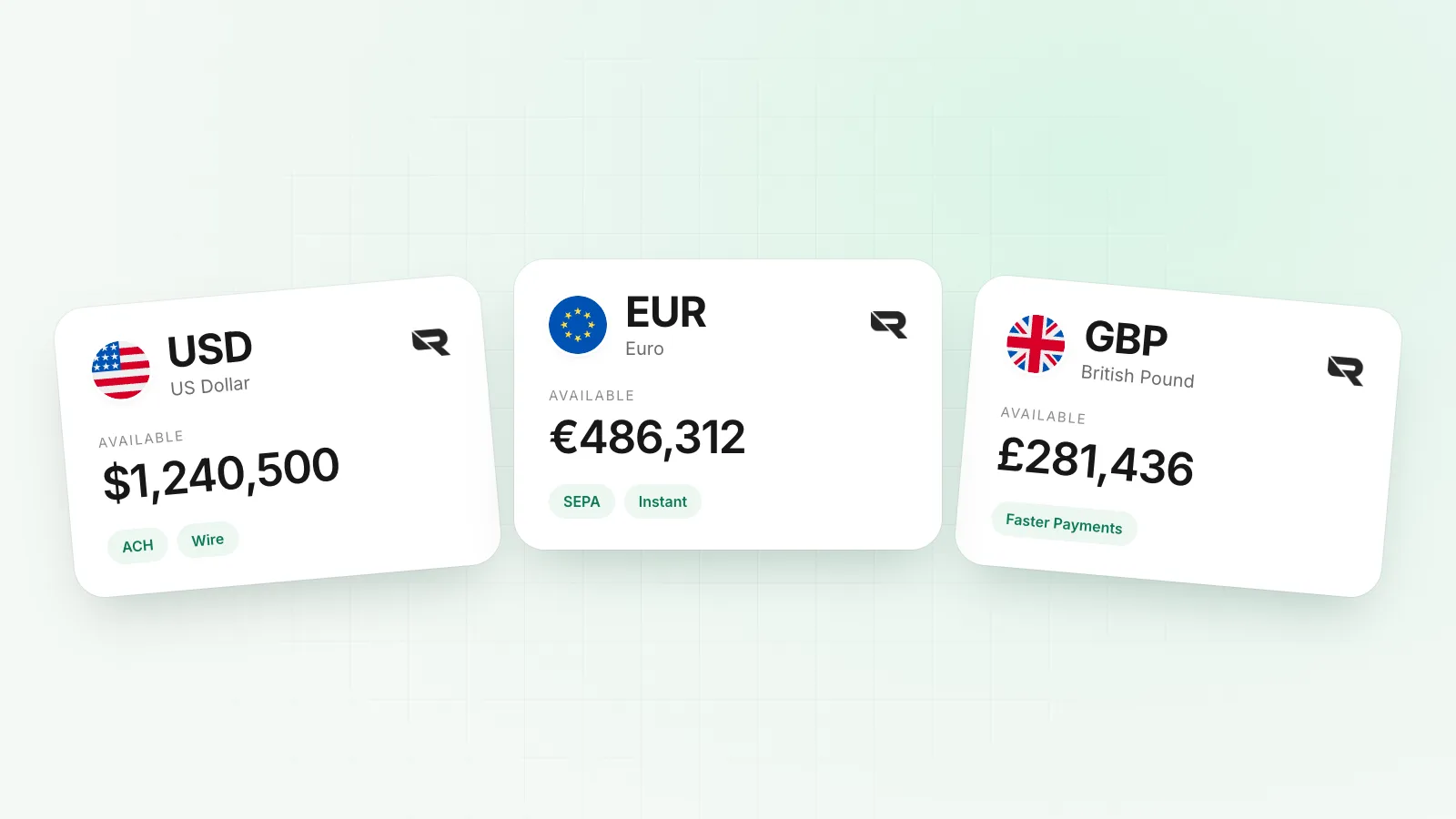
Nordic and Baltic companies run on fast domestic payment systems that mostly stop at the border. Selling abroad, they handle reverse charge VAT (or, in Norway, sales outside the EU VAT system), country reporting such as Lithuania's i.SAF, and clients who pay in euros, dollars and pounds. Holding each currency avoids converting every payment on arrival.
Jump to a country: Denmark · Finland · Norway · Sweden · Iceland · Estonia · Latvia · Lithuania
The eight countries at a glance
| Country | Currency | Currency regime | Domestic rail | What a company selling abroad has to do |
|---|---|---|---|---|
| Denmark | Danish krone (DKK) | Pegged to the euro within a narrow ERM II band | Straksclearing instant payments, settled at Danmarks Nationalbank | Reverse charge wording on EU invoices; EU sales list to Skattestyrelsen |
| Finland | Euro | Euro area | SEPA Instant | Send e-invoices (verkkolasku) when a Finnish client asks; reverse charge on EU invoices |
| Norway | Norwegian krone (NOK) | Own currency; books kept in kroner | Instant krone payments on infrastructure from Bits, settled through Norges Bank | State that services are outside the scope of MVA; no intra-EU wording |
| Sweden | Swedish krona (SEK) | Floats | Swish (seconds) and Bankgirot (same business day) | IBAN and BIC for foreign clients; periodic summary for EU sales; VOEC for Norwegian consumers |
| Iceland | Icelandic króna (ISK) | Floats; most capital controls lifted in 2017 | Interbank transfers through Reiknistofa bankanna | Decide when to convert foreign revenue; secure payment terms with buyers |
| Estonia | Euro | Euro area | SEPA Instant | Contact person in Estonia if the board is abroad; reverse charge on EU invoices |
| Latvia | Euro | Euro area | SEPA Instant | Show real activity in Latvia to open an account; customs evidence for zero-rated exports |
| Lithuania | Euro | Euro area | SEPA Instant | Monthly i.SAF invoice register by the 20th; reverse charge on EU invoices |
Denmark: moms reverse charge, EU sales list and paying freelancers abroad
Danish companies selling services to businesses elsewhere in the EU invoice without Danish moms, show both VAT numbers and state that the reverse charge applies. Goods to EU businesses are zero-rated intra-EU supplies, provided you hold the customer's valid VAT number and evidence that the goods left Denmark. Both go on the EU sales list (listeindberetning) to Skattestyrelsen. Check each customer's number in VIES before the first invoice and keep the result.
Germany and Sweden are the two markets where currency behaves differently. The krone is pegged to the euro under ERM II, so euro revenue carries little currency risk, but every conversion still costs a margin. The Swedish krona floats and has moved substantially against the krone over the past decade. Holding kronor, paying Swedish distributors and warehousing from them, and converting the surplus on a schedule keeps that movement out of each invoice. Domestically, Danish banks settle instant payments in seconds, around the clock, through Straksclearing at Danmarks Nationalbank.
Paying freelancers abroad runs the other way. Their invoices carry no Danish moms; the Danish company declares it under the reverse charge and, with full deduction, deducts it in the same return. Polish sole traders usually want zloty to a local account. Many Ukrainian freelancers, often registered as individual entrepreneurs (FOP), prefer dollars or euros because the hryvnia has moved sharply since 2022 and the National Bank of Ukraine's currency rules change from time to time. Indian freelancers receive rupees, and their bank needs a clear purpose such as "payment for software development services" to issue the inward remittance record they use for income tax and GST. Paying any of them in Danish kroner by SWIFT leaves the conversion to their bank. A full-time, exclusive, open-ended arrangement can be reclassified as employment in all three countries.
Finland: verkkolasku e-invoicing and game studio USD payouts
Under Finland's Act on Electronic Invoicing, in force since April 2020, any business or public body can require e-invoices (verkkolasku) from its suppliers, unless the supplier's annual turnover is €10,000 or less. The request must be explicit. Invoices travel through Finnish operators, addressed with e-invoice addresses such as OVT codes built from the business ID (Y-tunnus), or through Peppol, which Finnish operators connect to. A foreign supplier asked by a Finnish client usually complies through Peppol.
The law does not bind foreign clients. A client in Ohio has no Finnish e-invoice address and needs none. It needs prices in dollars, the VAT treatment (for most services to businesses outside the EU, no Finnish ALV, with the reason stated) and payment details it can pay domestically. EU business clients get both VAT numbers and the reverse charge wording. A US client paying a Finnish IBAN sends an international wire that may lose intermediary fees and is converted at the receiving bank's rate; US account details let it pay by ACH, in full.
Finnish game studios are the extreme case of dollar revenue. App stores and PC platforms pay monthly, usually 30 to 45 days after the end of the sales month, once earnings pass a minimum, so a good March arrives in late April or early May. Each platform runs a tax interview: a Finnish company completes Form W-8BEN-E and claims the Finland-US tax treaty, which reduces or removes US withholding on royalties. Do it before launch, or the first payouts may be withheld. Publisher milestones usually arrive in dollars too. Engines, cloud tools, user acquisition and outsourced art are priced in dollars, so converting revenue to euros on arrival means buying dollars back for each of them. Holding dollars and converting the surplus for euro payroll avoids paying the margin twice.
Norway: NOK payments, MVA on services abroad and USD suppliers
Norway sits in the European Economic Area and in SEPA for euro payments, but its currency is the krone and Norwegian businesses pay suppliers in NOK. A Norwegian account number has 11 digits, written 1234.56.78903, and the IBAN has 15 characters: NO, two check digits and that number. Domestic krone payments settle through Norges Bank, and instant payments between Norwegian banks run on infrastructure developed by Bits, the banks' infrastructure company, and Vipps is the everyday mobile option. Invoicing a Norwegian client in euros or dollars pushes the conversion onto the client.
For most services a Norwegian AS sells to business clients abroad, Norwegian MVA does not apply, and the invoice says the service is outside its scope. Because Norway is outside the EU VAT system, an invoice to a client in Berlin is not an intra-EU supply: there is no VAT number exchange and no recapitulative statement, and the German client accounts for German VAT itself. Goods exports are zero-rated with customs evidence, and the EU buyer pays import VAT. US clients ask for Form W-8BEN-E; for services performed outside the US, payments are generally made without withholding, and the Norway-US tax treaty covers many other cases. Books are kept in kroner, so record each foreign invoice and payment at a documented rate, such as Norges Bank's rate for the day.
Maritime and energy SMEs earn and spend mostly in US dollars, because charter hire, freight, fuel and parts are priced in them. Converting charter income to kroner and buying dollars back for a Singapore parts supplier costs two margins. Not every supplier wants dollars: a Polish or Turkish yard may quote in euros, a Philippine crew agency in pesos, so compare quotes after your conversion cost. The sector is a frequent target of invoice fraud, usually a message saying a port agent's bank details have changed. Confirm any new details by calling a contact you already know, and require a second approver for payments to new details. Our guide to invoice fraud and payment detail scams covers the warning signs.
Sweden: Bankgiro, Swish and VOEC for webshops selling to Norway
Bankgiro, Plusgiro and Swish only work inside Sweden, so a Swedish AB needs an IBAN and BIC on invoices to foreign customers. Swish settles in seconds, around the clock, on the Betalningar i Realtid rail and needs a Swedish bank account and phone number on both sides; Bankgirot payments settle the same business day. Sweden is in SEPA, so a German client can send euros to a Swedish IBAN, but a krona account converts them on arrival at the bank's rate. A dollar wire from the US may also lose intermediary fees. A workable setup keeps Bankgiro and OCR references for Swedish customers, a euro IBAN for EU customers and US account details for American ones. For most services to EU businesses the invoice carries no Swedish moms, shows the customer's VAT number and states that the reverse charge (omvänd skattskyldighet) applies, and the sale goes in the periodic summary (periodisk sammanställning) to Skatteverket.
Swedish webshops selling to Norway cross a customs border, because Norway is outside the EU customs union and VAT area. A seller registered in VOEC (VAT on E-commerce) charges 25 percent Norwegian VAT at checkout on items worth less than NOK 3,000 each (lower rates apply to food), prints the VOEC number on the parcel and reports quarterly to Skatteetaten. Parcels then clear with nothing to pay on delivery. Registration is compulsory once such sales to Norwegian consumers pass NOK 50,000 in twelve months. Without it, the carrier collects VAT and a handling fee at the door and many customers refuse the parcel. Items of NOK 3,000 or more go through ordinary customs clearance. Exports to Norway are zero-rated for Swedish moms with evidence that the goods left the EU. Norwegian shoppers prefer prices in Norwegian kroner, and a NOK balance lets card settlements land without a conversion on every payout.
Iceland: seafood and tour operators collecting EUR, GBP and USD
Icelandic exporters earn in euros, pounds and dollars and pay most costs in krónur, a small floating currency that moves more than the currencies they invoice in. Seafood processors sell mainly to EU buyers in euros, UK buyers in pounds and US buyers in dollars, with the contract setting the currency. Converting each receipt the day it arrives makes each shipment's margin depend on that day's rate. Iceland lifted most capital controls in 2017, so companies can hold foreign currency, pay packaging, freight and fuel from the matching balance, and schedule conversions ahead of payroll and fishermen's settlements. Larger exporters add forwards; see managing FX risk in a small business. New buyers usually pay in advance or through documentary collection, where they get the shipping documents only after paying; long-standing buyers move to open account terms with credit limits.
Tour operators face the same currency question with an added condition. US, UK and European agencies pay deposits months before the tour, and cancellation terms may require part of a deposit back. Keep enough available to cover likely refunds, agree the refund currency in the contract, and hold deposits in the currency they were paid in. Guides, vehicles, fuel and park fees are paid in krónur when the tour runs, so converting a winter's deposits in one go locks in one day's rate. US operators pay faster to US account details by ACH than by wire to an Icelandic IBAN, UK agencies pay sterling by Faster Payments and European wholesalers pay euros by SEPA. Ask agencies to quote booking references so each payment can be matched the week it arrives. At home, transfers between Icelandic banks clear in seconds through Reiknistofa bankanna, settled at the Central Bank of Iceland.
Estonia: e-Residency OÜ business account and billing clients abroad
An Estonian e-Residency company can be formed online in a day, but e-Residency is a digital identity. It gives no residency, citizenship or right to a bank account. Estonian banks tightened onboarding after the money-laundering cases of the late 2010s, and many now expect a substantial link to Estonia, such as local clients, staff, premises or management. An OÜ run entirely from abroad often lacks one, so most e-resident founders bank with regulated payment institutions or EU fintech providers. A non-resident OÜ still needs a contact person in Estonia whenever its management board is abroad (usually a licensed service provider that also supplies the legal address), accurate beneficial owner data in the Business Register and annual reports.
Providers review the register extract and articles, identity and address documents for board members and owners, and a specific description of the business. "Product design services for early-stage startups in Germany and the UK, invoiced in euros and pounds, about €8,000 a month" gets through; "consulting" prompts questions. Estonia taxes company profits only when they are distributed, but a company managed from your home country may be tax resident there under that country's rules. Check with an adviser where you live. The KYB documents checklist lists what most providers ask for.
On invoices, EU business clients account for VAT under the reverse charge, and clients in the UK or US are outside the scope of Estonian VAT. Small OÜs below the registration threshold may not be VAT registered; check how foreign services count towards it with the Tax and Customs Board. Invoice each client in its currency and let it pay on its own rail: SEPA in the euro area, Faster Payments in the UK, ACH in the US. US clients ask for Form W-8BEN-E, and the Estonia-US tax treaty covers income beyond services performed outside the US.
Latvia: SIA business account for non-residents and timber exports
A Latvian SIA owned from abroad can open a business account if it shows real activity in Latvia: staff on Latvian payroll, an office rather than only a registered address, Latvian or EU clients and suppliers. After 2018, under pressure from international regulators and following the collapse of ABLV Bank, Latvia overhauled how banks serve non-resident companies, and a reviewer's first question is still why the company is in Latvia. Expect to provide the Register of Enterprises extract and articles of association, identity and address documents for directors and beneficial owners that match the register, a business description with expected monthly volumes, client and supplier countries and currencies, supporting contracts or invoices, and evidence of the source of funds. Reviews stall on inconsistency: owners declared differently to the register and the provider, or payments from countries the description never mentioned. See also why business accounts get closed.
Wood and wood products are Latvia's largest export group. The UK, Sweden, Denmark, Germany and the Netherlands are among the main buyers, and Asian buyers matter for some grades. UK merchants often contract in pounds with an advance and the balance against documents, Nordic and German buyers usually pay euros on 30-day terms, and Asian buyers often pay dollars, sometimes under letters of credit. A mill's costs are almost all in euros, so the question is when to convert. Three structures protect a cargo: an advance of often 10 to 30 percent on order confirmation, cash against documents (the buyer gets the bill of lading only after paying) and a letter of credit. Exports to the UK and Asia are zero-rated with customs evidence; intra-EU supplies to VAT-registered buyers are zero-rated with valid VAT numbers and transport proof, and go on the EU sales list.
Lithuania: i.SAF reporting and hauliers getting paid across Europe
Every Lithuanian VAT payer reports the invoices it issued and received each month to the State Tax Inspectorate (VMI) through i.SAF, by the 20th of the following month, as XML from accounting software or through the VMI portal. The register covers foreign sales and purchases, including software subscriptions, with each counterparty's country and identifier. Missing foreign purchases are a common reason for VMI questions, because the reverse charge VAT on them should also appear in the return. i.SAF is a data report, not e-invoicing: private-sector clients can still receive PDFs, and public-sector buyers receive e-invoices through eSaskaita. Services to EU businesses are invoiced without Lithuanian PVM, with both VAT numbers and a reverse charge reference, and go on the EU sales list. Services to businesses outside the EU are stated as not subject to Lithuanian VAT.
Lithuanian hauliers live with a cash gap: Western European shippers pay on 30 to 90-day terms, while fuel, tolls, ferries and driver allowances go out daily. The EU Late Payment Directive, implemented in Lithuanian law, caps business payment terms at 60 days unless expressly agreed and not grossly unfair to the creditor, and lets you claim statutory interest plus €40 fixed compensation per late invoice. Most delays come from incomplete invoices, so invoice the day delivery is confirmed, attach the CMR (or e-CMR) and signed proof of delivery, quote the shipper's transport order number exactly and send it to accounts payable rather than the dispatcher. Factoring helps with specific slow payers but costs margin. Company cards per driver or truck, each with its own limit, keep road spending visible and can be frozen when a driver leaves.
Where Rivet fits
Companies registered in supported countries can apply for a Rivet business account, and availability for each country is confirmed during verification. Local rules still apply. Approved companies get an account in their own name, with US dollar details on every plan and, from the Growth plan, euro details with an IBAN and sterling details for Faster Payments. On the Scale plan a company holds balances in 25 currencies, including Norwegian, Swedish and Danish kroner. Payouts reach suppliers and freelancers in 120+ countries, on local rails where they exist, and from Growth a second approver can be required. Visa company cards spend from the balance, and every conversion shows its rate before you confirm. Companies with non-resident owners go through the same verification, and the document list is shown up front.
Rivet is not an e-invoice operator, a VOEC filing service or an i.SAF tool; your accounting software and advisers handle those. Rivet is not a bank; regulated partner institutions hold the funds. See Rivet business accounts.
Questions people ask
Can a foreign customer pay a Swedish Bankgiro number or use Swish?
No. Bankgiro, Plusgiro and Swish are domestic Swedish systems. Foreign customers pay to an IBAN with a BIC, and the receiving bank credits the account behind it.
Is Norway in SEPA?
Yes, for euro payments, as part of the European Economic Area. But Norway uses the krone, and domestic krone payments do not run on SEPA. A euro account receives SEPA payments from Norway only if the payer sends euros.
What does a Norwegian IBAN look like?
It has 15 characters: NO, two check digits, and the 11-digit Norwegian account number. Domestic payers usually use the 11-digit number alone; payers abroad use the IBAN and the bank's SWIFT code.
When must a Swedish webshop register for VOEC?
When its sales of low-value goods to Norwegian consumers exceed NOK 50,000 in a twelve-month period. Registered sellers charge Norwegian VAT at checkout and report it quarterly.
Can a Finnish client require an e-invoice from me?
Yes, under the Act on Electronic Invoicing for Contracting Entities and Traders, unless your annual turnover is €10,000 or less. The request must be explicit.
Can an e-resident open a bank account in Estonia?
It is possible but uncommon without a real link to Estonia, such as local clients, staff or premises. Many e-resident founders use regulated payment institutions or EU fintech providers instead.
When is Lithuania's i.SAF register due?
By the 20th day of the month following the reporting month. It covers invoices issued and received, including those with foreign clients and suppliers.
Which tax form do US clients and app stores ask Nordic companies for?
Form W-8BEN-E, confirming the company is foreign. Finland, Norway and Estonia each have a tax treaty with the US that can reduce or remove US withholding on some payments, such as royalties.
Sources
- 01Skattestyrelsen: VAT on international trade
- 02Danmarks Nationalbank: payment systems
- 03Finlex: Act on Electronic Invoicing for Contracting Entities and Traders (241/2019)
- 04OpenPeppol
- 05Apple Developer: Payments and financial reports
- 06IRS: Instructions for Form W-8BEN-E
- 07Norges Bank: Exchange rates
- 08Bits: Norwegian banking infrastructure
- 09Swift: IBAN registry
- 10Skatteetaten: MVA and services abroad
- 11Skatteetaten: VOEC
- 12Bankgirot
- 13Swish
- 14Sveriges Riksbank
- 15Central Bank of Iceland: payment systems
- 16e-Residency
- 17Estonian Tax and Customs Board: VAT
- 18Register of Enterprises of the Republic of Latvia
- 19Moneyval: Latvia
- 20VMI: i.SAF
- 21European Commission: late payment
- 22European Payments Council: SEPA Instant Credit Transfer
Rashidatou writes Rivet's guides to how money moves between countries: the payment rails, what each one costs, and the account details a company needs to get paid in another currency. Every figure in Rashidatou's articles is traced to the scheme rulebook, the regulator or the provider's published price list, and those sources are listed at the end.
More from Rashidatou K. →This article is general information, not legal, tax or financial advice. Rules and fees change; check the sources above and the provider’s current terms before you act on them.
- nordics
- baltics
- norway
- sweden
- denmark
- estonia
- reverse charge
- nok