Multi-currency business accounts: what they are and what to check before you open one
A multi-currency account lets a company receive, hold and pay in several currencies from one place. They are not all built the same way, and the differences decide what you pay on every payment.
- Published
- Reading time
- 5 min read
A company that sells in more than one currency eventually runs into the same problem. Its bank account is in one currency, so every foreign payment is converted on the way in, at the bank's rate, and every foreign supplier is paid by converting again on the way out. The margin is paid twice, and the company never actually holds the currencies it earns and spends.
A multi-currency business account fixes that by giving the company a balance in each currency and a way to receive into each one. This guide explains how they work and what to check before choosing one, because two accounts that look the same on a homepage can cost very different amounts in practice.
What a multi-currency account is
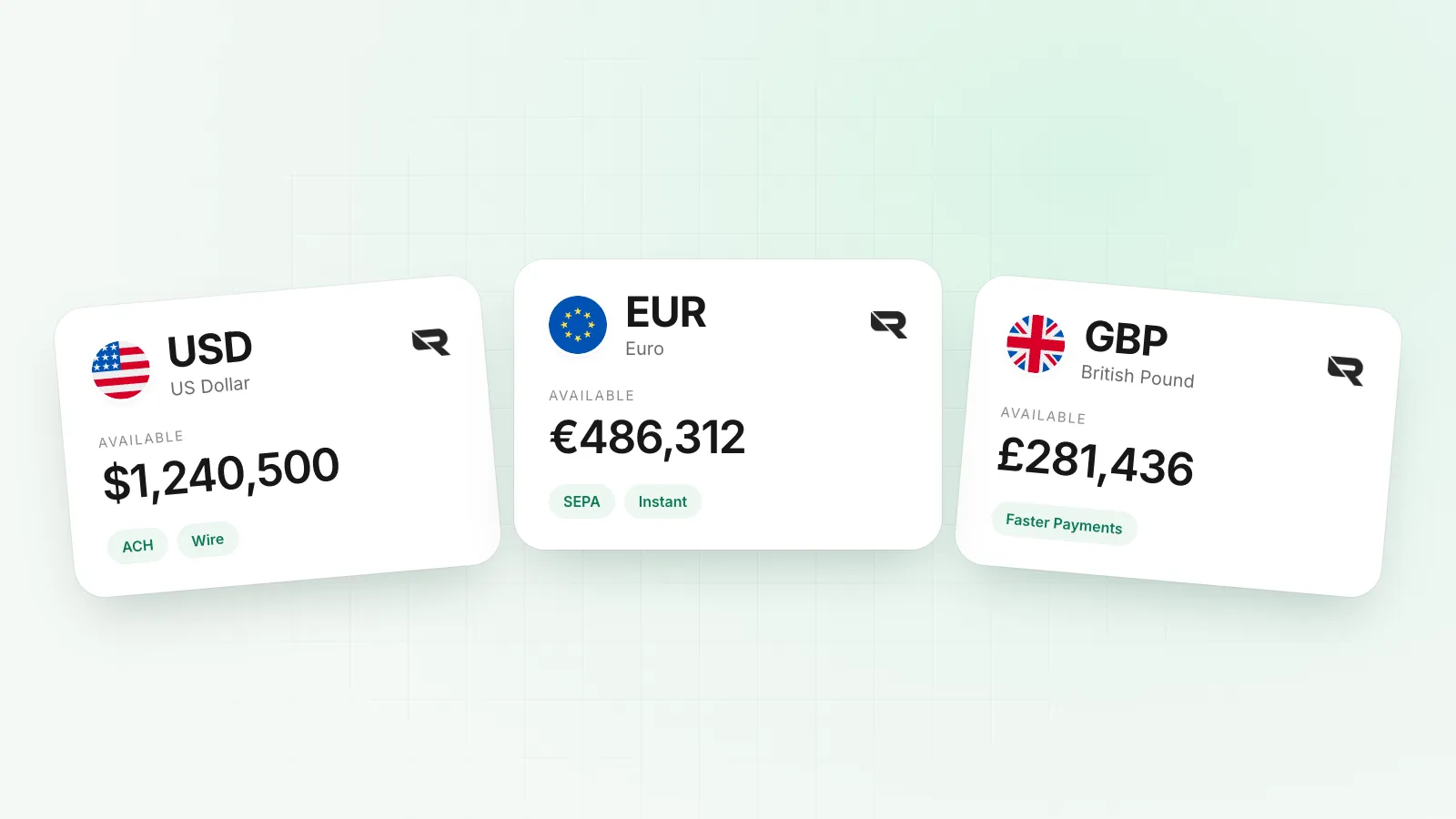
At its simplest it is one account, with one login and one set of users, holding several currency balances side by side: dollars, euros, pounds and others. Each balance can receive money, hold it, pay it out and convert into the others.
What separates a good one from a weak one is mostly underneath:
- How you receive. Whether each currency comes with local account details, SWIFT details, or only a payment reference into a shared pool.
- Whose name is on the details. Your company's legal name, or the provider's.
- When conversion happens. Only when you ask, or automatically on arrival.
- What it costs to convert. And whether you see the rate before you commit.
Local details versus SWIFT details
This is the single most important distinction.
Local account details are the identifiers a payer in that country already uses for domestic payments:
| Currency | Local details | Rail the payer uses |
|---|---|---|
| USD | Account number and ABA routing number | ACH or domestic wire |
| EUR | IBAN (and BIC) | SEPA Credit Transfer or SEPA Instant |
| GBP | Sort code and account number | Faster Payments, Bacs or CHAPS |
When a payer uses them, the payment stays on that country's domestic rail. There are no correspondent banks, so nothing is deducted in transit, and the money arrives in the currency it was sent in.
SWIFT details (a BIC plus an account number or IBAN) let anyone, anywhere, send a cross-border wire. They are the universal fallback, and the expensive one. A wire passes through correspondent banks that can each deduct a fee, and it is often slower. Our rail-by-rail comparison goes through the costs.
A good account gives you local details for the currencies you receive most, and SWIFT details for the rest.
Ten things to check
1. Are the details in your company's name?
Some providers issue details in your company's legal name. Others give you a reference number on an account held in their own name. The difference used to be cosmetic. It no longer is.
- Since 9 October 2025, payment providers in the EU must run Verification of Payee before a euro credit transfer: the payer's bank checks the name they typed against the name on the IBAN and warns them if it doesn't match.
- The UK has run Confirmation of Payee on sterling payments for several years, with the same effect.
A client who sees "the name doesn't match this account" will often stop and email you before paying. Details in your company's own name pass the check.
2. Which currencies get local details, and which only SWIFT?
"Hold 30 currencies" and "receive locally in 30 currencies" are different claims. Ask for the list of currencies with local details, and check that it covers where your payers actually are.
3. Does money stay in the currency it arrived in?
If the account converts everything to a base currency on arrival, you pay a margin on every incoming payment, and again when you pay a supplier in that currency. You want to hold dollars as dollars.
4. What is the FX margin, as a percentage?
The conversion margin is usually the largest cost of an international payment, larger than any transfer fee. Ask for it as a percentage over the mid-market rate. Some providers lower it as volume or plan rises. Be wary of "no fees" offers that don't mention the rate.
5. Is the rate shown before you confirm?
You should see the rate, the fee and the exact amount received on screen before anything converts, and nothing should convert until you accept.
6. What does each rail cost to send?
Look for a per-rail fee table: ACH, SEPA, Faster Payments, international wire. A provider that prices them differently is usually telling you the truth about its costs.
7. Who holds the money?
Most multi-currency providers are not banks. Customer funds are held by regulated partner institutions, often in safeguarded or segregated accounts that are kept apart from the provider's own money. Ask which institutions, in which jurisdictions, and what protection applies. A clear, specific answer is a good sign.
8. Can more than one person use it safely?
A company account needs roles: someone who can see balances, someone who can prepare payments, someone who approves them. Check for per-user permissions, approval thresholds and an audit log.
9. Does it handle paying out as well as receiving?
If you pay contractors or suppliers abroad, check batch payouts, which countries and rails are covered, and what happens when one payment in a batch fails. Our guide to paying international contractors covers this in detail.
10. What does verification involve, and how long does it take?
Every legitimate provider verifies the business and the people who own and control it before issuing account details. Ask for the document list upfront and how long a decision takes once the file is complete. Our KYB document guide explains what is usually asked and why.
What a multi-currency account is not
It is not a way around tax, sanctions or capital controls, and a provider that suggests otherwise is one to avoid. It does not change where your company is resident for tax. And it is not always a substitute for a local bank: some businesses still need a domestic bank account for local tax payments, payroll or lending.
A quick way to compare two accounts
Take last quarter's actual payments. For each one, work out what it would have cost on each account: the receiving fee, the conversion margin (if any), and the sending fee for what you paid out. The account with the lower total for your mix of currencies and rails is the cheaper one, whatever the headline prices say.
How Rivet handles this
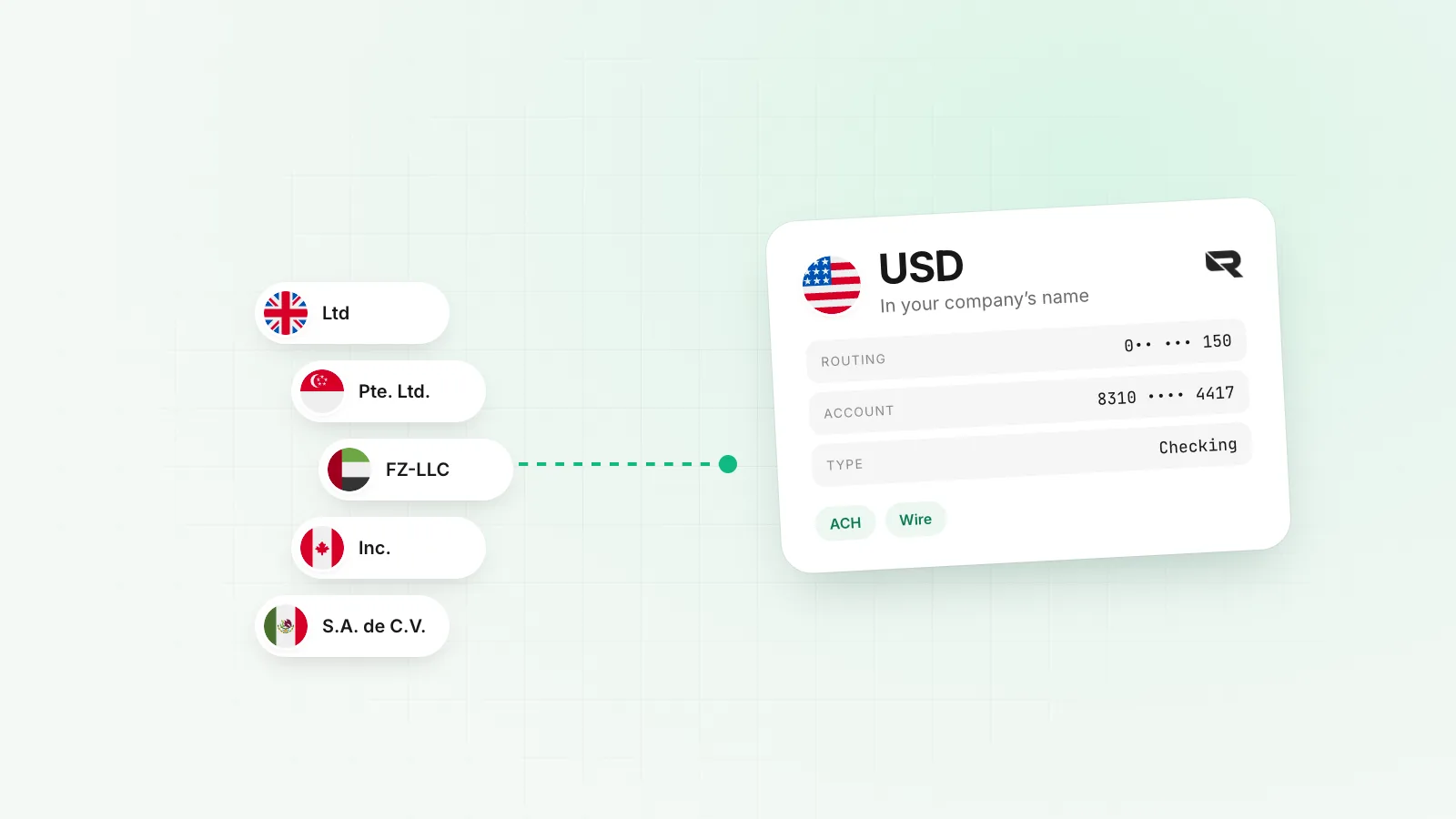
Rivet is a multi-currency business account for registered companies. Account details are issued in your company's legal name: a US account and routing number, a euro IBAN and a UK sort code, with more currencies on higher plans. Money stays in the currency it arrived in. Conversions show the rate and the fee before you confirm, and the FX margin falls as the plan rises. Funds are held by regulated partner institutions, not pooled on Rivet's balance sheet. Roles, approval thresholds, cards and batch payouts run from the same balances.
See named accounts for the currencies and pricing for fees by rail. Comparing providers? Our Wise Business alternatives guide puts the main options side by side, and what an international payment really costs shows how to compare them on one number.
Questions people ask
Is a multi-currency account the same as a bank account?
Functionally it does most of the same jobs, but many providers are not banks. They hold customer money with regulated partner institutions, often in safeguarded or segregated accounts, rather than lending it out. Deposit insurance may not apply in the same way, so ask the provider which institution holds your funds and how they are protected.
What is the difference between local and SWIFT account details?
Local details let payers in that country pay you on their domestic rail: ACH for dollars in the US, SEPA for euros, Faster Payments for pounds. SWIFT details let anyone pay you from anywhere, but through the international correspondent network, which is slower and can lose fees along the way.
Can I hold a currency without converting it?
With a true multi-currency account, yes. Money received in dollars stays in a dollar balance until you choose to convert, spend or send it. Some accounts convert everything to a base currency on arrival, which costs a margin on every payment you receive.
How long does it take to open a multi-currency business account?
It depends on how quickly the provider can verify the company and its owners. With a complete set of documents, a few business days is typical for providers that onboard companies online. Missing or mismatched documents are what make it take weeks.
Sources
Rashidatou writes Rivet's guides to how money moves between countries: the payment rails, what each one costs, and the account details a company needs to get paid in another currency. Every figure in Rashidatou's articles is traced to the scheme rulebook, the regulator or the provider's published price list, and those sources are listed at the end.
More from Rashidatou K. →This article is general information, not legal, tax or financial advice. Rules and fees change; check the sources above and the provider’s current terms before you act on them.
- multi-currency account
- fx
- iban
- local account details
- verification of payee