FX forward contracts explained for small businesses
A forward contract fixes today the exchange rate for a payment you will make or receive later. It removes surprise, but it is a binding contract with its own costs. Here is how forwards work and when a small business needs one.
- Published
- Reading time
- 2 min read
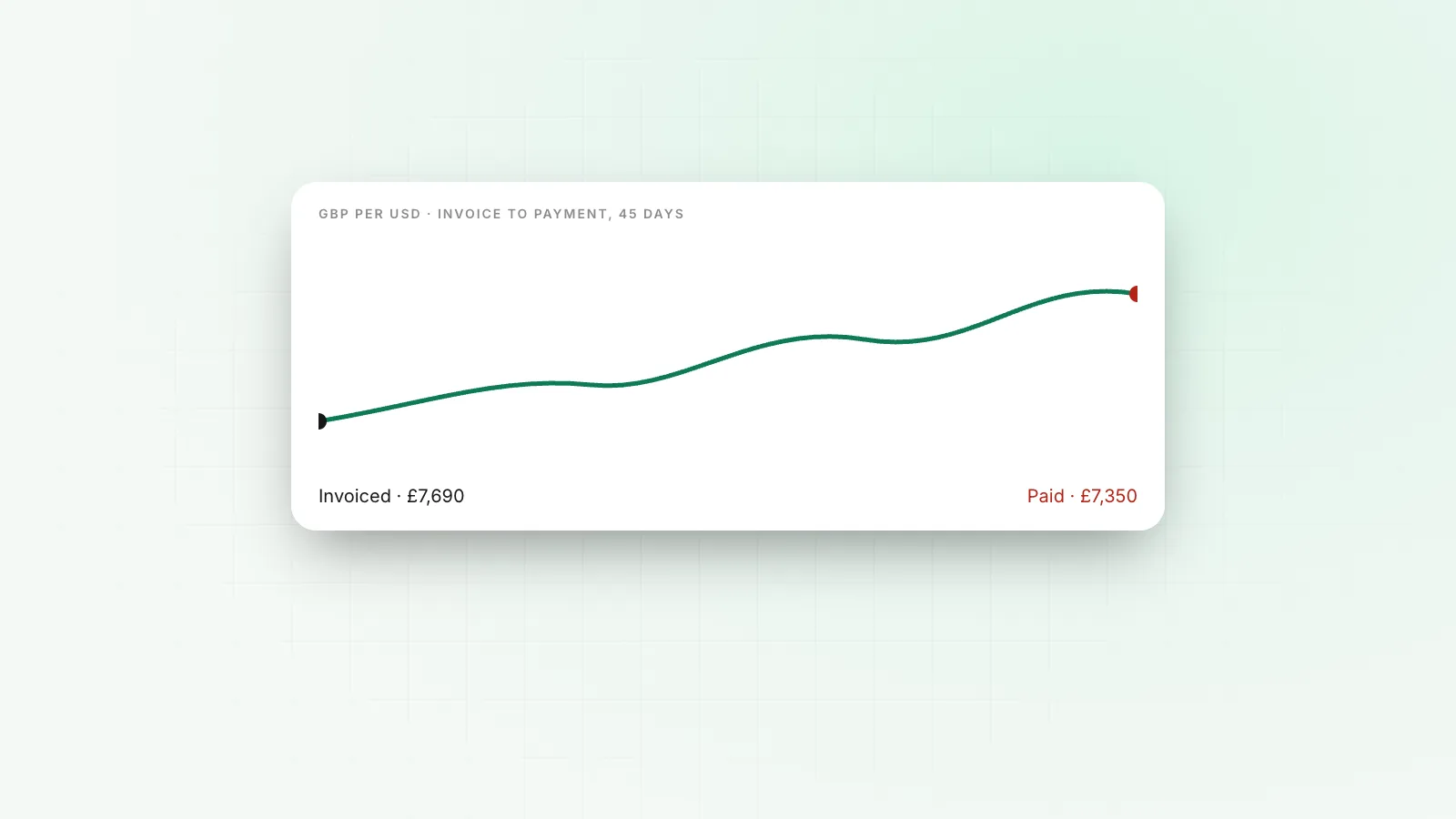
Say you sign a contract to buy €200,000 of equipment, payable in 90 days, and your company earns in dollars. If the euro rises 5% before you pay, the equipment costs you $10,000 more than planned. A forward contract lets you lock the rate now. It is the most common hedging tool, and it is often oversold to businesses that do not need it.
How a forward works
You agree with a provider to buy €200,000 in 90 days at a fixed rate. On the date, you pay the agreed dollars and receive the euros, whatever the market rate is then.
| Day | Market rate (USD per EUR) | Your rate | Your cost |
|---|---|---|---|
| Today | 1.08 | 1.09 (forward) | Fixed at $218,000 |
| Day 90, euro up | 1.14 | 1.09 | $218,000; you avoided $10,000 extra |
| Day 90, euro down | 1.03 | 1.09 | $218,000; you missed a $12,000 saving |
Figures are illustrative. A forward gives you certainty, so you lose the upside along with the downside.
Where the forward rate comes from
The forward rate is the spot rate adjusted for the gap between the two currencies' interest rates over the contract period. If dollar rates are higher than euro rates, the euro trades a little above spot in the forward market, as in the example. It is arithmetic, not a forecast.
Costs and conditions
- Margin in the rate. Providers price a spread into the forward rate, as they do on spot conversions.
- Deposit or collateral. Many ask for a few percent up front, and more if the rate moves against you.
- It is binding. If the equipment order is cancelled, you still own the contract and must settle any loss to close it.
In some countries, forwards for business payments are offered by regulated payment firms as well as banks. Check that your provider is authorized for them.
When a small business should use one
- A large, known payment or receipt on a fixed date
- Thin margins that a 5% move would wipe out
- A price already agreed with a customer or supplier in a foreign currency
Simpler alternatives
Natural hedging. Pay costs in the currency you earn. If you have euro income, euro bills need no hedge. See multi-currency cash flow forecasting.
Convert early. For a payment you know about and can afford to fund now, converting today and holding the currency removes the rate risk without a contract.
Price in your own currency. Where customers or suppliers accept it, the risk passes to them. The USD or local currency guide covers the trade-off.
The broader picture is in our FX risk guide.
On Rivet
Rivet holds USD, EUR and GBP balances side by side on the Growth plan, so you can convert early at the rate shown and hold the currency until a bill is due. See Pricing.
Questions people ask
What is an FX forward contract?
An agreement with a bank or currency provider to exchange a fixed amount of currency on a set future date, at a rate agreed today. It removes uncertainty about the rate on that payment.
How is the forward rate calculated?
From today's spot rate, adjusted for the difference between the two currencies' interest rates over the period. A currency with higher interest rates trades at a discount in the forward market. The forward rate is not a prediction of where the rate will be.
Do forward contracts cost money?
Providers earn a margin built into the forward rate, and many ask for a deposit or margin, often a percentage of the amount. If rates move against your contract, they may ask for more.
What happens if I don't need the currency on the date?
You are still bound. Usually you can close the contract early or extend it, and you settle the difference between your contracted rate and the current rate, which can be a gain or a loss.
Sources
Rashidatou writes Rivet's guides to how money moves between countries: the payment rails, what each one costs, and the account details a company needs to get paid in another currency. Every figure in Rashidatou's articles is traced to the scheme rulebook, the regulator or the provider's published price list, and those sources are listed at the end.
More from Rashidatou K. →This article is general information, not legal, tax or financial advice. Rules and fees change; check the sources above and the provider’s current terms before you act on them.
- fx forward contract
- currency hedging
- forward rate
- fx risk management
- hedge currency risk