How to build a cash flow forecast when you earn and spend in several currencies
A cash forecast in one currency is easy. Add a second currency and every number depends on an exchange rate. This method keeps each currency separate until the last step, so you can see where a shortfall actually is.
- Published
- Reading time
- 2 min read
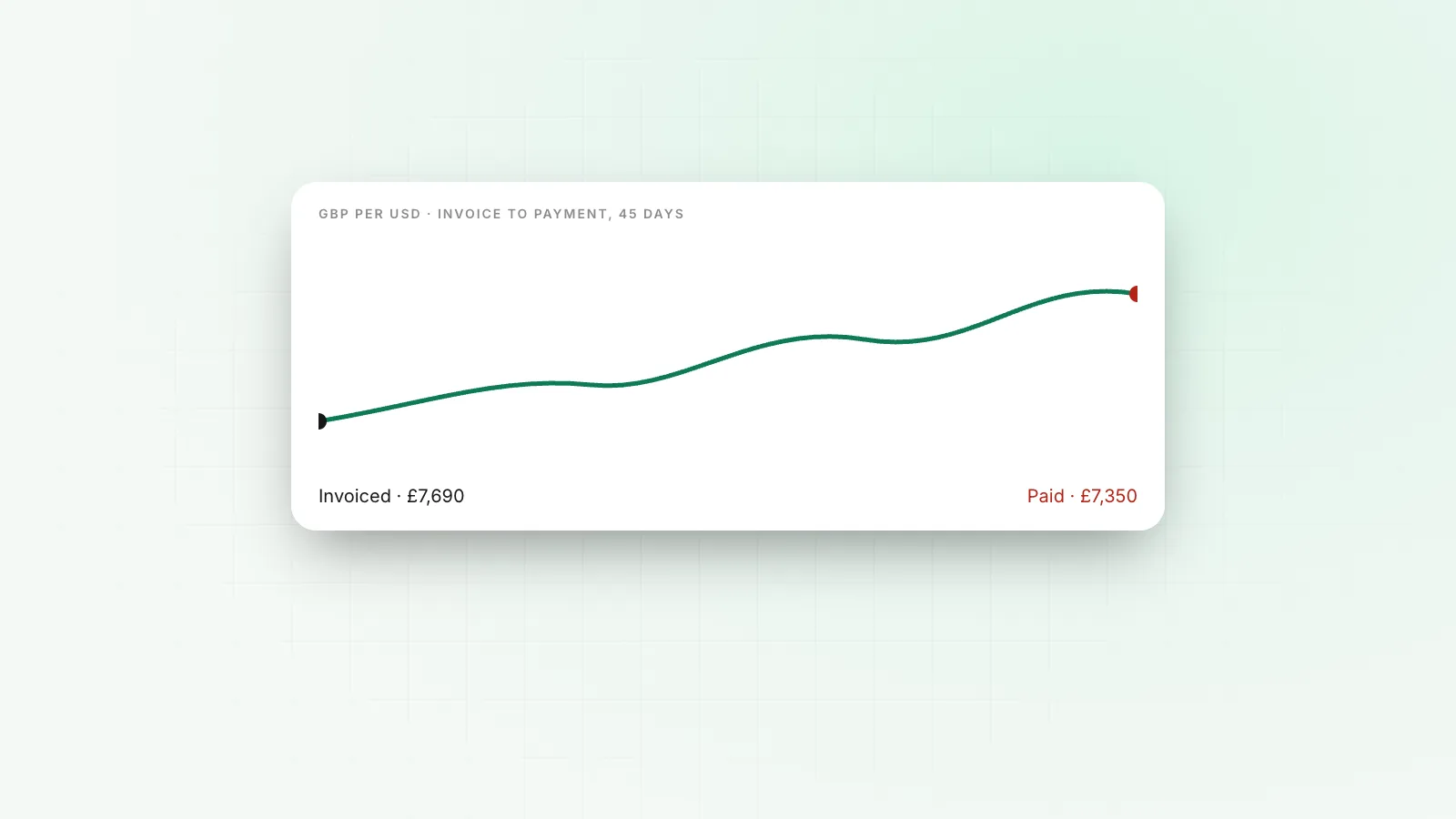
A company that sells to US clients in dollars, pays a team in euros and pounds, and keeps its books in one of them has three cash positions. If you add them together too early, a euro shortfall can hide inside a healthy dollar balance until payroll day. The method below keeps them apart until you choose to combine them.
Step 1: one sheet per currency
Make a 13-week grid for each currency you hold or owe. Use the currency itself, not your reporting currency. Rows:
- Opening balance
- Receipts: customer payments by expected date, platform payouts
- Payments: payroll, contractors, suppliers, rent, software, tax
- Closing balance
A 13-week direct forecast (actual cash in and out, by week) is the standard short-term tool. It is concrete enough to check against your bank every Friday.
Step 2: date receipts honestly
Use the date you expect cash, not the invoice due date. If a client always pays ten days late, forecast ten days late. If an international wire usually takes three days, add three days. Our guide to Swift fees and timing gives typical delays.
Step 3: find the low point in each currency
Look at the lowest closing balance on each sheet. That number matters more than the total. A business can be cash-rich in dollars and still miss euro payroll.
Step 4: plan conversions
Where a currency goes negative, plan a conversion before that week, from a currency with surplus. Write it into both sheets: out of USD, into EUR. Now you can see how much you convert, how often, and at what rate.
Step 5: one rate, then a stress test
Pick one rate per pair for the whole forecast, and write it at the top. Then run it again with each rate moved 5% and 10% against you. If a 10% move turns a quarter negative, you know where your exposure is. The FX risk guide explains the main ways to reduce it.
Step 6: match currencies where you can
The cheapest conversion is the one you skip. Pay euro contractors from euro income. Bill US clients in dollars and pay US software in dollars. Only the net difference needs converting. This is called a natural hedge, and it needs balances in each currency rather than one account that converts everything on arrival.
Step 7: combine at the end
Only now convert each sheet's closing balances into your reporting currency at your stated rate, for a single total. Use that total for the board deck. Use the currency sheets for decisions.
An example
| Week | USD closing | EUR closing | GBP closing |
|---|---|---|---|
| 1 | 84,000 | 12,000 | 6,500 |
| 4 | 91,000 | -3,000 | 4,200 |
| 8 | 102,000 | 5,000 | 1,800 |
Week 4 shows a euro gap. Converting USD to EUR in week 3 fixes it, and the forecast shows the amount needed.
Balances on Rivet
Rivet holds USD, EUR and GBP balances side by side on the Growth plan, so euro costs can be paid from euro income, and conversions show the rate before you confirm. See Pricing.
Questions people ask
What is a 13-week cash flow forecast?
A week-by-week list of the cash you expect to receive and pay over the next quarter, built from invoices, payroll and bills. It is short enough to be accurate and long enough to see a shortfall coming.
Which exchange rate should I use in a forecast?
Pick one and write it down, for example today's mid-market rate. Then run the forecast again with the rate moved 5% and 10% against you. The goal is to see how sensitive you are, not to predict the rate.
What is a natural hedge?
Paying costs in the same currency you earn. If you earn euros and also pay euro suppliers, those flows offset and only the difference is exposed to exchange rates.
How often should I update a cash forecast?
Weekly. Replace last week's forecast with actuals, roll the window forward a week, and look at the lowest balance in each currency.
Sources
Rashidatou writes Rivet's guides to how money moves between countries: the payment rails, what each one costs, and the account details a company needs to get paid in another currency. Every figure in Rashidatou's articles is traced to the scheme rulebook, the regulator or the provider's published price list, and those sources are listed at the end.
More from Rashidatou K. →This article is general information, not legal, tax or financial advice. Rules and fees change; check the sources above and the provider’s current terms before you act on them.
- cash flow forecast
- multi-currency cash flow
- 13-week cash flow
- fx planning
- treasury for smes