Should you pay overseas suppliers in USD or their local currency?
Paying every supplier in dollars feels simple. It often means the supplier's bank converts at a poor rate and the supplier builds a buffer into your price. Here is how to decide which currency to pay in.
- Published
- Reading time
- 2 min read
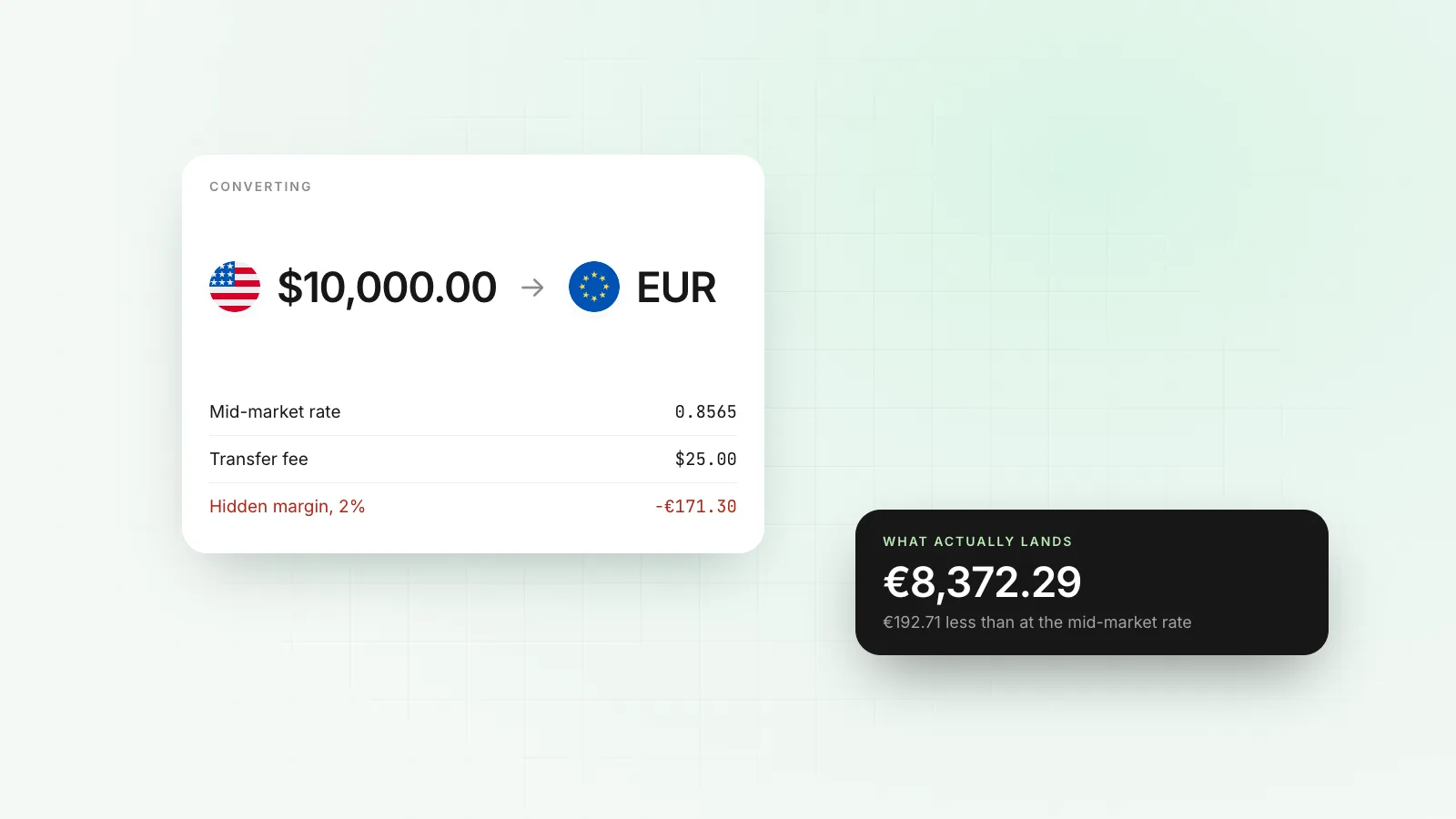
Many companies pay every overseas supplier in dollars by default. It keeps their own books simple. It also pushes the conversion onto the supplier, who usually does it through a local bank at a rate it cannot negotiate, and who has to guess where the exchange rate will be when your payment arrives. Most suppliers deal with that by adding a margin to your price.
Who carries what
| You pay in | Who converts | Who carries FX risk | Hidden cost |
|---|---|---|---|
| USD | Supplier's bank | Supplier | Supplier's conversion rate and a buffer in their price |
| Supplier's currency | You | You | Your conversion rate |
The conversion happens either way. The question is who does it, at what rate, and who prices in the risk.
When local currency is better
- The supplier's costs are local. A software agency in Poland pays staff in złoty. A USD invoice means currency risk for them, and they price it in.
- You can convert well. If your rate is close to mid-market, your conversion costs less than theirs. See mid-market rate and FX markup.
- You earn in that currency too. Paying euro suppliers from euro income needs no conversion at all.
- Faster arrival. Local currency often lands on a local rail the same day, while a USD wire may take days and lose fees to intermediary banks. See Swift fees and timing.
When USD is better
- The supplier asks for it. Many exporters, especially in commodity and manufacturing trades, price and buy inputs in dollars.
- The local currency is hard to buy or volatile. In some markets, suppliers prefer dollars as a store of value.
- Prices in the trade are set in dollars. Shipping and many raw materials, for example.
Our China supplier guide covers one market where both options are common.
How to decide: ask for two quotes
Ask each main supplier to quote in USD and in its own currency. Convert the local quote at today's mid-market rate and compare. A difference of 2 to 5% is common where the supplier was pricing in a currency buffer. Then decide whether the saving is worth carrying the currency risk yourself.
Managing the risk you take on
- Agree prices for a quarter or a year in the supplier's currency.
- Convert in advance for known large payments.
- Hold balances in the currencies you pay regularly.
- Stress-test your forecast with a 10% rate move. See FX risk for small businesses.
On Rivet
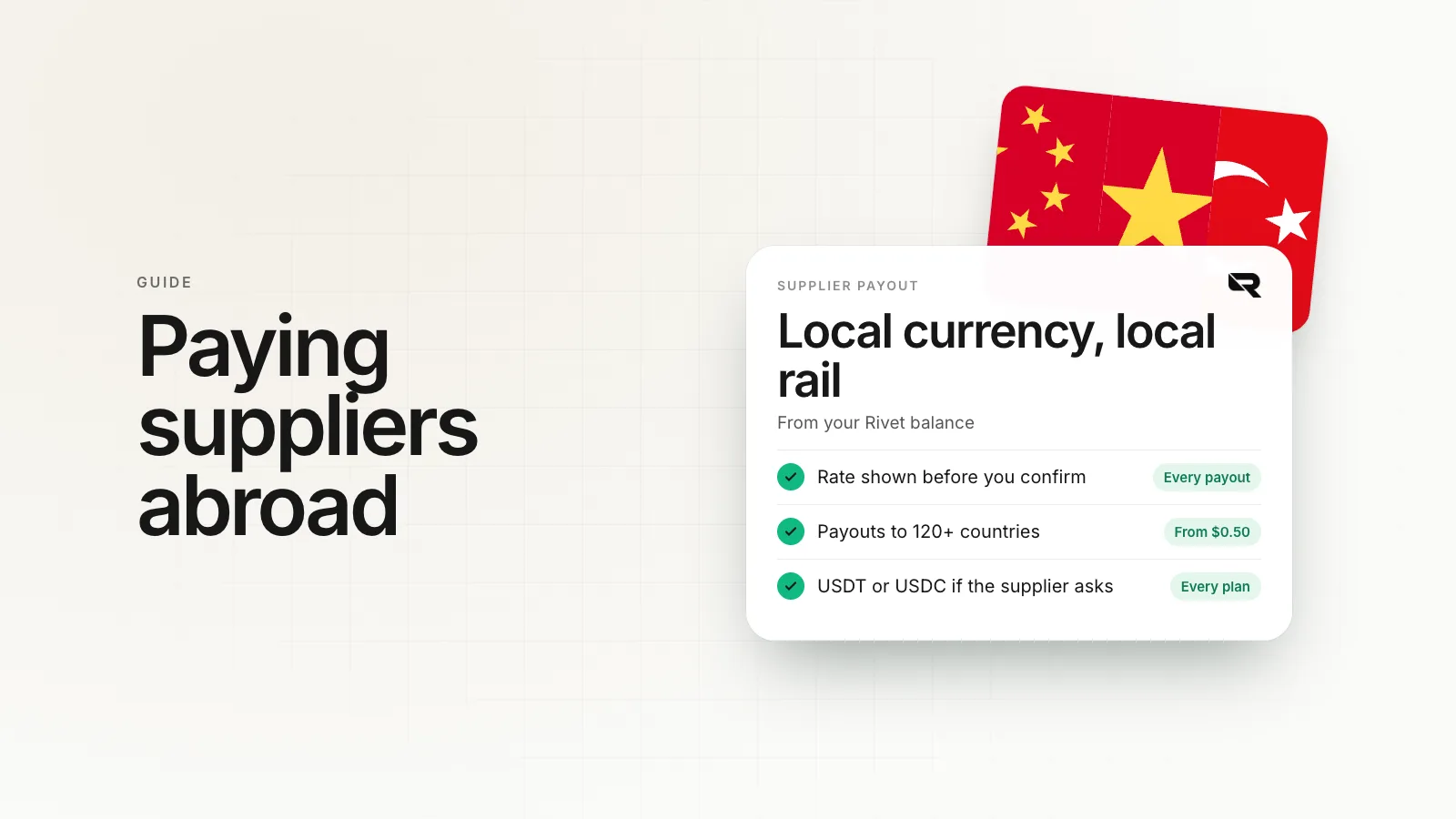
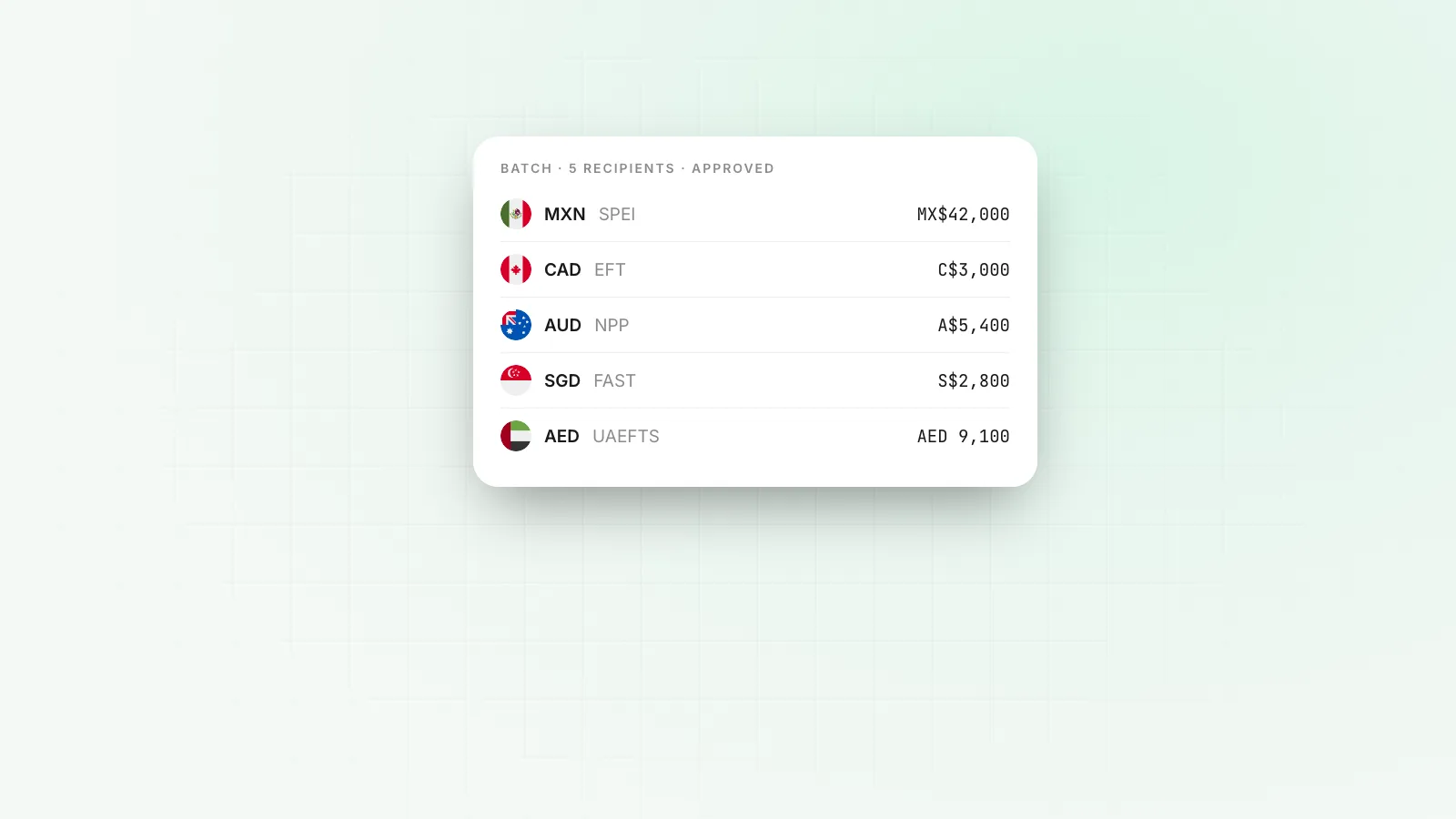
Rivet pays suppliers in USD or in their local currency in more than 120 countries, with the rate and fee shown before you send, from USD, EUR or GBP balances. See Payouts.
Questions people ask
Is it cheaper to pay suppliers in their local currency?
Often. If you convert at a good rate and the supplier no longer needs a currency buffer in its prices, the total cost can fall. Compare a quote in USD with a quote in local currency, converted at the mid-market rate, to see the difference.
Who pays the conversion fee on a USD payment to a foreign supplier?
Usually the supplier, through its own bank's exchange rate when the dollars arrive. Intermediary banks on a Swift wire may also take a fee from the amount. The supplier then tends to build those costs into its prices.
When should I keep paying in USD?
When the supplier asks for dollars, for example because it buys inputs in dollars or prefers to hold them, when prices in that trade are set in dollars, or when the local currency is hard to buy or volatile.
How do I reduce currency risk when paying in local currency?
Match currencies where you can: earn in the currencies you spend. Agree prices for a fixed period, convert ahead for known payments, and keep a buffer in your forecast.
Sources
Rashidatou writes Rivet's guides to how money moves between countries: the payment rails, what each one costs, and the account details a company needs to get paid in another currency. Every figure in Rashidatou's articles is traced to the scheme rulebook, the regulator or the provider's published price list, and those sources are listed at the end.
More from Rashidatou K. →This article is general information, not legal, tax or financial advice. Rules and fees change; check the sources above and the provider’s current terms before you act on them.
- pay suppliers in local currency
- usd vs local currency
- supplier payments
- fx risk
- international suppliers