Slovak automotive suppliers: euro revenue, dollar and yuan inputs
Slovakia's car plants buy from hundreds of local suppliers. Those suppliers sell to the plants in euros, but much of what they buy, electronics, raw materials and tooling, is priced in dollars or yuan. That mismatch sits in every quote they give.
- Published
- Reading time
- 2 min read
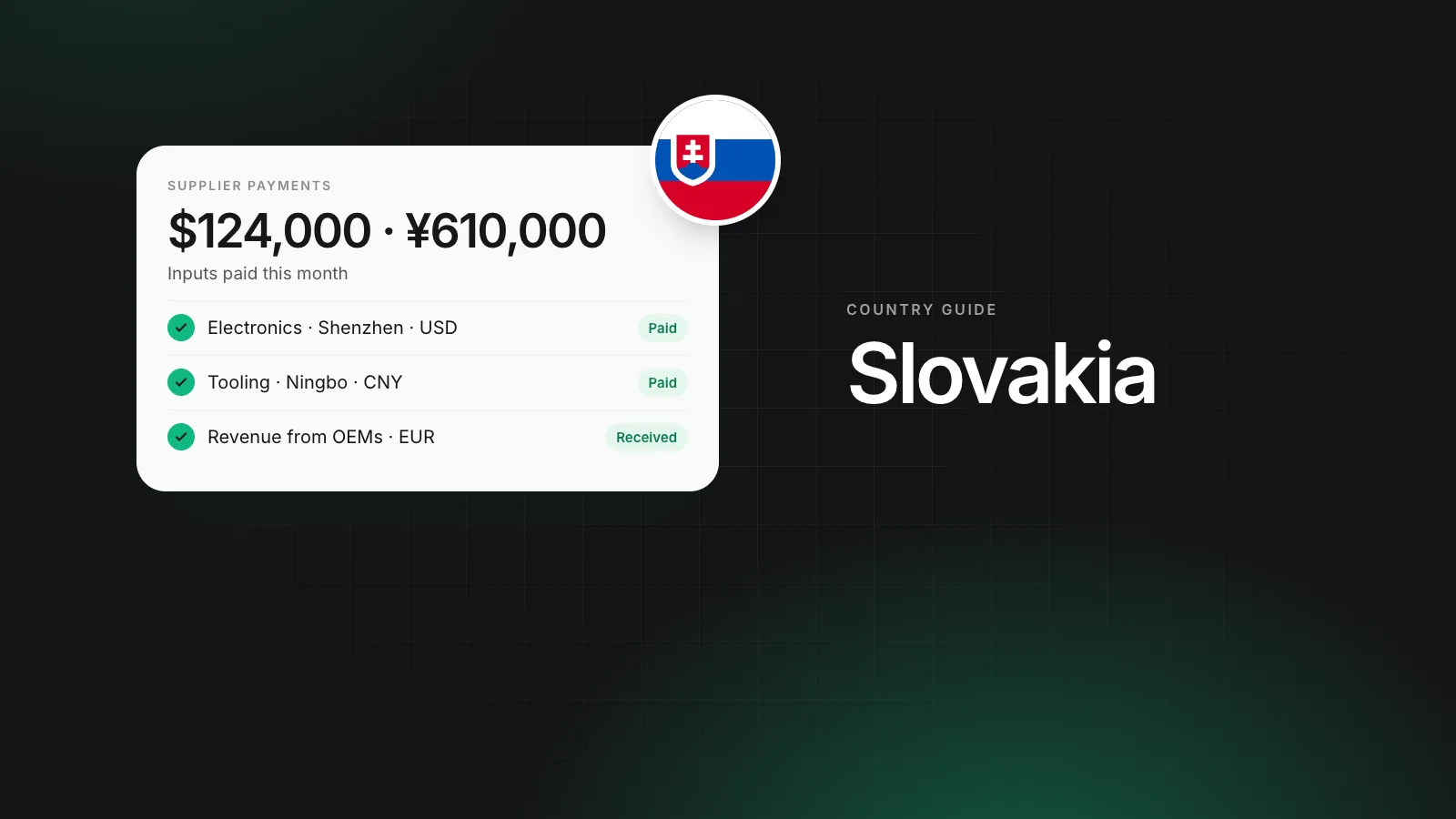
A Trnava wiring harness maker supplies two car plants. Its prices are fixed in euros for each model year. Its copper, connectors and some electronic modules come from suppliers who invoice in dollars, and moulds from a toolmaker in Ningbo who invoices in yuan. When the dollar rose 8 percent against the euro over a few months, the margin on its biggest contract all but disappeared.
The structural mismatch
Slovakia produces more cars per person than any other country, and its suppliers work under the carmakers' terms: euro prices, annual reviews, strong pressure to cut costs each year. The inputs often come priced in other currencies:
- electronic components and modules, usually in dollars,
- some metals and plastics, priced off dollar commodity markets,
- tooling and parts from China, in dollars or yuan.
A year-long euro price against dollar costs means the supplier carries the exchange rate.
Match first
Do you have any dollar revenue? Some suppliers sell to plants outside the euro area, or to buyers who pay in dollars. That revenue can pay dollar suppliers directly.
If you do not, a dollar balance still helps. Instead of buying dollars at the bank's rate each time an invoice is due, buy dollars in planned amounts, when the rate is acceptable, and pay suppliers from the balance.
Price clauses and hedging
At contract renewal, raise currency adjustment. Some supply contracts include clauses that move prices when exchange rates leave a band. Carmakers resist them, but suppliers with a documented dollar cost base have a case.
For the rest, forwards fix a rate for known future dollar needs across the contract year. See FX forward contracts explained.
Yuan or dollars for Chinese suppliers
Chinese toolmakers and component makers often accept yuan and sometimes quote lower for it. Compare the yuan price with the dollar price after your conversion cost on both. Our guide on how to pay suppliers in China covers the details.
Controls
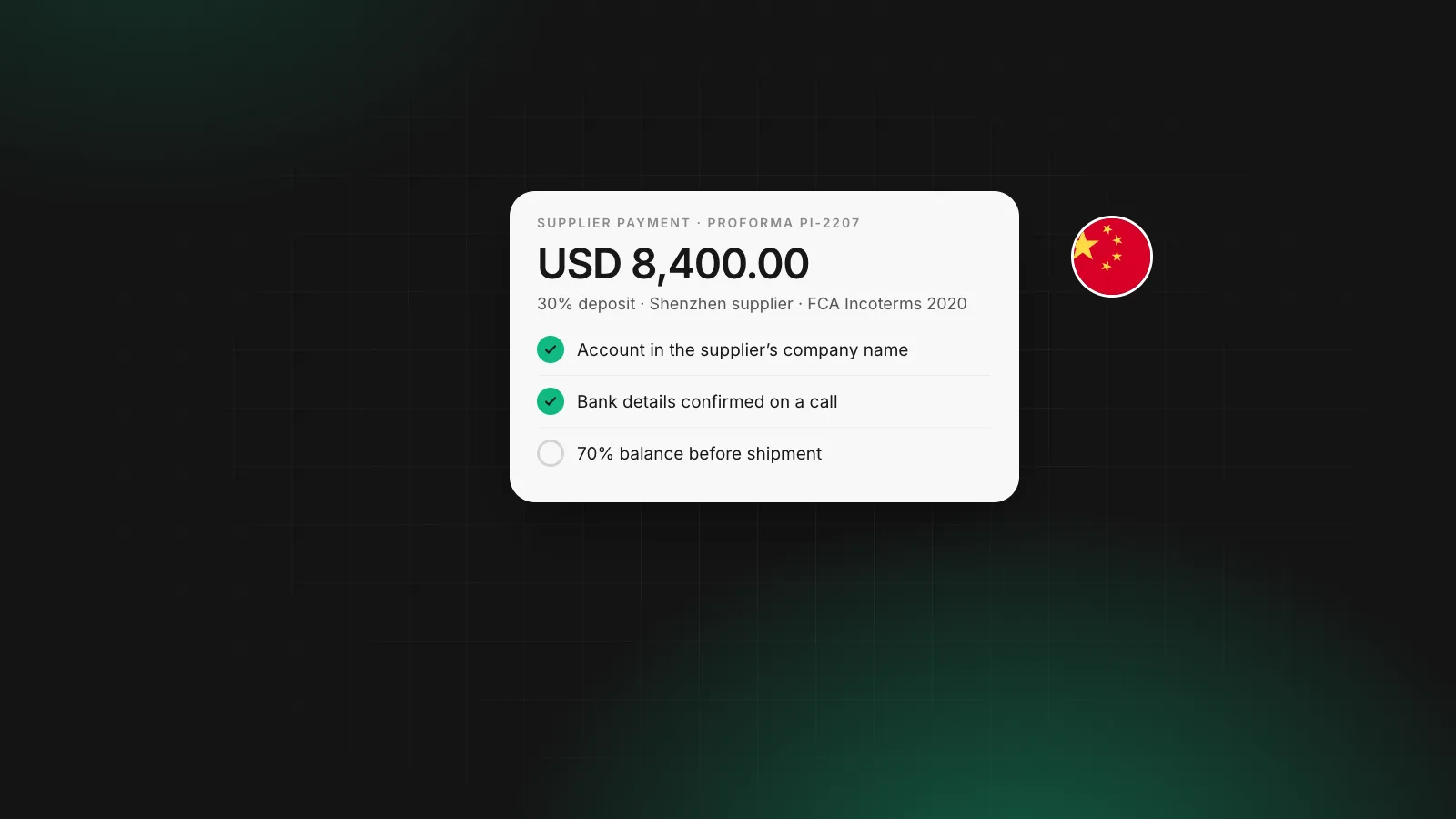
Supplier payment fraud targets companies like these: large regular payments to Asian accounts, often arranged by email. Confirm any change of bank details with a known contact by phone, and require two approvers for payments to new details.
Paying into Slovakia: the local rail
| What | Detail |
|---|---|
| Local rail | SEPA Instant Credit Transfer |
| Run by | European Payments Council scheme, run by each bank |
| Settlement | Under ten seconds, 24/7 |
| Published fee | By the EU Instant Payments Regulation, no more than the bank charges for a standard SEPA transfer |
Source: European Payments Council: SEPA Instant Credit Transfer. Checked when this guide was last updated; the scheme's own page has the current figures.
Where Rivet fits
A Rivet business account gives a Slovak company US dollar details on every plan and euro details with an IBAN from the Growth plan, and on the Scale plan balances in 30 currencies, including yuan. Suppliers in 120+ countries can be paid from those balances, conversions happen at a rate shown before you confirm, and from Growth payouts can require a second approver. Rivet is not a bank; regulated partner institutions hold the funds.
Questions people ask
Why are components priced in dollars?
Electronics and many commodities trade globally in dollars, and Asian suppliers often invoice exports in dollars.
Should we pay Chinese suppliers in yuan?
Some offer a lower price in yuan. Compare it with the dollar price after your conversion cost.
Can currency clauses help?
Some supply contracts include clauses that adjust prices when exchange rates move beyond a band. Raise it at contract renewal if your input costs are largely in dollars.
How much should we hedge?
Start by matching and buying dollars on a schedule. Use forwards for large, predictable dollar needs over the contract year.
Sources
Rashidatou writes Rivet's guides to how money moves between countries: the payment rails, what each one costs, and the account details a company needs to get paid in another currency. Every figure in Rashidatou's articles is traced to the scheme rulebook, the regulator or the provider's published price list, and those sources are listed at the end.
More from Rashidatou K. →This article is general information, not legal, tax or financial advice. Rules and fees change; check the sources above and the provider’s current terms before you act on them.
- slovakia
- automotive
- suppliers
- usd
- cny
- currency risk