Slovakia's mandatory e-invoicing from 2027: what companies should prepare now
Slovakia has legislated for structured B2B e-invoices and near real-time reporting to the tax authority, with the main obligation from 1 January 2027. Domestic invoices will change most. Foreign clients will still need clear payment details more than a new format.
- Published
- Reading time
- 2 min read
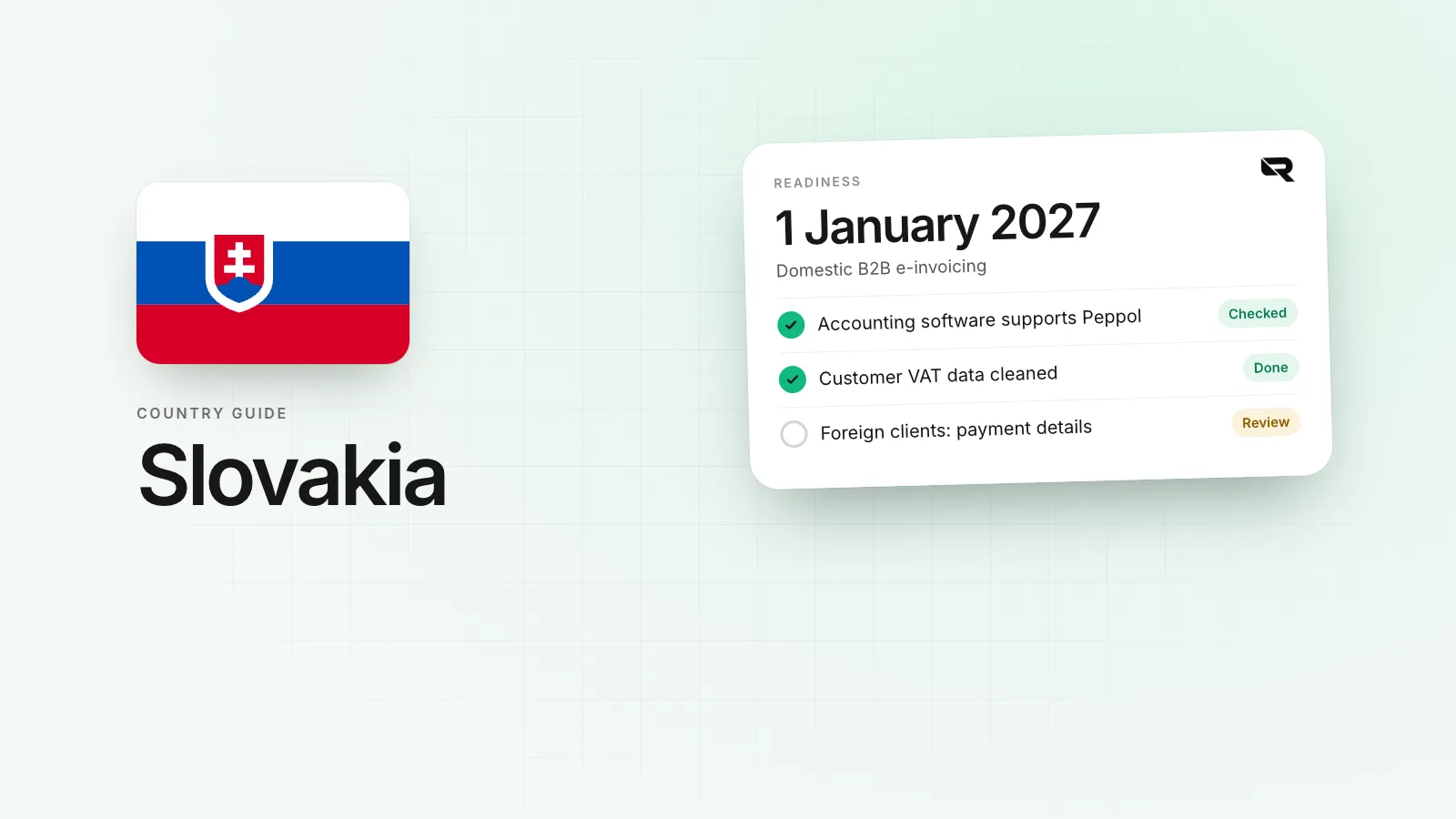
A Žilina automotive components supplier sends 200 invoices a month, mostly to Slovak and Czech customers. From 1 January 2027 the Slovak ones must be structured e-invoices exchanged through a certified network and reported to the Financial Administration. Its accounting software vendor has a plan. Its customer master data does not: half the VAT numbers are out of date.
The plan for 2027
Slovakia has legislated a shift from PDF and paper invoices to structured e-invoicing for B2B transactions between Slovak VAT payers, with the main obligation from 1 January 2027. The model:
- invoices are exchanged as structured data based on the European standard EN 16931,
- they travel over the Peppol network through access point providers,
- invoice data is reported to the Financial Administration as part of the exchange.
Check the Financial Administration's current guidance for the final scope and transition rules; details were still being published through 2026.
What to do before January
- Ask your software provider how it connects to Peppol, and whether it will act as your access point or work with one.
- Clean customer data. Every domestic customer needs a correct VAT ID and address. Wrong master data is the most common reason structured invoices bounce.
- Map your invoices. Split them into domestic B2B, foreign B2B and consumer, since each follows different rules.
- Plan receiving. You will also receive e-invoices from Slovak suppliers. Decide who approves them and how they reach accounts payable.
Foreign clients
The 2027 obligation covers domestic transactions. Invoices to Czech, German or Austrian customers can continue in agreed formats, with the usual reverse charge wording and the recapitulative statement. EU-wide cross-border digital reporting comes later, under the VAT in the Digital Age package from July 2030.
The payment side
Slovakia uses the euro, so euro-area customers pay by SEPA directly. Czech customers pay in euros or korunas, Polish ones in euros or zloty, and US or UK customers send international transfers that can arrive late and short. Giving each customer details they can pay domestically speeds collections more than any invoice format change.
Paying into Slovakia: the local rail
| What | Detail |
|---|---|
| Local rail | SEPA Instant Credit Transfer |
| Run by | European Payments Council scheme, run by each bank |
| Settlement | Under ten seconds, 24/7 |
| Published fee | By the EU Instant Payments Regulation, no more than the bank charges for a standard SEPA transfer |
Source: European Payments Council: SEPA Instant Credit Transfer. Checked when this guide was last updated; the scheme's own page has the current figures.
Where Rivet fits
Rivet is not a Peppol access point. A Rivet business account handles foreign collections: euro details with an IBAN and sterling details from the Growth plan, US dollar details on every plan, and balances in 30 currencies on Scale. Payments are matched to invoices, and conversions happen at a rate shown before you confirm. Rivet is not a bank; regulated partner institutions hold the funds.
Questions people ask
When does e-invoicing become mandatory in Slovakia?
The main obligation for domestic B2B invoices is planned from 1 January 2027. Check the Financial Administration's guidance for the final scope and any transition rules.
Will Slovakia use Peppol?
The adopted model is based on Peppol and the European standard, with invoice data reported to the tax authority as it is exchanged.
What about invoices to foreign clients?
The 2027 obligation targets domestic transactions. EU-wide cross-border digital reporting is scheduled under the VAT in the Digital Age package from July 2030.
What should we do now?
Ask your accounting software provider how it will connect to Peppol, clean customer VAT data, and map which invoices are domestic and which are foreign.
Sources
William covers what happens once a company starts moving money: getting the business verified, paying contractors and suppliers abroad, and keeping card spend under control. William writes for the founder or finance lead who has to make it work this week, and links every rule cited to the text it comes from.
More from William Sunjo M. →This article is general information, not legal, tax or financial advice. Rules and fees change; check the sources above and the provider’s current terms before you act on them.
- slovakia
- e-invoicing
- 2027
- peppol
- vat
- financná správa