The best way to pay international suppliers in 2026
The cheapest way to pay a supplier abroad is usually in their currency, on their local rail, from an account that shows the rate first. Six methods compared on cost, speed and risk.
- Published
- Updated
- Reading time
- 2 min read
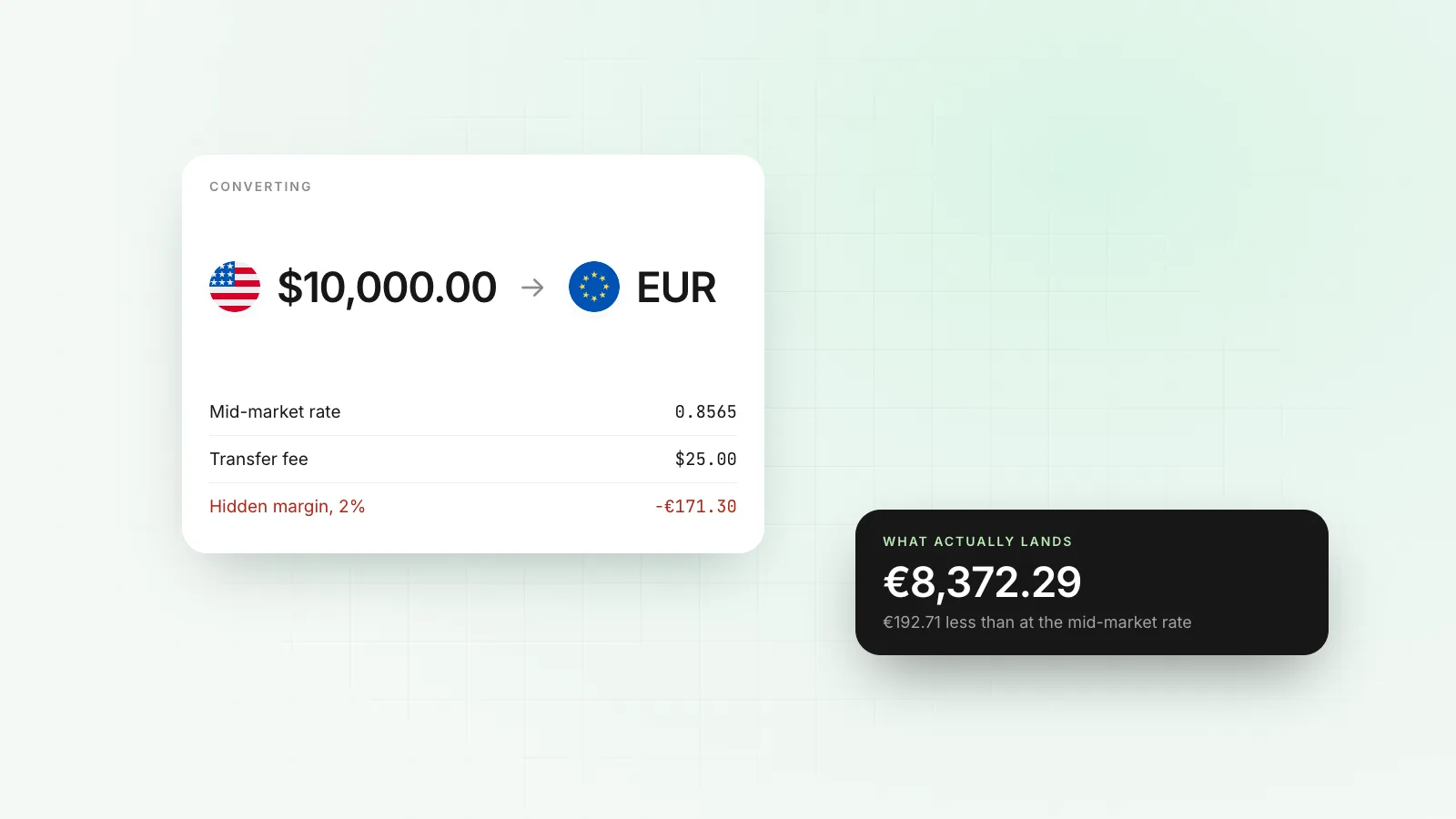
An importer pays a factory in Guangdong 40,000 USD by SWIFT from a high-street bank. The bank charges a sending fee, an intermediary bank deducts a fee on the way, and the factory's bank charges to receive. The factory gets less than invoiced and asks for the difference on the next order.
Paid in yuan from a specialist account, the same invoice goes on a local rail at a rate shown before sending, and arrives in full. WorldFirst's UK list, for example, shows £11.55 for a USD payment to mainland China within four business hours.
Prices are from each provider's page, read in November 2026.
Six methods compared
| Method | Cost | Speed | Best for |
|---|---|---|---|
| Bank SWIFT wire | Sending fee, intermediary deductions, bank FX margin | 1 to 5 days | Suppliers who insist on it |
| Specialist account, local rail | Published FX plus small fixed fee | Same day to 2 days | Most supplier payments |
| Corporate card | Card FX fee; supplier pays card fees | Instant | Small and online suppliers |
| Stablecoins (USDT, USDC) | Network fee and conversion | Minutes | Suppliers who ask for them |
| Letter of credit | Bank fees, often a percentage | Tied to shipping documents | Large first orders, new suppliers |
| Payment platform (e.g. Alibaba Trade Assurance) | Platform fees | Varies | Orders placed on that platform |
Four habits that save money
Ask for the price in both currencies. See paying suppliers in USD or local currency.
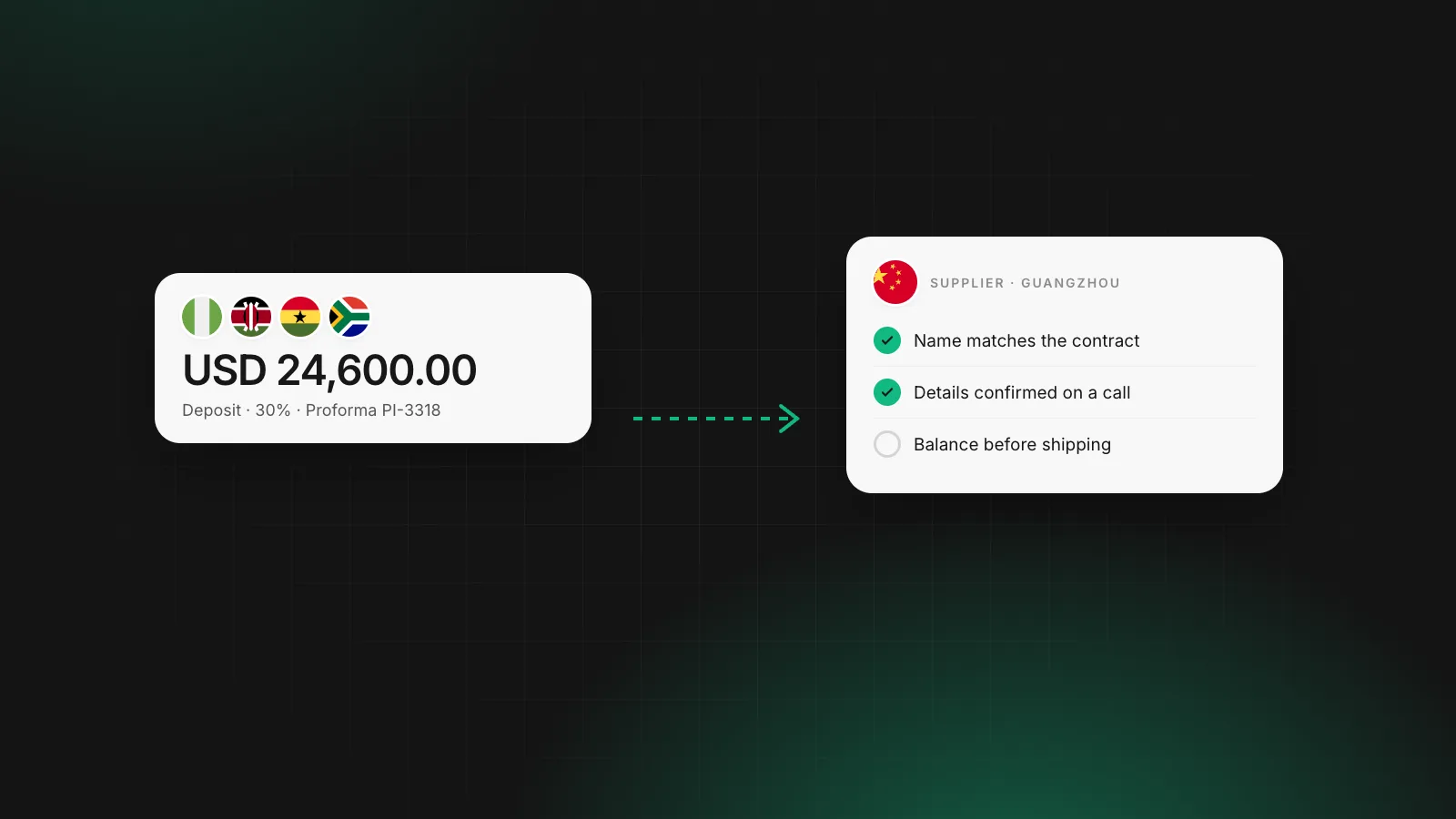
Verify bank details by phone before the first payment and after any change. Supplier detail changes are the commonest invoice fraud. See invoice fraud and payment detail scams.
Use the right documents. A proforma invoice for deposits, a commercial invoice for customs.
Batch payments on one approval to save time and fees.
How Rivet handles supplier payments
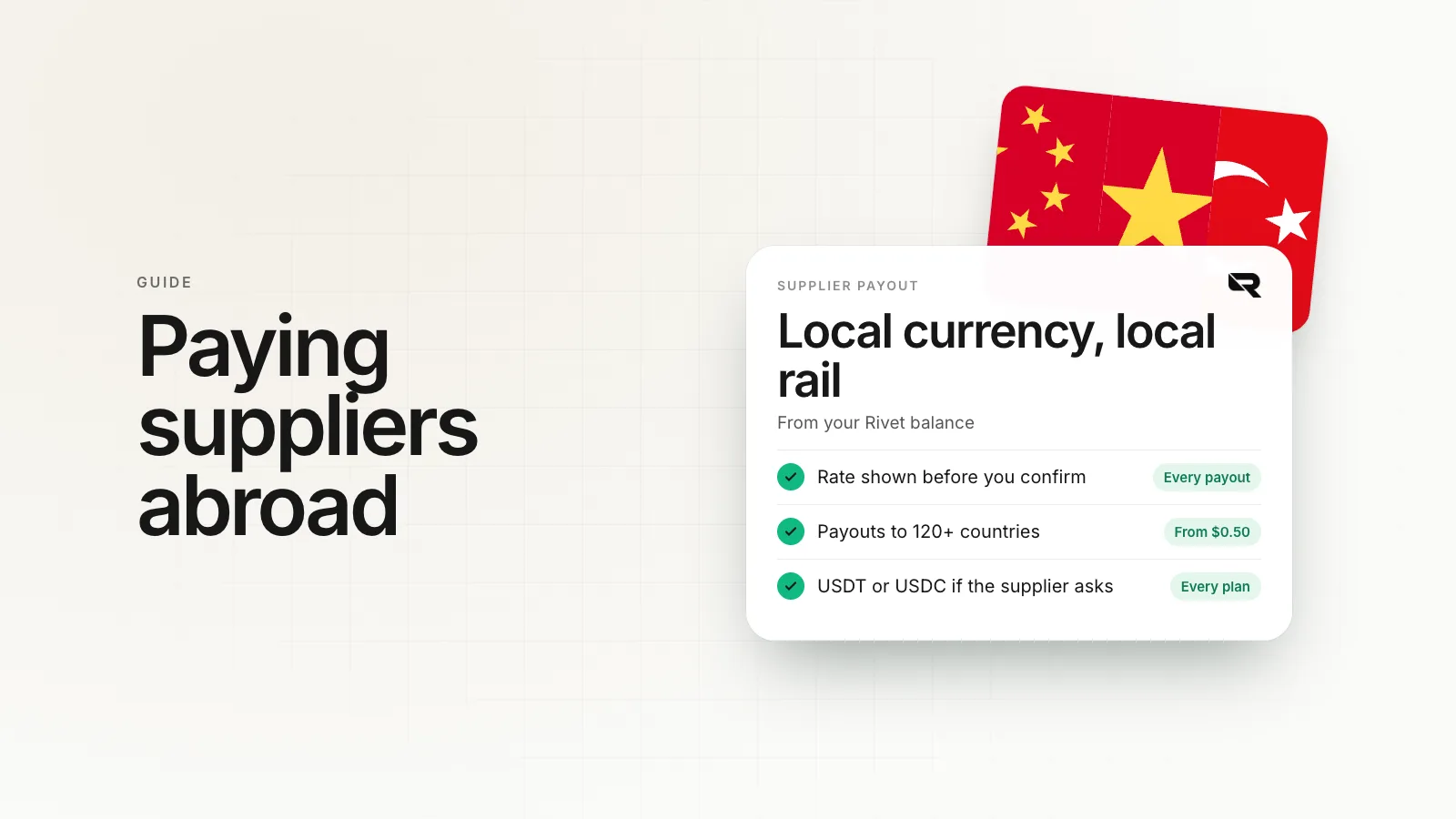
Rivet pays suppliers in 120+ countries from your USD, EUR or GBP balance, with the rate and fee shown before you confirm. Payouts cost $2 each on the free Starter plan, $1 on Growth and $0.50 on Scale, and Growth adds approvals for up to 10 team members. If a supplier asks for USDT or USDC, you can pay from the same account. Scale holds CNY and 20 more currencies. For China specifically, see how to pay suppliers in China. Rivet is not a bank; regulated partner institutions hold client funds.
Questions people ask
What is the cheapest way to pay an overseas supplier?
Usually a specialist provider paying in the supplier's currency on a local rail, at a published FX margin. A bank SWIFT wire in USD is often the most expensive once intermediary deductions and FX are counted.
Should I pay suppliers in USD or their local currency?
Ask for both prices. Suppliers that invoice in USD often add a buffer for currency moves. Our guide on paying suppliers in USD or local currency works through the numbers.
Is it safe to pay suppliers in USDT?
It can be, if the supplier is verified, you send on the network they specify, and you test with a small amount first. Check local rules in both countries.
Sources
William covers what happens once a company starts moving money: getting the business verified, paying contractors and suppliers abroad, and keeping card spend under control. William writes for the founder or finance lead who has to make it work this week, and links every rule cited to the text it comes from.
More from William Sunjo M. →This article is general information, not legal, tax or financial advice. Rules and fees change; check the sources above and the provider’s current terms before you act on them.
- best way to pay international suppliers
- pay overseas suppliers
- pay international vendors
- supplier payments
- international payments