How to get international clients to pay on time
Clients abroad pay late for different reasons than local ones. The wire is expensive, the invoice is missing a detail their accounts team needs, or nobody owns the payment. Most of it is fixable before you send the invoice.
- Published
- Reading time
- 2 min read

A client down the road who pays late is usually busy. A client abroad who pays late is often stuck: the wire costs them money, the invoice is missing a field their system needs, or the payment run happens once a month and you just missed it. These are process problems, and most can be fixed before you send the first invoice.
Make paying you a local transfer
The biggest fix is to give the client account details in its own currency and country. A US client pays your USD account on ACH like any other American vendor. A German client pays your IBAN on SEPA. Neither has to set up an international wire, pick a currency or pay a fee.
Our guide on receiving USD from US clients shows what a US accounts team expects to see.
Put terms in the contract, then on the invoice
Agree in the signed contract:
- the currency,
- the payment term (for example, 30 days from invoice date),
- deposits or milestones,
- what happens if payment is late.
Then repeat the term on every invoice, with a due date written as a date and not as "Net 30". The Net 30 guide explains how terms are read in different countries.
Give accounts payable everything it needs
Invoices bounce inside a client's company more often than they bounce at the bank. Include:
- your full legal name and address, and theirs
- tax IDs where required (VAT number in the EU and UK)
- their purchase order number, if they use them
- an invoice number and date, the due date and the amount in their currency
- your bank details, laid out field by field
The international invoicing guide has a full checklist.
Ask for money up front on new work
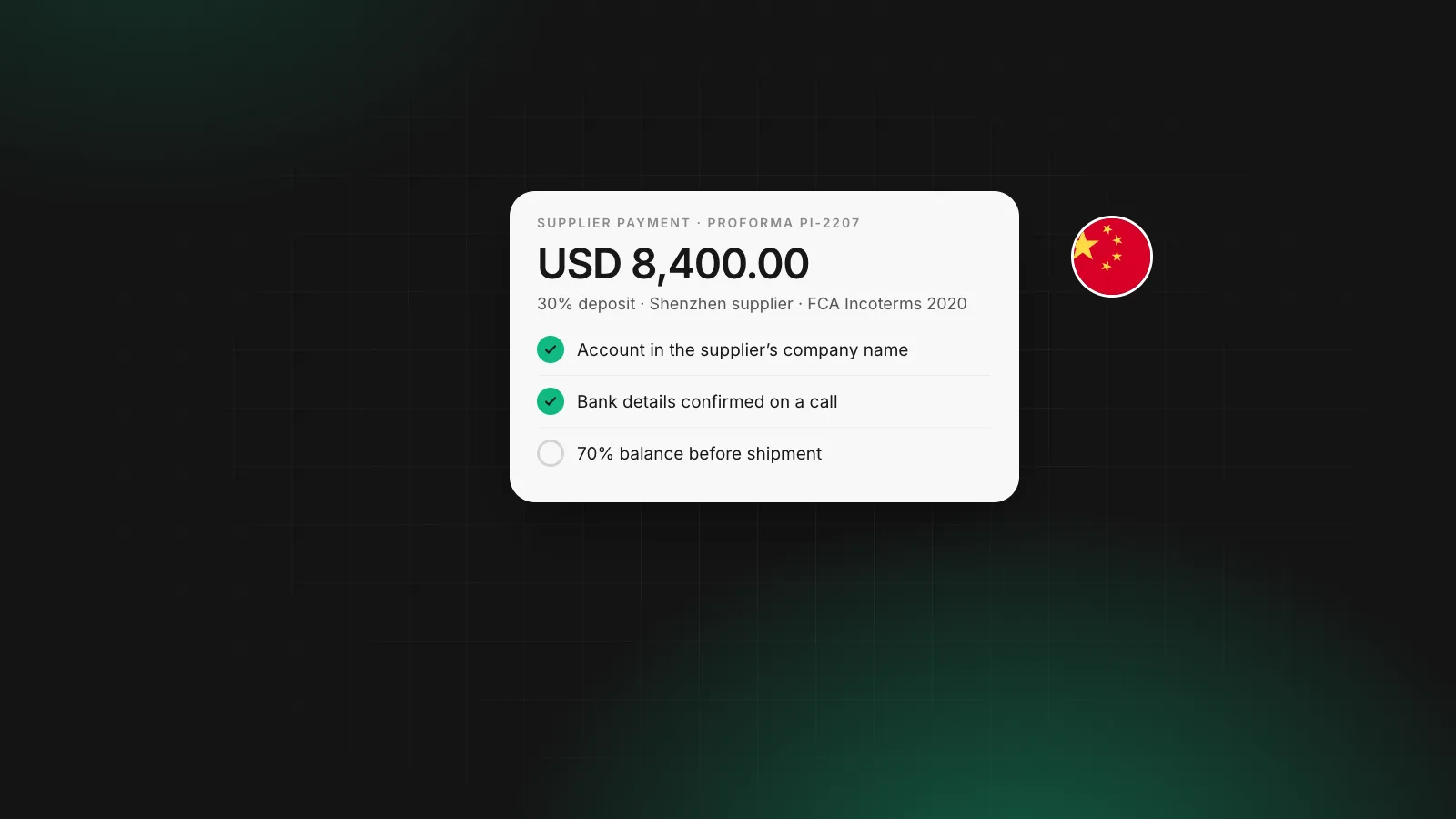
For a new client, or a large project, ask for 30 to 50% before work starts, then milestone payments. It filters out clients who were never going to pay and keeps your cash flow steady.
Remind on a schedule
| When | What |
|---|---|
| 3 days before due | Friendly note with the invoice attached |
| Due date | Short reminder |
| 7 days late | Ask whether anything is blocking payment |
| 14 days late | Escalate to the contract signer |
| 30 days late | Pause work, apply late fees as per contract |
Ask "is anything missing from our invoice?" early. It surfaces the PO number or tax ID problem while it is still easy to fix.
Late fees and interest
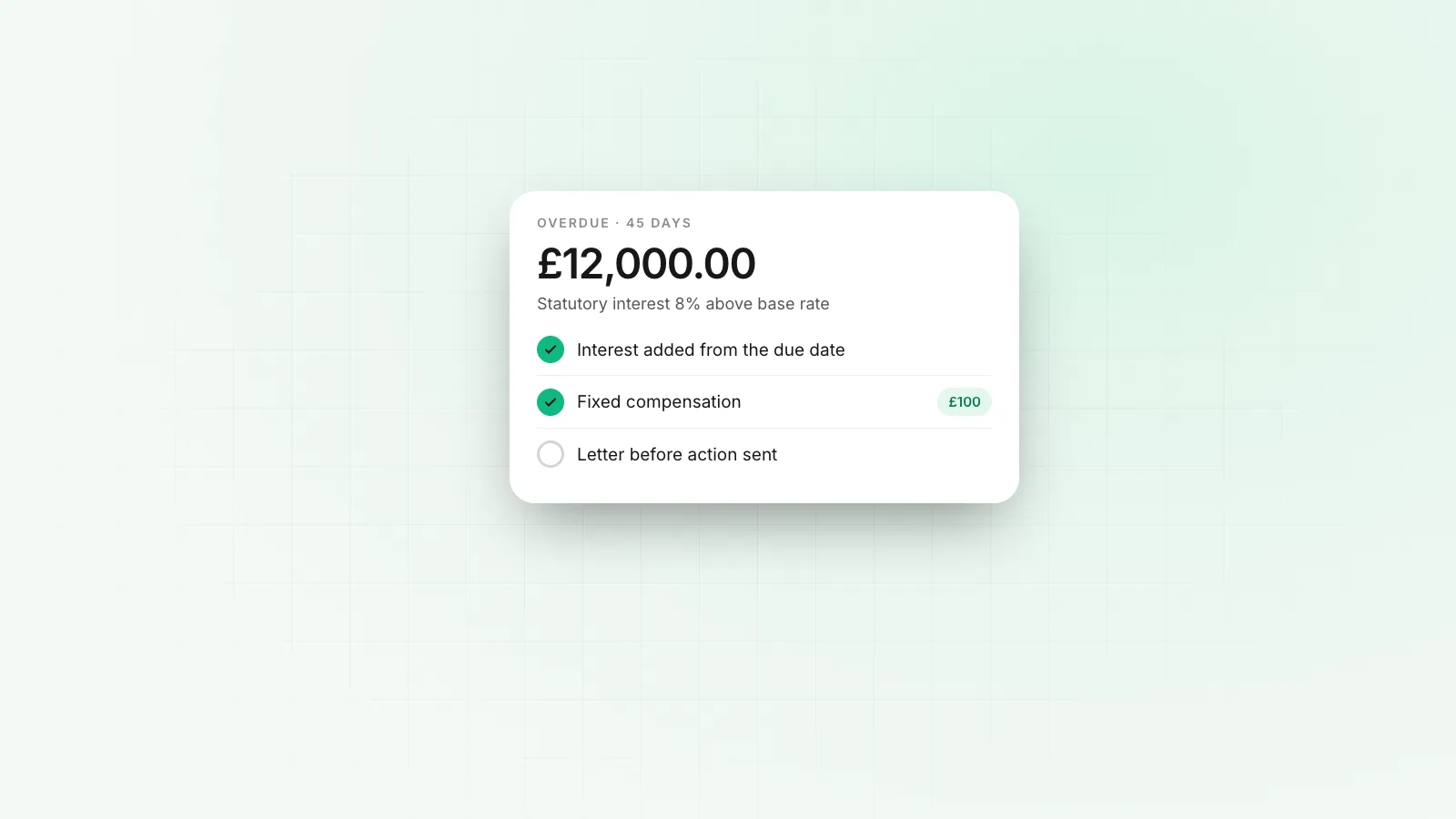
In the EU, the Late Payment Directive lets businesses claim statutory interest and a fixed recovery cost on overdue B2B invoices. The UK has a similar statutory scheme. Elsewhere, rely on what the contract says. Using these rights tends to end the relationship, so they work best as a written backstop.
Getting paid on Rivet
Rivet gives a company USD account details on every plan, and EUR and GBP details on Growth, so clients in those currencies pay you locally. Incoming payments show the payer's reference so you can match them to invoices. See Bank accounts.
Questions people ask
Why do international clients pay late?
Common reasons are the cost and hassle of an international wire, invoices that miss a detail their accounts payable process needs, payment runs that happen only once or twice a month, and no clear owner on the client side.
Should I invoice international clients in my currency or theirs?
Theirs, if you can receive it. A client paying in its own currency makes a domestic transfer with no FX decision, and the invoice goes through their approval process faster. You convert when it suits you.
Can I charge late fees to clients abroad?
If the contract says so. A late fee written into the signed contract is easier to enforce than one that first appears on an overdue invoice. In the EU and UK, statutory late payment interest can also apply to B2B invoices.
When should I send a payment reminder?
A short note a few days before the due date, another on the day, then at 7 and 14 days overdue. Escalate to the person who signed the contract after that.
Sources
William covers what happens once a company starts moving money: getting the business verified, paying contractors and suppliers abroad, and keeping card spend under control. William writes for the founder or finance lead who has to make it work this week, and links every rule cited to the text it comes from.
More from William Sunjo M. →This article is general information, not legal, tax or financial advice. Rules and fees change; check the sources above and the provider’s current terms before you act on them.
- late payments
- international clients
- accounts receivable
- get paid faster
- invoice payment terms