GENIUS Act deadlines: what changes for stablecoin payments in 2027
The GENIUS Act became law in July 2025, but most of it switches on later. The first hard date falls in January 2027 at the latest. Here is the timeline and what it changes for companies that use stablecoins.
- Published
- Reading time
- 2 min read
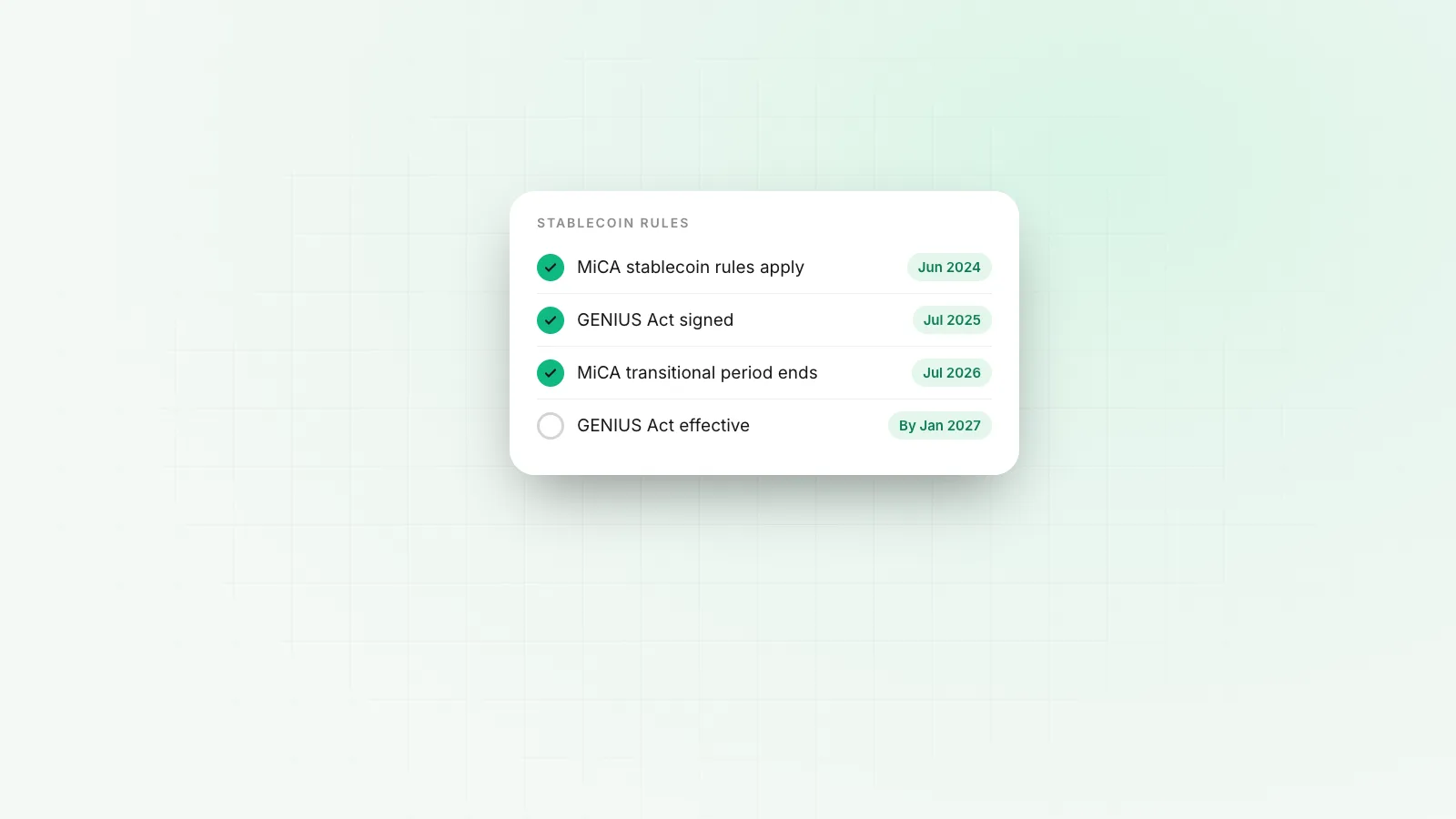
The GENIUS Act became US law on 18 July 2025. Most of it did not apply that day. The law gave regulators time to write rules and gave issuers time to comply, so the dates that matter to a business using stablecoins fall in 2027 and 2028. Our explainer on the GENIUS Act covers what the law says. This article covers when it bites.
When does the GENIUS Act take effect?
The Act takes effect on the earlier of 18 January 2027 or 120 days after the primary federal regulators issue final regulations. The regulators had until July 2026 to produce those rules. In practice, plan on January 2027 as the latest date the new regime is live.
| Date | What happens |
|---|---|
| 18 July 2025 | Act signed into law |
| July 2026 | Deadline for regulators to issue implementing rules |
| 18 January 2027, or earlier | Effective date: only permitted issuers may issue payment stablecoins in the US |
| July 2028 | US platforms may no longer offer payment stablecoins from issuers that are not permitted |
What a permitted issuer has to do
A permitted issuer is a subsidiary of an insured bank, a federally approved nonbank issuer, or a state-qualified issuer. The state route is open to issuers with up to $10 billion of stablecoins outstanding. All of them carry the same core duties:
- Back every coin one to one with cash, bank deposits, Treasury bills with short maturities, and a short list of similar assets.
- Publish the reserve composition every month, with the report examined by a registered public accounting firm.
- Redeem on request at par, under a published redemption policy.
- Follow the Bank Secrecy Act, including customer checks and sanctions screening.
- Pay no interest or yield to holders for holding the coin.
What changes for a business in 2027
If your company receives USDC from customers or pays suppliers in stablecoins, very little changes on the payment itself. A transfer on Ethereum, Solana or Polygon works the same before and after January 2027. The changes sit with your providers.
- Which coins they list. US exchanges, wallets and payment companies will drop coins that cannot meet the 2028 test. The switch will probably come before the deadline.
- What they ask you. Issuers and platforms fall fully under the Bank Secrecy Act, so expect the same business verification you would get at a bank. The KYB documents guide lists what that usually means.
- What the reserve reports show. Monthly reports give a finance team something concrete to check before holding a large balance in one coin.
What to check now
- List every stablecoin and network your company touches, including those your customers use to pay you.
- Ask each provider in writing which of those coins it plans to support after January 2027 and after July 2028.
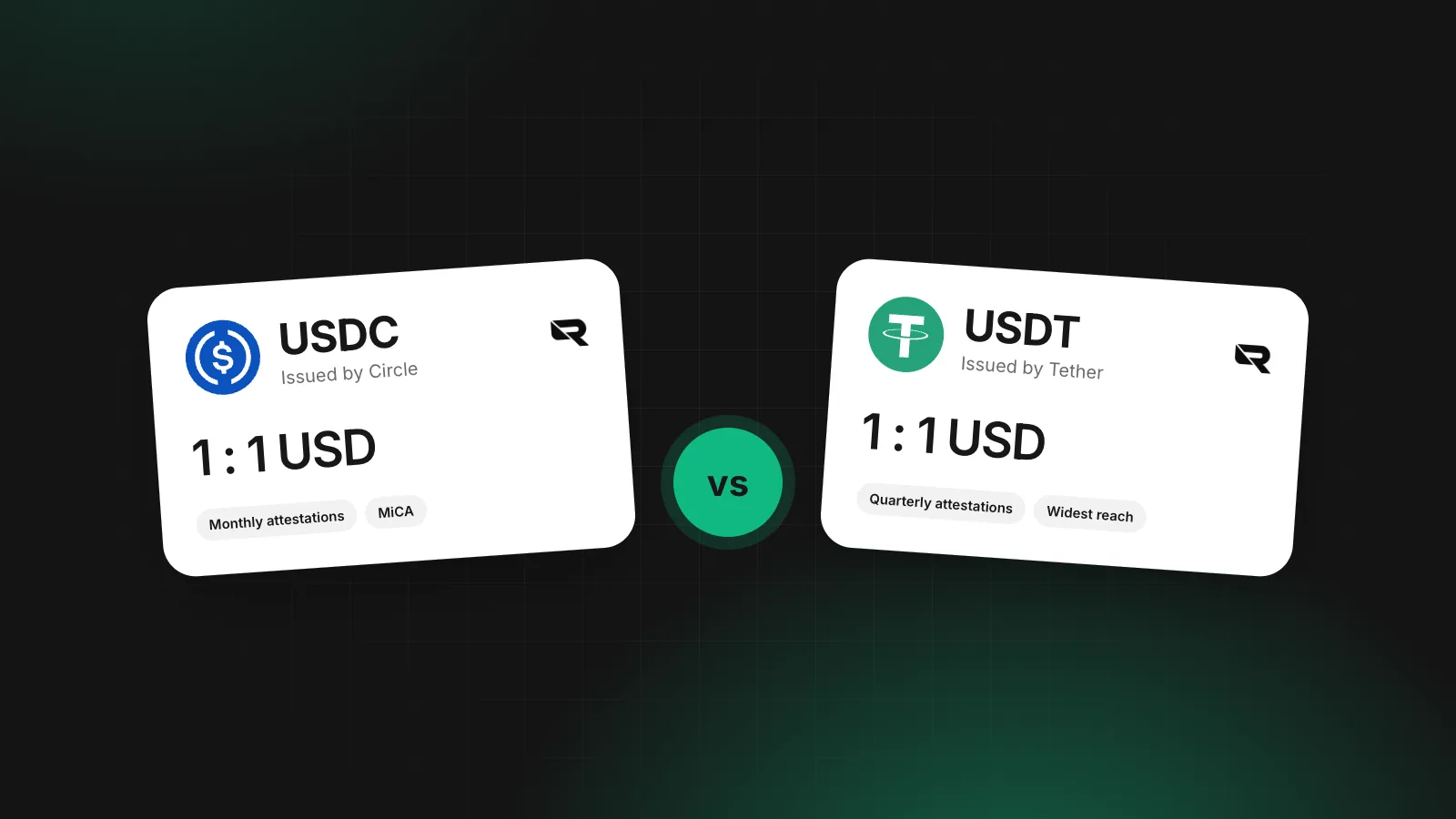
- Keep stablecoin balances to what you need for upcoming payments, and convert the rest to dollars on a schedule. The USDC vs USDT comparison covers how the two main coins differ today.
- If you operate in Europe as well, the MiCA rules already apply there, and the two regimes do not match exactly.
Stablecoins on Rivet
Rivet holds USDC and USDT beside a company's USD, EUR and GBP balances, and converts between them at a rate shown before you confirm. See Ramps for the networks we support.
Questions people ask
When does the GENIUS Act take effect?
On the earlier of two dates: 18 January 2027, which is 18 months after the law was signed, or 120 days after the federal regulators publish final rules. Regulators were given one year from enactment to write those rules.
Does the GENIUS Act ban USDT in the US?
The law does not name any coin. It says that from July 2028, US digital asset service providers may not offer a payment stablecoin unless a permitted issuer issued it, with a route for foreign issuers whose home regime the Treasury finds comparable. Which coins qualify depends on decisions not yet made.
Can a business earn interest on stablecoins after the GENIUS Act?
The Act bars permitted issuers from paying interest or yield to holders just for holding the coin. It does not regulate every product a third party might build, so read any yield offer closely and ask who is paying it and why.
Are payment stablecoins securities under the GENIUS Act?
No. The Act says a payment stablecoin issued by a permitted issuer is not a security or a commodity under the federal securities and commodities laws.
Sources
Rashidatou writes Rivet's guides to how money moves between countries: the payment rails, what each one costs, and the account details a company needs to get paid in another currency. Every figure in Rashidatou's articles is traced to the scheme rulebook, the regulator or the provider's published price list, and those sources are listed at the end.
More from Rashidatou K. →This article is general information, not legal, tax or financial advice. Rules and fees change; check the sources above and the provider’s current terms before you act on them.
- genius act
- stablecoin regulation
- stablecoins 2027
- usdc
- payment stablecoin