How companies use stablecoins for supplier payments, payroll and treasury
Most companies that use stablecoins use them for one or two specific jobs, not for everything. Here are the jobs where they help, and the controls that keep them safe.
- Published
- Updated
- Reading time
- 2 min read
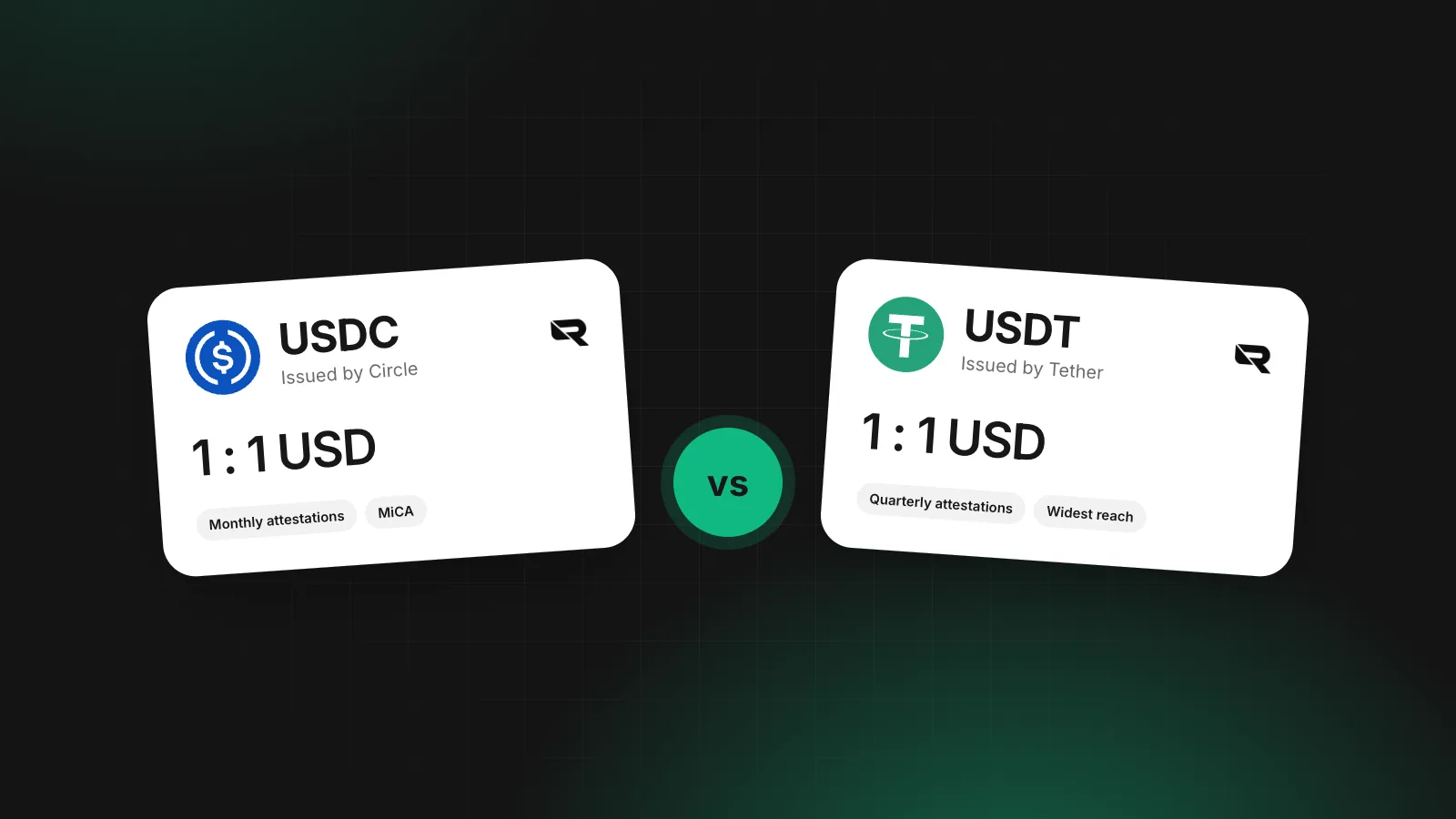
The useful question about stablecoins for a finance team is which of your payments would be cheaper or faster in USDC, and what controls you need around them. In our experience, companies that use stablecoins well use them for one or two jobs and keep bank rails for the rest.
Paying suppliers where wires are slow
An importer paying a factory in a country where incoming USD wires take three to five days and lose fees to intermediary banks can pay in USDC or USDT instead, if the supplier accepts it. The transfer settles in minutes and the supplier converts locally.
The supplier carries the conversion cost, so agree who pays it before the first invoice. The stablecoin vs SWIFT guide compares both routes on cost and time.
Paying contractors
Agencies with designers, developers and media buyers in Nigeria, Pakistan, the Philippines or Argentina often find contractors prefer stablecoins. Inbound wires can be costly or slow there, and some contractors already price their work in USD.
Run it as a normal contractor payout:
- A contract and an invoice for each payment.
- The contractor's tax form on file.
- An address the contractor confirmed in writing, on a named network.
- A small test payment to every new address.
- A record of the amount, date and transaction hash.
Moving money between your own entities
A group with a US LLC, a UK Ltd and a team in Kenya moves money between entities every month. Bank transfers between them can take days across time zones. A stablecoin balance moves at any hour, so the parent can fund a subsidiary on a Friday evening and payroll runs on Monday. Your accountant still needs an intercompany agreement and records on both sides.
Weekend and holiday settlement
Bank rails close. ACH and Fedwire do not settle on weekends or US federal holidays, and SWIFT payments depend on banks in both countries being open. Stablecoin networks run every day. For marketplaces paying sellers daily, that removes a two-day gap every week.
Why these routes and not others
The World Bank tracks the cost of sending money between countries. On many corridors into Africa, South Asia and Latin America the average cost remains well above the G20's 3% target for 2027. Those are the corridors where stablecoins are used most, because the gap is largest. Between two countries with fast, cheap local rails, a bank transfer is usually simpler.
The controls every stablecoin payout needs
| Control | Why |
|---|---|
| Approval by a second person | Same rule as bank payouts |
| Address allow-list | Stops payments to unknown addresses |
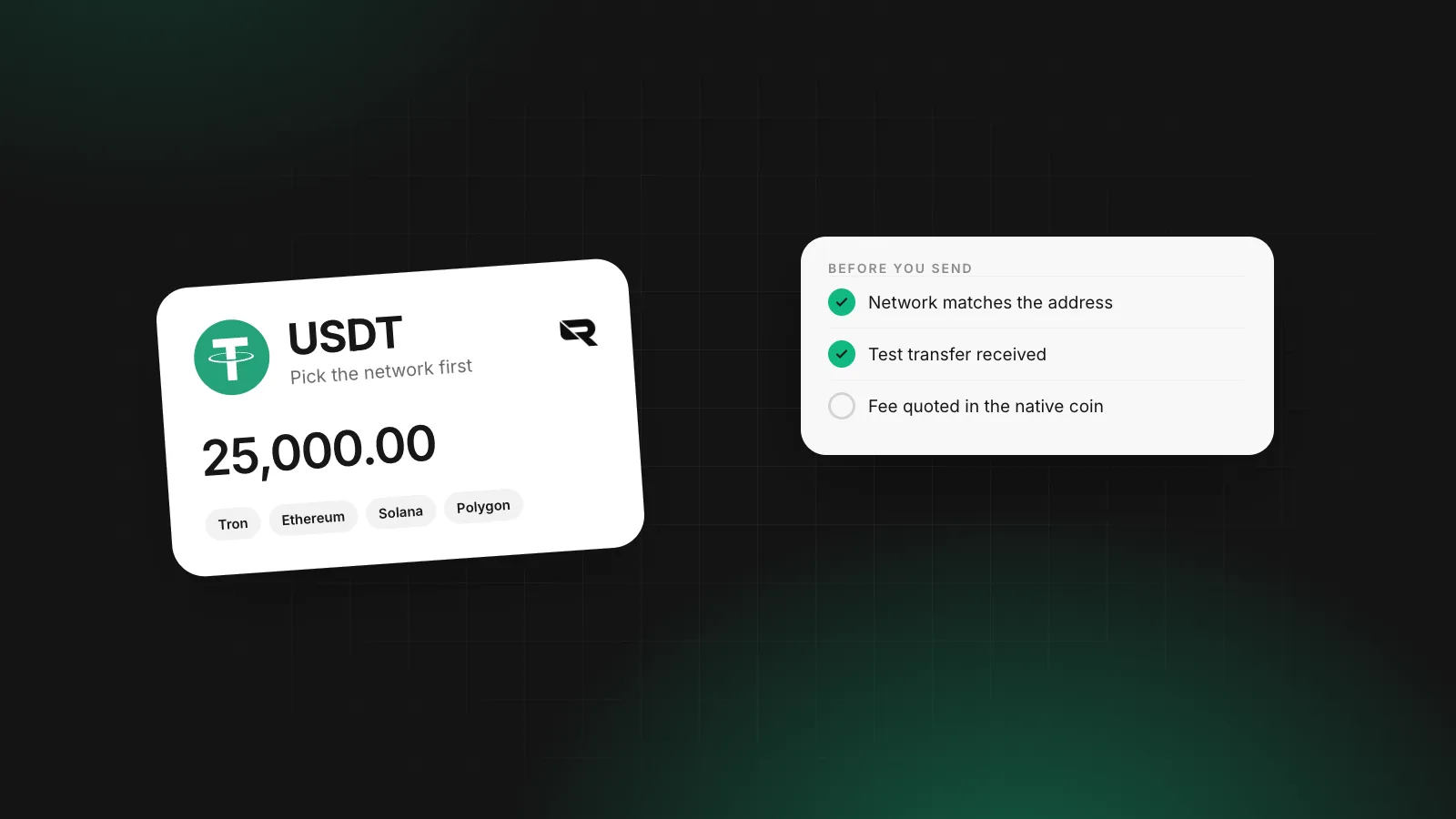
| Network named on every address | USDT on Tron and USDT on Ethereum are not interchangeable |
| Test transfer to new addresses | A wrong address cannot be reversed |
| Link to an invoice | Your auditor will ask |
Running it on Rivet
On Rivet, a stablecoin payout is one line in the same batch as bank payouts, under the same roles and approvals. Each recipient can be paid on their local rail or in USDC or USDT, and you see the cost of each leg before you send. See Payouts and Ramps.
Questions people ask
Which companies use stablecoins?
Mainly companies with counterparties in countries where receiving dollars by bank is slow or expensive: agencies with offshore teams, importers paying suppliers in Asia and Latin America, and marketplaces paying sellers. Large payment companies have also added stablecoin settlement to their own networks.
Can I pay contractors in stablecoins?
Yes, where the contractor agrees and local rules allow it. Treat it like any contractor payment: a contract, an invoice, the right tax form (a W-8BEN for non-US contractors of a US company) and a record of the amount in dollars on the day you paid.
Are stablecoins used for remittances?
Yes, increasingly, because a stablecoin transfer costs the same whatever the corridor. The cost moves to the edges: buying the stablecoin and converting it to local money at the other end. Where those edges are cheap, the total can be lower than a traditional transfer.
How do stablecoin companies make money?
Issuers such as Circle and Tether earn interest on the reserves backing their tokens. Payment providers earn fees and FX spreads on converting between bank money and stablecoins, and on payouts.
Sources
Rashidatou writes Rivet's guides to how money moves between countries: the payment rails, what each one costs, and the account details a company needs to get paid in another currency. Every figure in Rashidatou's articles is traced to the scheme rulebook, the regulator or the provider's published price list, and those sources are listed at the end.
More from Rashidatou K. →This article is general information, not legal, tax or financial advice. Rules and fees change; check the sources above and the provider’s current terms before you act on them.
- companies using stablecoins
- stablecoin remittances
- stablecoin payroll
- stablecoin treasury
- usdc