The GENIUS Act explained: what the US stablecoin law means for businesses
The GENIUS Act became law in July 2025 and sets federal rules for US dollar stablecoins. For a business using USDC or USDT, here is what it changes and what it does not.
- Published
- Reading time
- 2 min read
"Genius act summary" and "genius act effective date" are searched by finance teams that hold or pay in stablecoins and want to know what changed. The short version: US dollar stablecoins now have a federal rulebook, and the rules mostly constrain issuers, not the businesses that use stablecoins. This is a summary, not legal advice.
What the GENIUS Act is
The Guiding and Establishing National Innovation for U.S. Stablecoins Act, signed into law on 18 July 2025. It creates a federal framework for "payment stablecoins": digital assets designed for payment and redeemable for a fixed amount of money.
Who can issue
| Issuer type | Regulator |
|---|---|
| Subsidiary of an insured bank or credit union | The parent's federal regulator |
| Federally qualified non-bank issuer | Office of the Comptroller of the Currency |
| State-qualified issuer (smaller issuers) | State regulator, under a regime certified as substantially similar |
| Foreign issuer | Allowed under conditions, if its home regime is judged comparable |
Smaller issuers can choose state supervision; larger ones move to the federal regime above a size threshold.
The core rules for issuers
- Reserves of at least 100% of stablecoins outstanding, in cash, insured deposits, short-term Treasuries, certain repos and money market funds holding those assets.
- Monthly public reserve reports, examined by a registered accounting firm, with certification by executives.
- Redemption at par, with clear published procedures.
- No interest or yield paid by the issuer to holders.
- Anti-money-laundering obligations under the Bank Secrecy Act, including the ability to freeze tokens on lawful order.
- Priority for holders in an issuer's insolvency.
When it applies
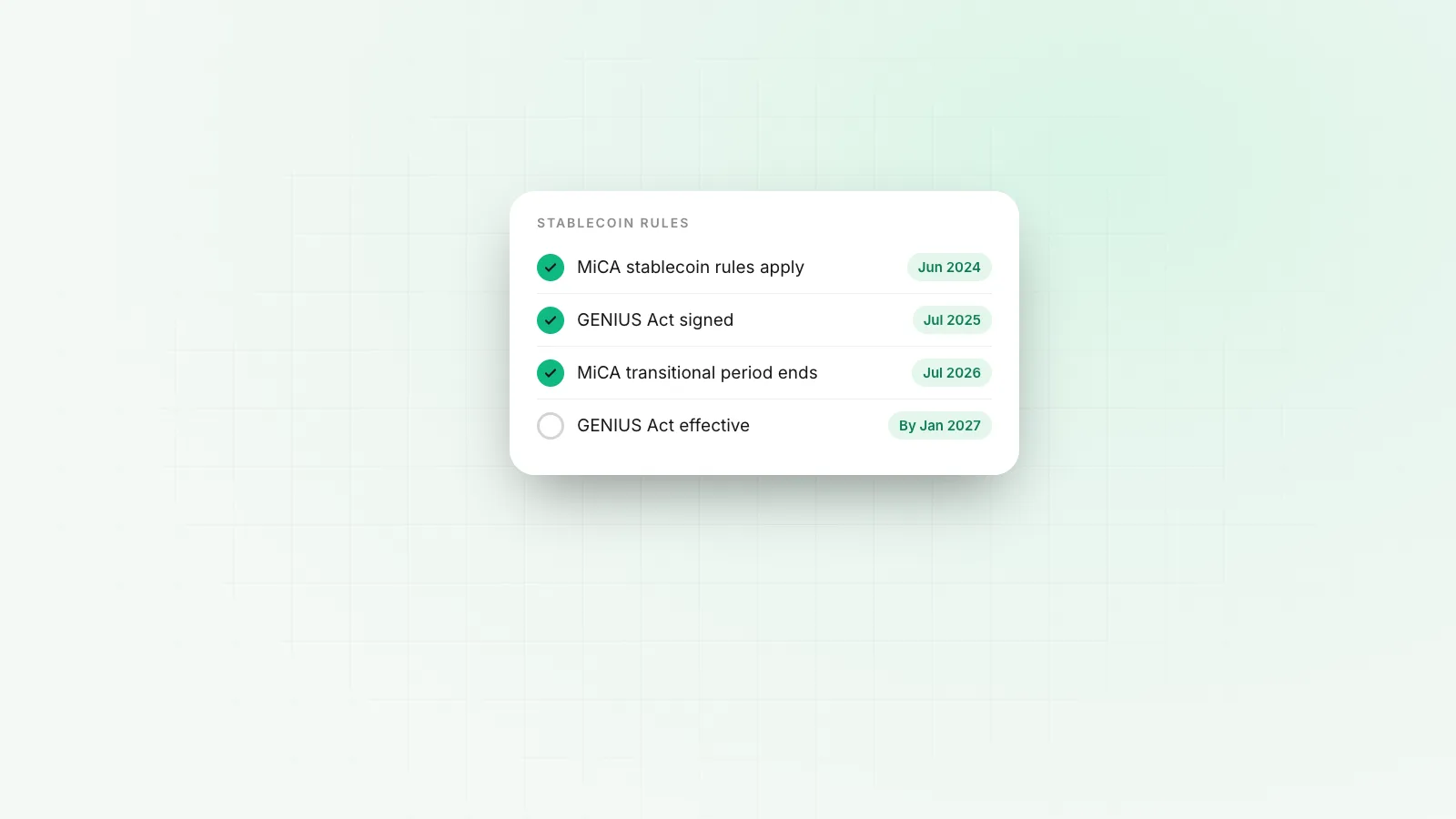
The Act takes effect on the earlier of 18 months after enactment (January 2027) or 120 days after regulators publish final rules. After that, US platforms have a further period before they may no longer offer stablecoins from issuers that are not permitted.
What it means for a business using stablecoins
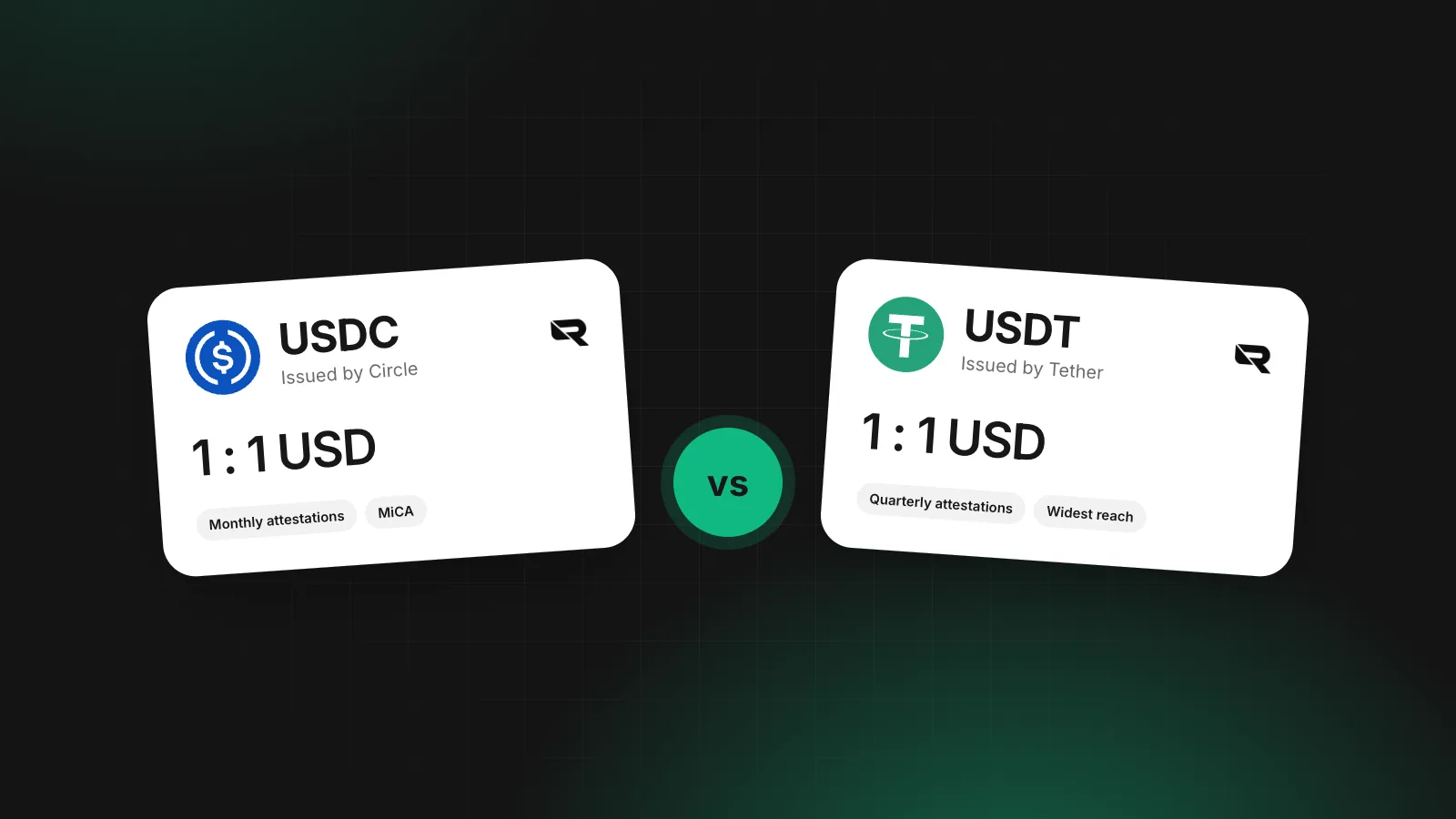
- Clearer reserves. Monthly reports from regulated issuers make due diligence easier. See USDC vs USDT.
- Which tokens your US provider supports may change as the rules take effect.
- Accounting and audit become easier when the stablecoin is issued under a federal regime.
- No change to the basics: wrong-network risk, test transfers and approval controls still apply. See stablecoins explained.
Outside the US
In the EU, MiCA has regulated stablecoin issuers since June 2024. See MiCA and stablecoins.
On Rivet
Rivet supports USDC and USDT beside your bank balances, and will follow the GENIUS Act's rules on which stablecoins can be offered in the US as they take effect. See Ramps.
Questions people ask
What is the GENIUS Act?
A US federal law, signed on 18 July 2025, that creates a regulatory framework for payment stablecoins: digital assets designed to be redeemed for a fixed amount of money, usually one US dollar. It sets who can issue them and the reserve, disclosure and supervision rules they follow.
When does the GENIUS Act take effect?
On the earlier of 18 months after enactment, which is January 2027, or 120 days after regulators issue final implementing rules. Some provisions phase in after that, including a period before it becomes unlawful for platforms to offer non-permitted stablecoins in the US.
Does the GENIUS Act apply to USDT?
It applies to payment stablecoins offered in the US. Foreign issuers can be treated as compliant if their home regime is judged comparable and they meet conditions set in the Act. How USDT is treated depends on Tether's arrangements under those provisions and implementing rules.
Can businesses earn interest on stablecoins under the GENIUS Act?
The Act bars issuers from paying interest or yield to holders. Rewards offered by exchanges or other platforms are a separate question that regulators and Congress continue to debate.
Sources
Rashidatou writes Rivet's guides to how money moves between countries: the payment rails, what each one costs, and the account details a company needs to get paid in another currency. Every figure in Rashidatou's articles is traced to the scheme rulebook, the regulator or the provider's published price list, and those sources are listed at the end.
More from Rashidatou K. →This article is general information, not legal, tax or financial advice. Rules and fees change; check the sources above and the provider’s current terms before you act on them.
- genius act
- genius act summary
- genius act effective date
- stablecoin regulation us
- payment stablecoin