Virtual dollar cards for business: how to get one and what to check
Personal virtual dollar cards are everywhere in Nigeria, Ghana, Kenya and Pakistan. A business needs something sturdier: cards in the company's name, funded from the company's dollars.
- Published
- Updated
- Reading time
- 2 min read
In Lagos, Accra, Nairobi and Karachi, "virtual dollar card" usually means a personal card from a mobile app, used to pay for Netflix or a domain name. Many small businesses run their ad spend and software on them too. That works until the card is declined mid-campaign, or the app closes it for business use.
This guide covers what a business should use instead.
What is a virtual dollar card?
A virtual card is a payment card that exists only as a card number, expiry date and security code. It works for online and in-app payments. A virtual dollar card is denominated in USD, so a USD charge from Meta or a US SaaS company does not trigger a currency conversion.
Why personal dollar cards fail businesses
- Declines on ad platforms. Ad platforms and SaaS billing systems run risk checks on cards. Cards from some consumer apps are declined more often.
- Decline fees. Some personal card apps charge a fee every time a payment is declined, so a failed ad charge that retries costs you several times.
- Closures. A personal card carrying 5,000 USD a month of ad spend looks like a business, and the provider may close it.
- Records. Company spend on a personal card has to be reimbursed and explained.
Business virtual cards: what to check
| Check | Why |
|---|---|
| Issued to the company | Spend and records stay in the business |
| Funded from a USD balance | No conversion on USD charges |
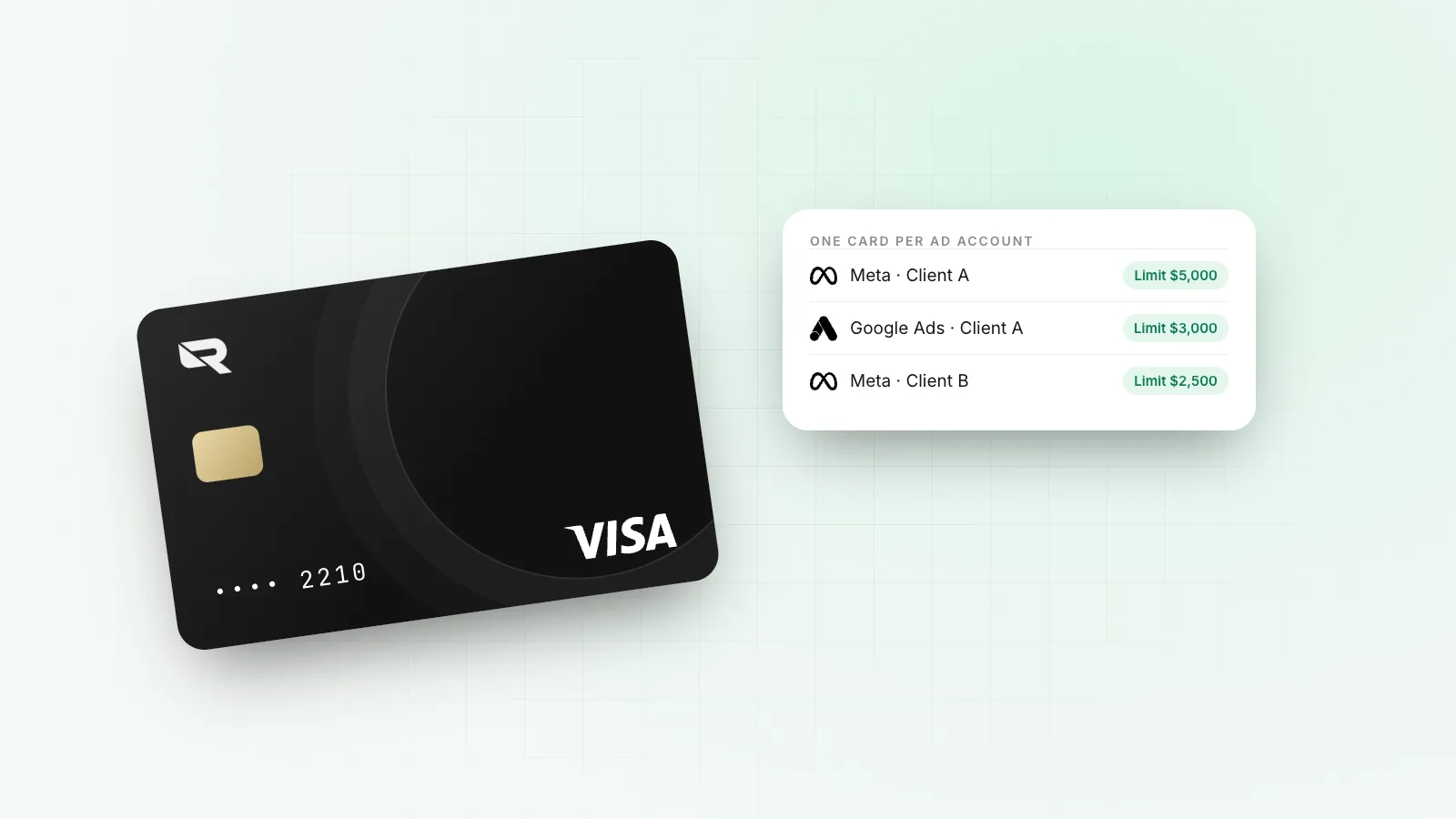
| Cards per account | One per vendor or ad account |
| Limit per card | Caps exposure on each bill |
| Fees: issuance, monthly, funding, decline, FX | Small fees add up across many cards |
| Freeze and cancel instantly | For compromised cards and cancelled subscriptions |
One card per vendor
The most useful habit with virtual cards: give each vendor and each ad account its own card. When a SaaS trial converts unexpectedly, freeze that card. When an ad account is compromised, only one card is exposed. When finance reconciles, each card's statement is one vendor. The virtual cards for ad spend guide goes further on ads.
Funding from the dollars you earn
If clients pay you in USD, spend from that USD balance. Converting dollars to naira or shillings when they arrive, then buying dollars back for card top-ups, costs two spreads. A business account that receives USD and issues USD cards from the same balance avoids both.
On Rivet
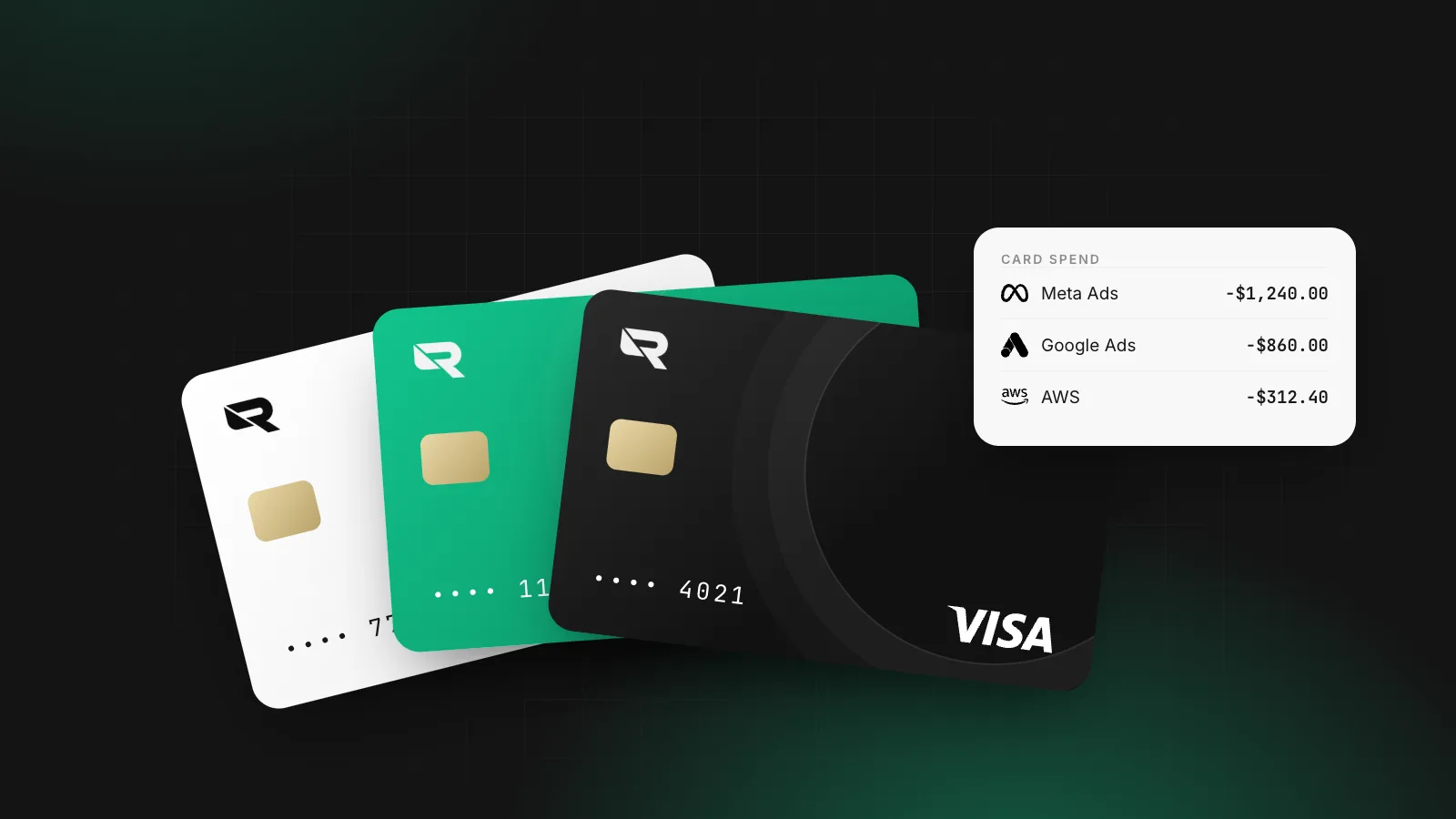
Every Rivet plan, including the free Starter, includes unlimited digital cards. Each card has its own limit, can be frozen or cancelled in a click, and spends from the company's USD balance, which clients pay into by ACH or wire. Physical cards come with Growth. See Cards.
Questions people ask
How do I get a virtual dollar card for my business?
Open a business account with a provider that issues USD cards to companies. After the business passes verification, you create cards in the dashboard, set a limit on each, and fund them from the company's USD balance. No physical card needs to be shipped.
Can I withdraw money from a virtual card?
Generally no. A virtual card is for online and in-app payments. It has no chip for an ATM. Money stays in the account balance the card spends from, and you move it out of the account by transfer.
Why is my virtual dollar card declined on Facebook ads or Google?
Common reasons are insufficient balance at the moment of the charge, a card type the platform does not accept, a billing address mismatch, or the platform's own risk checks on new cards. Business cards with a stable billing address and enough balance are declined far less often.
Are virtual dollar cards free?
Some providers charge to create a card, a monthly fee, a funding fee and fees on declines or non-USD spend. Rivet's plans include unlimited digital cards with no per-card fee.
Sources
William covers what happens once a company starts moving money: getting the business verified, paying contractors and suppliers abroad, and keeping card spend under control. William writes for the founder or finance lead who has to make it work this week, and links every rule cited to the text it comes from.
More from William Sunjo M. →This article is general information, not legal, tax or financial advice. Rules and fees change; check the sources above and the provider’s current terms before you act on them.
- virtual dollar card
- virtual dollar card for business
- virtual card for online payment
- virtual business card
- usd card