Corporate cards for startups: credit, charge or balance-funded, and how to choose
Most startups don't need a credit line. They need one card per person and per vendor, a limit on each, and receipts that arrive with the charge. Here is how the options differ.
- Published
- Reading time
- 4 min read
"Best corporate card for startups" is one of the most searched phrases in business finance, and most of the answers are lists of US charge cards. That is useful if your company is incorporated in Delaware and just raised a round. It is less useful if you are a five-person agency in London, a SaaS company in Lagos, or a US LLC owned by someone abroad.
This guide explains what a corporate card is, how the three kinds differ, who qualifies for each, and the controls that matter whichever one you choose.
What a corporate card is
A corporate card is issued to the company and handed to the people who spend for it. The account belongs to the company, the company is responsible for the charges, and finance can see and control every card from one place.
That separates it from two things people often confuse it with:
- A personal card used for work, with the employee claiming the money back later. The company has no control at the moment of purchase, and the employee is out of pocket until reimbursed.
- A small-business credit card, which in many countries is underwritten on the owner's personal credit and backed by a personal guarantee. If the company cannot pay, the owner does.
The three kinds of corporate card
| Credit card | Charge card | Balance-funded card | |
|---|---|---|---|
| Where the money comes from | A revolving credit line | A credit line paid in full each statement | Money the company has already put on the account |
| Interest | Yes, on balances carried over | No, but late payment has penalties | None |
| Underwriting | Credit history, revenue, often a personal guarantee | Usually cash balance or revenue; rarely a personal guarantee | None beyond verifying the company |
| Who qualifies | Established companies with a credit file | Mostly funded startups incorporated in the issuer's country | Any company the provider verifies |
| Limit | Set by the issuer | Set by the issuer, often moving with your balance | Whatever the company funds, then a limit per card |
| Builds business credit | Often | Sometimes | Generally no |
Startup charge cards popularised the idea of underwriting on cash in the bank instead of on years of history. They work well for a venture-backed US company. They are often unavailable to companies incorporated elsewhere, and limits can shrink when the cash balance falls.
Balance-funded cards skip underwriting. The company moves money onto the card program, and each card spends within its own limit. Nothing is borrowed, so there is no credit decision, no statement to pay off and no interest. The trade-off is that you cannot spend money you do not have, which for most early-stage companies is a feature.
What a startup actually needs from a card
The card type matters less than the controls around it. These are the ones that save time and money.
One card per person, and one per vendor
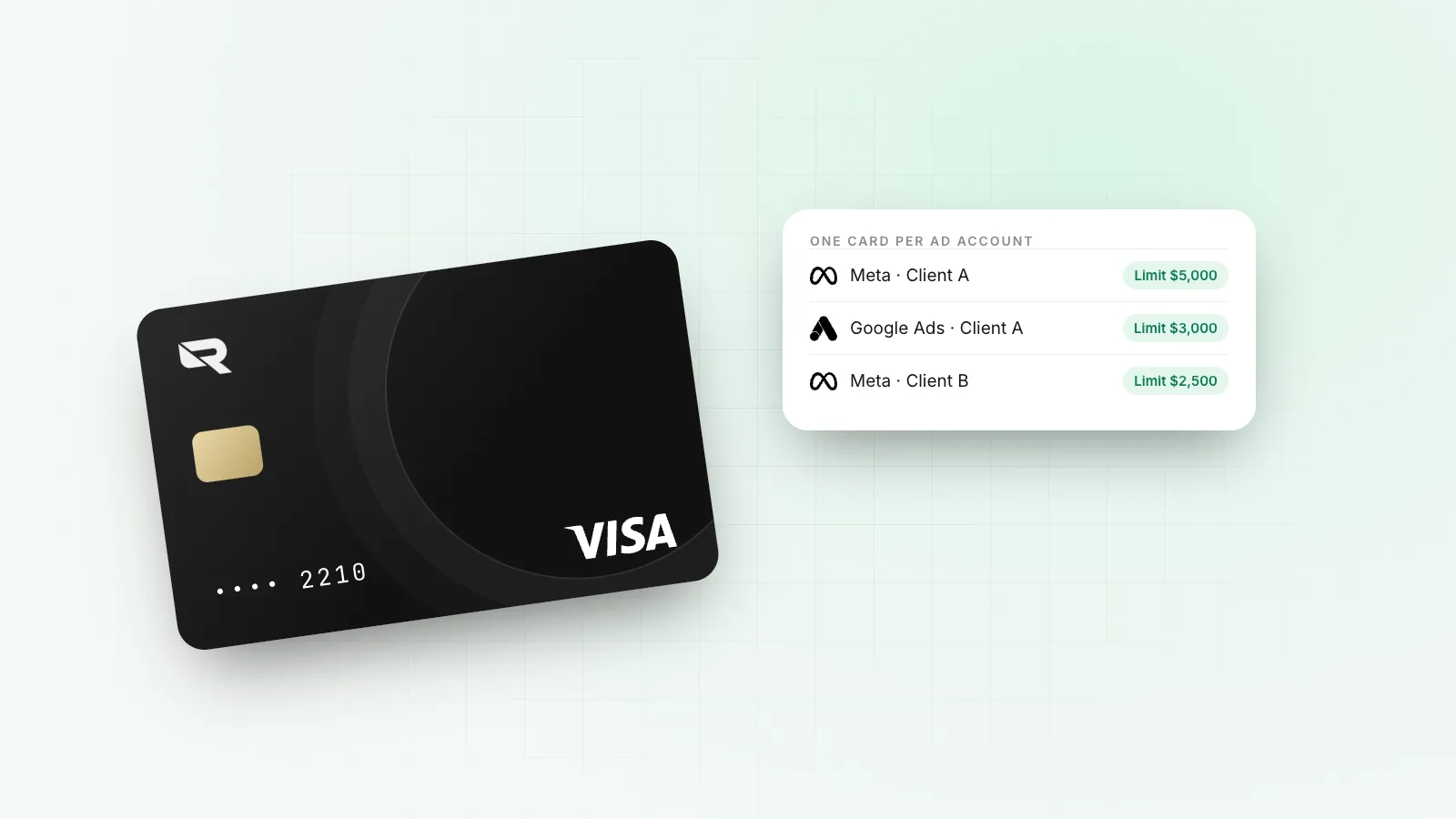
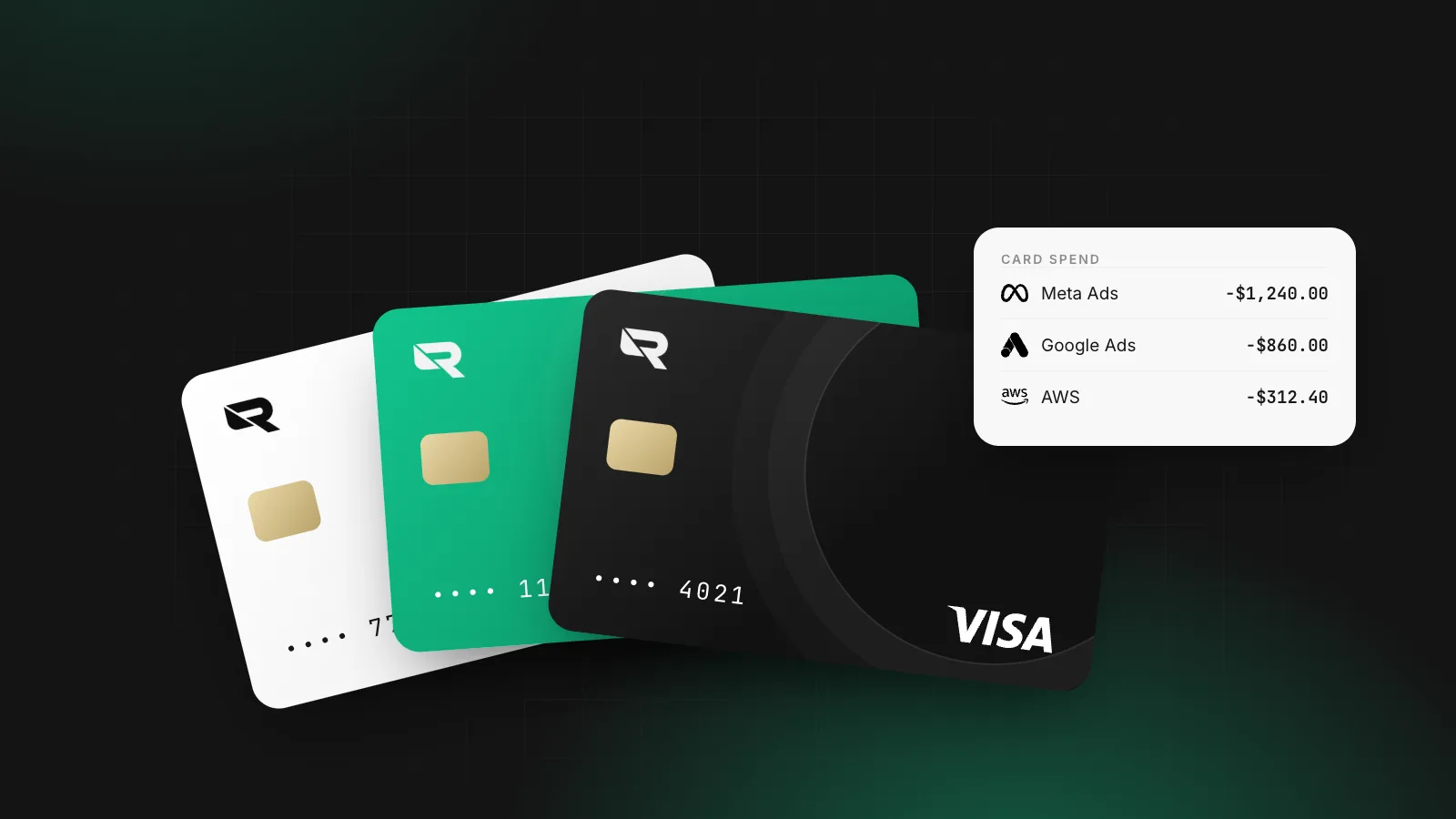
Issue a virtual card for each software subscription, ad account and recurring supplier. When a vendor overcharges, gets breached or should be cancelled, you freeze one card and nothing else breaks. It also makes the monthly review readable: the AWS card spent this, the Meta card spent that.
For agencies running ads, the guide to virtual cards for ad spend goes into per-client cards and why ad payments get declined.
A limit on every card
Set a limit and a reset period per card: monthly for subscriptions, per transaction for one-off purchases, a lifetime cap for a project. A card with no limit is a blank cheque.
Receipts at the time of purchase
Tax rules expect evidence. In the US, IRS Publication 463 and the substantiation rules under section 274 expect records of the amount, date, place and business purpose of expenses such as travel and meals, with documentary evidence such as a receipt for lodging and for any expense of $75 or more. Chasing receipts at month end is how they get lost. A card program that asks for the receipt when the charge lands, and attaches it to the transaction, removes that job.
Approvals above a threshold
Small purchases should go through without anyone signing off. Larger ones should need a second person. Set the threshold once in the card program and stop running approvals through chat messages.
Physical cards only where needed
Most startup spend is online. Physical cards are for travel, client dinners and anywhere a card has to be tapped or inserted. Issue them to the people who travel, not to everyone.
Questions to ask any card provider
- Who is liable for the spend: the company or me personally?
- Is there a credit check or a personal guarantee?
- Can a company incorporated in my country apply?
- Can I issue unlimited virtual cards, and what do physical cards cost?
- Can each card have its own limit and reset period?
- What is the FX fee when a card pays in another currency, and how is the rate set?
- Do receipts and categories attach to the transaction, and does it export to my accounting software?
- What happens to a card's balance when I freeze or delete it?
How Rivet cards work
Rivet cards are balance-funded Visa cards. They spend money the company has already moved onto them from its USD balance, so there is no credit line to apply for, no personal guarantee and no statement to repay. Starter includes unlimited digital cards; physical cards ship from the Growth plan. Each card has its own spend limit and reset period (daily, weekly, monthly, yearly, all-time or per authorisation), and you can freeze, replace or delete any card without touching the rest. Receipts, categories and approvals sit on the charge itself, so expenses are reviewed as they happen.
Corporate cards shows how the controls work, and Pricing lists which plan includes what.
Questions people ask
What is a corporate card?
A payment card issued in the company's name and given to employees for business spending. The company holds the account and is responsible for the charges. Finance can set limits per card, see every transaction as it happens, and cancel a card without affecting the others.
What is the difference between a corporate card and a business credit card?
A small-business credit card is usually underwritten on the owner's personal credit and backed by a personal guarantee. A corporate card is the company's liability. It may come with a credit line, be paid in full monthly as a charge card, or spend from a balance the company has funded.
Can a startup with no revenue get a corporate card?
Often, yes. Charge cards for startups typically underwrite on the cash the company holds after a funding round rather than on revenue. Balance-funded cards need no underwriting at all: the limit is whatever the company puts on the card.
Do corporate cards build business credit?
Some credit and charge cards report to business credit bureaus; balance-funded cards generally do not, because no credit is extended. If building a credit file matters to you, ask the issuer whether and where it reports.
How many corporate cards should a startup issue?
Enough that every recurring payee has its own card. One card per employee who spends, plus one per software subscription, ad account and major vendor, makes it easy to see where money goes and to cancel one payee without updating the rest.
Sources
William covers what happens once a company starts moving money: getting the business verified, paying contractors and suppliers abroad, and keeping card spend under control. William writes for the founder or finance lead who has to make it work this week, and links every rule cited to the text it comes from.
More from William Sunjo M. →This article is general information, not legal, tax or financial advice. Rules and fees change; check the sources above and the provider’s current terms before you act on them.
- corporate cards
- startups
- virtual cards
- expense management
- spend controls