Corporate cards and spend tools compared: Ramp, Brex, Airwallex and Rivet
Ramp and Brex are built around US companies and credit. Airwallex and Rivet start from a multi-currency balance. Which model fits depends on where your company is.
- Published
- Updated
- Reading time
- 2 min read
Corporate card providers look alike from their homepages: sleek cards, receipt matching, spend limits. They split on two questions that decide whether you can use them at all. Is the card credit or prefunded? And does the provider serve companies where yours is registered?
All figures below are from each provider's own pricing page, read on 1 November 2026.
How they compare
| Ramp | Brex | Airwallex | Rivet | |
|---|---|---|---|---|
| Free tier | Yes | Essentials, 0 USD per user | Explore, 0 USD | Starter, 0 USD |
| Paid tier | Plus, 15 USD per user per month plus a platform fee | Premium, 12 USD per user per month | Grow, 12 USD per user plus a platform fee | Growth 200 USD, Scale 500 USD per month (not per user) |
| Card type | Credit, subject to approval | Credit and other options | Multi-currency corporate cards | Prefunded from the company balance |
| Non-US companies | Issuing banks in the US, Canada, UK, EEA; local cards in 30+ countries on Enterprise | Non-US entity setup listed on Enterprise | Serves many markets directly | Companies registered in supported countries, including US LLCs with foreign owners |
| FX | Varies by plan | Varies by plan | 0.5% major currencies, 1.0% others | From 0.80% (Starter) to 0.30% (Scale) |
Credit cards vs prefunded cards
A credit card lets the team spend now and the company pay at month end. The provider has to underwrite that, usually on your bank balance, funding or revenue. Ramp's credit is "subject to credit approval", in its own words.
A prefunded card spends money the company has already put in the account. Nothing to underwrite, nothing to repay, and the limit on each card is the control. For a company that just raised money, credit is convenient. For one registered outside the US, or a new US LLC with no US credit history, prefunded is often the only card it can get.
Per-user pricing adds up
Ramp Plus, Brex Premium and Airwallex Grow all charge per user. On Airwallex, "user" means anyone holding a card or approving, submitting or paying an expense. A 20-person team on a 12 USD per-user plan pays 240 USD a month before any platform fee. Rivet's plans are flat: the price does not change with the number of cardholders.
Which fits which company
- A funded US startup with US founders: Ramp or Brex. Credit, rewards and accounting automation.
- An international company that spends in several currencies: Airwallex or Rivet, cards drawing on multi-currency balances.
- A company registered in Africa, South Asia or Latin America, or a US LLC with owners there: check eligibility first. Rivet was built for this group.
Cards on Rivet
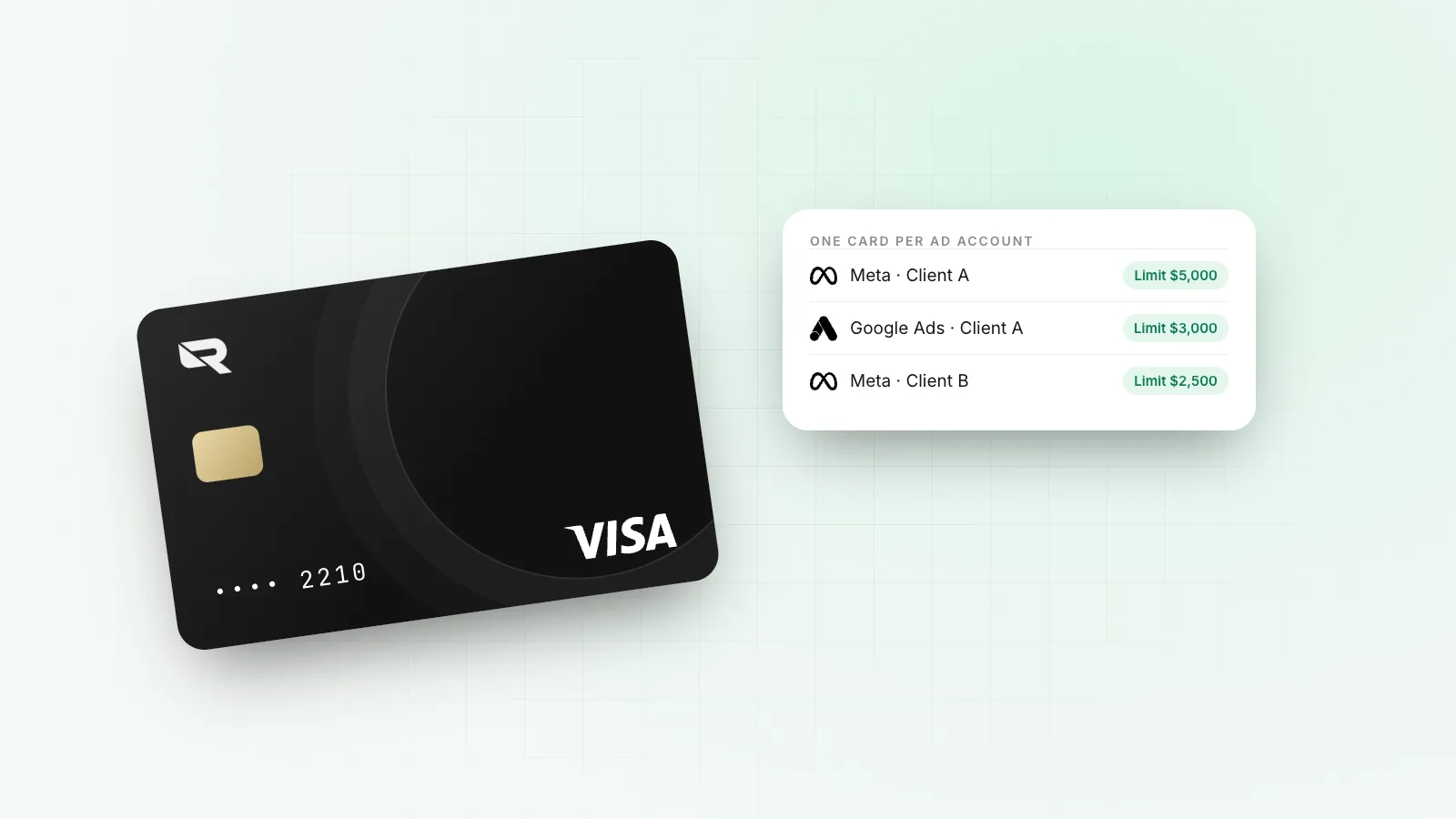
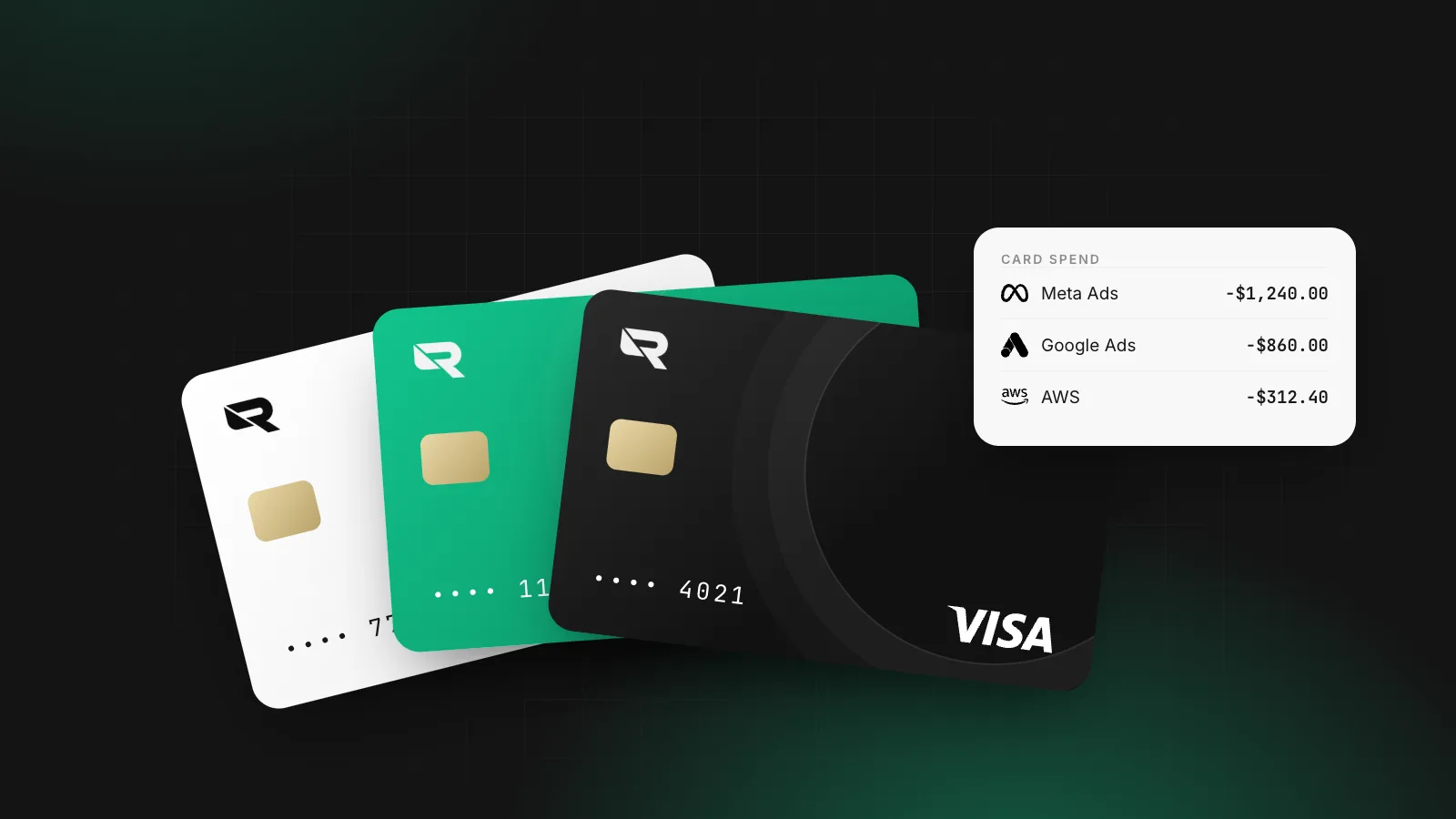
Every Rivet plan includes unlimited digital cards. Issue one per employee, vendor or ad account, set a limit on each, and freeze any of them in a click. Physical cards come with Growth. Cards spend from the company's USD balance, so there is no credit application. The corporate cards for startups guide covers what to look for in any provider, and Cards shows ours.
Questions people ask
Is Brex or Ramp better for startups?
Both are strong for US-incorporated startups with funding. Ramp leans towards spend controls and automation, Brex towards global entities and travel. The free tiers cover most early teams. A startup outside the US should check eligibility first, because Brex lists non-US entity setup on Enterprise only.
Airwallex or Ramp: which should I choose?
Ramp suits a US company that wants a credit card with strong expense automation. Airwallex suits a company that holds and spends several currencies and wants cards drawing on those balances. Many international teams care more about FX and local account details than about a credit line.
Do I need a credit check for a corporate card?
For a credit card, yes: the issuer underwrites the company, often on its bank balance or revenue. A prefunded card spends money already in the account, so there is no credit line to underwrite. Rivet's cards are prefunded.
Can a non-US company get a Ramp or Brex card?
Ramp names issuing banks for the US, Canada, the UK and the EEA, and offers local currency cards in 30+ countries on Enterprise. Brex lists non-US entity onboarding on its Enterprise tier. Ask each provider directly about your company's country before applying.
Sources
William covers what happens once a company starts moving money: getting the business verified, paying contractors and suppliers abroad, and keeping card spend under control. William writes for the founder or finance lead who has to make it work this week, and links every rule cited to the text it comes from.
More from William Sunjo M. →This article is general information, not legal, tax or financial advice. Rules and fees change; check the sources above and the provider’s current terms before you act on them.
- airwallex vs ramp
- brex corporate card for startups
- ramp
- brex
- corporate cards