Vietnamese exporters selling to the US after the 2025 tariff deal
Vietnam is one of the largest exporters to the US: electronics, furniture, footwear and apparel. A 2025 deal set a 20 percent tariff on most Vietnamese goods and a 40 percent rate on goods judged to be transshipped. Origin documents and payment terms now carry more weight.
- Published
- Reading time
- 1 min read
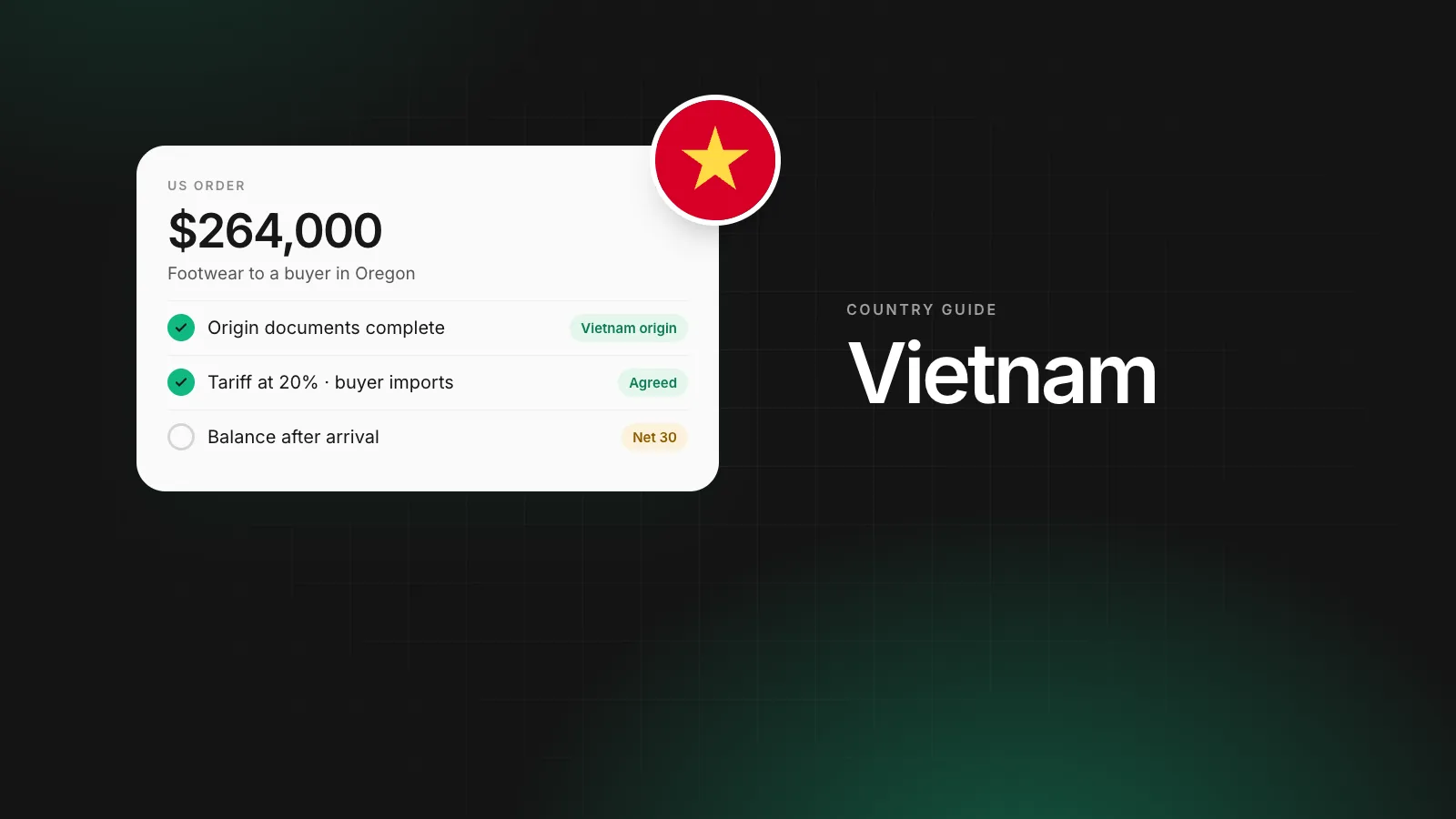
A Binh Duong footwear factory ships trainers to a brand in Oregon. In 2025 the US and Vietnam agreed a 20 percent tariff on most Vietnamese goods, with a 40 percent rate for goods the US considers transshipped. The brand's first question for the factory is no longer price. It wants proof that the shoes are made in Vietnam.
The tariff
Under the 2025 arrangement, most Vietnamese goods entering the US face a 20 percent tariff. Goods judged to be transshipped, made mostly elsewhere and routed through Vietnam, face 40 percent. Your product classification and origin decide which applies.
Proving origin
US Customs looks at where a product was substantially transformed. For a Vietnamese factory, that means keeping:
- Bills of materials and production records.
- Supplier invoices for inputs, showing where components came from.
- Certificates of origin.
Factories using many imported components should be ready to show how much processing happens in Vietnam.
Who pays
The importer of record pays US duty, usually the US buyer on FOB terms. Many buyers now ask suppliers to share the cost through lower prices. Negotiate with the numbers in front of you.
Payment terms
With margins tighter on both sides, payment terms matter more. Deposits on order, balances against documents, and letters of credit for new buyers protect the factory's cash flow.
Proceeds
Export proceeds come into Vietnam through licensed banks under SBV rules. Keep shipping documents and payment records together for each order.
Paying into Vietnam: the local rail
| What | Detail |
|---|---|
| Local rail | NAPAS 24/7 fast transfers |
| Run by | National Payment Corporation of Vietnam |
| Settlement | Seconds, 24/7 |
Source: NAPAS. Checked when this guide was last updated; the scheme's own page has the current figures.
Where Rivet fits
Rivet opens business accounts for registered companies after verification. A Vietnam-registered exporter receives proceeds through licensed banks in Vietnam under SBV rules, so check with your bank before receiving funds abroad. Rivet is not a bank; regulated partner institutions hold the funds.
See how tariffs get paid.
Questions people ask
What tariff applies to Vietnamese goods in the US?
Under the 2025 arrangement, most Vietnamese goods face 20 percent, while goods deemed transshipped face 40 percent. Check your product with a customs broker.
What counts as transshipment?
Goods made largely elsewhere and routed through Vietnam with little processing. US Customs looks at where substantial transformation occurred.
How can exporters prove origin?
Keep production records, bills of materials, supplier invoices for inputs and certificates of origin that show the goods were substantially made in Vietnam.
What payment terms suit US buyers now?
Many exporters ask for deposits and use letters of credit with new buyers, as tariffs put pressure on both sides' margins.
Sources
William covers what happens once a company starts moving money: getting the business verified, paying contractors and suppliers abroad, and keeping card spend under control. William writes for the founder or finance lead who has to make it work this week, and links every rule cited to the text it comes from.
More from William Sunjo M. →This article is general information, not legal, tax or financial advice. Rules and fees change; check the sources above and the provider’s current terms before you act on them.
- vietnam
- exports
- us tariffs
- transshipment
- rules of origin
- usd