Vietnamese software outsourcing companies receiving dollars under SBV rules
Hanoi and Ho Chi Minh City software firms build products for clients in Japan, the US and Europe. Their payments must arrive through Vietnamese banks under the State Bank of Vietnam's foreign exchange rules. Within those rules, companies can hold dollars and convert when they choose.
- Published
- Reading time
- 1 min read
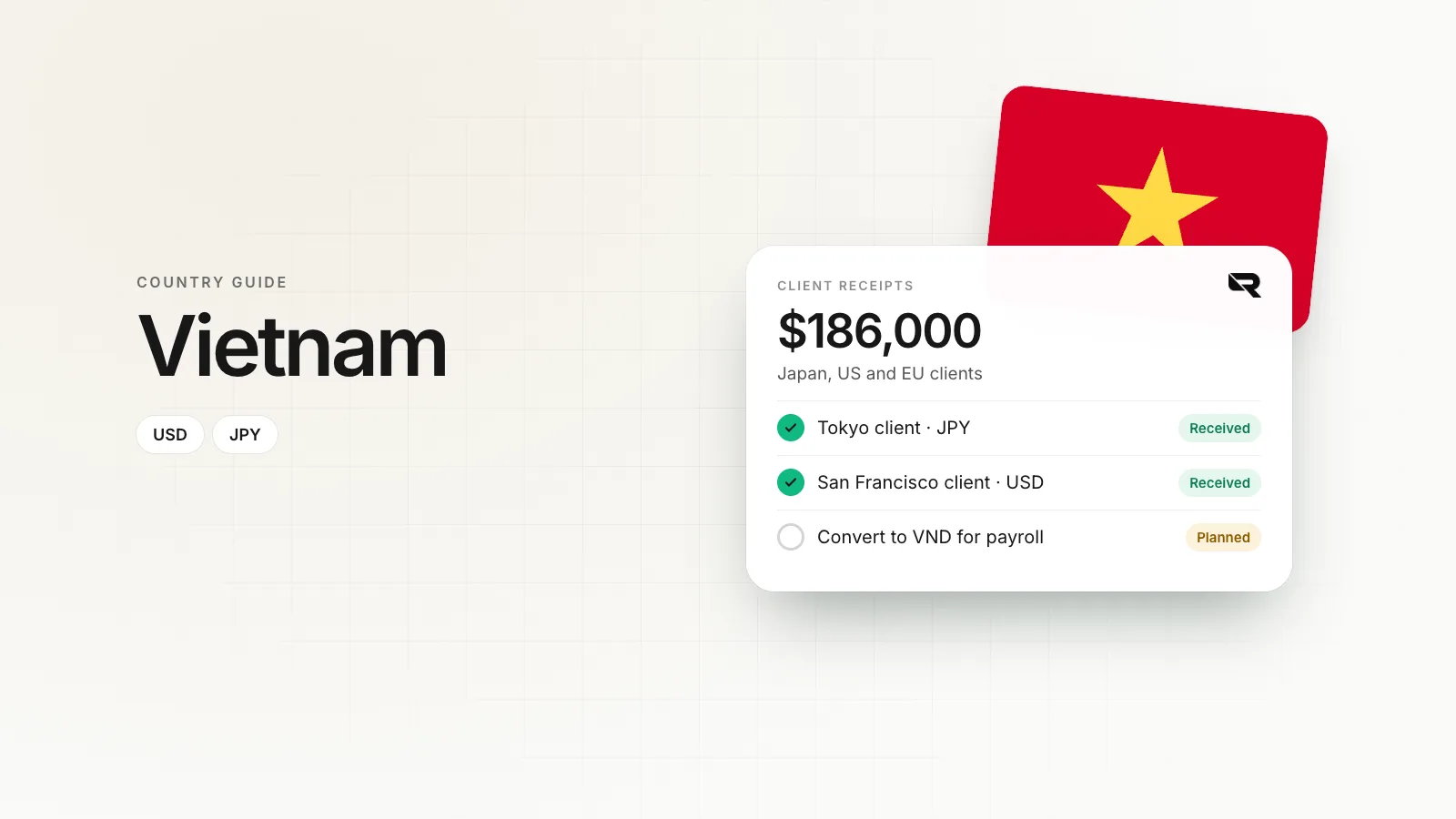
A Da Nang software outsourcing firm with 300 engineers works for a Tokyo manufacturer, a San Francisco startup and a German retailer. Payments arrive in yen, dollars and euros at its Vietnamese bank. It keeps the foreign currency until payroll, then sells what it needs for dong.
The rules
Vietnam's foreign exchange regime, administered by the State Bank of Vietnam (SBV), requires residents to conduct foreign currency transactions through licensed banks in Vietnam. For exporters, that means:
- export proceeds come into foreign currency accounts at Vietnamese banks,
- accounts abroad generally need SBV approval and are limited to specific cases.
Holding foreign currency
Companies can hold dollars, yen and euros at Vietnamese banks and sell them for dong when needed. There is no general obligation to convert on receipt. Converting a planned amount ahead of payroll gives control over the rate.
Japan as a key market
Japanese companies are among Vietnam's largest outsourcing clients, and many contract in yen. Vietnamese firms with yen revenue and dong costs carry yen exposure, which has been significant as the yen weakened.
Documents
Banks classify receipts with the contract, invoices and purpose details. Keep them consistent and send invoice numbers with each payment request.
Paying into Vietnam: the local rail
| What | Detail |
|---|---|
| Local rail | NAPAS 24/7 fast transfers |
| Run by | National Payment Corporation of Vietnam |
| Settlement | Seconds, 24/7 |
Source: NAPAS. Checked when this guide was last updated; the scheme's own page has the current figures.
Where Rivet fits
Rivet opens business accounts for registered companies after verification. A Vietnam-registered company must receive export proceeds through licensed banks in Vietnam and generally needs SBV approval for accounts abroad, so check with your bank first. Where available, partners abroad who bank with Rivet can pay Vietnamese bank accounts through Rivet's payouts. Rivet is not a bank; regulated partner institutions hold the funds.
Questions people ask
Can a Vietnamese company keep money in an account abroad?
Generally only with State Bank of Vietnam approval and in specific cases. Export proceeds are received through licensed banks in Vietnam.
Must Vietnamese companies convert foreign currency into dong?
Not immediately. They can hold foreign currency in accounts at Vietnamese banks and sell it when needed.
Why do Japanese clients pay in yen?
Many Japanese companies contract in yen. Vietnamese firms can receive yen and hold or convert it.
What documents do banks ask for?
Contracts with foreign clients, invoices and sometimes evidence of the service, to classify the receipt as export proceeds.
Sources
Rashidatou writes Rivet's guides to how money moves between countries: the payment rails, what each one costs, and the account details a company needs to get paid in another currency. Every figure in Rashidatou's articles is traced to the scheme rulebook, the regulator or the provider's published price list, and those sources are listed at the end.
More from Rashidatou K. →This article is general information, not legal, tax or financial advice. Rules and fees change; check the sources above and the provider’s current terms before you act on them.
- vietnam
- software outsourcing
- sbv
- usd
- jpy
- vnd