Writing an expense policy for a small business
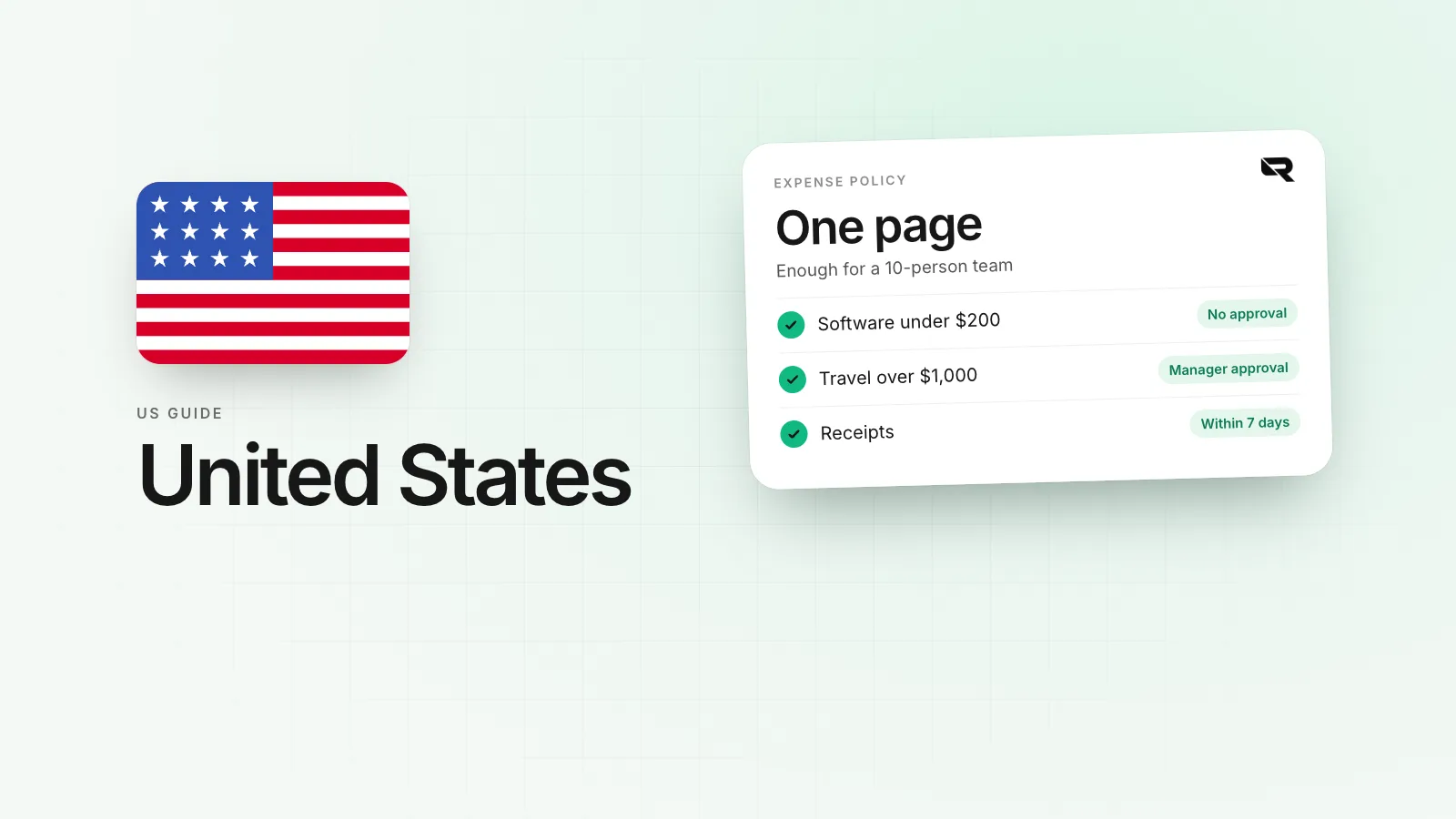
An expense policy for a 10-person company fits on one page. It says who can spend on what, up to how much, what proof is needed and who approves.
- Published
- Reading time
- 1 min read
"Expense policy template" and "corporate credit card policy template" sit high in Google's suggestions. A small business needs less than a template suggests.
A one-page policy
| Rule | Example |
|---|---|
| Who can spend | Anyone with a company card |
| Software | Up to $200 a month without approval; above, ask the finance lead |
| Travel | Book economy; over $1,000 needs manager approval |
| Meals | With clients only, up to $75 a person |
| Receipts | Uploaded within 7 days |
| Reimbursements | Paid within 14 days of a complete claim |
| Personal use | Not allowed; repay within 7 days if it happens |
Enforce it with cards
A rule says "software under $200". A card with a $200 monthly limit makes it true. Use per-card limits, merchant categories and approvals for anything over.
Accountable plan
Reimbursements under an accountable plan, with business purpose and receipts, are not taxable income to employees. Keep the records.
Review
Every six months, compare the policy with actual spend and adjust limits.
Paying into the United States: the local rail
| What | Detail |
|---|---|
| Local rail | ACH for batch payments; RTP and FedNow for instant transfers |
| Run by | Nacha for ACH; The Clearing House for RTP; the Federal Reserve for FedNow |
| Settlement | Same-day ACH within the business day, standard ACH the next; RTP and FedNow in seconds, 24/7, where both banks take part |
Source: Nacha: Same Day ACH. Checked when this guide was last updated; the scheme's own page has the current figures.
Where Rivet fits
Rivet gives every team member cards with their own limits, receipts on one ledger and, on Growth, approvals for up to 10 members. Rivet is not a bank; regulated partner institutions hold the funds. See expense management for small businesses.
Questions people ask
What should an expense policy include?
Who can spend, what on, limits per category, receipt rules, approval steps, reimbursement timing and what happens when rules are broken.
How long should it be?
For a small team, one or two pages. Longer policies go unread.
What receipts does the IRS need?
Records showing the amount, date, place and business purpose. Some expenses, such as travel, have extra rules.
Should every employee get a card?
People who spend regularly, yes, with limits. It is easier than reimbursements and keeps records clean.
Sources
Alexia compares the accounts, cards and payment tools companies weigh before they switch, and writes Rivet's market guides for founders in a specific country. Prices in Alexia's comparisons come from each provider's own pricing page on the date given in the article, rules come from the regulator or tax authority that sets them, and every source is listed at the end.
More from Alexia M. →This article is general information, not legal, tax or financial advice. Rules and fees change; check the sources above and the provider’s current terms before you act on them.
- expense policy template
- corporate credit card policy
- small business expenses
- approvals
- receipts
- us