Sole trader vs limited company in the UK: tax, liability and paperwork
A sole trader is the business. A limited company is a separate legal person that you own and run. That one difference drives the tax, the liability, the paperwork and how clients and banks treat you.
- Published
- Updated
- Reading time
- 3 min read
"Should I be a sole trader or set up a limited company?" is one of the most searched business questions in the UK, and the honest answer depends on your profit, your risk and how much admin you will tolerate. This guide compares the two using 2026/27 rates.
What is the difference between a sole trader and a limited company?
A sole trader is a person trading in their own name. The business has no separate existence: its income is your income, and its debts are your debts. A limited company is a separate legal person, registered at Companies House, that owns its money, signs its own contracts and owes its own debts. You own it through shares and run it as a director.
Everything else in this article follows from that.
How is each one taxed?
A sole trader pays Income Tax and Class 4 National Insurance on the year's profit. It does not matter whether the money stays in the business account or is spent; profit is taxed as yours.
| Sole trader | Limited company | |
|---|---|---|
| Tax on profit | Income Tax 20%, 40% or 45% | Corporation Tax 19% (profit up to £50,000) to 25% (over £250,000) |
| National Insurance | Class 4: 6% between £12,570 and £50,270, 2% above | On salary only, for employer and employee |
| Tax when you take money out | None, already taxed | Income Tax on salary; dividend tax on dividends |
| Dividend rates 2026/27 | Not applicable | 10.75% basic, 35.75% higher, 39.35% additional, after a £500 allowance |
A company owner is taxed twice on the same profit: once in the company and once on what they take out. That sounds worse, and at low profits it often is. The advantage appears when profit is high enough that you would pay 40% as a sole trader, and you can leave part of it in the company at 19% to 25% for later. Our guide to salary vs dividends for UK directors works through the usual split.
What does limited liability actually protect?
If a sole trader's business owes money it cannot pay, creditors can pursue the person's own savings and property. With a limited company, the shareholders' loss is normally limited to what they put in.
There are limits to that protection. Directors who give personal guarantees (common on leases and loans) are liable for what they guaranteed. Directors who keep trading while the company is insolvent, or who take money out improperly, can be made to pay. And a bank or landlord dealing with a new company will often ask for a guarantee anyway.
How much admin does each one involve?
| Task | Sole trader | Limited company |
|---|---|---|
| Register | HMRC Self Assessment, free | Companies House, £100 online |
| Annual filings | Self Assessment return, and MTD updates if over the threshold | Accounts, Corporation Tax return, confirmation statement (£50 online) |
| Payroll | Not needed | Needed if the director takes a salary |
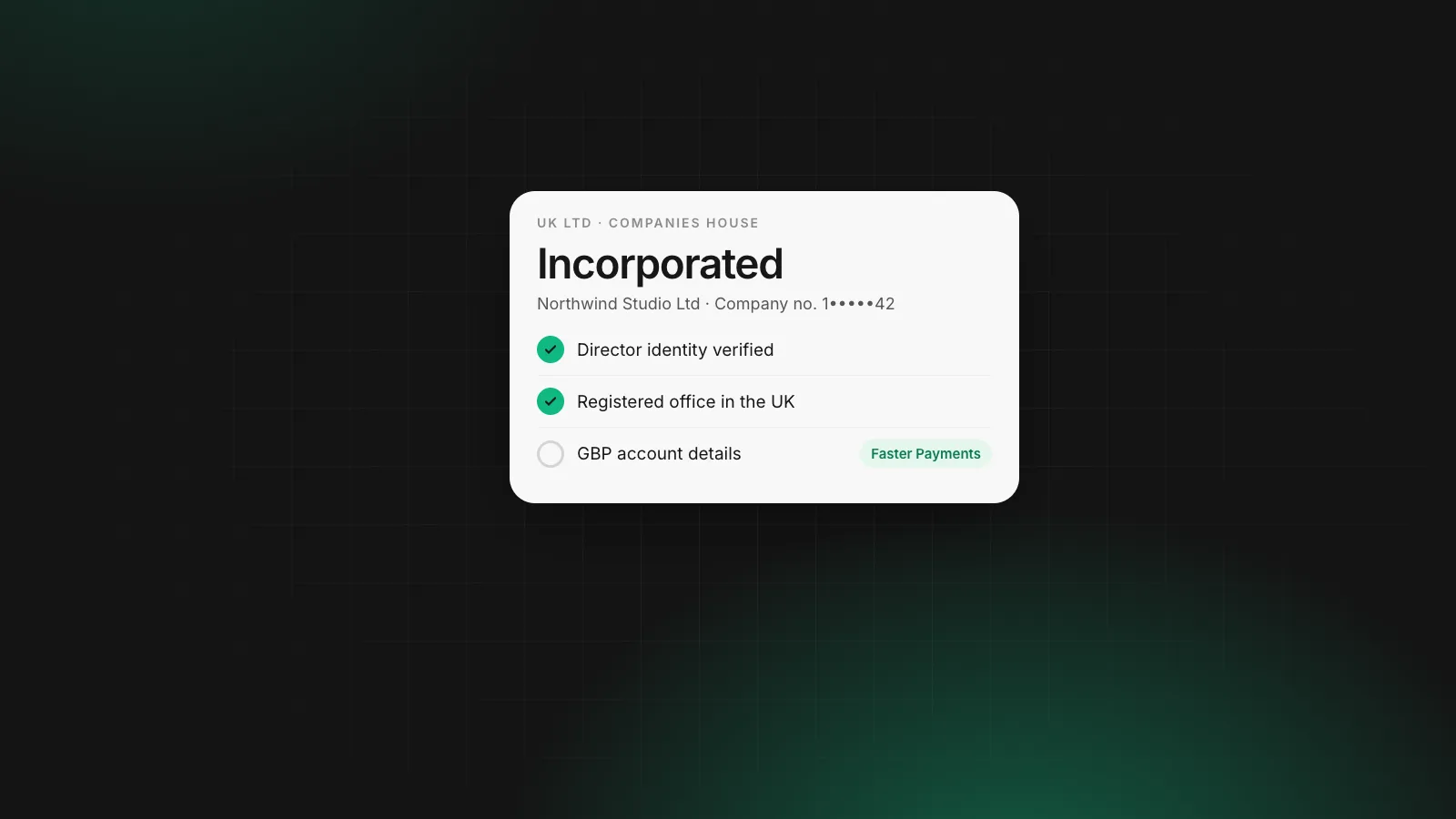
| Identity checks | None | Every director and person with significant control verifies identity with Companies House |
| Public information | None | Directors, owners and accounts on the public register |
Sole traders with qualifying income over £50,000 now keep digital records and send quarterly updates under Making Tax Digital for Income Tax. Companies are outside that regime, though their admin is heavier in other ways.
Which do clients, banks and platforms prefer?
Larger clients sometimes require a limited company before they will sign, especially for contractors, because it shifts some employment status questions. Many payment providers, marketplaces and business accounts outside the UK only open for registered companies. If you plan to sell abroad, collect in dollars or euros, or raise investment, a company is usually the expected form.
A sole trader can still get paid by overseas clients, and many do through a personal or sole trader account. The difference shows up when the provider asks for a registration number.
When should you move from sole trader to limited company?
Common triggers we see:
- Profit is moving into the higher-rate band and you do not need all of it to live on.
- A client or platform asks for a company.
- The work carries risk you do not want tied to your house.
- You want to bring in a partner or investor with shares.
Incorporating takes a day online. The slower part is moving contracts, VAT registration and bank accounts across. Read our guide to UK Ltd companies for non-residents if any owner lives outside the UK.
Rivet opens business accounts for registered companies, so a UK Ltd can hold GBP alongside USD and EUR in one account. Sole traders are outside what we serve.
Questions people ask
At what profit is a limited company worth it in the UK?
There is no single figure, because it depends on how much you take out and on your other income. Many accountants start the conversation once profit approaches the higher-rate threshold of £50,270 and you can leave some money in the company. Ask yours to run both cases on your numbers.
Can I switch from sole trader to limited company later?
Yes. You incorporate the company, move the business into it, tell HMRC you have stopped trading as a sole trader, and open a bank account in the company's name. Existing contracts and VAT registration may need transferring.
Do sole traders have to register with Companies House?
No. A sole trader registers with HMRC for Self Assessment. Only companies and limited liability partnerships register with Companies House.
Is a limited company more private than a sole trader?
Less. Directors' names, a correspondence address, shareholders with significant control and the annual accounts appear on the public Companies House register.
Sources
William covers what happens once a company starts moving money: getting the business verified, paying contractors and suppliers abroad, and keeping card spend under control. William writes for the founder or finance lead who has to make it work this week, and links every rule cited to the text it comes from.
More from William Sunjo M. →This article is general information, not legal, tax or financial advice. Rules and fees change; check the sources above and the provider’s current terms before you act on them.
- sole trader
- limited company
- uk ltd
- corporation tax
- companies house
- uk