How to pay EU suppliers from the UK after Brexit
The UK left the EU but stayed in SEPA, so a UK business can pay an EU supplier in euros by SEPA transfer, usually within a day. You need the supplier's IBAN and full details, and the payer's address has to travel with the payment.
- Published
- Updated
- Reading time
- 2 min read
Paying a supplier in France, Germany or Spain from the UK is still straightforward. The UK left the EU in 2020, but it stayed in the Single Euro Payments Area (SEPA). What changed is the paperwork around the payment and the goods, not the payment rail itself.
Can a UK business still pay by SEPA?
Yes. The UK is a participant in the SEPA schemes, and UK banks and payment firms that are registered participants can send SEPA credit transfers in euros. Your supplier receives the money into its IBAN, usually the next business day, and with SEPA Instant within seconds.
If your bank is not a SEPA participant, or you pay from a GBP account, the payment may go by SWIFT instead. That can take longer and lose fees to intermediary banks on the way.
What details do you need?
| Detail | Notes |
|---|---|
| Supplier's legal name | As on their bank account |
| IBAN | Starts with the country code, such as FR, DE or ES |
| BIC | Often still requested for SEPA payments from outside the EEA |
| Supplier's address | Good practice, and needed by some providers |
| Your full name and address | Required, because the UK is outside the EEA |
| Payment reference | Invoice number |
The payer address requirement is the one UK businesses trip on. Under EU and UK anti-money-laundering rules, a payment from outside the EEA must carry the payer's full address. A missing address can get a SEPA payment rejected.
How much does it cost?
The SEPA transfer itself is usually free or cheap. The real cost is the conversion if you pay euros from pounds. High street banks often add 2% to 4% to the mid-market rate on international payments. On a €20,000 invoice that is £340 to £690.
| Route | Typical cost |
|---|---|
| Bank, GBP account, SWIFT | Transfer fee plus FX margin, plus possible intermediary fees |
| Bank, EUR account, SEPA | Low transfer fee, conversion only when you top up |
| Payment provider with EUR balance | SEPA fee shown, conversion at a published margin |
See the true cost of international payments for how to compare quotes.
Does Verification of Payee apply?
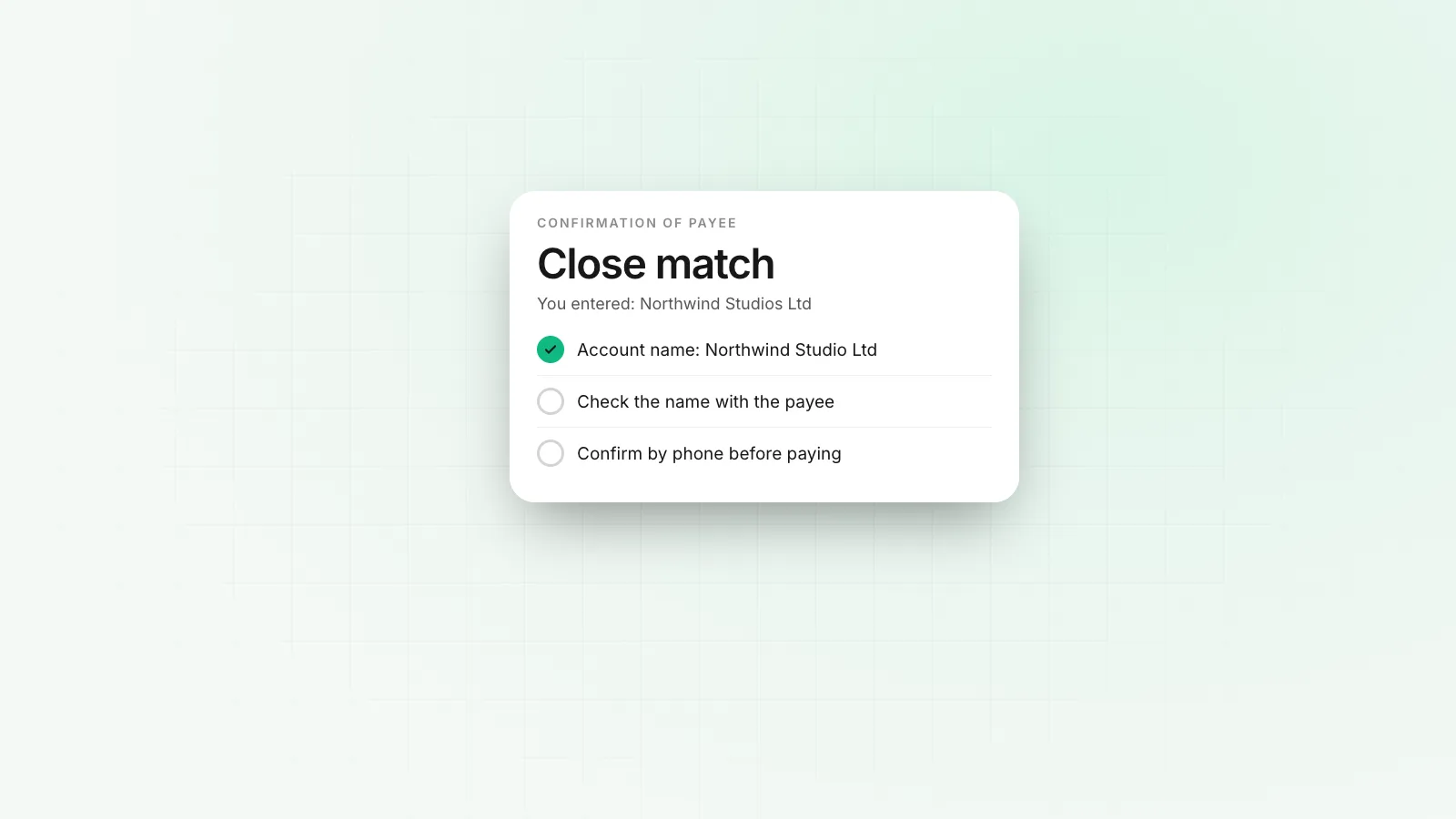
Since 9 October 2025, euro-area payment providers have run Verification of Payee on SEPA transfers, checking the payee name against the IBAN, the way Confirmation of Payee works in the UK. Many providers outside the euro area that send SEPA now offer it too. Read the result before sending; our guide to SEPA Instant and Verification of Payee covers it.
What changed for goods and VAT?
Goods from the EU now cross a customs border.
- You need a GB EORI number. See EORI numbers.
- Import VAT is due at the border, or through postponed VAT accounting if you are VAT registered.
- Duty can apply unless the goods qualify as EU origin under the UK-EU trade agreement, which needs proof of origin.
For services, an EU supplier normally invoices without VAT, and you account for UK VAT under the reverse charge on your return.
How to pay EU suppliers with Rivet
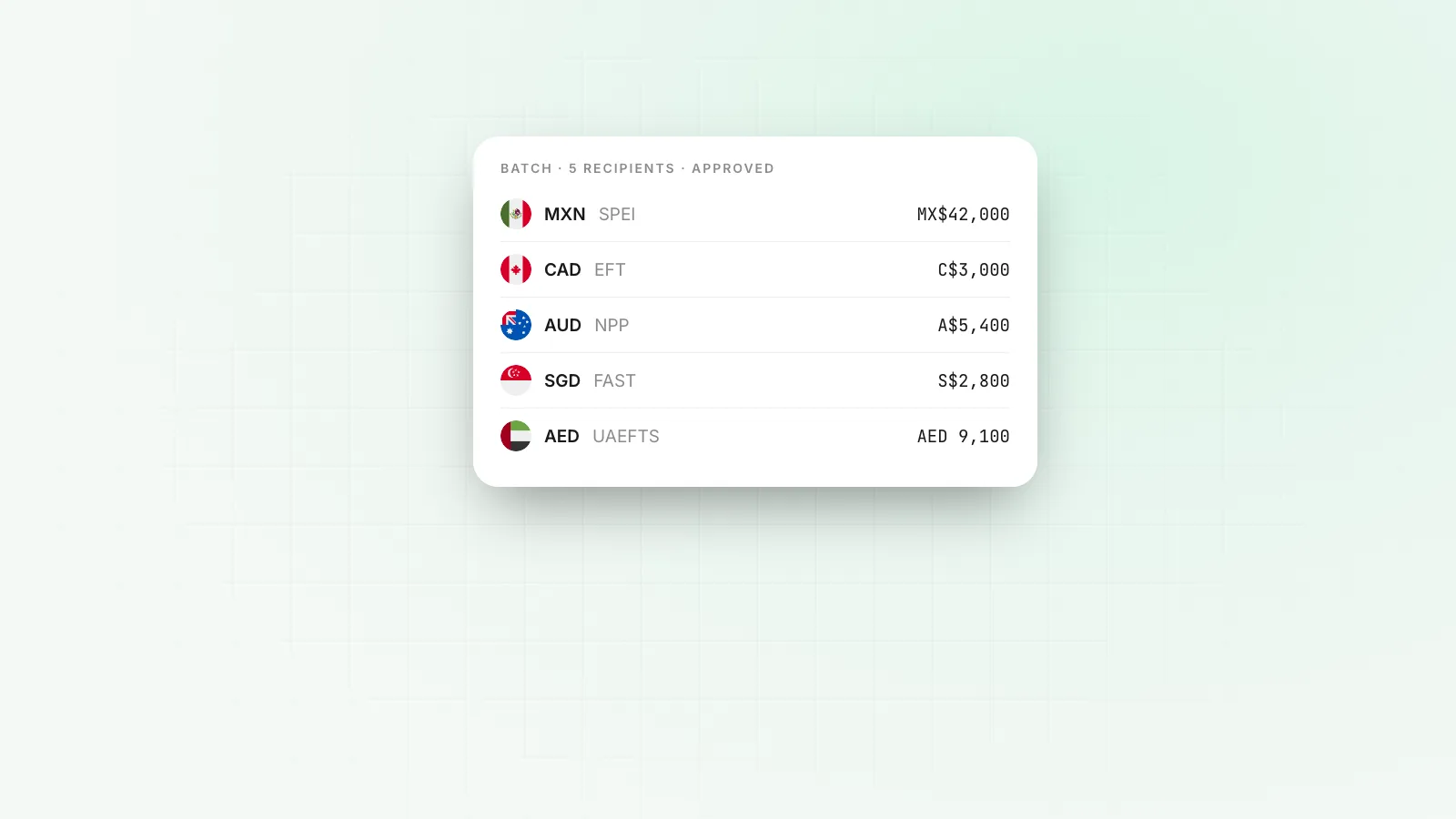
On Rivet's Growth plan, a registered company gets EUR account details in its own name next to GBP and USD. Euro income from EU customers lands as euros, and you pay EU suppliers by SEPA from that balance, converting from GBP only when you top it up, from 0.50% on Growth. Bulk payouts let you pay several EU suppliers in one batch.
Questions people ask
Can UK businesses still use SEPA?
Yes. The UK remained a participant in the SEPA schemes after Brexit. UK banks and payment providers that are SEPA participants can send and receive SEPA credit transfers in euros.
How long does a SEPA payment from the UK take?
A standard SEPA credit transfer arrives by the next business day. SEPA Instant arrives in seconds if both providers support it.
Why did my EU supplier receive less than I sent?
If the payment went by SWIFT instead of SEPA, intermediary banks may have deducted fees. A SEPA transfer should arrive in full. Ask your provider which route it used.
Do I pay VAT on EU supplier invoices?
EU suppliers usually invoice a UK business without EU VAT. For goods, import VAT is due when they enter Great Britain, often through postponed VAT accounting. For most services, you account for VAT under the reverse charge.
Sources
Rashidatou writes Rivet's guides to how money moves between countries: the payment rails, what each one costs, and the account details a company needs to get paid in another currency. Every figure in Rashidatou's articles is traced to the scheme rulebook, the regulator or the provider's published price list, and those sources are listed at the end.
More from Rashidatou K. →This article is general information, not legal, tax or financial advice. Rules and fees change; check the sources above and the provider’s current terms before you act on them.
- pay eu suppliers
- sepa from uk
- eur payments
- brexit
- iban
- uk