Norwegian maritime and energy suppliers: paying in dollars without converting twice
Charter rates, bunker fuel, ship parts and offshore equipment are priced in dollars. A Norwegian maritime SME that earns dollars, converts them to kroner, then buys dollars again for its suppliers pays for the same currency twice.
- Published
- Reading time
- 2 min read
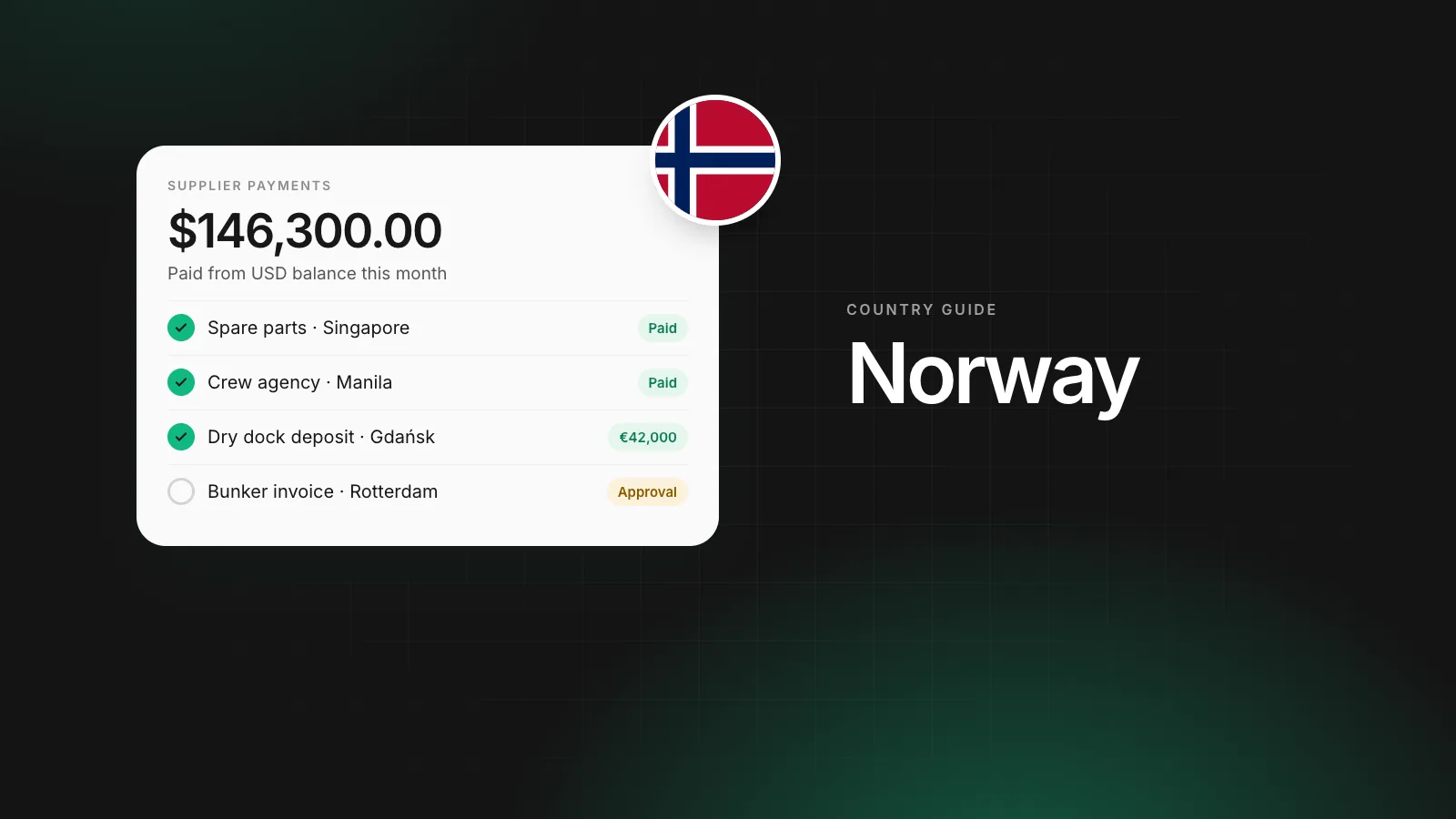
A Ålesund offshore vessel operator earns charter income in dollars from oil companies. It pays a spare-parts supplier in Singapore, a crew agency in Manila and a bunker supplier in Rotterdam, mostly in dollars too. The dollars it earns arrive in a krone account, converted. The dollars it pays out are bought back from kroner. The bank earns a margin twice, and the company carries currency risk on money that was never really meant to be kroner.
Dollar in, dollar out
Shipping runs on dollars. Charter hire, freight, fuel, ship parts and much of offshore equipment are priced in them. For many Norwegian maritime SMEs, most revenue and a large share of costs are in the same currency.
The simplest saving is to stop converting money that does not need to become kroner. A dollar balance receives charter payments and pays dollar suppliers directly. Only the surplus needed for Norwegian salaries, taxes and local costs is converted.
Local currency where it helps
Not every supplier wants dollars. A Polish yard may quote in euros or zloty, a Turkish one in euros, a Philippine crew agency in pesos for local wages. Ask for a quote in their currency and compare it with the dollar price after your conversion cost. Sometimes the local price is lower because the supplier no longer carries the conversion.
Controls on supplier payments
Maritime companies are frequent targets of invoice fraud. A message arrives from a port agent or supplier saying their bank has changed, sometimes from a compromised mailbox, sometimes from a domain one letter off the real one.
Two controls stop most of it:
- Confirm any new or changed bank details by calling a contact you already know, on a number you already hold.
- Require a second approver for any payment to new details.
Our guide to invoice fraud and payment detail scams covers the warning signs.
Records
Norwegian books are in kroner, so record each dollar receipt and payment at a documented rate. A payment platform that shows the rate and keeps it on each statement line makes month end simpler.
Paying into Norway: the local rail
| What | Detail |
|---|---|
| Local rail | Straksbetaling (instant payments) and Vipps |
| Run by | Bits, settled through Norges Bank |
| Settlement | Seconds, 24/7 |
Source: Bits: instant payments. Checked when this guide was last updated; the scheme's own page has the current figures.
Where Rivet fits
A Rivet business account gives a Norwegian company US account details in its own name on every plan, for ACH and wires, and holds dollars as dollars. From the Growth plan, euro and sterling details are added and payouts can require a second approver. Payments go to suppliers in 120+ countries, on local rails where they exist. Rivet is not a bank; regulated partner institutions hold the funds.
Questions people ask
Why does shipping use US dollars?
Charter contracts, freight rates, fuel and ship finance have been priced in dollars for decades, which makes the dollar the shared currency of the industry.
How much does double conversion cost?
It depends on the bank's margin. On large dollar volumes, even a fraction of a percent each way adds up to a meaningful annual amount.
How do I protect supplier payments from fraud?
Verify any change of bank details by phone with a known contact, and require two approvers for payments to new or changed details.
Should we pay yards and agencies in dollars?
Many invoice in dollars. Yards in Poland or Turkey may also quote in euros or local currency; compare prices including your conversion cost.
Sources
William covers what happens once a company starts moving money: getting the business verified, paying contractors and suppliers abroad, and keeping card spend under control. William writes for the founder or finance lead who has to make it work this week, and links every rule cited to the text it comes from.
More from William Sunjo M. →This article is general information, not legal, tax or financial advice. Rules and fees change; check the sources above and the provider’s current terms before you act on them.
- norway
- maritime
- offshore
- usd payments
- suppliers
- fx