Norwegian companies billing EU and US clients: MVA, invoices and collecting euros and dollars
Norway sits outside the EU VAT system, so Norwegian invoices to EU clients follow different wording from intra-EU ones. The payment side matters as much: euro and dollar receipts into a krone account are converted at the bank's rate on arrival.
- Published
- Reading time
- 2 min read
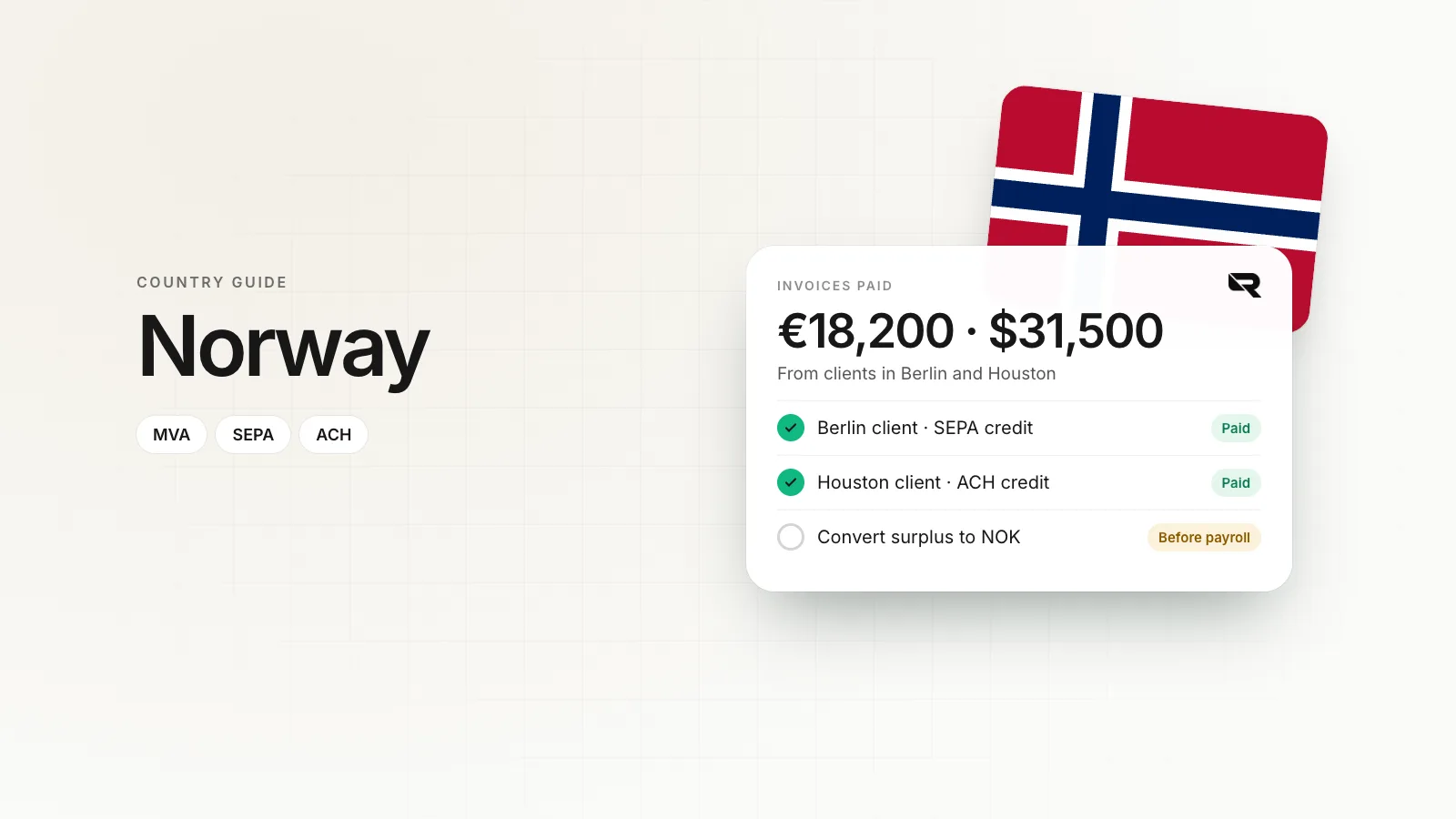
A Stavanger subsea engineering consultancy bills an operator in Berlin and an oilfield services firm in Houston. Both pay. Both payments land in the consultancy's krone account converted at the bank's rate on the day they arrive. A month later the consultancy buys dollars to pay a Houston subcontractor, converting back the other way.
MVA on services abroad
For most services a Norwegian AS sells to business clients abroad, Norwegian MVA does not apply. The invoice states that the service is outside the scope of Norwegian MVA.
Norway is outside the EU VAT system, so the invoice to Berlin is not an intra-EU supply. There is no EU VAT number exchange and no recapitulative statement. The German client treats it as a service bought from outside the EU and accounts for German VAT itself.
Goods are different: exports are zero-rated with customs evidence, and the EU buyer pays import VAT.
The W-8BEN-E for American clients
A US client will usually ask for Form W-8BEN-E before paying. It confirms that your AS is a foreign company. For services performed outside the US, payments are generally made without US withholding, and the Norway-US tax treaty covers many other cases.
Where the money goes on arrival
Norway takes part in SEPA, so the Berlin client can send euros by SEPA. The Houston client sends an international wire, which may lose intermediary fees. Into a krone account, both are converted on arrival at the bank's rate.
That is fine if you need kroner. Many Norwegian companies, especially in energy, maritime and technology, also pay for things in euros and dollars: subcontractors, equipment, software, travel. Each of those payments converts kroner back, and the margin is paid twice.
Keep foreign revenue in its currency
Holding euros and dollars lets you:
- Receive each payment exactly as invoiced.
- Pay foreign costs from the matching balance.
- Convert the surplus to kroner when you need it, at a rate you see first.
US account details also change how American clients pay. A domestic ACH transfer arrives in full; an international wire often does not.
Paying into Norway: the local rail
| What | Detail |
|---|---|
| Local rail | Straksbetaling (instant payments) and Vipps |
| Run by | Bits, settled through Norges Bank |
| Settlement | Seconds, 24/7 |
Source: Bits: instant payments. Checked when this guide was last updated; the scheme's own page has the current figures.
Where Rivet fits
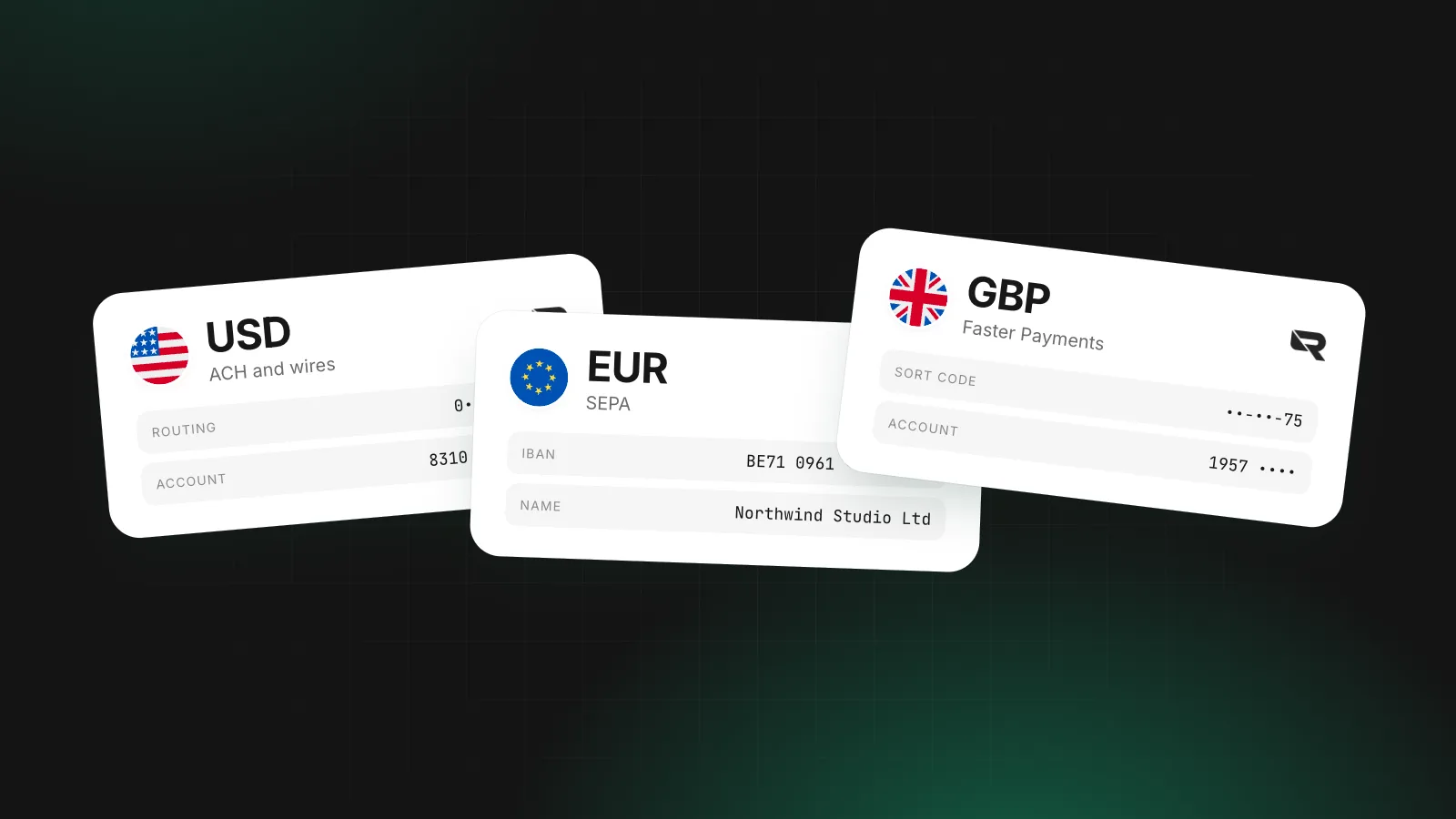
A Rivet business account gives a Norwegian AS US account details in its own name on every plan and, from the Growth plan, euro details with an IBAN and sterling details. On the Scale plan it holds 30 currencies, including Norwegian kroner. Payments are matched to invoices, and conversions happen when you choose at a rate shown before you confirm. Rivet is not a bank; regulated partner institutions hold the funds.
Questions people ask
Does a Norwegian AS charge MVA to an EU business client?
For most services, no. Remote services to foreign businesses are generally outside the scope of Norwegian MVA. The invoice states this.
Can EU clients pay a Norwegian company by SEPA?
Norway is in the SEPA area, so euro payments can reach Norwegian IBANs. If the account is in kroner, the bank converts on arrival.
Should a Norwegian company keep dollars?
If it pays for anything in dollars, such as software, cloud hosting, equipment or contractors, yes. Paying dollar costs from dollar revenue removes two conversions.
How should I record foreign invoices?
Books are kept in kroner. Record each foreign invoice and payment at a documented exchange rate, such as Norges Bank's rate for the day.
Sources
Rashidatou writes Rivet's guides to how money moves between countries: the payment rails, what each one costs, and the account details a company needs to get paid in another currency. Every figure in Rashidatou's articles is traced to the scheme rulebook, the regulator or the provider's published price list, and those sources are listed at the end.
More from Rashidatou K. →This article is general information, not legal, tax or financial advice. Rules and fees change; check the sources above and the provider’s current terms before you act on them.
- norway
- as
- mva
- eu clients
- us clients
- nok