Mobile money vs a bank account for business: what each is good for
Mobile money is the fastest way to collect from customers across much of Africa, and it is often where suppliers and staff want to be paid. A bank account handles large invoices, foreign clients, credit and audits better. Most growing businesses run both and sweep between them.
- Published
- Reading time
- 2 min read
Across much of Africa, a business that does not take mobile money loses sales. A business that runs only on mobile money hits a ceiling. Each one suits different jobs, and most growing businesses use both.
Where does mobile money work best?
| Job | Why mobile money fits |
|---|---|
| Collecting from consumers | Customers already have a wallet; payment takes seconds |
| Paying agents, riders and casual staff | They often have no bank account, or prefer the wallet |
| Small supplier payments | Fast and cheap for small amounts |
| Rural or informal markets | Agent networks reach where branches do not |
In Kenya, M-Pesa handles a large share of the country's payments. In Ghana, MTN MoMo dominates, and interoperability lets wallets pay bank accounts. In Senegal and Côte d'Ivoire, Wave and Orange Money are everyday tools. GSMA's annual State of the Industry Report tracks how large the industry has grown.
Where does a bank account work better?
| Job | Why a bank account fits |
|---|---|
| Large invoices | Wallet limits are too low |
| Foreign clients | They pay by SWIFT, ACH or SEPA, not mobile money |
| Foreign currency | Wallets hold local currency only |
| Credit and overdrafts | Banks lend on statements and accounts |
| Audits and tax | Statements are complete and accepted everywhere |
| Payroll for salaried staff | Predictable, documented, often required by staff |
What are the limits of mobile money for business?
- Balance and transaction limits set by the central bank and operator.
- Cash-out and transfer fees, which add up at volume.
- Reconciliation: hundreds of small payments with thin references.
- Single-operator risk: an outage stops collections.
The Ghanaian E-Levy, which taxed electronic transfers, was abolished in April 2025, which made moving between wallets and banks cheaper. See whether the E-Levy is still charged.
How do businesses run both?
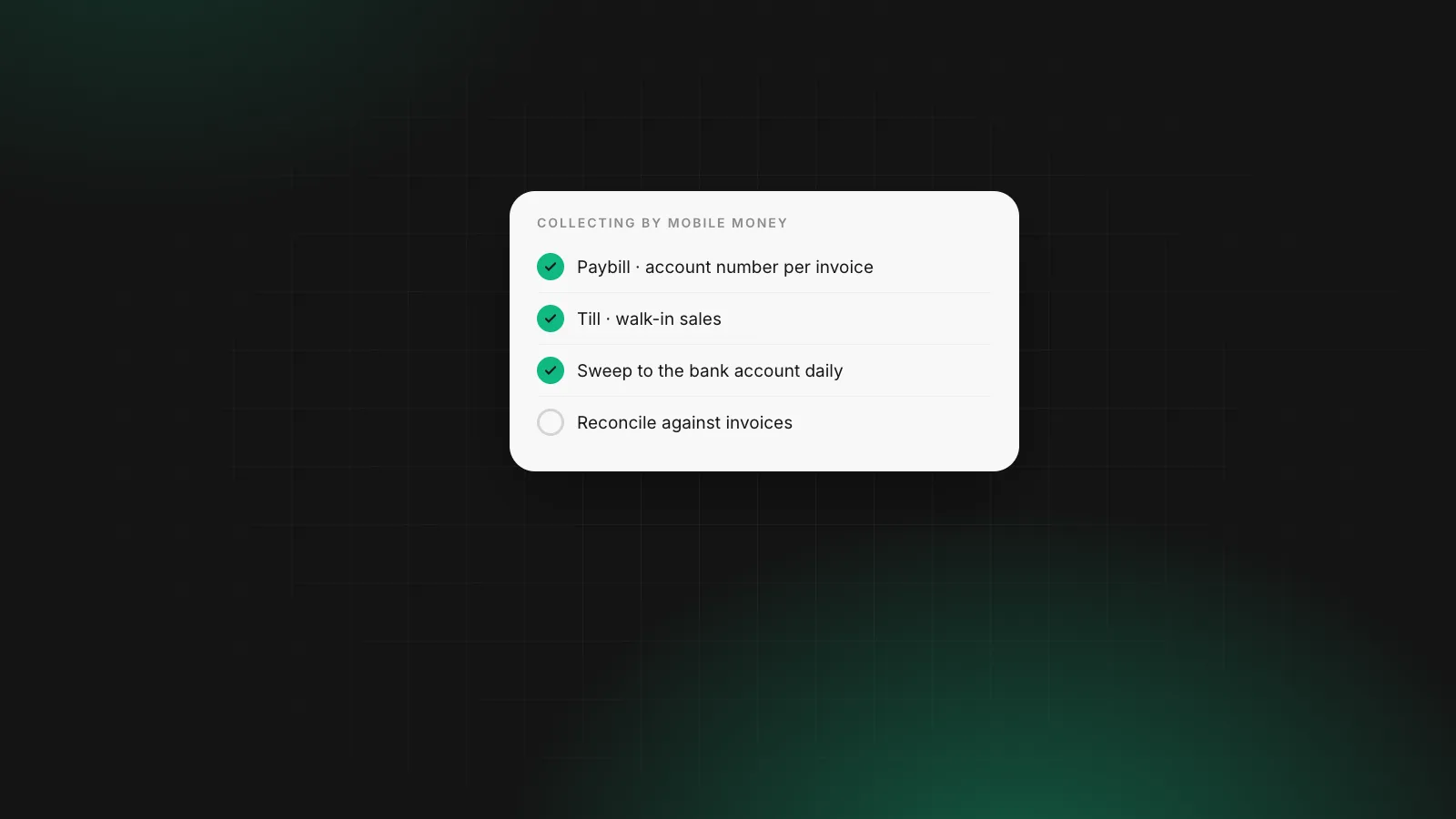
- Collect from customers on a merchant wallet, such as a Till or Paybill in Kenya. See M-Pesa Paybill vs Till.
- Use invoice or customer numbers as references.
- Sweep the wallet to the bank account daily or automatically.
- Pay suppliers and salaries from the bank, and pay agents from the wallet.
- Reconcile wallet statements against invoices, then sweeps against the bank.
What about clients outside the country?
Clients abroad pay in USD, EUR or GBP. A domiciliary or foreign currency account at a local bank takes SWIFT wires. Account details in the client's own currency let them pay by a domestic transfer instead. See domiciliary account vs USD account.
Where Rivet fits
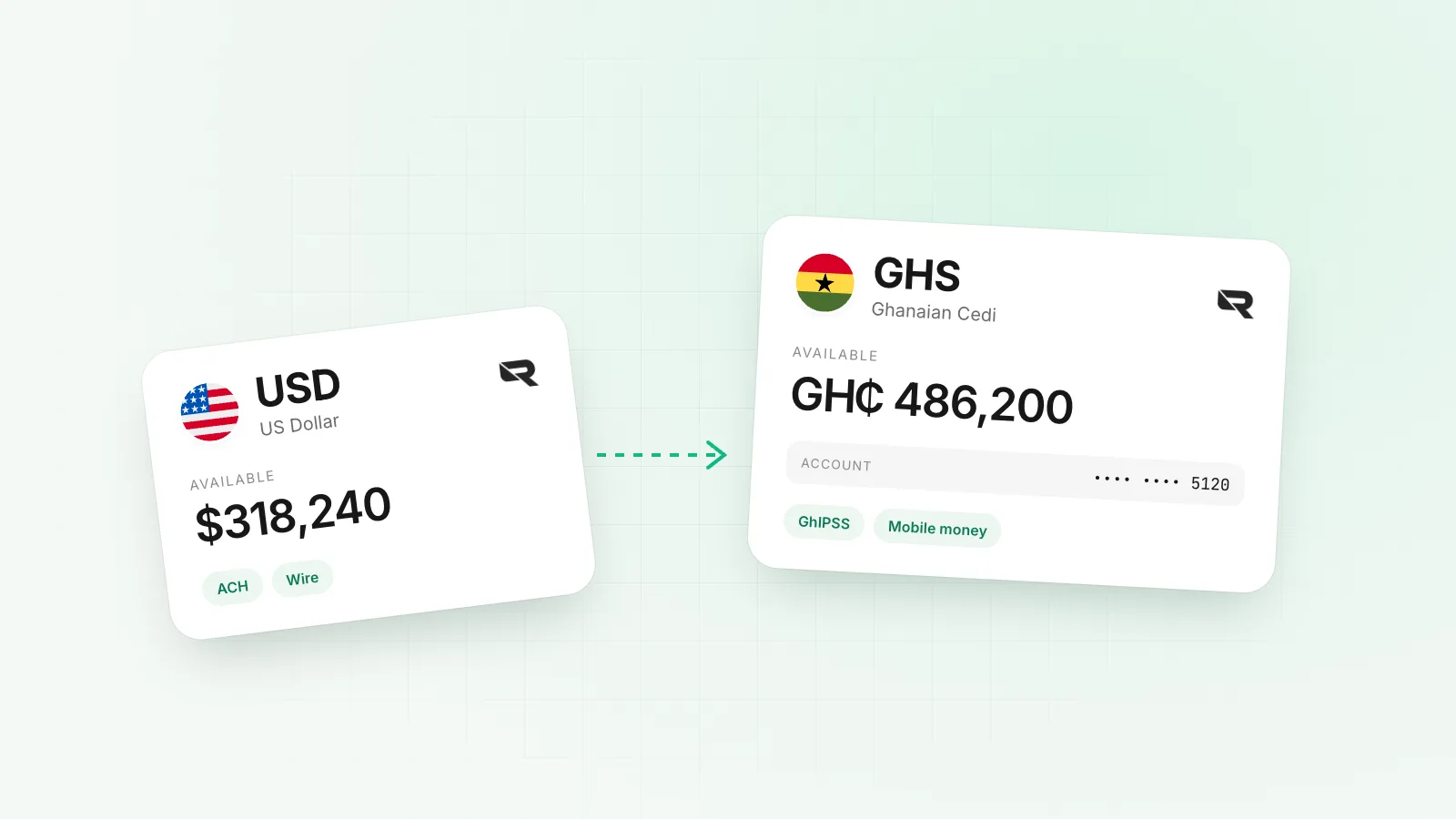
Rivet is a business account for registered companies, not a mobile wallet. Companies that collect locally by mobile money and bill clients abroad use Rivet for the foreign side: USD account details in the company's name for clients abroad, and on Scale, balances in KES, GHS, NGN, ZAR, XAF and XOF to hold, convert and pay out.
Questions people ask
Is mobile money safe for business funds?
Mobile money operators hold customer funds in trust or escrow accounts at banks, under central bank rules. The bigger practical risks are wallet limits, fraud on the phone, and operational problems with reconciling many small payments.
Can foreign clients pay into a mobile money wallet?
Some international remittance and payout providers can send to wallets, but business clients abroad almost always pay by bank transfer. For B2B invoices, a bank account is what they expect.
Do I need a business wallet or can I use a personal one?
Use a merchant or business product, such as a Till or Paybill in Kenya or a MoMo merchant account in Ghana. Personal wallets have lower limits and mixing personal and business money causes tax and record problems.
Can a business get a loan based on mobile money history?
Some lenders use mobile money transaction data to assess small businesses. Banks usually still want bank statements and accounts for larger facilities.
Sources
Rashidatou writes Rivet's guides to how money moves between countries: the payment rails, what each one costs, and the account details a company needs to get paid in another currency. Every figure in Rashidatou's articles is traced to the scheme rulebook, the regulator or the provider's published price list, and those sources are listed at the end.
More from Rashidatou K. →This article is general information, not legal, tax or financial advice. Rules and fees change; check the sources above and the provider’s current terms before you act on them.
- mobile money
- bank account
- m-pesa
- momo
- business payments africa
- collections