Is the E-Levy still charged in Ghana? What changed for business payments
No. Ghana repealed the Electronic Transfer Levy with effect from 2 April 2025. Mobile money and bank transfers no longer carry the 1% tax. Operators' own transfer fees and other taxes still apply, so the cost of collecting by MoMo did not fall to zero.
- Published
- Updated
- Reading time
- 2 min read
"Is E-Levy still deducted?" is still one of the most common questions from businesses in Ghana that collect or pay by mobile money. The answer is no. The tax ended on 2 April 2025. What is left is the operators' own fees, and they are worth knowing too.
What was the E-Levy?
The Electronic Transfer Levy was a tax on electronic transfers above a daily threshold, introduced in May 2022 at 1.5% and cut to 1% from January 2023. It applied to mobile money transfers between accounts, some bank transfers and some merchant payments, and was collected by the operators and banks on behalf of the Ghana Revenue Authority. It was widely criticised for discouraging digital payments.
When was it abolished?
Parliament passed the Electronic Transfer Levy Repeal Bill in March 2025 as part of the 2025 budget measures. The President assented, and the repeal took effect from 2 April 2025. The GRA directed operators and banks to stop charging it from that date and to refund any amounts deducted afterwards.
Some operators needed a day or two to switch it off, so a few transfers on 2 and 3 April 2025 still showed the levy before being refunded.
What do businesses still pay?
| Charge | Still applies? | Who sets it |
|---|---|---|
| E-Levy | No, since 2 April 2025 | Was set by law |
| MoMo transfer fees | Yes | Operator tariff |
| Cash-out fees | Yes | Operator tariff |
| Merchant payment fees | Yes, where charged | Operator and merchant agreement |
| Bank transfer fees | Yes | Your bank |
| Interoperability fees between networks or banks | Yes, where charged | Operators and GhIPSS participants |
If you see a line labelled "E-Levy" on a statement dated after 2 April 2025, ask your operator or bank to reverse it.
What did the repeal change for businesses?
- Paying suppliers, staff and agents by MoMo became cheaper.
- Moving money between a MoMo merchant wallet and a bank account no longer carried the 1% tax.
- Customers lost one reason to prefer cash.
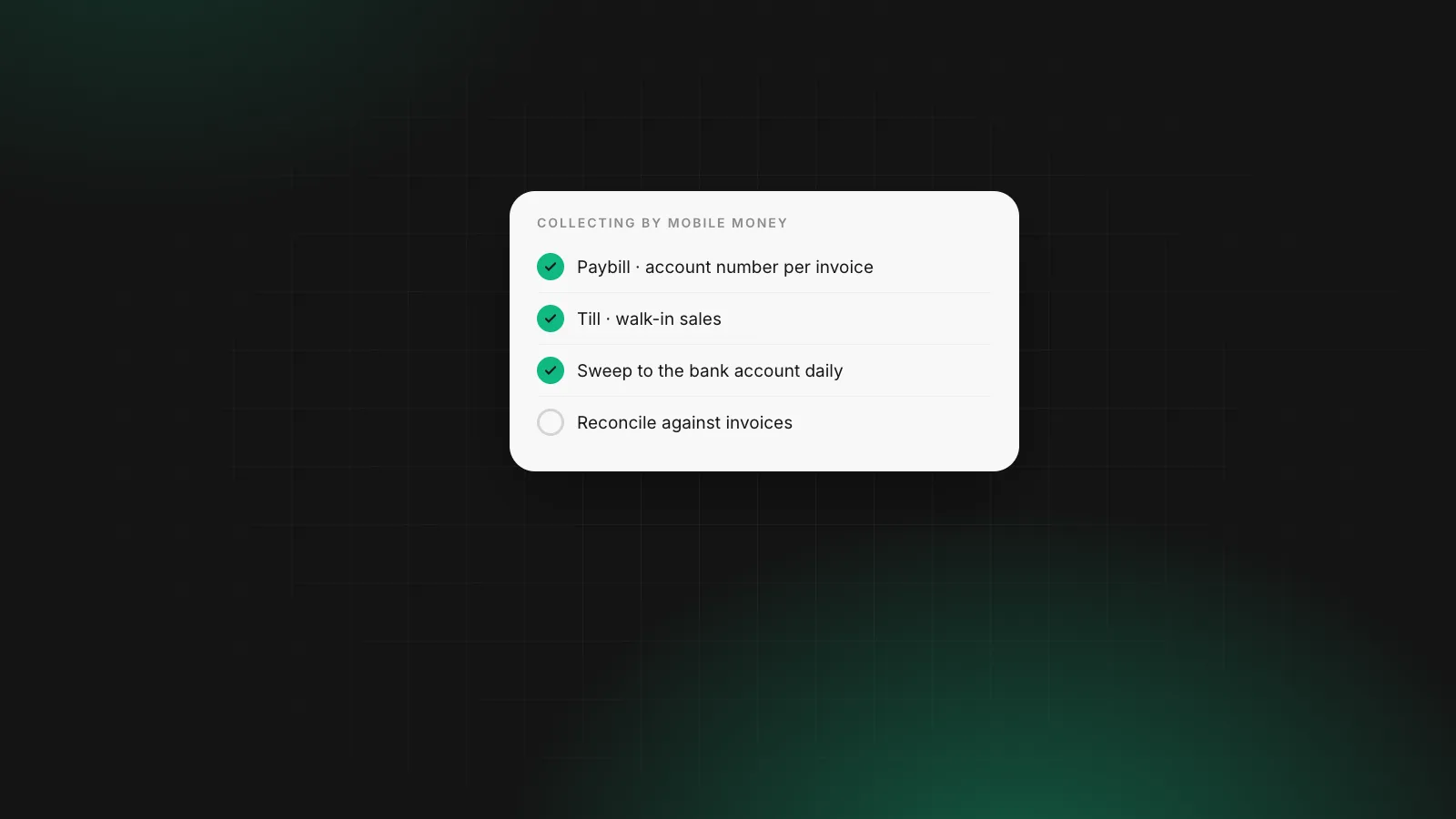
For a business sweeping its MoMo collections to the bank every day, the saving on a GH₵ 100,000 month is about GH₵ 1,000.
How should a business collect in Ghana now?
Mobile money for retail customers, bank transfer for business clients, and cards where customers expect them. Our guides to GHS business payments and mobile money vs a bank account for business compare the routes.
What about clients outside Ghana?
Foreign clients rarely pay by MoMo. They pay in USD, EUR or GBP by wire or local transfer. A Ghanaian company that bills abroad can receive USD account details in its own name with Rivet in the countries we support, and on Scale hold GHS in the same account, converting when it needs cedis.
Questions people ask
When was the E-Levy abolished in Ghana?
The repeal took effect on 2 April 2025, after Parliament passed the Electronic Transfer Levy Repeal Bill in March and the President assented to it.
Why am I still paying charges on MoMo transfers?
The E-Levy was a tax. Mobile money operators charge their own fees for transfers, cash-outs and some merchant payments. Those were never part of the E-Levy and still apply.
Can I get back E-Levy charged after April 2025?
The GRA directed charging entities to refund E-Levy deducted after the repeal date. If you see a charge labelled E-Levy after 2 April 2025, raise it with your operator or bank.
Did the repeal affect bank transfers too?
Yes. The E-Levy covered certain bank transfers and merchant payments as well as mobile money. Those are no longer taxed under it.
Sources
William covers what happens once a company starts moving money: getting the business verified, paying contractors and suppliers abroad, and keeping card spend under control. William writes for the founder or finance lead who has to make it work this week, and links every rule cited to the text it comes from.
More from William Sunjo M. →This article is general information, not legal, tax or financial advice. Rules and fees change; check the sources above and the provider’s current terms before you act on them.
- e-levy
- ghana
- mobile money
- momo charges
- gra
- ghs