Jamaican food and coffee exporters: selling to the US, UK and Japan and getting paid
Jamaica's food and beverage exports reach supermarkets in the UK, distributors in the US and specialty buyers in Japan. Each pays in its own currency, on its own terms. Small exporters need structure to avoid waiting months for money.
- Published
- Reading time
- 2 min read
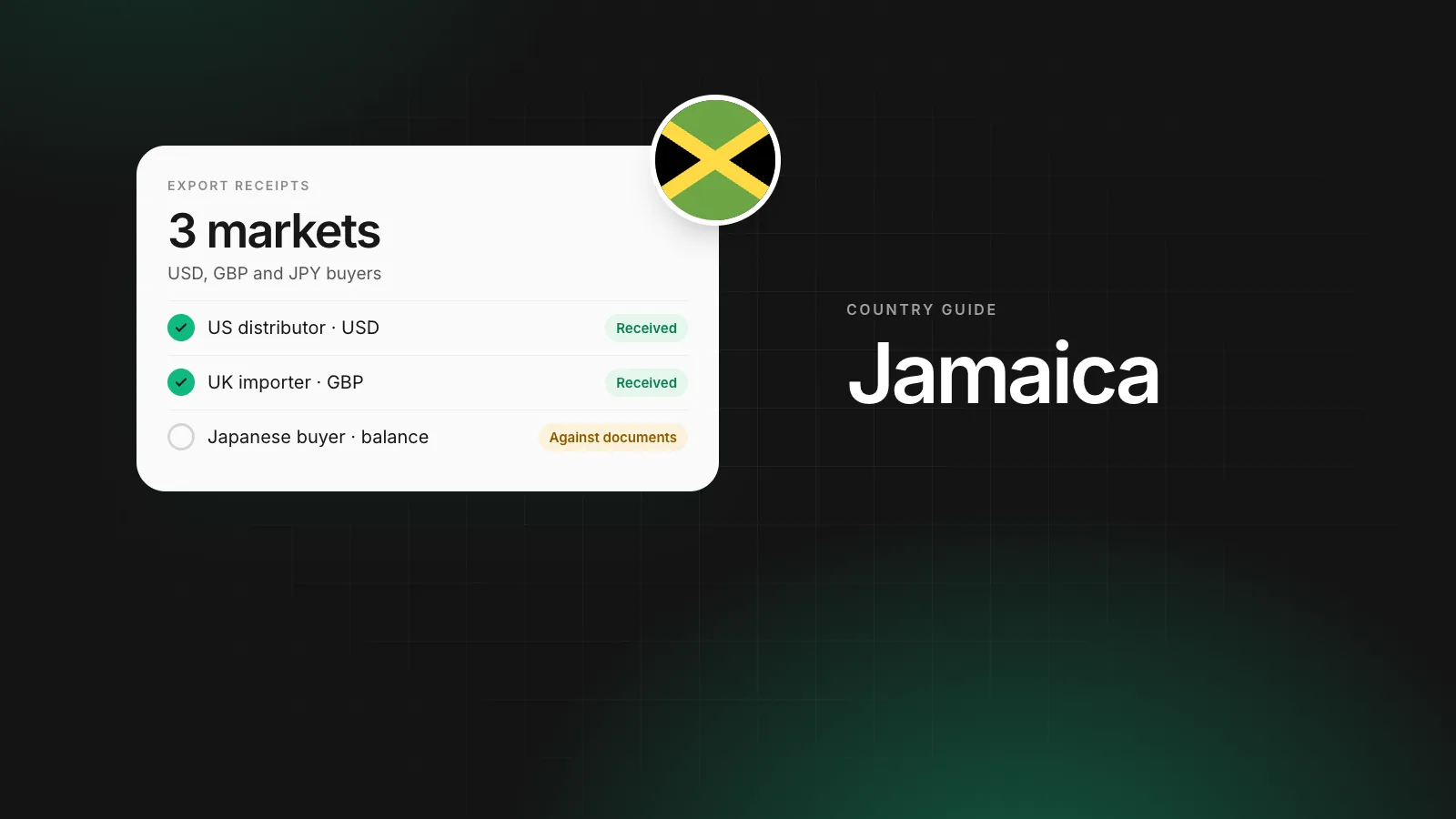
A St. Elizabeth sauce and spice maker sells to a distributor in Florida, an importer in London and, through a coffee subsidiary, a specialty buyer in Tokyo. Florida pays in dollars on 45 days. London pays in pounds on 60. Tokyo pays the balance when it receives the shipping documents. Into a Jamaican dollar account, each payment is converted on arrival.
Who buys and how
- US distributors pay in US dollars, usually on 30 to 60-day terms.
- UK importers pay in pounds, often on 60 days.
- Japanese buyers of Blue Mountain coffee pay in yen or dollars, sometimes under letters of credit.
- Canadian buyers in Canadian or US dollars.
Protecting a small exporter
A long payment term on a large order can tie up months of a small company's cash. Practical structures:
- Deposits of 30 to 50 percent on order for new buyers.
- Cash against documents: the buyer gets the bill of lading only after paying.
- Letters of credit for large orders or unfamiliar buyers. See letter of credit explained.
- Credit limits per buyer.
Documents
Food exports need the commercial invoice, packing list, transport document, certificate of origin and any sanitary or phytosanitary certificates. Missing documents delay customs clearance and, under documentary terms, payment.
Currencies
Holding pounds and US dollars, rather than converting at arrival, lets you pay foreign costs in those currencies, such as packaging, freight and trade fairs, and convert the surplus when the rate suits you.
Paying into Jamaica: the local rail
| What | Detail |
|---|---|
| Local rail | ACH (Automated Clearing House) and the JamClear RTGS |
| Run by | Bank of Jamaica |
| Settlement | ACH within the business day; RTGS in real time for larger amounts |
Source: Bank of Jamaica: payment systems. Checked when this guide was last updated; the scheme's own page has the current figures.
Where Rivet fits
A Rivet business account accepts registered companies after verification, including Jamaican companies. Approved companies get US account details on every plan and sterling and euro details from the Growth plan, in their own name, so buyers pay locally. Balances can be held, used to pay suppliers in 120+ countries, or converted at a rate shown before you confirm. Rivet is not a bank; regulated partner institutions hold the funds.
Questions people ask
What payment terms do food buyers expect?
Large importers often want 30 to 60-day terms. New or small exporters should ask for advances or use documentary collections until a relationship exists.
Should a Jamaican exporter accept payment in pounds?
UK buyers prefer it. A sterling balance lets you receive pounds in full and convert when the rate suits you.
How do Japanese buyers usually pay?
Often by bank transfer, sometimes under letters of credit for larger orders, in yen or dollars depending on the contract.
What documents do exporters need?
Commercial invoice, packing list, bill of lading or air waybill, certificates of origin and any food safety certificates the importing country requires.
Sources
William covers what happens once a company starts moving money: getting the business verified, paying contractors and suppliers abroad, and keeping card spend under control. William writes for the founder or finance lead who has to make it work this week, and links every rule cited to the text it comes from.
More from William Sunjo M. →This article is general information, not legal, tax or financial advice. Rules and fees change; check the sources above and the provider’s current terms before you act on them.
- jamaica
- exports
- blue mountain coffee
- gbp
- usd
- payment terms