Jamaican BPO companies collecting US dollars from American clients
Jamaica's outsourcing sector employs tens of thousands, mostly serving US companies. Revenue arrives in US dollars; payroll goes out in Jamaican dollars. How quickly and completely the dollars arrive shapes the firm's cash position every month.
- Published
- Reading time
- 1 min read
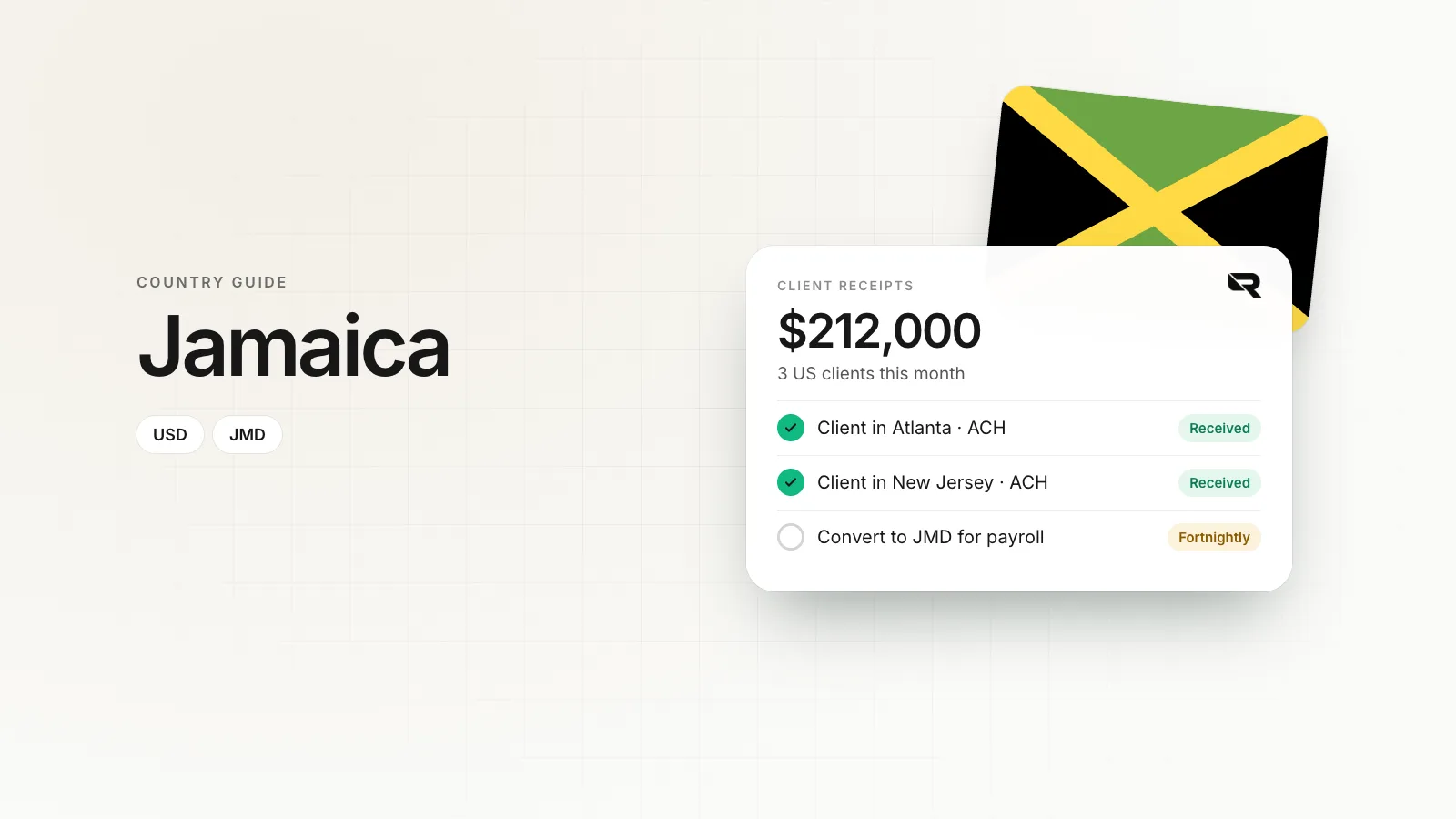
A Montego Bay contact centre with 600 agents serves three US companies. It invoices in US dollars and pays agents fortnightly in Jamaican dollars. US client payments arrive by international wire, three to six days after release. In one month, a delayed payment from its largest client forced it to draw on an overdraft to meet payroll.
Dollars in, Jamaican dollars out
Jamaica's BPO sector grew on English-speaking talent, US-friendly hours and special economic zone incentives. Its clients are mostly American companies, paying in US dollars. Its costs are mostly local.
The Jamaican dollar floats, managed by the Bank of Jamaica. Converting each client payment on arrival leaves the rate to the day the client happened to pay.
The timing problem
For a BPO, payroll dates are fixed. Client payments are not. An international wire to a Jamaican bank depends on the client's accounts payable schedule, the correspondent banks in between and the receiving bank. Three to six days is common.
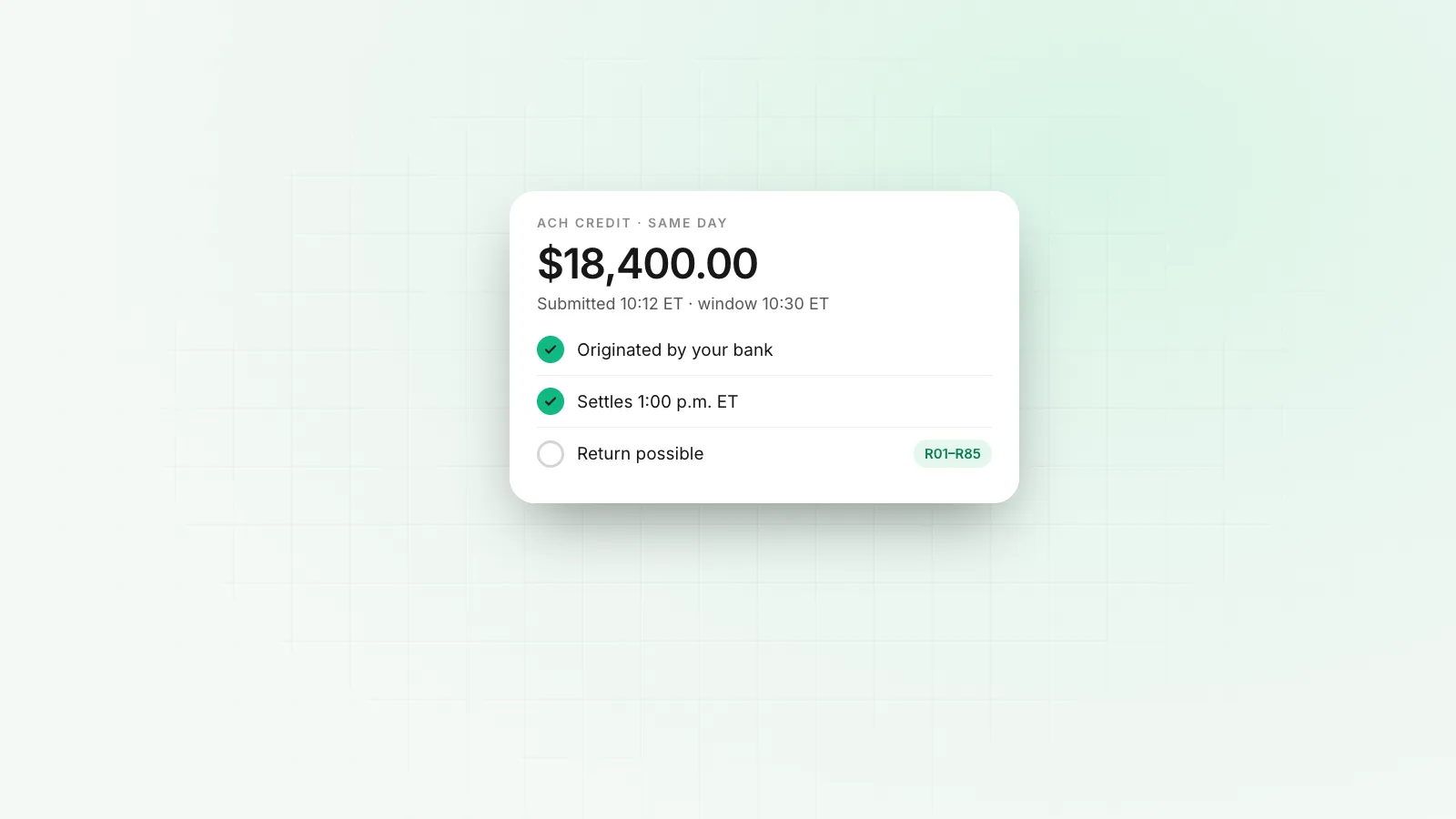
US account details in the company's own name let US clients pay by ACH, like domestic vendors. Payment arrives in one to two business days, in full.
Convert on a schedule
Hold US dollars as they arrive. Convert a planned amount to Jamaican dollars a few days before each payroll. The rate is then a decision, and payroll does not depend on a client's wire.
Paying into Jamaica: the local rail
| What | Detail |
|---|---|
| Local rail | ACH (Automated Clearing House) and the JamClear RTGS |
| Run by | Bank of Jamaica |
| Settlement | ACH within the business day; RTGS in real time for larger amounts |
Source: Bank of Jamaica: payment systems. Checked when this guide was last updated; the scheme's own page has the current figures.
Where Rivet fits
A Rivet business account accepts registered companies after verification, including Jamaican companies. Approved companies get US account details in their own name on every plan, euro and sterling details from the Growth plan, and payouts in 120+ countries, including to their Jamaican bank. Rivet is not a bank; regulated partner institutions hold the funds.
Questions people ask
Can Jamaican companies hold US dollars?
Yes. Jamaica has a liberalised foreign exchange regime, and US dollar accounts are common.
Why do US client wires take several days?
They pass through correspondent banks and are often processed separately by US accounts payable teams.
How should BPO firms handle the Jamaican dollar?
Hold US dollars and convert a planned amount ahead of each payroll, rather than converting each receipt on arrival.
Do BPOs in special economic zones have different tax rules?
Companies in Jamaica's special economic zones benefit from a reduced corporate tax rate and other incentives, subject to conditions.
Sources
Rashidatou writes Rivet's guides to how money moves between countries: the payment rails, what each one costs, and the account details a company needs to get paid in another currency. Every figure in Rashidatou's articles is traced to the scheme rulebook, the regulator or the provider's published price list, and those sources are listed at the end.
More from Rashidatou K. →This article is general information, not legal, tax or financial advice. Rules and fees change; check the sources above and the provider’s current terms before you act on them.
- jamaica
- bpo
- usd
- jmd
- us clients
- outsourcing