Stablecoin payments for business: how USDC and USDT work, and what the GENIUS Act changed
Stablecoins settle in minutes, on weekends, across borders. Since July 2025 the US has a federal law for them. Here is where they fit in a company's payments, and where they don't.
- Published
- Reading time
- 5 min read
Most of the noise about stablecoins is about trading. The use that has grown fastest is duller and more useful: companies paying other companies. A June 2025 study of payment companies by Artemis, Castle Island Ventures and Dragonfly found business-to-business stablecoin payments had grown from under $100 million a month in early 2023 to more than $3 billion a month in 2025.
The reason is practical. A supplier in a market where an international wire takes four days, or a contractor who wants dollars their local bank won't hold, can be paid in minutes, on a Sunday, for a network fee measured in cents. This guide covers how that works, what the new US law requires of the companies that issue stablecoins, and the operational mistakes that cost businesses money.
What a stablecoin is
A payment stablecoin is a digital token designed to be worth one unit of a currency, almost always the US dollar, and redeemable for it. The issuer holds reserves (cash, bank deposits, short-term government debt) to back the tokens in circulation.
The two largest dollar stablecoins are:
- USDC, issued by Circle.
- USDT, issued by Tether.
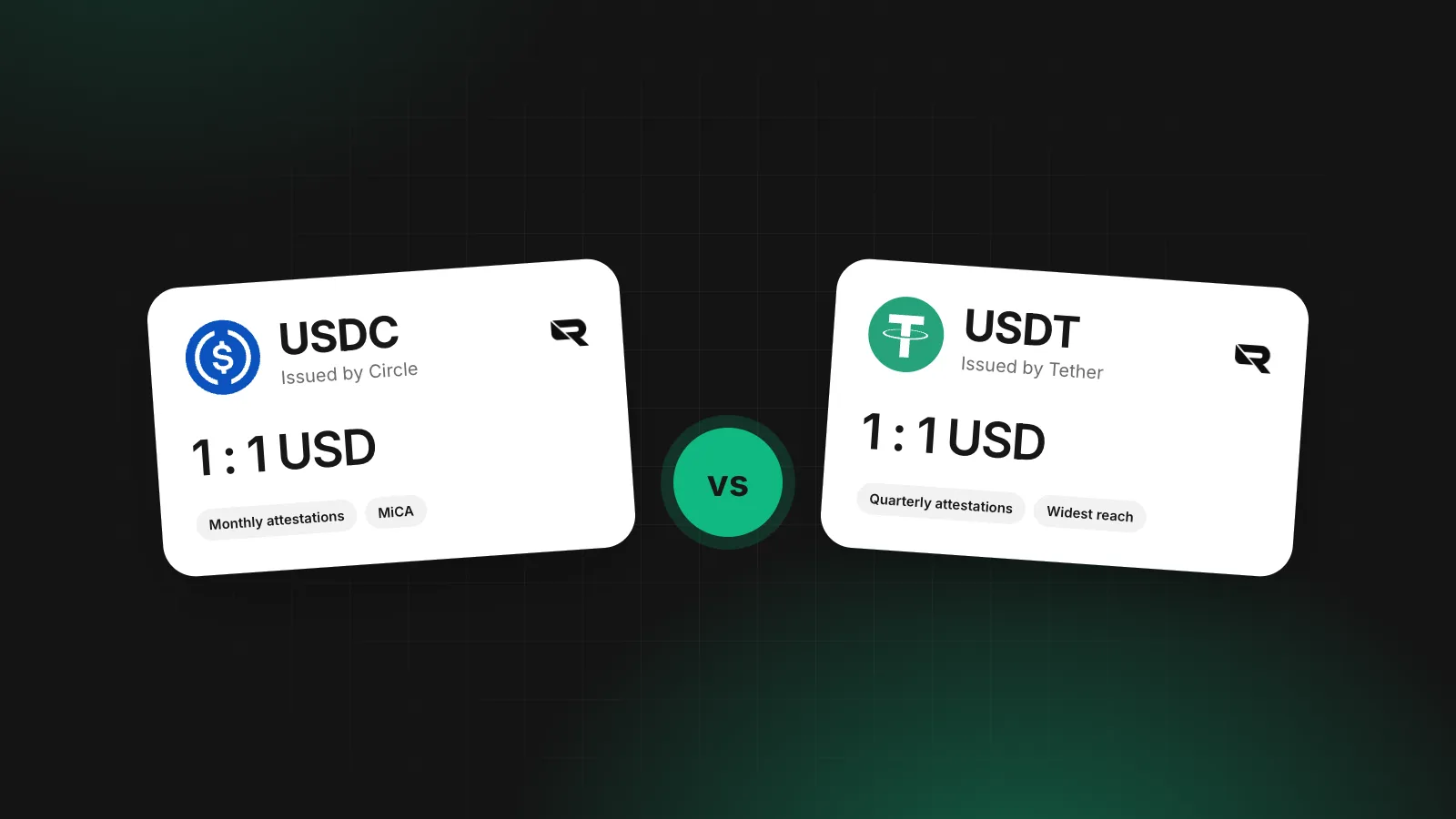
How the two differ on reserves, regulation and reach is covered in USDC vs USDT for business.
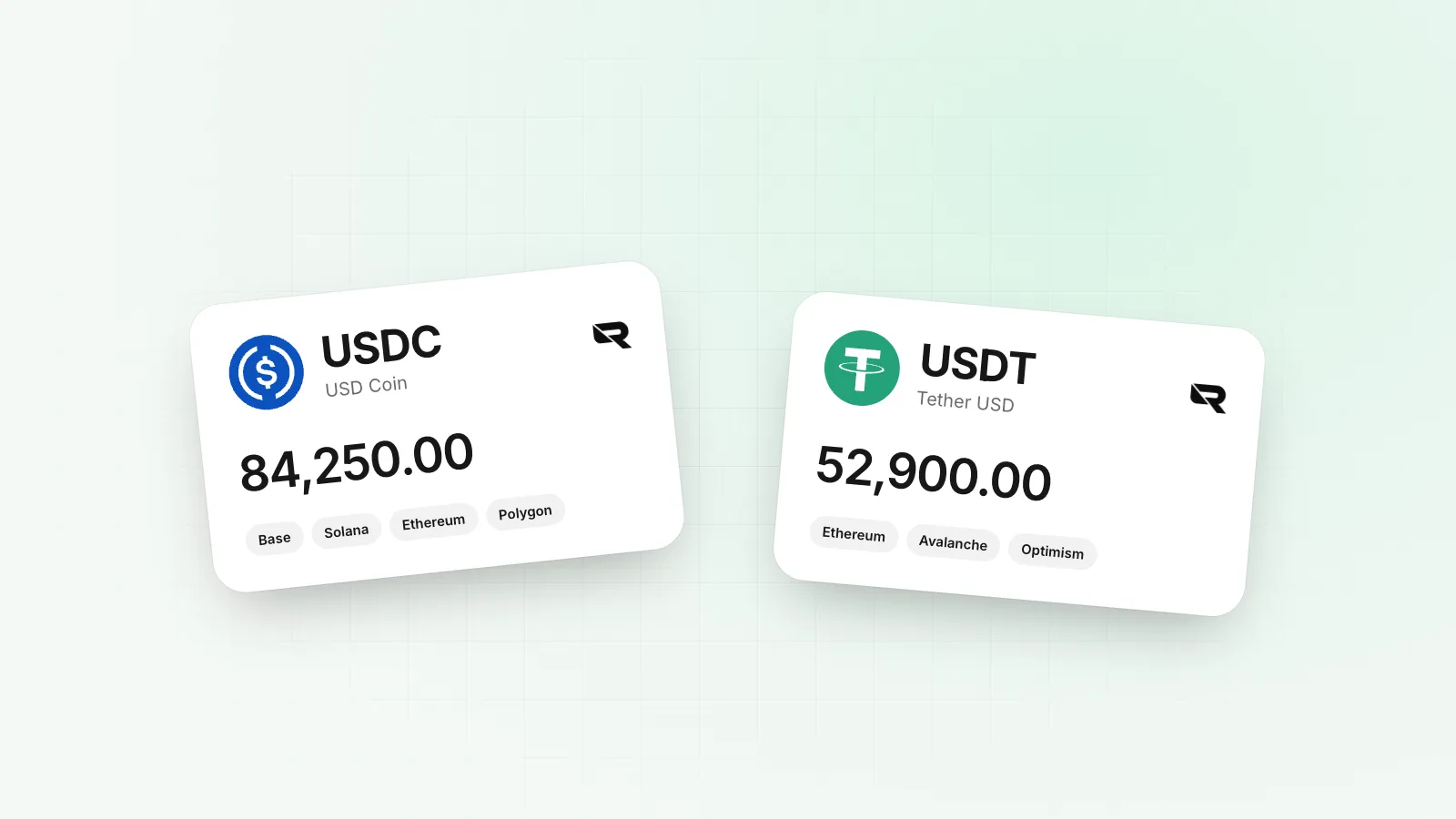
Tokens live on public blockchains, often several. The same USDC exists on Ethereum, Base, Solana, Polygon, Optimism, Avalanche and others. A token on one network is not automatically usable on another, which matters a great deal when you send one (see the mistakes section below).
What the GENIUS Act changed
The GENIUS Act (S.1582, Public Law 119-27) was signed on 18 July 2025. It is the first US federal law written specifically for payment stablecoins. In short:
- Only permitted issuers may issue payment stablecoins in the US: subsidiaries of insured banks, federally licensed non-bank issuers, and state-licensed issuers under a size limit, with a route for foreign issuers in comparable regimes.
- One-to-one reserves. Every token must be backed at least one-for-one by high-quality liquid assets: US dollars, deposits at insured institutions, Treasury bills with maturities of 93 days or less, and certain repurchase agreements backed by Treasuries.
- No reusing reserves. Reserve assets generally cannot be lent out or pledged.
- Monthly disclosure. Issuers must publish the composition of their reserves every month, examined by a registered public accounting firm, with the CEO and CFO certifying the reports.
- No interest to holders. Permitted issuers may not pay holders interest or yield for holding the token. Whether exchanges and other third parties can offer rewards is still being argued over and is subject to rulemaking.
- Redemption and insolvency. The Act sets out redemption policies and gives holders priority over reserves if an issuer fails.
The law takes effect on the earlier of 18 January 2027 or 120 days after regulators issue final rules, so parts of it are still being implemented.
For a business, the practical effect is clearer rules about what stands behind a regulated dollar stablecoin, and more banks and payment providers willing to support them.
And in Europe
The EU regulates stablecoins under the Markets in Crypto-Assets Regulation (MiCA), whose stablecoin rules have applied since 30 June 2024. Issuers of tokens offered in the EU need authorisation. In practice, that has changed which stablecoins European exchanges and payment providers can offer, so a token that works for a US counterparty may not be available to a European one.
Where stablecoins fit in a company's payments
Stablecoins are a rail, like SWIFT or SEPA. They are good at some jobs and wrong for others.
Good fits:
- Paying suppliers and contractors where bank rails are slow, expensive or closed. Many corridors still take days by wire; an on-chain transfer settles in minutes.
- Weekends and holidays. Blockchains don't keep banking hours. A payment due on a Saturday can arrive on a Saturday.
- Recipients who want dollars. In countries with volatile currencies or limited access to dollar accounts, a USDC payment can be the most useful form of payment you can make.
- Moving money between your own accounts across providers or countries, quickly.
Poor fits:
- Paying anyone who has to convert straight back to local currency at a bad rate. If the off-ramp costs 3%, you've saved nothing.
- Payments that might need reversing. There is no chargeback and no recall.
- Counterparties whose regulators restrict digital assets.
- Domestic payments where a free instant rail already exists. Faster Payments or SEPA Instant are simpler.
The risks, and how to manage them
Operational risk: the expensive mistakes
- Wrong network. Sending USDC on Polygon to an address the recipient only monitors on Ethereum is the classic error. Confirm network and address together, in writing.
- Wrong address. Addresses are long strings; a copy-paste error or a malicious clipboard swap sends money to someone else. Use saved, verified payee addresses and check the first and last characters.
- No test transfer. For any new recipient, send a small amount first and wait for confirmation before sending the rest.
- Fees in the wrong token. Some networks charge gas in their native token. Providers that manage this for you avoid stuck payments.
Issuer and market risk
A stablecoin is only as good as its reserves and its issuer's ability to redeem. Prices have briefly moved away from $1 in past stress events. Prefer stablecoins whose issuers publish regular, independently examined reserve reports, and don't hold more in a single token than you would leave with a single counterparty.
Compliance
Your provider will screen counterparties and wallet addresses, and may ask about a payment's purpose, as a bank would for a wire. Sanctions apply to on-chain payments exactly as they do to bank transfers. Keep records of each payment: date, amount, counterparty, network, transaction hash, and the rate used at any conversion.
Accounting and tax
Treatment varies by jurisdiction and accounting framework, and the standards are still developing. Ask your accountant how to classify balances and conversions before your stablecoin holdings become material.
Getting in and out: on-ramps and off-ramps
Most companies don't want to hold stablecoins indefinitely; they use them for a leg of a payment. That makes the ramps (converting fiat to stablecoins and back) the part that decides the cost:
- See the rate and fee before you confirm, both ways.
- Prefer ramps that fund from and pay into the same account your clients already pay, so you're not wiring money between providers to reach the ramp.
- Check which networks are supported for both deposit and withdrawal, and that they match your counterparties.
How Rivet handles this
Rivet's ramps convert between your fiat balances and USDC or USDT, on Ethereum, Base, Solana, Polygon, Optimism and Avalanche, with the rate, the fee and the exact amount on screen before you confirm. Funding comes from the same account details your clients pay into. In bulk payouts, one batch can mix local-rail payments with on-chain USDC legs, so a contractor who prefers stablecoins and one who wants a bank transfer are paid in the same run. Digital assets are not deposits, are not legal tender and may lose value, and the service is not available in every jurisdiction.
For the bank-rail side of the same decision, see SWIFT vs SEPA vs ACH vs Faster Payments.
Questions people ask
Are stablecoins legal for businesses to use?
In many countries, yes, under rules that differ by jurisdiction. The US now has a federal framework for issuers (the GENIUS Act), and the EU regulates stablecoins under MiCA. Some countries restrict or ban them. Check the rules where your company and your counterparties are before you use them.
What is the difference between USDC and USDT?
Both are dollar stablecoins issued by private companies. USDC is issued by Circle, USDT by Tether. They differ in who issues them, where those issuers are regulated, how reserves are reported and which exchanges and regions support them. For a business, the practical question is which one your counterparties accept and on which network.
Can I earn interest on stablecoins I hold?
Not from a GENIUS Act-regulated issuer: the law prohibits permitted issuers from paying holders interest or yield. Whether third parties such as exchanges may offer rewards is contested and subject to rulemaking. Treat any yield offered on a stablecoin balance as a separate product with its own risks.
What happens if I send USDC on the wrong network?
If the receiving address cannot access that network, the funds may be unrecoverable, or recoverable only with the recipient's provider's help, slowly and not always. Always confirm both the address and the network with the recipient, and send a small test amount first.
How are stablecoin payments recorded in the accounts?
Treatment depends on your accounting framework and jurisdiction, and the standards are still evolving. Most companies record the date, amount, counterparty, network and transaction hash for each payment, and the exchange rate used when converting to or from fiat. Ask your accountant before you hold material balances.
Sources
- 01Congress.gov: S.1582, GENIUS Act (Public Law 119-27)
- 02Fenwick: Key provisions and implications of the GENIUS Act
- 03Baker McKenzie: The GENIUS Act, a federal framework for stablecoin issuers
- 04Regulation (EU) 2023/1114 on markets in crypto-assets (MiCA), EUR-Lex
- 05Artemis, Castle Island Ventures and Dragonfly: stablecoin payments report (via Reap, June 2025)
- 06Circle: USDC transparency and reserves
Rashidatou writes Rivet's guides to how money moves between countries: the payment rails, what each one costs, and the account details a company needs to get paid in another currency. Every figure in Rashidatou's articles is traced to the scheme rulebook, the regulator or the provider's published price list, and those sources are listed at the end.
More from Rashidatou K. →This article is general information, not legal, tax or financial advice. Rules and fees change; check the sources above and the provider’s current terms before you act on them.
- stablecoins
- usdc
- usdt
- genius act
- mica
- treasury
- cross-border payments