Georgian trading companies paying suppliers in China, Türkiye and the EU
Georgia sits on trade routes between Europe, Türkiye and Central Asia, and its importers pay suppliers in four or five currencies. They sell mostly in lari. Each supplier payment is a conversion decision, a fraud check and a document for customs.
- Published
- Reading time
- 2 min read
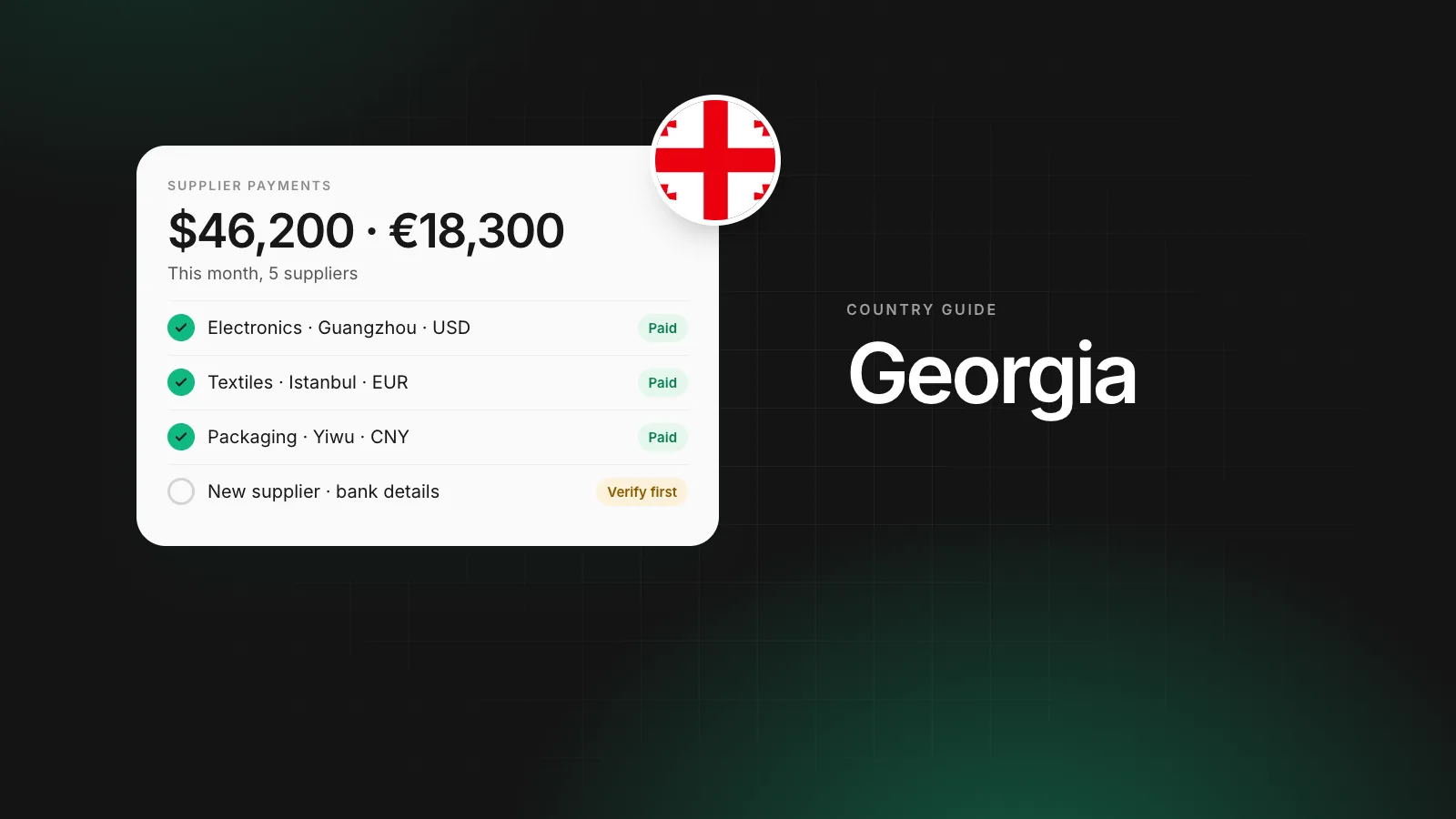
A Tbilisi household goods importer buys electronics from Guangzhou, textiles from Istanbul, packaging from Yiwu and appliances from Italy. It sells everything in lari through its shops and to retailers across the Caucasus. Each month it sends five or six supplier payments in three or four currencies, and once a year someone tries to redirect one of them.
Which currency for which supplier
- China: most factories invoice exports in dollars. Some offer a lower price in yuan, which saves them converting.
- Türkiye: suppliers often quote in euros or dollars because of lira volatility, sometimes in lira for local-style deals.
- EU: euros.
Compare the price in each currency with what it costs you to buy that currency. A slightly higher dollar price can be cheaper overall than a yuan price you can only buy at a poor rate.
Duty and origin
Georgia has free trade agreements with the EU (the DCFTA), China, Türkiye and others. Goods that meet origin rules can enter with reduced or no duty, but only with the right origin certificate or statement. Ask suppliers for it before shipment, not after the goods reach customs.
The lari between order and payment
Importers sell in lari and buy in dollars or euros. If the lari weakens between placing an order and paying the balance, the margin shrinks. Three habits help:
- Price your selling list with a margin for currency moves.
- Buy dollars or euros ahead for confirmed orders when the rate is acceptable, and hold them until the balance is due.
- Pay deposits and balances from that balance, not by converting on the day.
Fraud checks
Supplier payment fraud often starts with a genuine email thread: an invoice arrives with "updated bank details", sometimes from a compromised mailbox. Before paying any new or changed account:
- check the account name matches the supplier,
- confirm by phone or video with a contact you already know,
- have a second person approve the first payment.
Where Rivet fits
A Rivet business account accepts registered companies after verification, including Georgian LLCs. It holds US dollars on US account details in the company's name, adds euro and sterling details from the Growth plan, and on Scale holds 30 currencies, yuan and lira included. Suppliers in 120+ countries can be paid from those balances, conversions show their rate before you confirm, and from Growth a second approver can be required. Rivet is not a bank; regulated partner institutions hold the funds.
Questions people ask
Should Georgian importers pay Chinese suppliers in dollars or yuan?
Most Chinese exporters invoice in dollars. Some offer lower prices in yuan. Compare both after your conversion cost.
Does Georgia's free trade agreement with China reduce duty?
Georgia has a free trade agreement with China, and with the EU and Türkiye. Goods that meet the origin rules, with the right certificate, can enter with reduced or no duty.
How do I manage lari risk?
Price imports in the currency you pay in, set selling prices with a margin for currency moves, and buy dollars ahead for known orders when the rate suits you.
How do I check a new supplier's bank account?
The account name should match the supplier's legal name. Confirm the details on a call with a contact you know, and be suspicious of accounts in a different country.
Sources
Rashidatou writes Rivet's guides to how money moves between countries: the payment rails, what each one costs, and the account details a company needs to get paid in another currency. Every figure in Rashidatou's articles is traced to the scheme rulebook, the regulator or the provider's published price list, and those sources are listed at the end.
More from Rashidatou K. →This article is general information, not legal, tax or financial advice. Rules and fees change; check the sources above and the provider’s current terms before you act on them.
- georgia
- importers
- china suppliers
- turkey suppliers
- usd
- gel